North of Dayton the Great Miami runs up through its namesake county — Troy’s courthouse square at the center, Piqua’s canal-era brick upriver, Tipp City’s preserved downtown between, and the western farm grid rolling out to the Darke County line — and with this build-out, Miami County becomes the fifth county on our map covered completely: every incorporated community, its own page, its own file, the same standard. The geography is the friendliest expansion yet — the county seat sits barely twenty minutes up I-75 from our Salem Ave office, closer than half of Warren — and the pest patterns are the ones this site knows best: river-corridor towns, courthouse-square commerce, canal-era housing stock, and farm-country campuses on the western grid. This hub is the county index; the depth, as always, is one click down.
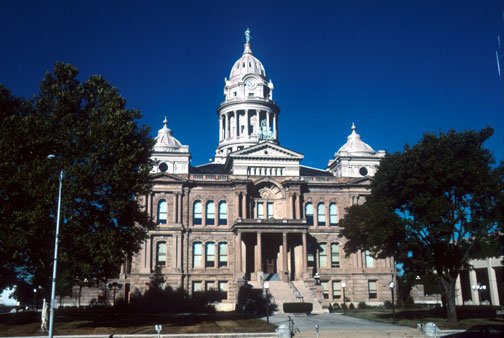
Every Miami County community, by name
- Troy — the county seat: courthouse square, levee-guarded riverfront, Strawberry Festival crowds
- Piqua — the canal city: the county’s biggest housing stock and its deepest industrial memory
- Tipp City — the preserved canal downtown and the I-75 growth edge, Mum Festival included
- West Milton — the Stillwater’s west-county anchor
- Covington — the Stillwater mill town on the western grid
- Bradford — the railroad town on the Darke County seam
- Pleasant Hill — the Newton Township village above the Stillwater
- Ludlow Falls — the village with the waterfall in its name and its backyard
- Casstown · Fletcher · Laura · Potsdam — the farm-grid villages, covered by name per the map’s standing promise
- Plus every township between — Concord, Monroe, Bethel, Elizabeth, Staunton, Lostcreek, Brown, Spring Creek, Washington, Newberry, Newton, Union — routed under the nearest community at identical pricing
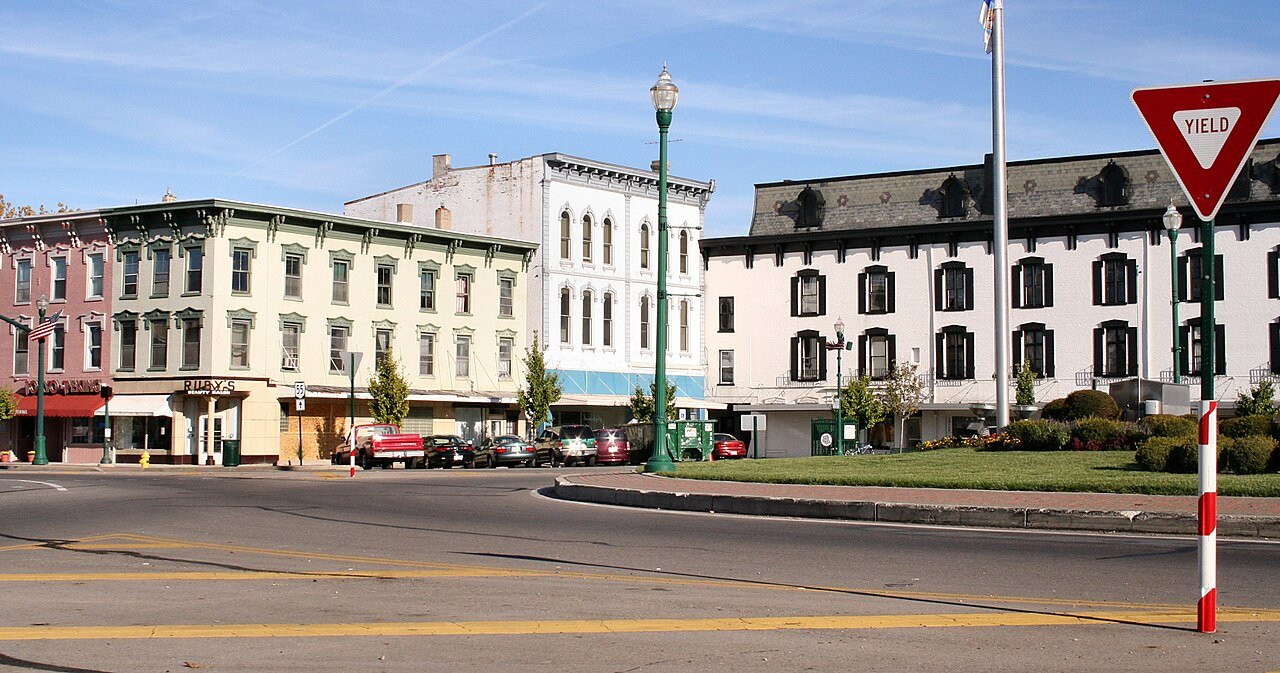
The county’s pest geography: two rivers, one canal’s legacy, and the grid
Miami County’s map sorts into four familiar systems. The Great Miami corridor — Piqua through Troy to Tipp City’s edge — runs the valley file this site maps on every stretch of the river: long mosquito seasons, flood-memory basements behind the levees (the 1913 inheritance runs strongest in the towns that built the conservancy’s walls), moisture-honest cellars, and wet-year pushes. The Stillwater’s west — West Milton, Covington, Pleasant Hill, Ludlow Falls — runs the quieter river’s version, wooded valley walls included, with the falls country adding its gorge microclimates. The canal-era stock — the county’s signature housing inheritance, Piqua’s and Troy’s and Tipp City’s brick and frame survivors from the Miami & Erie decades — carries the heritage file at county scale: stone cellars, lime mortar, balloon frames, and the craftsmanship exclusion they reward. And the farm grid — the county’s broad western and eastern sections — runs the complete rural doctrine: campus farmsteads, harvest-calendar Octobers, cluster-fly farmhouses, and grid villages holding concentrated pressure. Four systems, all previously mastered elsewhere on the map — Miami County’s expansion is the doctrine coming home to territory it already knows.
Northern logistics, stated plainly
The county rides I-75 straight off our home routes — Tipp City’s edge is fifteen minutes from Salem Ave, Troy twenty, Piqua under thirty — which makes northern coverage the gentlest arithmetic of any expansion: the corridor communities join near-daily density immediately (the Vandalia and Huber Heights routes already brush the county line), the western grid anchors scheduled loops on the Preble pattern, and the priority lane runs county-wide from day one. No mileage lines anywhere, photo-first booking as the standing accelerator, and the seam doctrine at every border — the Darke, Champaign, and Shelby edges get the same “lines are for auditors” treatment the map applies everywhere. The county’s trucks were half-serving this geography already; the pages just catch the paperwork up to the routes.
A Miami County year
- March–May: canal-town ants wake; termite swarms photograph same-day in the heritage stock; both rivers open their seasons; cluster flies exit the grid’s farmhouse attics; moles surge the suburban sod
- June–August: corridor mosquito peaks; wasps scale from courthouse-square awnings to grid-village barns; Troy’s Strawberry Festival and the summer calendar pulse the food economies; carpenter bees work every unpainted board
- September–October: the county-wide double — harvest pushes across the grid, valley pushes off both corridors, invader flights on every sunny wall, Tipp City’s Mum Festival crowds; the September visit anchors all four systems at once
- November–February: interior mouse season; heritage exclusion weather; pre-spring WDI queues for three active downtown markets
The courthouse-square economy: three downtowns, one doctrine
Miami County keeps three genuine downtowns — Troy’s square circling its courthouse, Piqua’s canal-era blocks, Tipp City’s preserved Main Street — and all three run the connected-block commerce file this site’s treat-the-building doctrine serves: shared-wall storefronts on stone cellars, dining rows earning documentation-grade programs, upper-floor apartments and offices adding the mixed-use layer, and festival calendars (strawberries in June, mums in September) pulsing the whole apparatus on schedule. The county’s downtown revival energy — all three squares are winning their reinvention decades — adds the renovation file: pre-work inspections for every canal-era rehab, exclusion built at the framing stage, and the vacancy-history reads that revival projects deserve. Three squares, one standard, and block-coordination economics on every one of them.
The farm-account file, northern edition
The county’s grid runs serious agriculture — the corn-and-soybean sections, the hog and dairy operations, the grain infrastructure serving all of it — and the Preble farm doctrine transfers whole: structural and household work is ours (farmhouse to feed room, barn triage to equipment protocols, the September calendar against the harvest push), crop application and elevator fumigation belong to their own licenses (the co-op’s lane and the fumigation specialists’, named honestly), and the seam between the lanes — the feed-room mouse economy, barn flies as structural sanitation, wasp colonies over the equipment — is exactly where we work daily. Rural literacy travels north intact: cluster flies as the farmhouse signature, the deer-mouse protocols for every stored cab and camper, WDI inspections rural-fluent for the farm-lending paperwork, and the campus quote reading every parcel whole. The grid fed the canal towns for two centuries; the doctrine serves both halves of that old partnership now, county-wide.
Miami questions we hear
Dayton company, Miami County prices — same promise as everywhere?
Identical, and geography makes it the easiest keep on the map: the corridor communities sit closer to Salem Ave than half our Montgomery roster, the loops absorb the grid on the Preble pattern, and no Miami quote carries a mileage line, a fuel surcharge, or a northern asterisk. The cost guide’s ranges apply untouched; the two-tier structure reads the same at every courthouse square; and the county’s households can hold this page to it — in writing, like everything else here.
The eight-county map: Montgomery · Greene · Warren · Preble · full service area.
The canal inheritance: why the county’s old stock reads the way it does
The Miami & Erie Canal built this county’s towns the way the railroads built others’ — Piqua and Troy and the Tippecanoe that became Tipp City grew up as canal ports, their oldest commercial blocks facing the towpath, their housing booms tracking the boat traffic — and the canal decades left a specific structural inheritance our inspections read on every heritage visit: pre-Civil-War brick and frame on stone cellars built close to the water table (the canal ran on the valley’s wet grade by design), fill soils along the abandoned channel that still settle and wick, towpath-adjacent districts whose grade histories confuse modern drainage, and the deep-porch, high-ceiling vernacular whose voids and cornices host the standing wasp-and-invader calendars. Canal-town exclusion is its own craft — moisture-first, mortar-literate, respectful of fabric that predates the county’s railroads — and the county keeps enough of it to make the craft a standing route specialty. The boats stopped running before anyone alive remembers; the water table they followed never left, and neither did the housing that grew beside it. We read both, town by town, on every heritage quote in the county.
For the county’s landlords, boards, and institutions
The portfolio doctrine arrives north intact: three downtowns’ worth of mixed-use stock on building-wide logic, the county’s rental spread from canal-era conversions to corridor product on turnover inspections and documented response, school and institutional facilities on calendar-scheduled programs with the family-safety placement bedrock, and the HOA opportunities of the I-75 growth edges on the association playbook. Miami County’s property community runs tight-knit the way county-seat counties do — agents, landlords, and facilities managers all know each other across three squares — and referral-chain economics have always been this company’s native habitat. The chains start with the first documented job; the county’s first ones are already on the loops.
The levee towns and the 1913 line, northern chapter
Miami County paid the Great Flood’s price alongside the whole valley — Piqua and Troy sat square in the 1913 water, and the Miami Conservancy’s answer (the levees and channel works that still define both riverfronts) wrote the county’s flood-memory chapter in the same ink as Franklin’s and Troy’s own page details: protected-but-remembering low districts whose cellars run the century-long moisture epilogue, fill-soil settling along the old flood plain, and the sill-line termite vigilance damp history demands. The levee-town doctrine travels north complete — know your block’s line, run the cellar discipline, book the spring moisture review on the flood-plain side and the September anchor on the upland side — and the conservancy’s engineers, who guarded the valley better than anyone dared hope for a century, get the same tribute here the site pays them everywhere: their walls hold the river; the doctrine holds the cellars; and between the two, the valley’s towns keep standing exactly as planned.
Which Miami communities are next after the twelve?
After this build-out the county’s incorporated roster is complete — the twelve named pages cover every municipality and village, with the unincorporated crossroads (Conover, Alcony, Christiansburg-adjacent lanes, and their kin) riding nearest-community routing per the map’s standing rule, and the resident-request queue open as always for any crossroads that wants its name in print. The county joins the map whole, first draft to final village, the way every county now has: completely, or not at all.
What the fifth county completes
Miami County’s pages close a map two years of work opened: eight counties, every incorporated community named and filed, the Miami Valley’s pest reality documented from the state line at College Corner to the Darke seam at Bradford, the lake country at Harveysburg to the falls at Ludlow Falls — and one company’s standing offer holding across all of it: free quotes, free photo identification, honest two-tier structure, no mileage lines, and calendars kept. The valley’s eight counties share one watershed, one flood history, one harvest rhythm, and now one published playbook; the trucks that learned it street by street run it loop by loop; and the phone that started on Salem Ave answers for all of it, first ring, business hours, every working day. The map is the promise; the promise is kept; and Miami County — welcome aboard — makes it whole.
Licensed by the Ohio Department of Agriculture (Pesticide Business License #115079; applicator #170858 — categories 10A, 10B, and 12), insured, locally owned: (937) 569-3330, Monday–Friday 8–6, Saturdays by appointment. Greater Dayton Pest & Rodent — eight counties, one standard, zero footnotes.
The I-75 growth edge: the county’s newest chapter
Between the canal squares the interstate writes the county’s current growth — Troy’s and Tipp City’s corridor edges adding phases and logistics stock on the pattern the southern counties know by heart — and the growth doctrine transfers north without translation: builder-gap penetrations awaiting steel, field-displacement Octobers wherever phases meet the working grid, sod-and-irrigation economies installing on schedule, year-one baselines as each street’s cheapest decision, and the commissioning-stage opportunities of the distribution and retail stock rising along the exits. The county’s growth runs calmer than Warren’s boom — canal counties add their chapters deliberately — but the physics match, the phase-cycle intelligence transfers, and the corridor’s new households get the same era-read discipline at the door that the whole map now runs. New ground, old doctrine, standing offer.
One county-wide tip worth the hub: find your system, book its season
The eight-county compression, northern edition: every Miami County address lives in one of the four systems above — corridor, Stillwater west, canal-era stock, or the grid — and each system’s page-linked playbook names its anchor season (spring moisture reviews for the flood-memory blocks, September everywhere else, year-one baselines on the growth edge, harvest-timed exclusion on the grid). Find your system in the geography section, book its season, or send the address and let the free line sort it in a sentence: (937) 569-3330. Four systems, one calendar, and the county’s quietest houses are the ones that learned which appointment was theirs.
Festival country, northern calendar
The county’s celebrations anchor the region’s festival map — Troy’s Strawberry Festival drawing its June hundreds of thousands to the levee and the square, Tipp City’s Mum Festival crowning September, Piqua’s calendar threading its own summer — and the festival doctrine runs its northern edition on the biggest stages yet: host-block businesses on pre-event patrols and surge-rated discipline, the scavenger response tracked to each festival’s season (June’s crowds meet building wasp colonies; September’s meet them at peak), post-event inspections reading what the hundreds of thousands seeded, and the residential blocks along the routes absorbing their parking-and-picnic spillover with ordinary defense slightly advanced. Festival counties host by identity; their pest calendars simply join the planning committees — ours marked all three towns’ big weekends before the first northern page published, because route companies read civic calendars the way farmers read skies. The strawberries draw the crowds; the doctrine keeps the crowds’ visit tidy; and the squares stay festival-ready year-round, which is the entire municipal point.
How fast does the northern coverage actually respond?
The friendliest numbers on any expansion: corridor communities (Tipp City, Troy, Piqua) join the near-daily density of the home routes immediately — next-day norms, genuine same-day capability most weekdays, the priority lane at full strength; the western grid books scheduled loops on the Preble cadence, multiple days weekly in season; and the whole county shares the photo-first accelerator and the no-markup urgency policy. Twenty minutes of interstate makes Miami the closest expansion in the company’s history — the response times read accordingly, and the county’s households can test the claim with one call: (937) 569-3330.
From the courthouse clock to the last grid crossroads, the fifth county’s file opens complete — twelve communities below, four systems above, one calendar throughout. Miami County, the valley’s map is finished with you on it; the pages that follow prove it town by town, and the trucks were already on the way.
Eight counties, one watershed, one number — the valley reads as one map now, and it answers as one phone.
Welcome north; the September calendar is open.
The valley is one map; here is its northern quarter.
The county to the east. Miami meets Clark County along Bethel Township, and the two are the northern farm pair of our territory — grain ground, elevators, and an October governed by harvest rather than by frost. New Carlisle is closer to Tipp City than most people on either side realize.
Straight west. Miami County shares its western line with Darke County, and the two are a study in contrast: Miami runs the canal-era towns and the Great Miami corridor, Darke runs layer houses, hog barns and the feed infrastructure that makes it Ohio’s top livestock county. Rodent pressure there is continuous rather than seasonal, which is the one thing that genuinely changes the program. Further south, Butler County completes the river.
Frequently asked questions
Do you cover all of Miami County?
Yes — Troy, Piqua, Tipp City, West Milton, Covington, Bradford, Pleasant Hill, Casstown, Fletcher, Ludlow Falls, Laura, Potsdam, and the townships between: twelve communities with dedicated pages, plus every farm lane connecting them.
What pests dominate Miami County?
Farm-country files: harvest-and-frost rodent surges (the county’s defining pattern), bean-field stink bug flights, barn wasps and outbuilding paper colonies, river-corridor moisture guilds along the Great Miami and Stillwater, and the historic cores’ old-stock mice.
How does Miami County pricing work?
Published formula, no distance premium — route days make Piqua price like Kettering: most county homes $39–$55/month quarterly, farm campuses walked and quoted as systems. Free: (937) 569-3330.
Why is fall pest pressure so intense in Miami County?
The agricultural calendar — harvest strips cover and food from thousands of acres simultaneously, sending field populations toward every heated structure just as frost arrives. The September exclusion visit is worth more per dollar here than anywhere on our map.
Do you really treat farm properties as campuses?
It is the only honest way — barns, grain areas, and outbuildings are the recruitment pool for the house, so piecemeal quotes fail by design. Walked assessments, system pricing, harvest-aware scheduling; the Preble-and-Miami routes were built on it.
How fast can you reach Miami County addresses?
Weekly-or-better rotations through all twelve communities — days typically, priority faster, no travel charges to any of them.
Do you serve Miami County businesses?
Yes — Troy’s industrial corridor, Piqua’s facilities, the downtown squares’ restaurants, and the grain-adjacent operations each on matched programs; food-facility documentation is a county staple.
What is the stink bug situation here?
The county IS the flyway — bean and corn acreage on every side makes September flights a certainty, and the sunny farmhouse wall is the audition stage. Barrier-plus-seal before Labor Day, annually, as infrastructure; the flyway houses know the drill.
Do the small villages really get full service?
Identically — Potsdam and Laura get the same formula pricing, the same protocols, and the same free estimates as Troy; the route-day model makes village service economical, and each village’s page proves we actually know the place.
How do I start service in Miami County?
Instant quote from any county address, free photo ID, or (937) 569-3330 — free estimates, campus walks scheduled on route days, first visits typically within the week.