
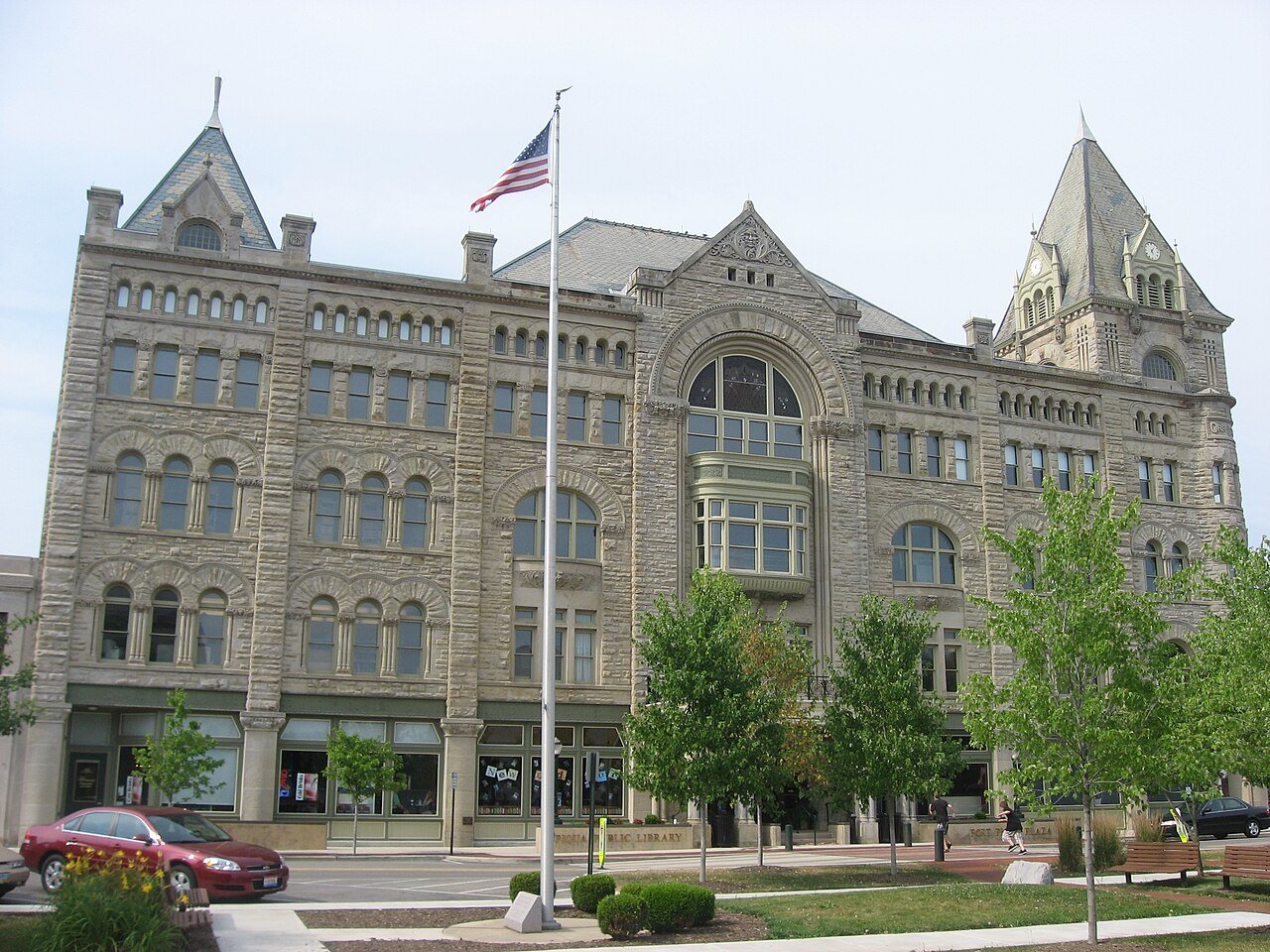
Piqua is Miami County’s second city and its deepest history — a Great Miami river town of about 20,000 whose name is Shawnee, whose fortunes were made by the Miami & Erie Canal, and whose downtown is anchored by one of Ohio’s great restoration stories: Fort Piqua Plaza, the 1891 Romanesque hotel that stood derelict for decades and now houses the public library behind turrets and sandstone arches. Canal water still runs at the Johnston Farm, where a replica boat plies the last navigable stretch; the river still bends through downtown behind its post-1913 levees; and the housing stock still tells the whole story, from Rossville’s early blocks to the mill workers’ cottages to the ranches spreading east toward the interstate. Greater Dayton Pest & Rodent covers every chapter: ants, rodents, wasps, termites, mosquitoes, spiders, roaches and bed bugs, thirty minutes up I-75 from our home routes. (937) 569-3330 — or book online.
The canal city’s pest inheritance
Piqua is the county’s fullest expression of what our Miami County page calls the canal inheritance. A town that boomed with the Miami & Erie in the 1840s and boomed again with the mills banks its wealth in brick — and its pest pressure in the seams of that brick. Downtown’s commercial blocks share party walls, interconnected cellars and a century and a half of utility penetrations; the residential rings hold some of the county’s oldest continuously occupied houses, stone-foundationed and balloon-framed, where mice inherit entries their great-great-grandmothers used. The rule we run in Troy applies doubled here: old boom towns need exclusion archaeology — finding the coal chute behind the paneling, the sewer-line gap under the slab porch, the sill corner where 1880 stone meets 1955 block — and they need it done reversibly, in materials that respect buildings older than the pest-control industry itself. That is precisely the work our twelve-doors inspection was built for, and Piqua gives it more doors per house than anywhere else in the county.
River, levee, and the wet edge of town
The Great Miami wraps Piqua’s west and south, and the 1913 flood — which hit this city as hard as anywhere in the valley — left the same inheritance it left Troy and Dayton: Conservancy District levees, a riverfront the city is steadily reclaiming as parkland, and a permanent moisture gradient through the near-river neighborhoods. For pest work that gradient is the map. The blocks between downtown and the levee run damper basements — spider and camel-cricket country, millipede surges in wet springs, and the soil-moisture conditions that make termite pressure a when-not-if in the older stock. The riverfront parks and the canal remnants produce mosquito generations all summer in the standing margins. And Swift Run and the hydraulic canals that once powered the mills thread surprising wet corridors through otherwise dry neighborhoods — corridor doctrine territory, where the linear parks that make Piqua walkable also give wildlife and rodents covered highways between the field edges and the table scraps. Our riverside protocol is the county standard: treat the pest, then name the moisture condition feeding it, because chemistry against hydrology is a subscription to the problem.
Rossville, the mills, and reading Piqua’s eras
The era-read runs long here. Rossville and the oldest river-adjacent blocks predate the Civil War — stone foundations, hand-cut sills, the county’s most generous rodent entries and its most deserving preservation care. The mill-era rings — workers’ doubles and cottages walking out from the factories that made Piqua briefly the underwear capital of America (the Atlas mills shipped nationwide) — are balloon-framed and cellar-doored, with the interconnected attic voids that let a squirrel or a mouse population tour a whole block. The streetcar and interwar streets east of downtown bring foursquares and bungalows with better foundations and worse grade lines. And the postwar-to-modern east side, out toward the I-75 interchange’s retail strip, runs the standard suburban board — slab-gap ants, garage mice, carpenter ants where the shade trees have matured. Four eras, four inspection styles, one visit: your address tells us which century’s problems you inherited, and the treatment plan follows the foundation, not a franchise template.
The Johnston Farm and the living-history file
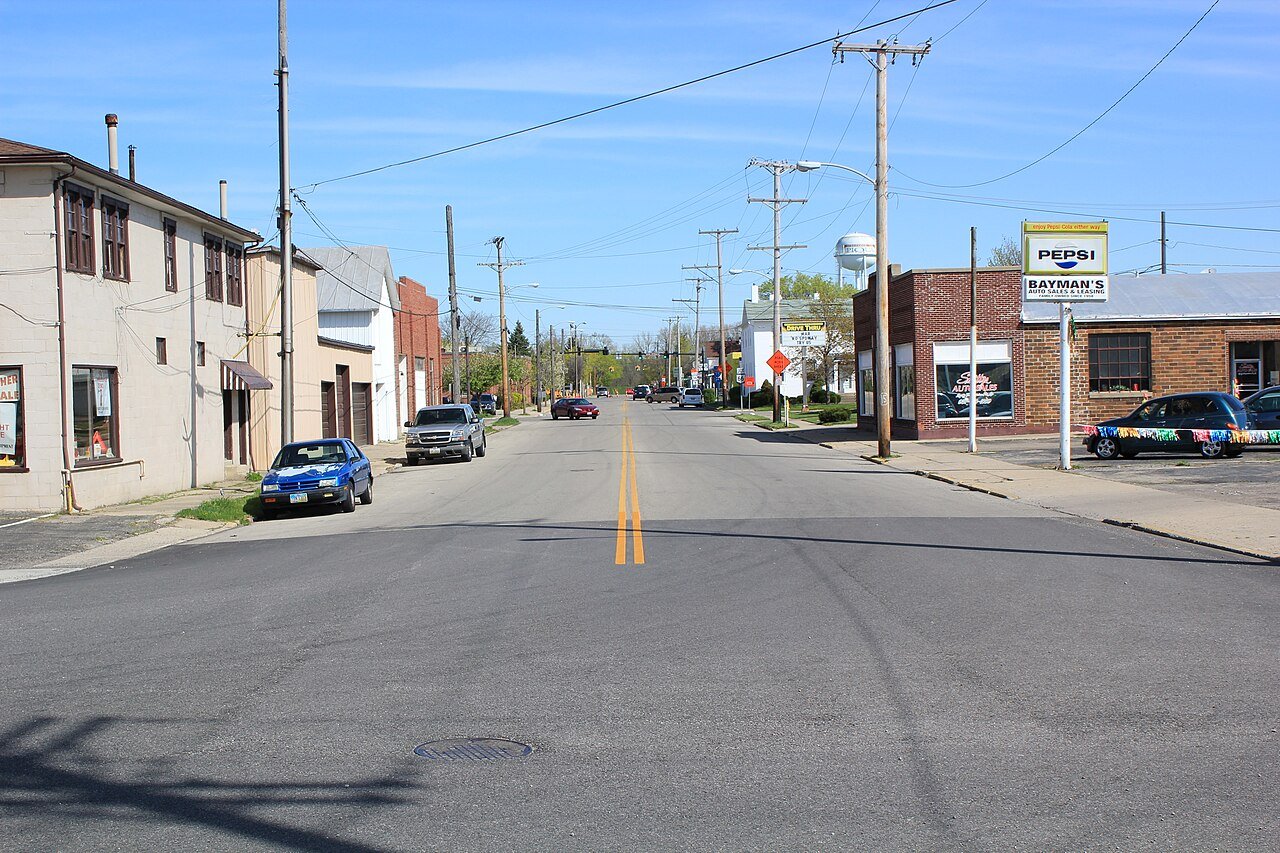
North of town, the Johnston Farm & Indian Agency keeps Piqua’s deepest history open to the public: the 1810s farmhouse of Indian agent John Johnston, the summer kitchen, the cider house, the barn — and the canal boat General Harrison working the restored stretch of the Miami & Erie. Living-history sites are a specialty file we already run at the county’s other museums, and the doctrine holds: historic structures get heritage-grade reversible exclusion (copper mesh and discretion, nothing that scars 200-year-old fabric), collection and interpretation spaces get monitoring rather than blanket treatment, and the landscape features that make the site wonderful — the canal water, the orchard, the livestock — get managed as the wildlife magnets they are, with wasp patrols ahead of event season and rodent grids around the feed and the boat landing. The same logic scales down to every century farmhouse on the Piqua periphery: house plus outbuildings plus water equals a campus, and campuses get campus inspections.
Commercial Piqua: from the Plaza to the interchange
Piqua’s commercial file runs three districts. Downtown, where the Fort Piqua Plaza anchors a genuinely reviving main street — coffee roasters, restaurants, the library’s daily crowds — runs the block-aware protocol: shared walls mean shared pressure, so our downtown accounts get monitoring that reads the block, not just the suite, and roach introductions get chased across property lines before they become district folklore. The east-side interchange strip — the big-box, grocery and restaurant cluster where Piqua meets I-75 — is standard retail pest economics: dumpster corrals, loading docks, drive-through sugar. And the industrial base — Hartzell’s propeller works and the manufacturers threading the old mill districts — runs documented IPM with the audit-ready trend logs modern supply chains demand. All three ride the same trucks as the residential routes; a city of 20,000 is one map to a route company, and we treat it that way.
The Piqua pest calendar
February–March: consolidated winter mouse populations announce themselves in the old stock; prime exclusion weather, because active runs show. April–May: termite swarms out of the moist river-adjacent soil — the free same-week identification exists precisely for the porch-crack cloud moment; ant trails wake citywide; wasp queens stake every eave from Rossville to the interchange. June: mosquito season opens on the riverfront and the canal remnants; the first barrier treatments go down; downtown patio season begins and brings the scavengers with it. July–August: peak pressure everywhere — and the Heritage Festival’s Labor Day approach starts the pre-event calendar for the Johnston Farm corridor. September: the anchor visit — perimeter defense at yellowjacket peak, exclusion ahead of the field-mouse migration off the corn that borders Piqua on three sides; the single appointment that most changes a house’s winter. October–November: seal-and-check season; attic inspections as squirrels make their cold-weather decisions. December–January: interior work, monitoring reads, and next year’s plan priced while the pressure sleeps.
Landlords and the second-city rental market
Piqua’s rental stock is the county’s largest and oldest mix — subdivided Victorians, mill-era doubles, garden apartments, single-family ranches — and old rental stock is where pest problems compound fastest, because deferred maintenance and tenant turnover feed each other. Our landlord program is built for exactly this market: per-door pricing that makes portfolio coverage cheaper than crisis calls, direct-tenant scheduling, unit-by-unit documentation that stands up in disputes, and the multifamily protocols that actually end problems — adjacent-unit inspection on every bed bug response, block-void mapping on German roach jobs in the doubles, and the shared-wall honesty that one treated unit in an untreated building is a coin-flip, not a cure. Owners who inherit a century double with a “mouse history” get the straight assessment: the history usually ends at the twelve doors, and sealing them costs less than one winter of tenant calls.
Termites in the county’s oldest wood
If Troy is the county’s wood-detail showcase, Piqua is its wood-volume champion: more pre-1900 structures than anywhere else north of Dayton, riverside soil moisture, and a century-and-a-half of additions whose grade lines crept up over brick. Eastern subterranean termites read all of that as habitat. Our inspection logic here starts where the moisture is — the river-adjacent blocks, the hydraulic-canal corridors, crawlspaces under Victorian additions — and our protection is monitoring-first: bait systems watching the soil year-round beat one-time barriers that degrade in silence, especially around stone foundations that were never designed for trench-and-treat chemistry. Bryan’s 10A and 10B licenses plus Category 12 cover the whole span — treatment, monitoring, and the NPMA-33 WDI inspections that Piqua’s affordable-historic housing market orders steadily, because a $160,000 Victorian is exactly the transaction where a $175 inspection earns its keep.
Why Piqua calls us
- Old-house literacy: stone foundations, balloon frames and canal-era cellars are our home turf — reversible exclusion, era-read inspections, no foam-in-the-brickwork vandalism.
- Two honest tiers: one-time jobs at one-time prices, and the Protection Plan — with its re-treatment guarantee — when you want the year owned.
- Photo-first triage: text the evidence to (937) 569-3330; identification is free and honeybee swarms go to beekeepers, not the invoice.
- No crisis markup: urgent response at scheduled-work prices, county-wide policy.
- Thirty interstate minutes: Piqua rides the I-75 spine — next-day norm, same-day capability most weekdays, no distance surcharge.
Do it yourself, or call?
The honest split, Piqua edition: a reachable paper-wasp umbrella, a post-rain ant line, a single garage mouse in a ranch — DIY with our guides, genuinely. Call instead for anything in a wall void, any termite evidence (in this housing stock, always), bed bugs anywhere, roaches in any building with a shared wall — which in central Piqua is most buildings — and any problem on its third round of store-bought spray. Old houses turn recurring pests into condition problems, and conditions need diagnosis before chemistry.
Piqua questions, answered straight
Our Rossville-area house has had mice “forever.” Is exclusion even possible in a house this old?
Yes — and old houses are where exclusion pays best, because the entries are structural and finite, not behavioral and endless. A stone foundation from the 1850s might carry a dozen genuine entry points; found and sealed with reversible materials, they stay sealed, and the workmanship guarantee means re-entry through our work brings us back free. “Forever” usually means nobody ever did the archaeology. We do the archaeology.
The house backs onto the old canal corridor and the bugs are relentless. Why?
Linear water plus linear vegetation equals a pest highway — moisture for mosquitoes and termites, cover for rodent movement, prey density for spiders. Corridor-backing houses get the corridor protocol: the defensive line goes on your side (perimeter treatment, exclusion, drainage honesty at the property line), because nobody treats the public corridor itself. Managed that way, canal-side living costs one seasonal adjustment, not a plague.
Do you service the north end and the county edges past the interchange?
All of it — city limits are billing fiction to a route company. North to the county line, the rural roads toward Covington and Fletcher, the farmsteads in between: same prices, same response classes, and farm campuses get quoted as campuses.
A restaurant downtown — how do you treat without closing us?
Off-hours service, targeted formulations, monitoring-led IPM and documentation your health inspector will actually compliment. Downtown’s shared walls make the monitoring half non-negotiable; catching the block’s pressure at our stations beats catching it in a dining-room review. First visit maps the building; nothing about the program requires closing a functioning kitchen.
Same-day service, really, thirty minutes north?
Most weekdays, yes — Piqua sits at the top of the I-75 spine our routes already run. Next-day is the standing norm, the priority lane covers the genuine emergencies, and none of it carries a mileage line, because interstate miles are the cheapest miles in the business.
The seasonal city, the festival file
Piqua’s civic calendar earns its own paragraph in the county’s festival doctrine. Taste of the Arts fills downtown in spring; the Heritage Festival takes over the Johnston Farm every Labor Day weekend with encampments, kettle corn and canal-boat crowds; and the riverfront’s growing event slate keeps the levee lawns busy all summer. Each date is a pest date to a route company. Labor Day is the sharpest: the Heritage Festival lands precisely at yellowjacket maximum, when colonies are at peak population and peak sugar-hunger — so the farm corridor’s pre-event patrol, the vendor-area monitoring and the post-event residential sweep are all on our calendar before the reenactors pitch their first tent. Downtown’s spring events run the gentler June version. The pattern never changes: crowds bring calories, calories bring foragers, and the businesses and blocks that host get their defense a week ahead of the parade instead of a week behind it.
The second city, fully covered
From Fort Piqua Plaza’s sandstone arches to the last farmhouse before the Shelby County line, Piqua is the northern anchor of our Miami County coverage — the oldest wood, the deepest cellars, the richest history and the pest file to match. Troy, Tipp City and Covington share the routes; the service-area map shows the whole eight-county valley. One standard everywhere the trucks go — and they go everywhere.
Start with a photo: text whatever you found to (937) 569-3330 for free identification and an honest quote, or book online. Canal city, we kept the best of your history running — let’s retire the part with teeth.
The underwear capital’s lesson in prevention
Piqua’s favorite historical footnote — the Atlas mills that once made this the nation’s underwear capital, celebrated for years by the Great Outdoor Underwear Festival — carries an actual pest-control moral. Mill towns learn that maintenance is cheaper than replacement: the factories that survived were the ones that fixed roofs before the looms rusted. Houses run the same ledger. The September anchor visit, the fall exclusion pass, the moisture conversation nobody wants to have about their downspouts — that’s roof-fixing money, tens of dollars against the hundreds that an established infestation costs, or the thousands that termite repair costs in hand-built wood. Our pricing pages publish the math because the math is the argument: prevention in Piqua’s housing stock is the best-returning home expense on the block, and the oldest houses — the ones that survived the mills, the flood and the interstate — deserve owners who maintain like the mill engineers did.
Piqua, the fifth county’s northern anchor is on the map and on the routes — the canal city’s pest file is open, and the trucks already run your way.
From Rossville’s stone cellars to the interchange’s loading docks, one standard covers the second city — identification free, quotes honest, urgency never surcharged. That’s the deal the whole valley gets, and Piqua’s version of it starts with one photo and one phone call today.
Welcome to the roster, Piqua — the northern anchor holds.
Who actually turns up in Piqua: Greater Dayton Pest & Rodent is owned and operated by Bryan Camden, licensed by the Ohio Department of Agriculture — firm #115079, commercial applicator #170858, categories 10A, 10B and 12. When you call, you talk to the person who does the work. No call center, no rotating crews, and the same technician on every visit.
Frequently asked questions
Do you provide pest control in Piqua?
Yes — Piqua’s historic river-town blocks and its farm-belt edges are standing stops on the Miami County rotation.
What pests are most common in Piqua?
River-town-plus-farmland: older-stock foundation mice (the mortar-joint doors), damp-basement guilds near the river, harvest-season rodent surges at the edges, and the full fall-invader flight off the surrounding acreage.
How much is pest control in Piqua?
County-standard formula: most Piqua homes run $39–$55/month quarterly, one-time flat, farm campuses walked and quoted honestly. Free estimates: (937) 569-3330.
Why do Piqua’s older houses get mice every fall?
Age plus edge — the historic stock’s accumulated gaps meet a farm-belt field population at first frost, and the combination writes October’s call log. September masonry-appropriate sealing beats November trapping every year.
Do you handle the river-adjacent moisture pests?
The damp-basement guild (camel crickets, centipedes, silverfish) runs strong near the Great Miami — dehumidifier-first doctrine, seepage triage, and the honest verdict that the bugs are the symptom and the water is the patient.
How fast can you reach Piqua?
Weekly-or-better Miami County routes — days typically, priority faster, no travel charges despite the distance.
Do you serve Piqua businesses?
Yes — downtown’s restaurants and storefronts, the industrial park’s facilities, and the grocery-and-retail corridor each on matched programs with inspection-ready documentation.
What about the farm properties around Piqua?
Campus treatment — barns, grain areas, and outbuildings quoted as the recruitment system they are, with the harvest-calendar scheduling that meets the surge before it reaches the house.
Is termite monitoring worth it in Piqua?
The older blocks say yes — age, moisture, and mature landscaping stack conducive conditions, and bait systems suit the era’s finished basements (no drilling). Free annual inspections regardless.
How do I start service in Piqua?
Instant quote, free photo ID, or (937) 569-3330 — free estimates and first visits typically within the week.
Piqua Pest Control, Service by Service
Piqua’s pest files, written from this town’s canal-era infrastructure and century housing stock:
- Rodent control in Piqua — the canal ledger, rats and mice on separate maps
- Ant control in Piqua — the alley grid, intercepted at the fence line
- Termite control in Piqua — the heavy-timber file, baselined and watched
- Wasp & hornet removal in Piqua — the broken-pane file, closed at the glazing
- Cockroach control in Piqua — the loft chase, treated as one system
- Termite inspection in Piqua — what an inspection actually covers, what it costs, and why a sale here rarely forces one.