
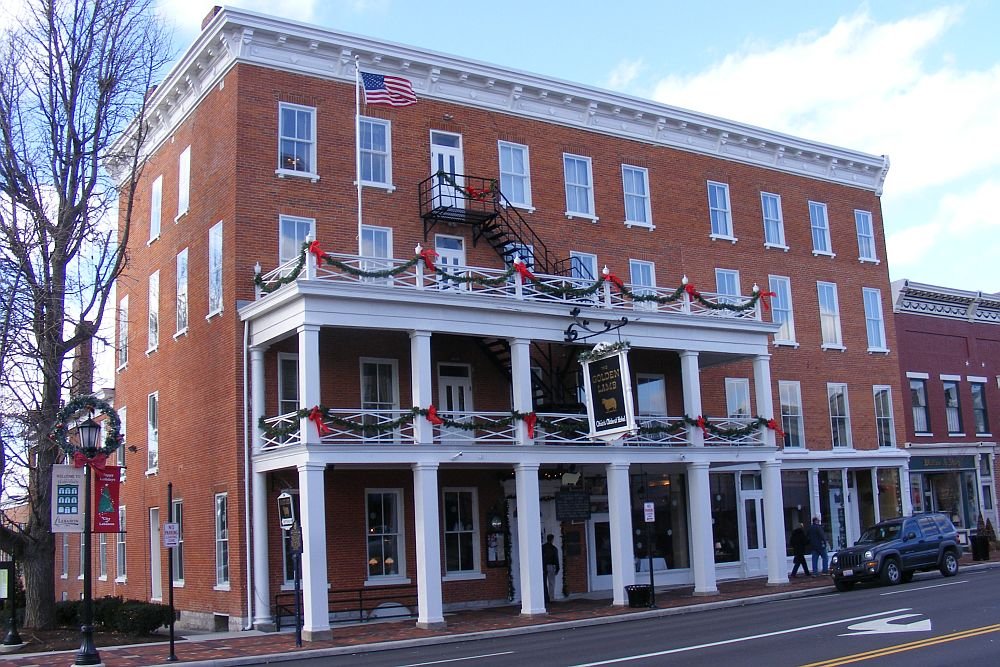
Warren County is where our map turns south — Springboro’s historic district and growth streets sitting minutes off our Montgomery routes, Lebanon holding the county seat around Ohio’s oldest inn, and the county running from there down the I-75 corridor and the Little Miami valley through some of the fastest-growing communities in the state. We have served the county’s northern tier since early on — Springboro and Lebanon carry longstanding pages — and this hub marks the full build-out: every Warren community named, paged, and routed, from the Montgomery seam to the county’s southern reach. The index below is the county in one screen; the depth is one click down, community by community.
Every Warren County community we cover
- Springboro — the northern gateway: historic district + growth streets
- Lebanon — the county seat, the Golden Lamb’s town, antique-district old stock
- Franklin — the Great Miami river town on the I-75 spine
- Carlisle — the Montgomery-seam village sharing Franklin’s valley
- Waynesville — the antiques capital on the Little Miami
- Corwin — Waynesville’s river-twin village at the trail
- Harveysburg — the Caesar Creek hilltop village
- Mason — the county’s big southern city
- Morrow — the Little Miami trail town
- South Lebanon — the valley village turned growth corridor
- Maineville — the southern growth belt’s village core
- Plus every township address between — Clearcreek, Turtlecreek, Wayne, Massie, Salem, Union, Hamilton, Deerfield and the rest — routed under the nearest community at identical pricing
The county’s pest geography: growth corridor, heritage towns, and the valley
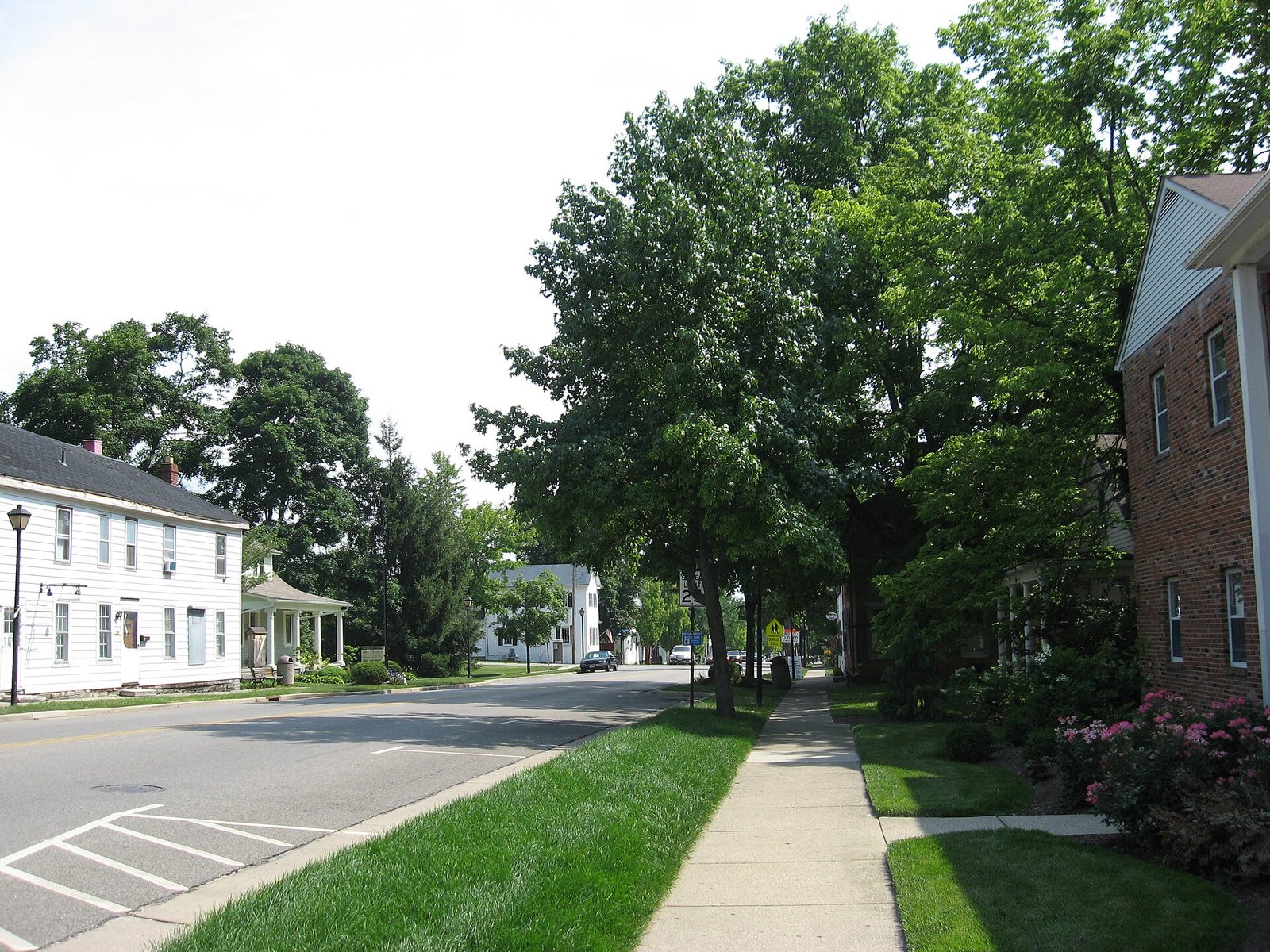
The I-75 growth corridor — Springboro through Franklin toward Mason — is new-construction country at Ohio-leading pace: the unsealed line-sets, grade-hugging deck ledgers, sod-and-irrigation mole economies, and field-displacement rodent pressure that our new-build homework section exists for, phase after phase after phase. The heritage towns — Lebanon’s antique district, Waynesville’s shop streets, the historic cores of Franklin and Springboro — run the old-stock craftsmanship file: stone cellars under Federal-era storefronts, balloon-framed Victorians, and the preservation-grade exclusion this site’s historic pages teach. The Little Miami valley — Waynesville and Corwin down through Morrow, South Lebanon, and Maineville — adds the river-corridor economy (long mosquito seasons, woodland push, trail-edge ticks) with Caesar Creek’s lake-and-forest country pressing in from the east. And the rural seams run Preble-style campus properties along every township road between. Four bands, familiar playbooks — the county is new territory only on the map; its pest patterns are ones this site has already written the manual for.
Southern-reach logistics, stated honestly
Warren runs deeper south than any county on our map — Springboro sits twenty minutes from our Salem Ave office while Mason and Maineville run forty-plus — and the route system flexes accordingly, exactly as the Preble hub promised for the west: the northern tier (Springboro, Franklin, Carlisle, Lebanon, Waynesville) rides near-daily density off the Montgomery trunk; the southern tier (Mason, Morrow, South Lebanon, Maineville, Harveysburg) anchors scheduled southern loop days, typically multiple per week in season; urgent situations jump the queue county-wide per the priority-response rules; and no quote anywhere in the county carries a mileage line. The photo-first habit pays its usual southern dividend — a clear picture books the right truck with the right equipment the first time — and neighbors coordinating a street or a cul-de-sac onto one loop day get the routing gratitude the whole site describes. Calendar, kept: the promise that built the west county’s trust travels south intact.
A Warren County year
- March–May: ants wake from the antique districts to the newest phases; termite swarms demand same-day photos in the heritage cores; moles surge across the corridor’s irrigated sod; the valley opens its mosquito season
- June–August: wasps scale on deck structures and historic eaves alike; Caesar Creek and trail country run peak tick and mosquito margins; cicada killers patrol the sandy new lawns; festival-season crowds pulse the heritage towns’ commercial pressure
- September–October: the county double everywhere — field-displacement and woodland pushes meeting invader flights on every sunny wall; the September visit anchors all four bands
- November–February: interior mouse season; heritage-core exclusion projects; pre-spring WDI queue for one of Ohio’s busiest real-estate counties
Warren questions we hear
You’re a Dayton company — why go this far south?
Because the north county asked first and the map followed the referrals: Springboro customers recommended Franklin cousins, Lebanon landlords held Mason rentals, and the routes grew the way honest service maps do — one referred street at a time. The build-out this hub announces just makes the paperwork match the trucks. Cincinnati-side companies serve the county’s south too; our lane is the households and businesses who want Dayton-side scheduling, this site’s published local literacy, and pricing without metro-franchise overhead — a lane the referral pattern says is wide.
Growth-county homework: the fastest-growing file on the map
Warren has led Ohio’s growth tables for decades, and growth writes pest patterns faster than any other force we track. Every new phase repeats the sequence: former crop or pasture ground broken (its rodent population displaced into whatever stands nearby — including last year’s phase), fresh construction with its signature gaps (line-sets, ledgers, garage corners cut to schedule), warranty landscaping installing the mulch-against-foundation and irrigation-mole economies on day one, and a two-to-five-year settling period where seals age, grades shift, and the “new house, why do we have mice” calls begin. The county-wide homework mirrors the Greene growth-belt prescription at larger scale: first-year baselines while the punch-list energy lives, steel at the penetrations before the first October, grading-and-mulch discipline as the landscaping matures, and for the subdivisions still surrounded by working ground, the September barrier as standing policy. Builders’ warranties do not cover biology; a forty-dollar tube of anything does not fix a colony; and the cheapest decade any Warren new-build will ever have starts with one inspection in year one. We run these baselines across the corridor weekly — they are quick, they are inexpensive, and they are the difference between the quiet houses and their neighbors.
Heritage-town commercial: shops, inns, and festival seasons
The county’s heritage economy — Lebanon’s antique district anchored by the Golden Lamb, Waynesville’s shop streets that crown themselves the antiques capital, the festival calendars that flood both towns seasonally — runs commercial pest pressure with old-building character: Federal and Victorian storefronts on stone cellars, shared walls running whole blocks, merchandise (upholstery, textiles, paper, wood) that is itself pest-attractive inventory, and dining rooms operating inside history. The programs mirror our downtown and village-storefront doctrine: treat-the-block coordination where walls are shared, documentation-grade service for the food rooms, preservation-conscious methods in the historic fabric, and festival-season scheduling that anticipates the crowd-and-crumb surges rather than reacting to them. Antique dealers add one specialty conversation — carpet beetle and wood-borer vigilance for inbound inventory — that we are unusually equipped to have. The towns that keep Ohio’s history deserve pest work that respects it; ours does, floorboard by original floorboard.
Caesar Creek and the valley: the county’s wild east
Caesar Creek Lake and its state park wrap thousands of wooded, watered acres into the county’s eastern flank, the Little Miami’s scenic corridor threads south from Waynesville with its trail towns strung like beads, and together they run the county’s standing wild-edge economy: woodland deer mice pushing at every structure within range each fall, carpenter ant parent colonies working the mature timber toward every roofline within trunk-trail ambition, tick margins wherever trails and yards trade edges, and the long valley mosquito seasons every river page on this site describes. Harveysburg’s hilltop, Corwin’s trailside lanes, Morrow’s river blocks, and every campground-adjacent property inherit the full edge-lot defense: sealed structures, September barriers, wood lines respected and managed, and the particular festival-season note that the Renaissance Festival’s autumn crowds bring Harveysburg a seasonal commercial pulse all its own. The county’s east is its most beautiful band and its most pressured — the usual trade, answered by the usual doctrine, detailed town by town in the pages above.
The bottom line for the southern county
Warren County gets the complete standard this site keeps: growth-corridor literacy for Ohio’s fastest-building streets, preservation-grade craftsmanship for its heritage cores, valley-and-lake edge defense for the wild east, campus doctrine for the township lanes — delivered on a two-tier route system honest about its geography, documented everywhere, guaranteed per the two ways to hire us, and priced without mileage lines from the Springboro seam to the county’s southern edge. Eleven communities named and paged, every township covered between, and one number for all of it: (937) 569-3330 — free quotes, free photo identification, Monday–Friday 8–6, Saturdays by appointment. Greater Dayton Pest & Rodent, Ohio licensed — ODA Pesticide Business License #115079: the southern county, finally indexed.
The eight-county map: Montgomery · Greene · Preble · Miami · full service area.
What the southern county adds to the operation
Each county has taught this company something; Warren’s lessons are scale and pace. The growth corridor taught us phase-cycle thinking — that a subdivision is not one pest map but a rolling five-year sequence of them, and that a company tracking phases can tell a buyer what their street will face in year three because it watched the identical street two phases back. The heritage towns taught inventory-literate commercial work — that an antique district’s pest file includes the merchandise, and that dealers talk to each other exactly like farmers and cul-de-sacs do. And the county’s pace taught route discipline at range: the two-tier system this hub describes is Warren’s invention by necessity, now the template every distant corner of the map runs on. Growth counties compound everything — problems, referrals, and lessons alike — and Warren has been compounding ours since the first Springboro street called the second one. The full build-out is the interest paid.
Which Warren communities still lack pages?
After this build-out: functionally none of consequence — the eleven above cover every incorporated community, with the unincorporated crossroads (Oregonia, Pleasant Plain, Butlerville, Fosters, and their kin) covered under nearest-community routing and the township roster named in the coverage list. If your crossroads deserves its own page, the resident-request queue that built this whole site remains open: say so when you call, and the map grows the way it always has.
For the county’s landlords and portfolio owners
Warren’s rental economy spans the whole spread — corridor single-family portfolios bought phase by phase, heritage-town apartments over the shops, valley-village doubles, and the multifamily stock following the growth south — and the property-management doctrine travels intact: turnover inspections as standard practice, documented response timelines that survive deposit disputes, building-wide logic wherever walls are shared, and the per-door program economics our multifamily engine prices honestly (with its famous refusal to risk-pool bed bugs — the carve-out discipline that keeps operators solvent). Corridor investors get one Warren-specific bonus: phase-cycle intelligence, portfolio-applied — we can tell you which of your streets face which year-three patterns because we service their twins two phases over. The county’s growth made its rental market; the same growth makes systematic pest programs the only kind that keep up.
And the honest southern boundary?
Where the county does: coverage runs to the Warren line, with the border blur every county page grants — a Loveland-adjacent or Clermont-seam address within minutes of our southern loops gets the same “county lines are for auditors” treatment as everywhere else, sorted honestly on the phone. Below that, Cincinnati’s market serves Cincinnati; our lane ends where Dayton-side routing stops making customers’ scheduling better instead of worse, and we will always say so plainly rather than collect a customer the map cannot serve well. The line exists; the phone call finding it is free.
A Warren tip worth the whole hub: buy the year-one inspection, whatever you bought
The county-index advice, southern edition: whatever Warren County property you hold — the phase-three new build, the antique-district storefront, the trailside cottage, the township acreage — its highest-value hour is the baseline inspection that reads it once, completely, before its first full season under your name. New builds get their gaps mapped while the builder still answers the phone; heritage buildings get their era-read and moisture file; valley properties get their edge audit; and every one of them gets the written record that turns future “is this new?” questions into comparisons instead of guesses. Ohio’s fastest-growing county changes hands constantly — the baseline is how each handoff starts smart, it costs less than the mistakes it prevents by an order of magnitude, and it is quoted free like everything else on this page: (937) 569-3330. Welcome south, officially.
The valley’s festival calendar and what it means for the towns that host it
One more county signature deserves its page-space: Warren hosts an outsized share of the region’s event economy — the Renaissance Festival’s autumn weekends above Harveysburg, Waynesville’s Sauerkraut Festival flooding the antiques streets each October, Lebanon’s horse-drawn carriage season, the Kings Island summer machine at the southern edge — and event towns run event-pulse pest patterns: concentrated food waste on festival weekends, yellowjacket scavenger surges exactly when the crowds peak, propped doors and vendor storage feeding the post-festival rodent uptick, and the commercial-kitchen crush the host towns’ restaurants absorb. The host-town playbook mirrors our fair-season Eaton doctrine at Warren scale: pre-festival wasp patrols for the venues and vendor rows, tight-lid dumpster discipline through the run, and the post-season inspection that catches what the crowds seeded. It is a happy problem — the festivals are the towns’ lifeblood — and like every happy problem on this site, it responds to calendars over crises. Ours already marks the county’s big weekends.
How fast can the southern tier actually get service?
Working norms, stated plainly: northern-tier requests (Springboro through Lebanon and Waynesville) book next-day to two-day like the home county’s outer ring; southern-loop requests (Mason, Morrow, South Lebanon, Maineville, Harveysburg) book onto the next scheduled loop, typically inside three business days and faster in season; genuine emergencies — stings at doors, transaction deadlines, commercial exposure — jump every queue county-wide, same as the whole map. The photo line remains the great accelerator at range: verified photos let southern jobs arrive diagnosed, equipped, and single-trip. And plan members ride priority routing everywhere, which in the county’s far reaches is the membership’s most tangible perk. Distance is logistics, not neglect — and logistics is the thing this company has always been best at saying out loud.
From the Golden Lamb’s two-century porch to the newest slab poured this morning somewhere along the corridor, Warren County runs the full spread of everything this site knows how to protect — and as of this build-out, every community in it can read exactly how by name. The oldest inn in Ohio has watched a lot of service companies come and go; we intend to be the kind that stays, one kept calendar at a time.
— Greater Dayton Pest & Rodent, 733 Salem Ave, Dayton. Free quotes and photo identification every business day, county-wide.
The far end of the map. Warren anchors the southern end of our territory and Clark County the northeastern — Springfield to Lebanon is a long way across. What connects them is the doctrine rather than the geography: old housing stock on the one hand and production farm ground on the other, treated by the same licensed company out of one office in Dayton.
The county to the west. Warren shares its western border with Butler County — Middletown actually straddles the line — and the I-75 corridor runs the same distribution and dock-door work through both. Northwest, at the far edge of the territory, Darke County runs the rural residential file at its most demanding — houses where the pressure from the surrounding ground never lets up.
Frequently asked questions
Do you cover all of Warren County?
The northern and central county thoroughly — Springboro, Franklin, Lebanon, Mason, Carlisle, Waynesville, and the townships between; the far southern edges get route-day scheduling. Every listed community has its own page.
What pests dominate Warren County?
Growth-country patterns: new-plat landscaping ants (the construction boom ships colonies daily), big-lot ground wasps found by mowers, first-frost garage mice in the young subdivisions, and the historic cores’ (Lebanon, Franklin, Waynesville) old-stock files alongside.
How does Warren County pricing work?
Published formula, no geography premium: most Warren homes run $39–$55/month quarterly (the county’s larger new footprints read honestly in the math); one-time flat; free quotes: (937) 569-3330.
Which Warren County communities have pages?
Ten-plus: Springboro, Franklin, Lebanon, Mason, Carlisle, Waynesville, Harveysburg, Corwin, Morrow, Maineville, and South Lebanon — each profiled to its housing stock and edges.
Why do Warren County’s new builds get pests so fast?
The boom itself — disturbed ground displaces field populations toward the newest structures, landscaping imports colonies wholesale, and construction gaps host the first scouts before the punch list closes. The first-year package (perimeter, seal, sentries) is the county special.
How fast is Warren County scheduling?
Near-daily routes through the northern tier — days typically, priority faster, no travel charges.
Do you serve Warren County businesses?
Yes — the 741 and 63 corridors’ retail and restaurants, Mason-area offices, and the logistics boxes rising along the interstates, each on matched programs with documentation.
What is the mower-and-ground-nest situation here?
The county’s signature August event — big new lawns meeting September colony peaks; flag-and-dust priority protocol, and the fall burrow-filling that converts this year’s incident into next year’s non-event.
Do the historic river towns get different treatment?
Franklin’s and Waynesville’s old blocks run the preservation protocols (masonry-safe, reversible, cavity-experienced) — the county holds both of our disciplines within ten minutes of each other.
How do I start service in Warren County?
Instant quote from any address, free photo ID, or (937) 569-3330 — free estimates, honest triage, first visits typically within days.