
Fletcher holds the county’s northeast corner — a village of about 500 on the US 36 corridor through Brown Township, grain to every horizon, Main Street’s frame houses and church spires marking the crossroads, and its neighbor hamlet Lena two miles west sharing the schools, the township hall and the claim to fame: this corner of Miami County raised A. B. Graham, the schoolteacher who founded what became 4-H, and the youth-agriculture ethic he started still runs the township’s fair entries every July. Greater Dayton Pest & Rodent serves Fletcher, Lena and all of Brown Township with the complete roster — ants, mice and rats, wasps, termites, mosquitoes, spiders, roaches and bed bugs — on the northeast loops running out of Piqua’s corridor. (937) 569-3330, or book online.
We take the word exterminator as a compliment in Fletcher — it means somebody wants the problem gone rather than managed. That is the job.
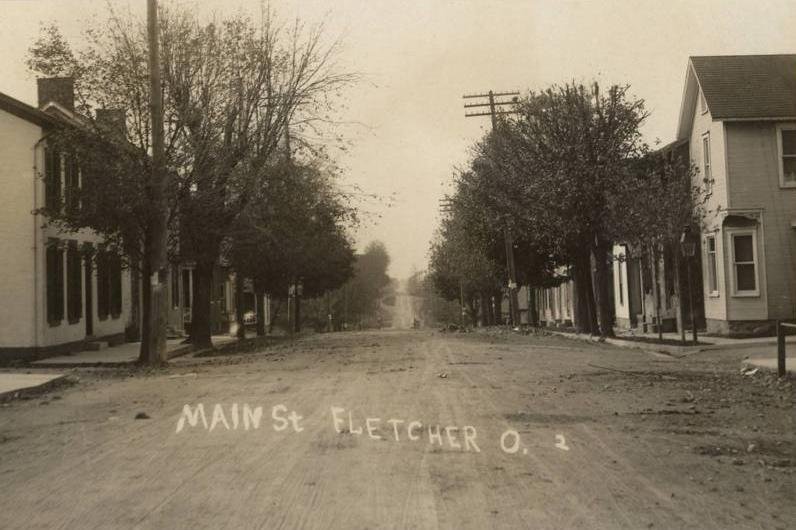
The northeast corner: hamlet doctrine at the county line
Fletcher runs the smallest-village doctrine in its purest form: a compact grid of frame houses holding a line against an entire township of field ecology, with the year’s pressure concentrated into the two campaigns every grain hamlet knows. The autumn campaign rules — when Brown Township’s sections come off, the fields’ rodent population files toward the nearest heated foundations, and in a village of a hundred-odd houses every address is front-line; the September exclusion pass is the year’s decisive appointment, worth more per square foot here than in any city on our roster. The summer campaign is the porches and outbuildings: wasp queens prospect every eave and shed each May, and one spring patrol removes the season’s nests at starter size. The frame-built stock adds its own line: wood houses on the northeast plain carry the county’s most weather-worked siding seams, and weather-worked seams are mouse doors — the twelve-doors inspection reads them fast, and reversible sealing closes them for keeps.
4-H country: the Graham inheritance
A. B. Graham’s idea — that farm kids learning by doing would out-farm their parents — started in this township’s school rooms and became the largest youth organization in America, and Brown Township still runs on it: project animals in the outbuildings, fair-entry gardens behind the houses, the July pilgrimage to the county fair in Troy with livestock trailers on 36 at dawn. For a pest company this is a working file, not nostalgia. Project livestock means feed in residential outbuildings — rabbit pellets, chicken scratch, the show pig’s ration — and feed is the anchor of every rodent map; the 4-H family’s coop-and-hutch cluster runs mini-campus rules (the feed can is the feed room; harden it first). Fair season means animals traveling and returning — and returning animals occasionally bring passengers, so post-fair checks of bedding and hutches join the July calendar. And the ethic itself — learn the system, keep the records, do the unglamorous work on schedule — is precisely the temperament our September-anchored, documentation-backed program asks of a household. Graham’s township takes to it naturally; his idea was always the county’s best pest doctrine in disguise.
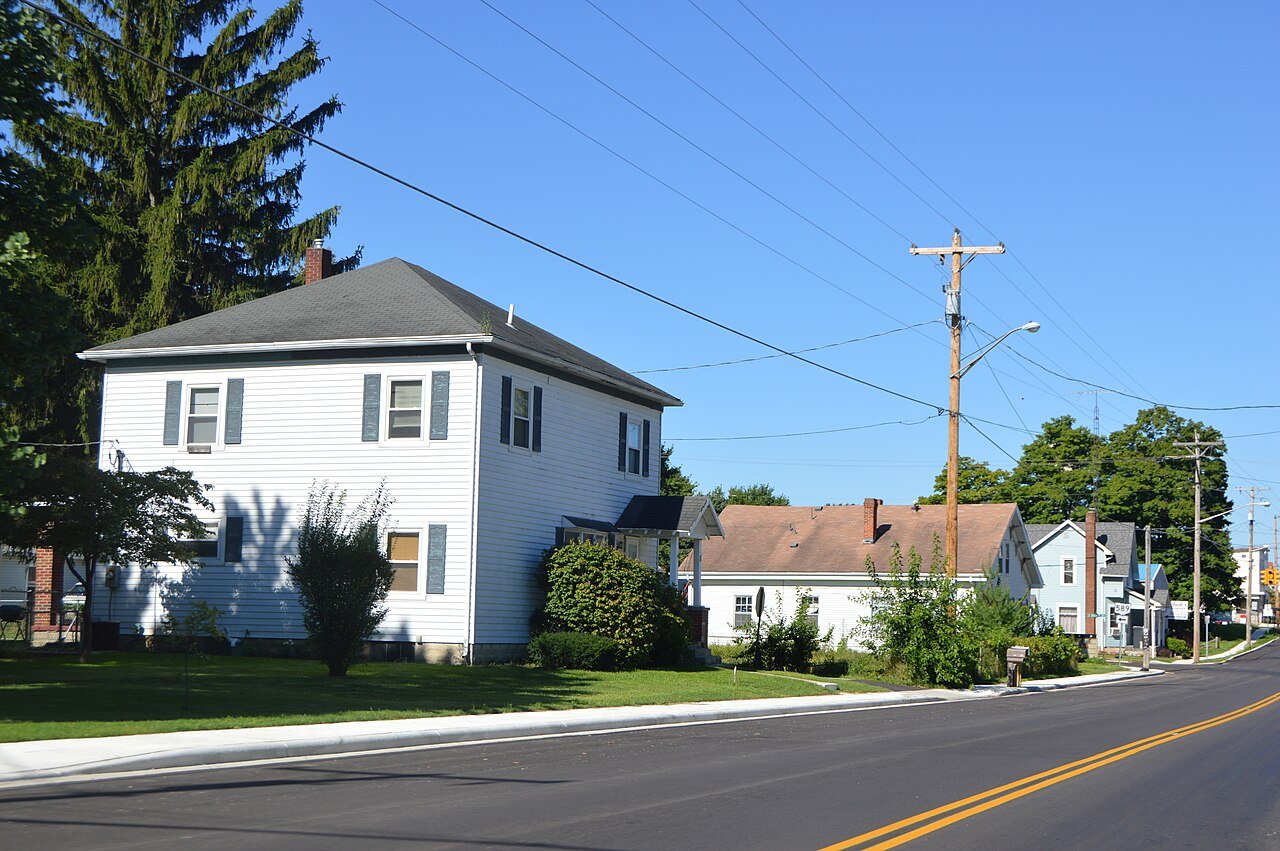
The US 36 corridor and the two-hamlet township
US 36 threads Fletcher and Lena onto one east–west line between Piqua’s interchange and the Champaign County grain, and the corridor is the township’s pest logistics in both directions. For service, it’s the route spine: the northeast loops run 36 on schedule, which is why a village of 500 gets next-day norms and published prices without a city address. For pressure, it’s the classic highway ecology at rural scale — mowed berms and brushy fence lines moving rodents along the corridor, the truck-traffic litter gradient feeding the scavenger insects, and the farmsteads fronting the highway running slightly warmer baseline pressure than the section-road places a mile off it. Corridor-fronting households get that fact named in the inspection and answered in the plan (perimeter defense weighted to the road side); everyone else gets the quieter section-road profile and the honest word that it’s quieter. Two hamlets, one spine, one loop day — the geography wrote the routing again, and the routing is why the corner never waits.
Brown Township’s campuses: the doctrine at full grain
The township is campus country end to end — century farmsteads, serious grain operations, the five-acre pole-barn class filling in along the section roads — and the farm-campus doctrine runs exactly as written across all of it: house, barn, machine shed, feed room and grain storage quoted as one system, feed room hardened first, barn populations managed with bait geometry the cats endorse, farmhouse sealed the same visit, the whole campus re-read after harvest when the pressure re-sorts. Equipment sheds get spring queen patrols before overwintered wasps found June’s nests; livestock operations get the sanitation-first fly arithmetic (manure schedule beats spray schedule, every August); grain storage gets perimeter grids and buyer-ready documentation; and the 4-H mini-campuses get the scaled rules with a straight face, because the show pig’s feed can anchors a real rodent map. No mileage lines anywhere in the township — the loops already run these roads, and the published pricing holds to the county line.
The Fletcher pest calendar
February–March: winter mice audible in frame walls; prime exclusion weather while runs show. April–May: swarm watch in the oldest stock; ant files wake at slab seams; queen patrols clear porches and sheds. June: ditch-country mosquito season opens; barriers go down where the drainage holds water; project animals settle into summer quarters. July: fair month — trailers out, ribbons home, post-fair hutch checks; peak wasp building. August: high summer’s steady defense; the corridor’s scavenger gradient at maximum. September: the anchor — perimeter at yellowjacket peak, exclusion ahead of the harvest migration; the corner’s whole winter decided in one visit. October–November: seal-and-check, post-harvest campus audits, attic decisions. December–January: interior follow-ups and next year’s plan, priced in the quiet.
Why the corner calls us
- The corner is on the map: no density minimums, no fine print — Fletcher and Lena ride the northeast loops at the same standard and prices as the county’s cities.
- Hamlet fluency: two-campaign years, frame-seam exclusion, harvest-timed September work — the doctrine written for exactly this scale.
- Campus quoting: house-plus-barn-plus-feed-room as one plan, 4-H mini-campuses included, cats respected as colleagues.
- Two honest tiers: one-time jobs at posted prices; the Protection Plan’s re-treatment guarantee when the year should be owned.
- Photo-first triage: text the evidence to (937) 569-3330 — free identification before any truck rolls, honey bees to beekeepers free, always.
Fletcher questions, answered straight
The show animals’ feed keeps drawing mice no matter how clean we keep the barn. What’s the fix?
Container physics, then architecture. Feed in bags is feed on offer — galvanized cans with tight lids end the buffet, spilled scratch swept same-day ends the appetizer, and then the hutch-and-coop cluster’s own twelve doors get sealed so the population that showed up for dinner doesn’t stay for winter. That’s the mini-campus protocol, it takes one visit plus habits, and 4-H families run it better than anyone once it’s on the record sheet.
We’re technically over the Champaign line east of the village. Still covered?
Covered — the loop turns around past the county line, not at it, exactly as in Bradford where the town itself straddles two counties. Service maps that end at an auditor’s line orphan real farms; ours follows the roads the trucks actually drive. Same prices, same response classes, same September.
Does the highway really change our pest pressure?
Measurably but modestly: corridor-fronting places run a warmer rodent baseline (the fence-line highway effect) and a touch more scavenger-insect traffic than the section roads. The plan answers it with road-side perimeter weighting and honest framing — it’s a gradient, not a plague, and a properly sealed foundation retires most of the difference. The inspection names which profile your address runs; the quote follows the profile.
Termites in the frame-built corner
Frame villages run the termite file differently than stone crossroads: more wood, more ground contact, more places where a century of porch repairs and skirt boards met soil and stayed there. The northeast plain’s dry uplands keep baseline pressure moderate — subterranean colonies follow moisture, and the drained grid sheds it — but the local multipliers are everywhere: downspouts dumping at foundations, mulch riding up frame siding, additions and mobile-home skirts in quiet contact, the ditch lines holding damp through the growing season. Our inspection logic reads contact and moisture first; protection is monitoring-led bait architecture suited to frame stock; Bryan’s 10A/10B licenses stand behind treatment, and Category 12 behind the WDI inspections that farm transfers and village sales order. The frame corner’s rule of thumb: if wood you can’t see meets soil you can’t see, someone should look annually — and the looking is the cheap line on any ledger the township keeps.
Do it yourself, or call?
The corner’s split, honestly drawn. Reasonable DIY: the reachable paper-wasp umbrella, a rain-week ant file, one mouse in a tight garage, the fall spider sweep — guides on the house. The call list: anything inside a wall or soffit void, any termite evidence where frame meets soil, campus-scale rodent pressure, bed bugs anywhere (fair-season travel included), bats always, October lawn nests, and any problem outlasting its third store-bought fix — recurrence means a condition, conditions need diagnosis, and the photo line diagnoses free. In Graham’s township the principle should sound familiar: learn by doing what you can do, call the specialist for what you can’t, and keep the records either way.
The mosquito file: ditch country, northeast edition
The corner’s mosquito pressure runs on the township drainage — ditches, culverts, tile outlets, the low corners that hold a storm’s water for the ten days a brood needs — and the honest program is the grain-belt standard: barrier treatments on your own vegetation, larval-source discipline on your own acre (troughs, gutters, the tire behind the shed, the tarp pond), and measured expectations about the network nobody treats. Livestock places add the fly file with its sanitation-first arithmetic; project-animal families get the small-scale version (hutch hygiene moves more flies than any aerosol); and August’s verdict is the same one the whole valley’s program answers to — porch evenings back, chore hours bearable, the yard yours again. Unglamorous, honest, and the file the late summer thanks us for most.
Landlords and the corner’s scattered doors
Rental doors in the northeast corner are scattered and specific — village frame houses, farmhouse leases whose tenants don’t run the barns, the odd double — and scattered doors get the full landlord program from door one: per-door pricing, direct-tenant scheduling, per-unit documentation for deposit season, and the farmhouse-lease clause covering campus pressure the lease can’t reach. The grain-country ledger closes every owner conversation: one September exclusion pass per unit beats one February emergency call, every year, at every address the loops pass.
What Graham’s corner teaches the whole roster
It’s fitting that the county’s smallest-village pages keep circling back to a schoolteacher from this township, because A. B. Graham’s founding insight — systems are learnable, records beat guesswork, and the young farmer who understands the why outperforms the one who only knows the how — is the closest thing our trade has to a founding philosophy. Everything the eight counties’ pages call doctrine is Graham’s method applied to pests: learn the system (the era-read, the corridor map, the campus census), keep the records (monitoring logs, per-unit documentation, the September checklist), do the unglamorous work on schedule (exclusion before migration, patrols before festivals, inspection before evidence). The corn clubs became 4-H because the method worked on anything; it works on mice. And a township that has taught learn-by-doing for a hundred and twenty years is the easiest place in Ohio to explain why the September visit matters — the fair families already keep better records than we do. The corner’s inheritance is the county’s best customer.
From Main Street’s frame porches to the last section road before the Champaign line, the northeast corner is read, quoted and covered — two hamlets, one spine, every campus between. Piqua, Casstown and the whole county roster ride the same standard; the eight-county map holds the valley. Text a photo to (937) 569-3330, take the free identification and the straight quote, and let Graham’s method finish what it started: the system learned, the records kept, the winters quiet.
The frame village’s winter: what the two campaigns buy
It’s worth cashing the doctrine out in a Fletcher-sized example, because the numbers are the argument. A frame house on the village grid, unsealed, hosts the harvest migration annually: droppings in the pantry by Thanksgiving, wall scratching by January, the spring discovery of a nest in the insulation, and the year’s running cost in traps, contaminated goods and one panicked service call — call it hundreds, plus the February misery. The same house after one September campaign: twelve doors found and sealed reversibly, perimeter laid at yellowjacket peak, monitoring set — and the winter goes silent, this year and every year the seal holds, with the workmanship guarantee standing behind the holding. The delta is the product: prevention in a hamlet isn’t a subscription upsell, it’s the cheaper of the two ways the year can go, and the frame corner’s households have watched both versions from their own porches. The 4-H record book would score it the same way we do — and in this township, that’s the highest audit there is.
The corner holds: two hamlets on one spine, the fair trailers rolling every July, the combines every fall, and the loop threading it all on schedule. Fletcher, Lena, Brown Township — the northeast file is open, the September calendar has room, and the frame porches are about to get their quietest winter on record. One photo starts it: (937) 569-3330.
Neighbors on the loop: how the corner connects
The northeast loop stitches the corner to the county’s whole system: west on 36 into Piqua’s corridor density (and its same-day capability, which the corner borrows on loop days), south past Casstown’s stone crossroads toward the Miami East campus, and onward to the Troy spine that anchors everything. That connectivity is the quiet answer to the question every small place asks a service company — will you actually come? — because the coming is already scheduled; Fletcher isn’t a special trip, it’s a standing stop between standing stops. The whole eight-county architecture works this way by design: hubs feed corridors, corridors feed loops, loops reach every crossroads, and the smallest address on the map rides the same logistics as the county seat. The service-area map draws it; the trucks prove it weekly; and the corner’s houses get city scheduling with township horizons — the best trade in the valley, and it’s not close.
A hundred and twenty years ago this township taught the country that good systems, kept records and scheduled work could transform a farm; the same recipe transforms a pest year, and the corner already knows it by heart. Fletcher’s file is open, the loop runs on time, and the frame village’s winters are about to earn a blue ribbon of their own.
Who actually turns up in Fletcher: Greater Dayton Pest & Rodent is owned and operated by Bryan Camden, licensed by the Ohio Department of Agriculture — firm #115079, commercial applicator #170858, categories 10A, 10B and 12. When you call, you talk to the person who does the work. No call center, no rotating crews, and the same technician on every visit.
Frequently asked questions
Do you provide pest control in Fletcher?
Yes — the northeastern Miami County village rides the rotation; every lane gets the full program.
What pests are most common in Fletcher?
Deep farm-belt files: the county’s strongest harvest rodent surges, farmstead wasps and fencerow globes, stored-product pests, stink bug certainty, and deer mice as the default outbuilding tenant.
How much is pest control in Fletcher?
County formula, distance irrelevant: most homes $39–$55/month quarterly; campuses walked; free: (937) 569-3330.
How strong is the fall surge this deep in the belt?
The county’s strongest — maximum acreage, minimum buffer; September sealing plus sentries is the entire question-and-answer, and the route calendar treats Fletcher accordingly.
Do you treat Fletcher’s farm properties?
Campus model throughout — the village’s surrounding operations are the route’s core work: systems quotes, harvest scheduling, grain-adjacent protocols.
How fast can you reach Fletcher?
Weekly rotation — days typically, priority arranged, no travel charges to the county’s corners.
What about the fencerow hornet globes?
Preble-grade specimens grow here too — the honest triage stands: remote globes get free frost verdicts; lane-and-lot traffic gets the protocol.
Do stored-grain pests need professional help here?
When the purge-and-seal protocols meet hidden bulk sources — wall caches, forgotten bins — the source-hunt is genuinely our craft, and grain country supplies the cases.
Is the deer-mouse protocol standard in Fletcher?
Default — every shed and barn assumes the two-tone tenant: ventilate-then-enter, gloved handling, outbuilding-first inspections.
How do I start service in Fletcher?
Instant quote, free photo ID, or (937) 569-3330 — free estimates, route days weekly.