
Casstown is Miami County at its most essential — a few hundred people at the crossroads east of Troy where routes 55 and 589 meet, a stone Lutheran church that has anchored the corner since the German settlement generations, Lost Creek threading its wooded bottoms through the township that shares its name, and Miami East’s consolidated campus schooling the whole eastern grain plain a couple of miles south. Hamlets this size get skipped by every franchise service map in Ohio; they are precisely why ours works differently. Greater Dayton Pest & Rodent serves Casstown and all of Lost Creek Township with the full roster — ants, mice and rats, wasps, termites, mosquitoes, spiders, roaches and bed bugs — on the eastern loops that run out of Troy’s corridor, minutes away. (937) 569-3330, or book online.
People in Casstown still ask for an exterminator, and there is nothing wrong with the word — it just undersells the part that matters, which is keeping them out afterwards.
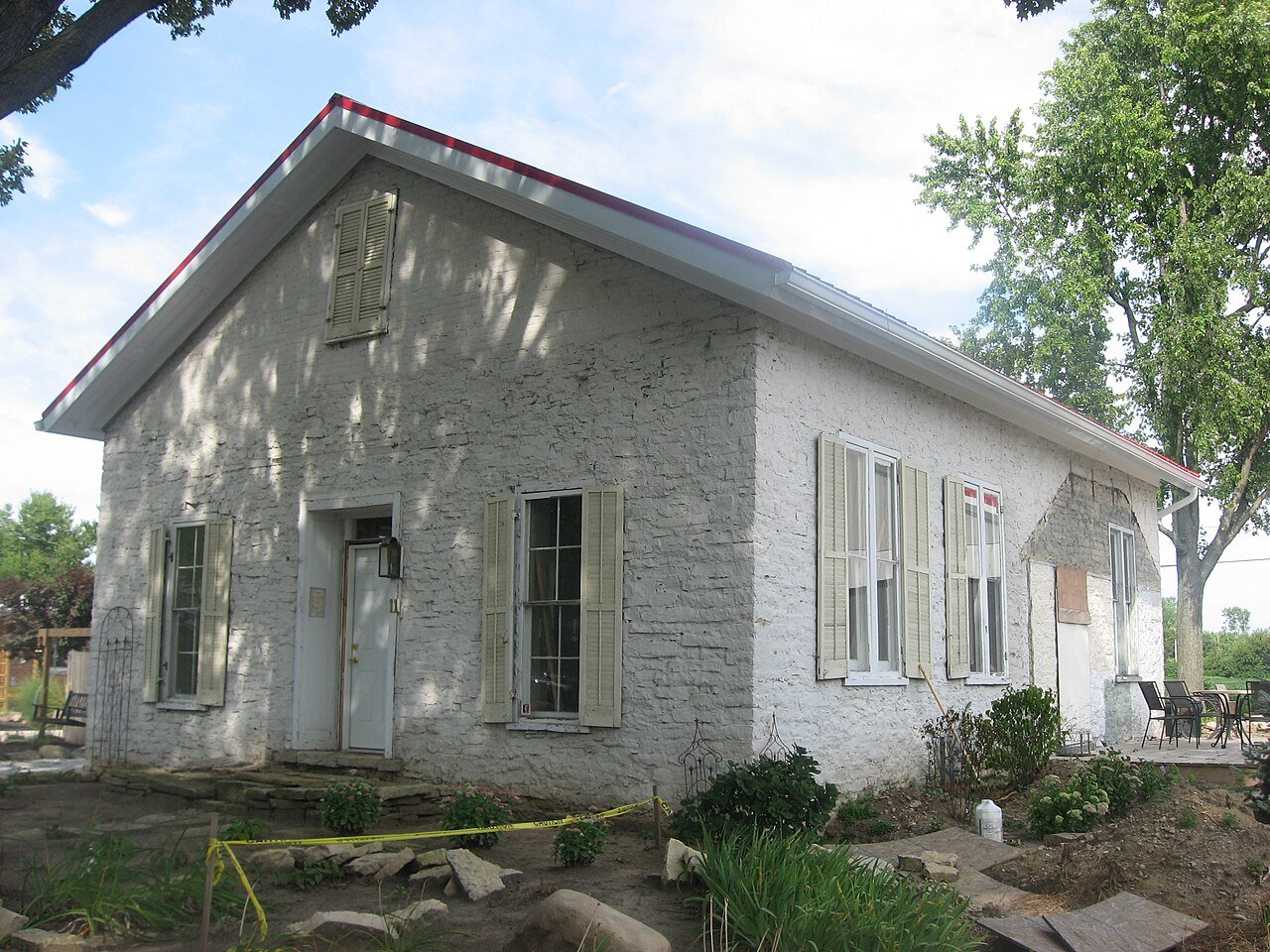
The crossroads hamlet: smallest-village doctrine
Our Preble County pages worked out the doctrine for Ohio’s smallest incorporated places, and Casstown runs it cleanly: a hamlet is a handful of foundations holding a line against an entire township’s worth of field ecology, which concentrates the year’s pressure into two predictable campaigns. The autumn campaign is the big one — when Lost Creek Township’s harvest comes off, the fields’ rodent population re-files toward the nearest warmth, and in a village this size every house is a front-line address; the September exclusion pass is therefore worth more per square foot here than anywhere in the county’s cities. The summer campaign is the eaves: hamlet houses carry generous porches and outbuildings, wasp queens prospect every one each May, and a single spring patrol removes the season’s nests at golf-ball size. Two campaigns, faithfully run, and a Casstown house stays quieter than a city condo — that’s the hamlet bargain, and we deliver our half on a schedule.
Stone church country: the German settlement stock
The Lutheran stone church is the tell: this corner of the county was settled by German farming families who built the way they farmed — heavy, square and for keeps — and the hamlet’s oldest houses carry that inheritance in fieldstone foundations and hand-hewn sills now deep into their second century. Stone-built stock ages differently than balloon-framed boom towns: fewer casual gaps, but the gaps it has are structural and permanent until someone closes them properly — mortar joints weathered to soil level, cellar entries cut generously for root-crop storage, sill seams where stone meets later frame additions. The twelve-doors inspection reads this stock quickly, reversible exclusion (copper mesh, color-true sealants, nothing that scars fieldstone) closes it for good, and the workmanship guarantee makes the closure permanent on paper as well as in mortar. Heritage-grade care isn’t a city luxury — the county’s best stone deserves it most, and it lives at this crossroads.
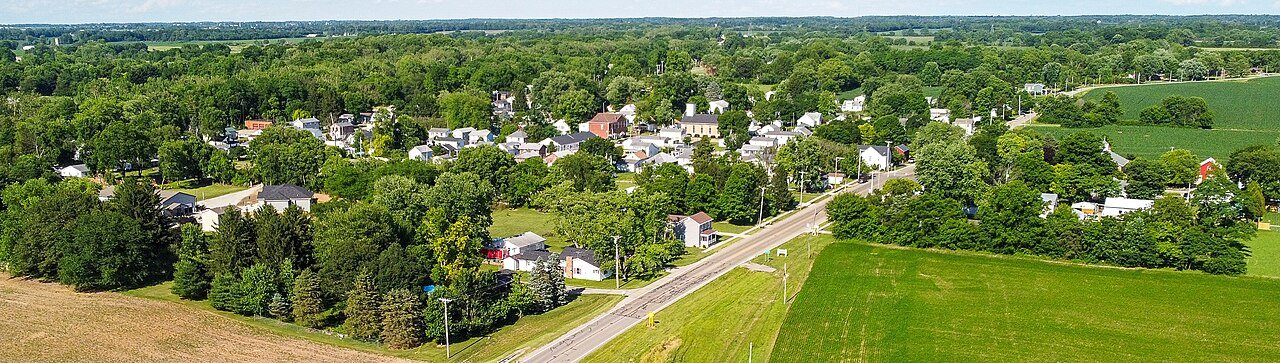
Lost Creek: the corridor through the grain
Lost Creek gives the township its name and its pest corridor — a wooded stream line wandering the eastern plain, collecting drainage, wildlife and insect ecology into the one moving strip the grain doesn’t flatten. The corridor doctrine applies at township scale: lanes and farmsteads along the creek bottoms run damper basements, steadier mosquito pressure, more wildlife traffic (raccoon, mink, the deer everybody counts) and the soil moisture that keeps termite interest alive in the old stone stock, while the upland grid two fields over runs the dry-plain board. Creek-adjacent households get the corridor protocol — annual exclusion checks, corridor-side perimeter defense, drainage honesty — and everyone gets the plain physics: the creek keeps flowing, the defense goes on your side, and the porch evenings come back by July.
Miami East country: the consolidated-campus township
Miami East Local gathers the county’s whole eastern plain onto one campus south of the crossroads — the Vikings’ fields, the bus fleet, the consolidated everything — and it structures township life the way the elevator structures Bradford’s: one place, everyone’s place, held to the highest standard in the district. Institutional service there runs the school protocol our county pages describe — monitoring-led IPM, occupancy-aware scheduling, inspection-ready documentation, concession-season honesty at the athletic complex — and the campus’s rural setting adds the grain-belt lines: field-edge rodent grids sized to the surrounding sections, and wasp vigilance wherever bleachers meet August. For the township’s families the campus is also the pest calendar’s social clock: harvest-season Fridays fill the fields exactly as the migration files toward foundations, which makes the September anchor visit the appointment that lets a household watch the Vikings in peace knowing the twelve doors are already shut.
The farm campuses: doctrine’s home ground
Lost Creek Township is campus country wall to wall — century farmsteads, serious grain operations, the growing five-acres-and-a-pole-barn class — and the farm-campus doctrine runs here exactly as written: house, barn, machine shed, feed room and grain storage quoted as one system; feed room hardened first; barn populations managed with cat-respecting bait geometry; the farmhouse sealed the same visit; the whole system re-read after harvest. Equipment sheds get spring queen patrols before overwintered wasps found June’s nests; livestock places get sanitation-first fly honesty; grain storage gets the perimeter grids and the documentation buyers increasingly ask about; and the mini-campus class gets the scaled rules — the coop is the feed room, always. No mileage lines: the eastern loops run 55 and 589 on schedule, and the published pricing holds to the last lane in the township.
The Casstown pest calendar
February–March: winter mice audible in stone-stock walls; the year’s best exclusion weather while active runs show themselves. April–May: swarm watch along the creek stock; ant files wake at the slab seams; wasp queens prospect every porch and shed on the crossroads; spring queen patrols clear the outbuildings. June: mosquito season opens in the Lost Creek bottoms; corridor households get barriers first; the uplands mostly coast. July–August: peak summer — colonies at strength, field ecology at full song, the county fair pulling the township to Troy mid-July. September: the anchor — perimeter defense at yellowjacket peak and the harvest-migration exclusion that decides the hamlet’s whole winter; the single highest-value visit of the Casstown year. October–November: seal-and-check, attic decisions, post-harvest campus audits across the township. December–January: interior follow-ups and next season’s plan, priced in the quiet.
Why the crossroads calls us
- Hamlets are on the map: no minimum-density fine print — Casstown rides the eastern loops at full standard and published prices, like every address in the county.
- Stone-stock literacy: fieldstone foundations get heritage-grade reversible exclusion, not foam theater.
- Campus fluency: house-plus-barn quoting, harvest-timed re-reads, cats respected.
- Two honest tiers: one-time jobs at posted prices; the Protection Plan’s re-treatment guarantee when the year should be owned.
- Photo-first triage: text the evidence to (937) 569-3330 — free identification before any truck rolls, honey bees to beekeepers free, always.
Casstown questions, answered straight
Are we honestly worth a service call, twelve houses from the light?
Honestly, yes — because the loop already passes the light. Route economics are the whole answer: the eastern loops run 55 through the crossroads on their way to a dozen township accounts, so your address adds minutes, not miles. That’s why the prices don’t change and why next-day norms hold in a hamlet. The franchise maps skip you because they route from a call center; ours routes from Troy’s corridor, and you’re on the way.
Our fieldstone cellar gets mice every fall no matter what we plug. Why?
Because fieldstone entries hide in the mortar horizon — the crumbling joint at soil level, the root-cellar vent framed generously in 1880, the seam where stone meets the kitchen addition’s block — and hardware-store plugging treats the visible holes while the structural ones stay open. The twelve-doors pass on stone stock is a different exercise: flashlight-and-mirror work along the whole mortar line, inside and out, then reversible closure that respects the stone. Done once, done right, guaranteed — and the fall clockwork stops.
Do you treat the church and the township buildings?
Institutional accounts are a specialty file: monitoring-led, occupancy-aware, documentation-ready, and — for heritage structures like the stone church — strictly reversible in materials and method. A building that has anchored a crossroads since the German settlement deserves the same care its congregation gives it; our county-wide institutional standard was written for exactly that duty.
What about the WACO fly-in traffic and the summer events out this way?
Troy’s WACO field sits just west of the township, and its September fly-in weekend adds a small, cheerful spike of picnic-and-crowd pressure to the eastern lanes — the festival doctrine’s lightest edition. Event-adjacent households simply take their September anchor a week early; the biplanes and the yellowjackets share the same calendar, and only one of them needs managing.
The county’s smallest roster entry, held to its largest standard
Casstown closes out the eastern plain the way Potsdam and Fletcher close their corners — proof that the eight-county standard doesn’t thin at the edges. Stone church, creek corridor, campus township, twelve houses and every farm lane between: read, quoted and covered. The service-area map shows the whole valley; the eastern loop shows up on schedule. Text a photo to (937) 569-3330, take the free identification and the straight quote, and let the crossroads’ September do its quiet work.
Do it yourself, or call?
The hamlet split, honestly drawn. Reasonable DIY: the reachable paper-wasp umbrella on the porch rail, a rain-week ant file to the sink, one mouse in a tight modern garage, the seasonal spider sweep of a dry upland basement — the guides cover all of it, no invoice required. The call list: anything inside a wall, stone seam or soffit void (sealing an active entrance remains the classic own-goal), any termite evidence near the creek stock, campus-scale rodent pressure (architecture beats teaspoons every time), bed bugs anywhere, bats always — protected species, legal seasons, rabies protocol — and any problem now outlasting its third store-bought remedy, because recurrence means a condition and conditions need diagnosis before chemistry. The photo line runs the diagnosis free, which makes guessing the only thing in the township that doesn’t pay.
Landlords and the township’s scattered doors
Rental doors out here are scattered — a village double, farmhouse leases whose tenants don’t run the surrounding barns, the odd single-family — and scattered doors get the landlord program without the volume requirements: per-door pricing from door one, direct-tenant scheduling, per-unit documentation for deposit season, and the farmhouse-lease clause that covers campus pressure the lease can’t reach. The township ledger holds here as everywhere in grain country: one September exclusion pass per unit beats one February emergency call, every single year.
Termites and the stone stock’s long game
Fieldstone foundations are the county’s most termite-resistant architecture — stone doesn’t feed anybody — but the wood they carry is the county’s oldest, and the interfaces are where the long game plays out: sill plates riding the stone at soil-adjacent height, additions whose modern slabs meet the old wall in seams nobody opens, porch skirts and cellar stairs in ground contact since McKinley. Add Lost Creek’s moisture where the corridor runs close, and the inspection logic writes itself: read the interfaces, read the grade lines, read the damp. Protection is monitoring-first — bait stations watching the soil suit stone stock far better than trench chemistry ever did — with Bryan’s 10A/10B licenses behind treatment when activity shows and Category 12 behind the WDI inspections that farm-property transfers order. German settlement wood has stood a century and a half on good bones and good habits; an annual look and a monitoring line keep both intact for the next one.
That’s the whole crossroads file: two campaigns, one corridor, stone bones, campus country — and a route company that treats twelve houses at a stoplight as exactly what they are, the standard’s truest test. Casstown, the eastern loop runs your road already; one photo puts your address on it, and the stone-church corner keeps its winters as quiet as its Sundays.
The mosquito and fly file: plain answers for the plain
Eastern-plain mosquito pressure runs on drainage, not rivers: the creek bottoms, the township ditches, the tile outlets and low corners that hold a wet week’s water. The honest program mirrors Bradford’s: barrier treatments on your own vegetation, larval-source discipline on your own acre (troughs, gutters, the tarp pond behind the shed), and measured expectations about the ditch network nobody treats. Livestock places add the fly file, and the fly file is sanitation arithmetic before it is chemistry: manure schedules, waterer hygiene and feed-spill discipline move more flies than any spray, so that’s where our counsel starts — with the treatments earning their keep on top of the housekeeping, not instead of it. August porches and milking parlors alike get their evenings back when the program runs in that order; the county’s farm generations knew it before we wrote it down, which is why the plain townships take the advice well.
The hamlet’s advantage: why small defends best
Here’s the cheerful secret the franchise maps miss when they skip the crossroads: hamlets are the easiest places in Ohio to defend properly. A few dozen foundations is a finite, knowable system — every stone cellar’s quirks learnable, every corridor lane mappable, the whole village’s twelve-doors census achievable in a season — and at that scale the block-sealing logic our county pages describe stops being aspiration and becomes arithmetic: every sealed house measurably shrinks the winter carrying capacity for the rest. A city company can never know a metro that way; a route company can know Casstown completely. That completeness is the product: not a spray schedule but a working model of one crossroads’ ecology, kept current visit by visit, priced in daylight, and backed by guarantees that mean something because the company that writes them drives past the stone church every week anyway. Small towns built this county; defending them well is just returning the favor.
One programming note for the eastern lanes: households along 55 and 589 can pair their service days with the Troy corridor’s near-daily routes, which means the hamlet enjoys city-grade scheduling flexibility — morning or afternoon windows, next-day norms, genuine same-day capability most weekdays — without a city address. The priority lane reaches the crossroads at the same no-markup policy as everywhere else, sting allergies get flagged for priority routing at no charge, and the free photo triage sorts urgent from routine before any truck moves. Small place, full service, posted prices — the crossroads bargain, kept.
From the stone church’s corner to the last tile outlet on the township line, the eastern plain’s smallest roster entry gets the county’s full playbook — two campaigns run on time, one corridor read honestly, every fieldstone cellar treated like the heritage it is. The Germans built this crossroads to last; the pest program just helps it keep the promise. Welcome to the roster, Casstown — twelve houses, full standard, no fine print.
The crossroads holds, the loop runs, and the stone keeps its counsel — quiet walls, quiet winters, kept schedules.
Who actually turns up in Casstown: Greater Dayton Pest & Rodent is owned and operated by Bryan Camden, licensed by the Ohio Department of Agriculture — firm #115079, commercial applicator #170858, categories 10A, 10B and 12. When you call, you talk to the person who does the work. No call center, no rotating crews, and the same technician on every visit.
Frequently asked questions
Do you provide pest control in Casstown?
Yes — the crossroads village east of Troy rides the county rotation; small place, full program, known lanes.
What pests are most common in Casstown?
Open-country files: the harvest rodent surge foremost, farmstead wasp economies, stored-grain pests on the ag properties, stink bug flights off the surrounding fields, and the older village homes’ foundation mice.
How much is pest control in Casstown?
County formula, no village premium: most homes $39–$55/month quarterly; campuses walked; free estimates: (937) 569-3330.
Why does open-country living mean more fall pests?
Exposure — fields on every side mean the displacement wave hits without buffer; the September exclusion visit and sentry-trap standard are the crossroads defense.
Do you handle the farmsteads around Casstown?
Campus model — barns, grain, sheds as one system, harvest calendar respected, deer-mouse protocol assumed.
How fast can you reach Casstown?
With the Troy-area rotation — days typically, priority arranged, no travel charges.
What about barn and outbuilding wasps?
The farmstead file — paper colonies in every eave-line and the fencerow globes beyond; honest triage (frost verdicts for the remote, protocol for the traffic zones).
Do stored-grain pests reach village pantries?
Via the usual vehicles — farm-adjacent bulk buying and seed storage; the airtight-and-freeze protocols cover it, and the source-hunt experience is local.
Is the Protection Plan right for Casstown?
Open-country adjacency says yes for most — standing exposure warrants the quarterly rhythm; the first-call triage stays honest.
How do I start service in Casstown?
Instant quote, free photo ID, or (937) 569-3330 — free estimates, route-day scheduling.