
Tipp City is the town the canal built and the interstate perfected — roughly 10,000 people whose Main Street is a genuine 1840s canal-era streetscape (the Old Tippecanoe Main Street Historic District, antiques and coffee under original cornices) and whose western edge is one of the Dayton region’s busiest interchanges, where exit 68’s travel plazas and logistics parks hum around the clock. In between: the Mum Festival every September, canal locks preserved as parkland, some of Miami County’s most sought-after schools, and subdivision growth that has made “Tipp” a first-choice bedroom community for two counties’ worth of commuters. Greater Dayton Pest & Rodent covers the whole span — ants, mice and rats, wasps, termites, mosquitoes, spiders, roaches and bed bugs — and Tipp City sits closer to our home routes than any town in the county: fifteen interstate minutes, next-day standard, same-day most weekdays. (937) 569-3330 or book online.
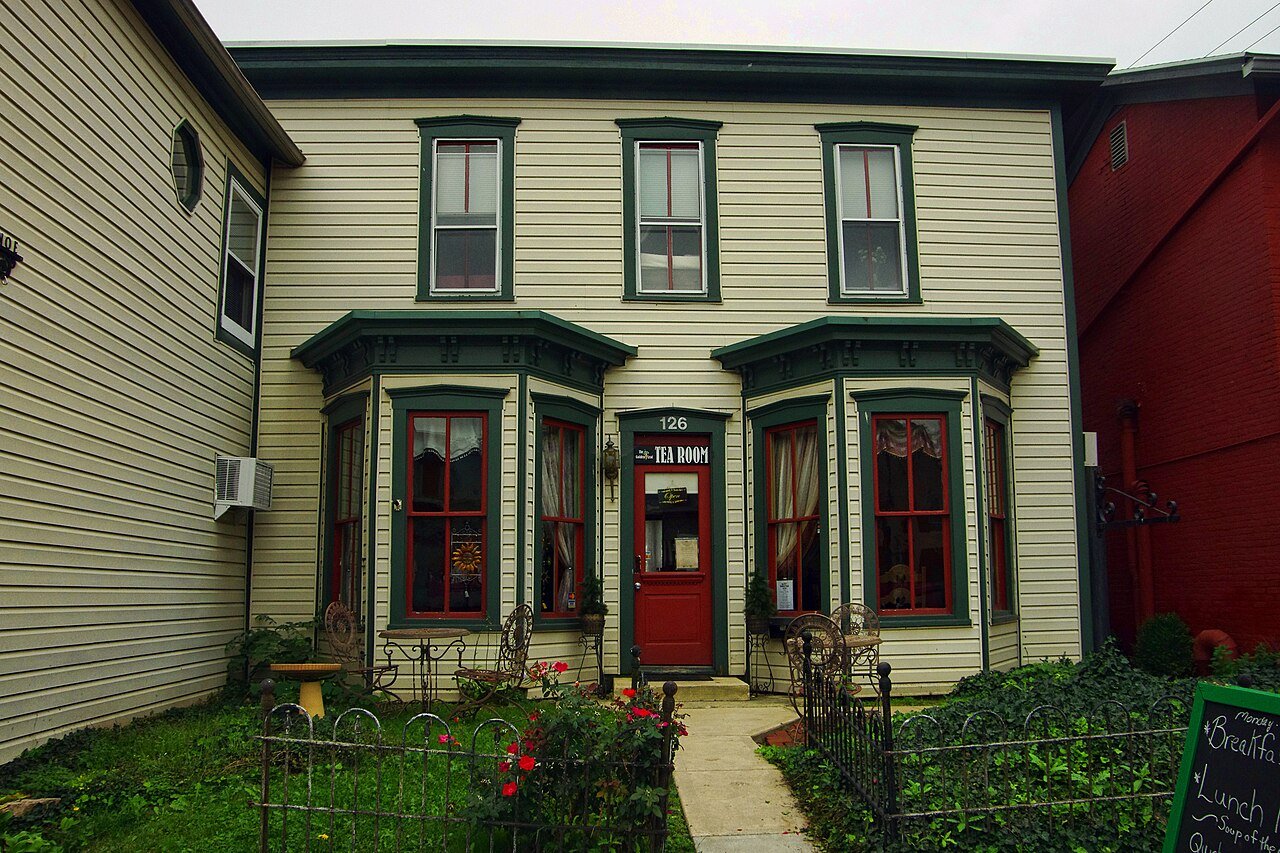
Canal Main Street, interstate edge: the two-speed town
Tipp City runs at two speeds, and its pest map splits the same way. East of the tracks, the canal-era grid — Main Street’s brick blocks, the locks, the tree-lined streets of Italianates and gabled cottages that grew with Tippecanoe City — is the canal inheritance in concentrated form: stone foundations, shared commercial walls, cellar doors and coal chutes, the built-in mouse entries of every pre-1900 downtown. West of I-75, the growth town — subdivisions unfolding across former bean fields, the interchange’s restaurant row and travel plazas, the light-industrial parks — runs the modern board: slab-gap odorous house ants colonizing disturbed soil, first-winter mice testing brand-new garage seals, dock-door rodent pressure at the logistics buildings, and drive-through yellowjacket economics at the exits. One town, two centuries, two playbooks — and a route company that runs both on the same morning.
The historic district: exclusion under the cornices
The Old Tippecanoe district is one of Ohio’s best-preserved canal streetscapes, and preservation-grade buildings deserve preservation-grade pest work. The commercial blocks — antique shops whose inventory is literally irreplaceable, restaurants and bakeries under tin ceilings, apartments upstairs — share the party-wall physics of every old downtown: one building’s roach or mouse introduction is the block’s problem within a season unless somebody maps the shared voids. Our district accounts get the block-aware protocol we run in Troy and Piqua: monitoring that reads the row, off-hours service that never interrupts a Saturday antique crowd, and formulations chosen for buildings where people browse, eat and live in the same stack. The residential blocks behind Main get the heritage-grade treatment: twelve-doors inspections that find the century’s accumulated entries, reversible copper-and-sealant exclusion that would pass a preservation review, and the flat refusal to foam-bead a painted-brick facade that the whole valley’s historic stock gets from us. An antique district’s pest standard should match its paint standard — invisible at the curb, permanent at the sill.
Mum Festival September: the doctrine’s home date
The Mum Festival has crowned Tipp City Septembers for generations — parade, car show, mum sales by the thousands in City Park — and it lands on the pest calendar’s sharpest weekend: yellowjacket colonies at annual maximum, sugar-hungry, working every lemonade and funnel cake in the park. The festival doctrine runs its home game here: pre-festival patrols for the park-adjacent blocks and host businesses in the last week of August (finding the season’s nests at softball size, before the crowds arrive), monitoring through the weekend, and the post-festival residential sweep while ant trails and scavenger patterns are still fresh enough to read. There’s a botanical footnote, too: thousands of potted mums moving from growers to park to porches make September a minor traffic season for hitchhikers — earwigs, pillbugs, the occasional ant colony riding a root ball — so porch-pot inspections join the fall checklist in mum country. The festival is the town’s beloved clock; our September anchor visit simply reads it.
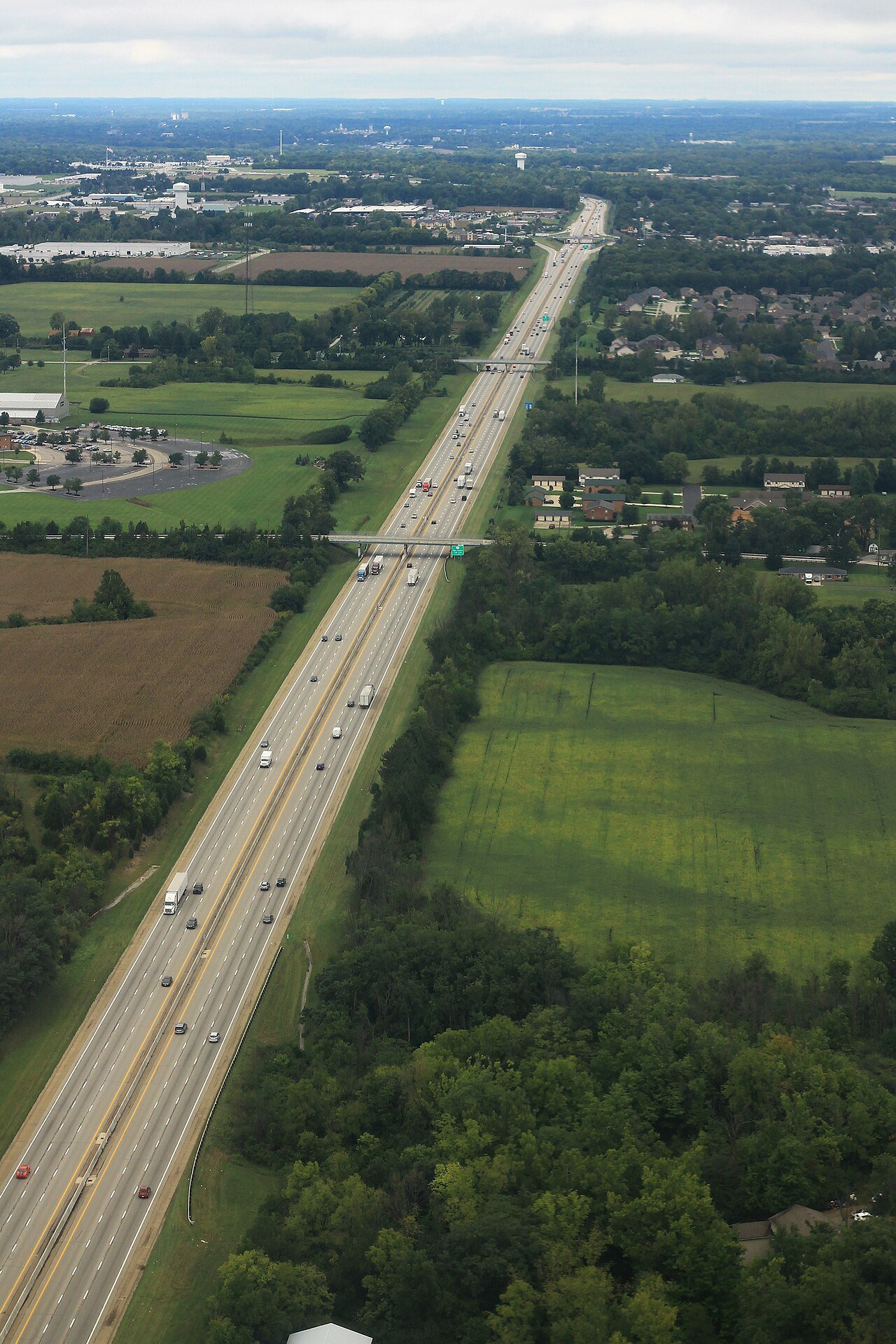
Exit 68 and the interchange economy
Tipp City’s interchange is a twenty-four-hour ecosystem — travel plazas, fast food, hotels, fuel — and twenty-four-hour food service runs pest pressure unlike anything else in a small town. Truck-stop economics concentrate everything: dumpster corrals emptied daily still feed rodent populations that commute from the surrounding fields; drive-through windows run all-day sugar for late-season wasps; landscaping islands between parking acres become ground-nest real estate; and hotels inherit whatever the interstate’s travelers carry — which is why bed bug vigilance is a standing line in every hospitality contract we write. Our interchange accounts run intensity-matched programs: exterior rodent grids sized to the field pressure, monthly-not-quarterly inspection cadence for the food operations, monitoring in the hotels with the room-response protocols that catch an introduction at one room instead of one floor. The logistics and light-industrial parks behind the strip get the dock-door standard — exclusion audits, bait-station geometry, and the documentation their corporate audits ask for. It’s the busiest quarter-mile of pest pressure in the county, and it’s fifteen minutes from our garage.
The growth side: new subdivisions, first-decade pests
West and south of the interstate, Tipp City is building — and the growth-homework doctrine applies in full. New-construction neighborhoods run a predictable first decade: years one and two, disturbed-soil ant surges as displaced colonies re-sort around fresh slabs, plus the first winter’s mouse test of builder-grade garage seals (builder sweeps fail that test with remarkable consistency); years three through six, landscape maturity arrives and with it the first real wasp seasons, spider populations tracking the new insect base, and mulch-bed pest ecology; years seven through ten, maturing trees bring carpenter ant pressure and the first termite-monitoring conversations as landscaping timber ages into the soil. Buyers get the phase-read at the first visit — which decade your street is living in, and what that means for the next one — and HOA boards get common-ground contracts for the retention ponds, playgrounds and entrance monuments that developers landscape beautifully and pest-plan never.
The canal, the locks, and the wet green line
The Miami & Erie’s ghost still runs through Tipp City — Canal Lock Park preserves the stonework downtown, and the old towpath alignment threads a green corridor along the town’s eastern edge toward the Great Miami beyond. Corridor doctrine, home edition: linear water and linear vegetation form the highways along which pest pressure moves, so the blocks backing the canal line and the river bottoms run a permanently different profile than the uplands three streets over — more mosquito production in the still margins, more rodent and wildlife movement under the cover, more spider pressure tracking the insect density, and the soil moisture that keeps termite scouts interested in the adjacent stock. Corridor-backing customers get the corridor protocol: the defensive line on the private side — perimeter treatment, exclusion, drainage honesty — timed to the corridor’s season rather than the calendar’s. It’s the same physics we manage along every waterway in the valley, and it’s why two Tipp City addresses can need two different plans.
The Tipp City pest calendar
February–March: winter mice speak up in old-district walls and new-build garages alike; exclusion season while entries show. April–May: termite swarm watch in the canal-era stock; ant lines wake; wasp queens found under every cornice on Main. June: mosquito season opens on the corridor; patio season opens downtown; both get their first treatments. July–August: peak pressure; interchange accounts at full cadence; pre-Mum patrols begin in late August. September: the anchor — Mum Festival weekend at yellowjacket maximum, perimeter defense down before the parade, exclusion ahead of the field-mouse migration off the surrounding grain. October–November: seal-and-check; attic decisions; porch-mum hitchhiker checks. December–January: interior follow-ups and next season’s plan, priced while everything sleeps.
Schools, families and the bedroom-community standard
Tipp City’s schools are the reason half its subdivisions exist, and a family town holds pest work to a family standard. Ours reads like this: products chosen and placed for households with toddlers, dogs and swing sets (baits in tamper-resistant stations, treatments where children aren’t, never blanket-spraying a yard that hosts a swing); scheduling that respects school-run mornings and works around nap windows when parents ask; straight answers about what actually needs treating versus what a franchise upsell script would claim; and the published pricing logic that lets a household budget the year instead of fearing the invoice. The Protection Plan is the family product in its natural habitat — the year owned for a flat rhythm, the re-treatment guarantee absorbing the surprises, the September anchor visit doing the quiet work that keeps winter boring. And for the one-time problems — the nest over the slide, the mouse in the pantry week — one-time prices, posted honestly, no subscription required.
Landlords and the small-portfolio file
Tipp’s rental market is small but real — downtown’s upstairs apartments, a scatter of doubles in the old grid, single-family rentals absorbed from the subdivision stock — and small portfolios get the same landlord program architecture as the county’s big ones: per-door pricing, direct-tenant scheduling, per-unit documentation, and the shared-wall protocols above the antique shops where a commercial kitchen and a residential lease share one Victorian wall. The district’s mixed-use stacks are exactly where block-aware monitoring earns its keep; a bakery’s standard and a tenant’s standard are the same standard when the joists are shared.
Why Tipp City calls us
- Closest town in the county: fifteen minutes up I-75 from our home routes — next-day standard, genuine same-day capability most weekdays, and the priority lane at no markup.
- Both centuries covered: heritage-grade reversible exclusion for the canal district, phase-read prevention for the new subdivisions — one company fluent in both.
- Two honest tiers: one-time jobs at one-time prices; the Protection Plan — with its re-treatment guarantee — when you want the year handled.
- Photo-first triage: text the evidence to (937) 569-3330, get a free identification and a real quote before a truck moves.
- Owner-operated: Bryan Camden’s licenses (10A, 10B, Category 12) and standards on every visit — not a franchise script.
Tipp City questions, answered straight
We just closed on a new build west of 75. Do we actually need pest service?
Year one, mostly no — you need the phase-read and two cheap habits: verify the garage-door sweep before the first winter (builder sweeps fail the mouse test constantly) and keep mulch off the slab line. Where new-build customers start paying us is usually the disturbed-soil ant surge or the year-three wasp seasons; before that, a single fall exclusion check is honest coverage. We’ll tell you when your street’s decade actually warrants more — that’s the point of publishing the doctrine.
Our shop is in the historic district and we’ve seen a mouse. How bad is this?
Manageable, if treated as a block fact rather than a shop secret. One mouse in a party-wall row means the row has traffic; our district protocol maps your building’s voids, sets monitoring, seals your entries reversibly, and — where neighbors opt in — reads the block as one system. Handled that way, it’s a maintenance line, not a reputation event.
Mosquitoes off the canal corridor are eating our evenings. Can you fix it?
We can shift it decisively: barrier treatments on your vegetation, larval-source honesty on your own standing water, timing matched to the corridor’s production cycle. The public corridor itself keeps producing — that’s the physics — but corridor-side customers reliably get their porch evenings back, which is the measure that matters.
Termites in a canal-era house — inspect or wait for signs?
Inspect. In pre-1900 stock near a water corridor, waiting for signs means waiting for damage — subterranean termites eat from the inside out, and the mud-tube evidence often appears years into the meal. An annual inspection is the cheap line; monitoring stations are the standing defense; and if a spring swarm ever rises from a porch crack, the same-week free identification exists for exactly that heart-rate moment. Bryan’s Category 12 license also covers the WDI inspections Tipp’s brisk housing market keeps ordering.
Do you cover Monroe Township and the roads between Tipp and Troy?
Everything between the interchanges and out to the township lines — the rural addresses along 202 and 571, the farmsteads west of the interstate, all of it at town prices. Farm campuses get quoted as campuses (house, barn, outbuildings, one plan), and the county page maps every community on the roster.
The closest town on the newest county
Tipp City is where our Miami County coverage begins — first exit past the county line, first stop on the northern routes, and the town where the county’s two stories (canal Main Street, interstate growth) share a single school district. Troy and West Milton ride the same trucks; the service-area map shows the whole eight-county valley. Mum country, the September calendar is open: text a photo to (937) 569-3330 for free identification, or book online — and let’s make this the fall the old district’s mice finally lose their lease.
What the canal towns teach about pest work
Tipp City, Piqua and the county’s other canal survivors share a lesson our whole practice is built on: buildings that last are buildings that get maintained on a rhythm, not rescued in a crisis. The 1840s blocks on Main Street have outlived the canal, the railroad’s dominance and the mall era because every generation did the unglamorous work — roofs, tuckpointing, sills — before failure forced it. Pest defense is the same trade at a smaller scale. The September anchor visit is tuckpointing; the twelve-doors exclusion pass is the sill repair; the monitoring stations are the annual walk-around with a flashlight. None of it is dramatic, all of it is cheaper than the alternative, and the houses that get it stay boring in the best possible way — no February scratching, no swarm-season panic, no patio surrendered to yellowjackets in a festival September. That’s the standard the historic district holds its paint to, and it’s the standard we hold our routes to, in every era of housing this two-speed town runs.
One more Tipp-specific note: the antique problem
Antique districts import wood, upholstery and history by the truckload — and occasionally import residents. Powderpost beetle galleries in a just-bought walnut chest, bed bug risk in vintage upholstery, the odd mouse nest in a barn-found cabinet: dealers know the risks, and the good ones inspect inventory like we inspect foundations. For buyers, two habits cover almost everything — examine wooden pieces for fresh, light-colored frass (old empty galleries are history; powdery new dust is activity) and quarantine upholstered finds for a careful seam inspection before they join the living room. When a purchase does bring a passenger home, photo-first triage sorts it in minutes, and treatment for a single piece is a small, contained job if it’s caught at the doorway rather than the den. The district’s treasures are worth the thirty-second check — and we’re the call either way.
Two centuries, one standard, fifteen minutes away — Tipp City’s file is open, and the season starts whenever you do.
Frequently asked questions
Do you provide pest control in Tipp City?
Yes — Tipp’s canal-era downtown and its newer plats both sit on the Miami County rotation, weekly or better.
What pests are most common in Tipp City?
The canal-town blend: historic-block foundation mice and moisture basements downtown, sod-line wasps and pavement ants in the newer plats, and the farm-edge September surge (rodents and stink bugs) that the surrounding acreage delivers on schedule.
How much is pest control in Tipp City?
County formula: most Tipp homes run $39–$55/month quarterly; one-time flat by job. Free instant quote or (937) 569-3330.
Do you know the historic downtown buildings?
The canal-era stock gets preservation-minded work — masonry-safe exclusion, reversible exterior protocols, and the old-cavity wasp experience the era’s walls occasionally require. Same discipline as our Oakwood and Springboro historic routes.
Why does my newer Tipp plat house get fall invaders?
Field adjacency — the plats border working acreage, and the September flights (stink bugs, lady beetles) audition every sunny wall. The barrier-plus-seal package before Labor Day is the answer; edge-lot houses should treat it as annual infrastructure.
How fast can you reach Tipp City?
Days typically on the county rotation, priority faster, no travel charges.
Do you serve Tipp City businesses?
Yes — the downtown restaurant-and-shop blocks, the I-75 corridor’s facilities, and the local offices each with matched programs and documentation.
What about mosquitoes near the canal and river corridor?
Real seasonal pressure — the audit-plus-barrier program handles the floodwater-and-container mix, and downtown event treatments (festival season) book each summer.
Is the Protection Plan worth it in Tipp City?
Edge-adjacent and historic-block houses: clearly — standing pressure plus accumulated doorways. Interior newer plats can run leaner; the first call sorts it honestly, and we say so.
How do I start service in Tipp City?
Instant quote from your address, free photo ID, or (937) 569-3330 — free estimates, first visits usually within the week.
Tipp City Pest Control, Service by Service
Tipp City’s pest files, written from the canal-era downtown and the I-75 subdivisions — two building inventories, two clocks:
- Termite control in Tipp City — the preservation premium, both clocks read
- Rodent control in Tipp City — one town, two doors: cellar and garage
- Cockroach control in Tipp City — the shared-wall ledger, balanced block-wide
- Ant control in Tipp City — the threshold file, held at the door
- Wasp & hornet removal in Tipp City — the awning row, clean by festival weekend
- Termite inspection in Tipp City — what an inspection actually covers, what it costs, and why a sale here rarely forces one.