Pleasant Hill earned its name honestly — the village of about 1,200 sits on genuine high ground above the Stillwater’s west bank, a rarity in a county that mostly runs flat, with Newton Township’s grain unrolling west and the river’s wooded valley dropping away east toward Ludlow Falls. It is Brethren country by heritage — the plain churches still anchor the grid — and Newton school country by identity, one campus for the whole township. Greater Dayton Pest & Rodent serves the hill, the valley edge and every farm lane between: ants, mice and rats, wasps, termites, mosquitoes, spiders, roaches and bed bugs, on the same west-county loops that run West Milton and Covington. (937) 569-3330, or book online.
The hill and the valley: two pest climates, one village
Elevation is the interesting variable here, and it genuinely splits the village’s pest profile. The hilltop grid drains fast and dries fast — its houses run the standard grain-belt board (harvest-migration mice, eave wasps, slab ants) with less of the damp-basement pressure the river towns carry. The valley edge — the streets and lanes stepping down toward the Stillwater’s wooded bank — runs the full corridor profile: mosquito production in the bottoms, wildlife pressure (raccoon, squirrel, the occasional bat colony) working uphill from the woods, spider density tracking the river’s insect hatch, and the soil moisture that keeps termite scouts interested. Two houses three blocks apart can honestly need two different plans — the hilltop ranch a September exclusion and little else, the valley-edge Victorian the whole corridor protocol — and the inspection’s first job is telling you which climate you actually live in.
Brethren bones: the plain village’s housing
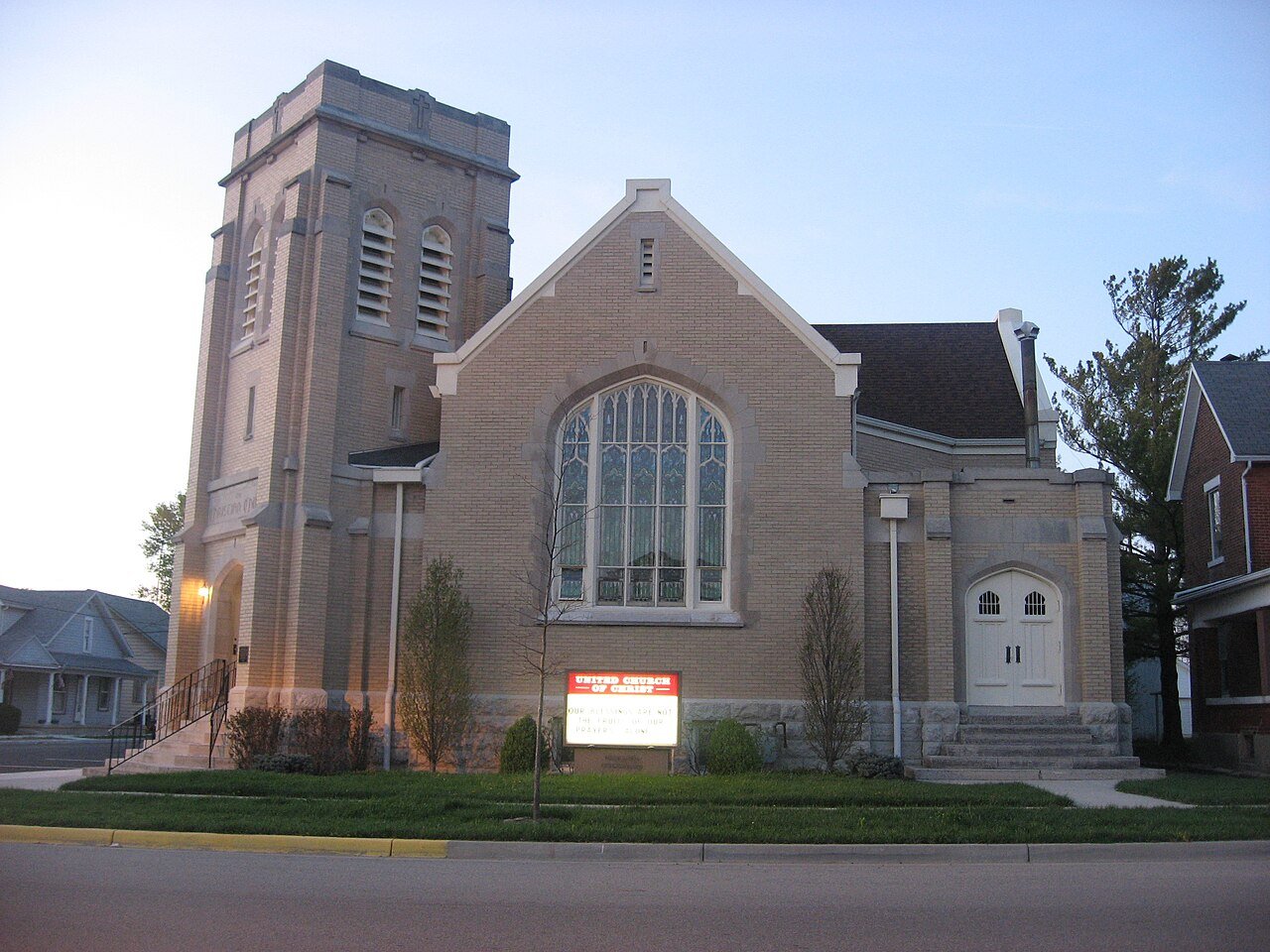
The Brethren settled this township for the same reasons the Quakers took West Milton — good land, good water, room for plain living — and the village they built runs the county’s familiar catalog with a plain-style accent: sturdy, unornamented nineteenth-century houses near the churches, foursquares and bungalows filling the grid, postwar ranches at the edges, and farmsteads immediately beyond in every direction. Plain building was honest building — the old stock here tends to solid sills and sensible grade lines — but two centuries of settling still open the entries a twelve-doors inspection exists to find, and the village’s grain-belt position makes the fall migration the year’s main event: when Newton Township’s harvest empties the fields, the hilltop’s few hundred foundations are the warmest addresses on the horizon. September exclusion, reversible materials, the workmanship guarantee behind every seal — the doctrine fits the architecture: nothing showy, everything permanent.
Newton campus and the one-school town
Newton Local runs the whole township from one campus at the village edge — elementary through high school, the Indians’ fields behind — and one-school towns concentrate their family life the way grid villages concentrate their mice: everything happens in one place, so the standard has to hold there. Institutional work at the campus level means monitoring-led IPM, treatments scheduled around occupancy, documentation ready for any inspection, and concession-season honesty at the athletic fields (bleacher scavengers, press-box wasps, the dumpster line). Family houses run the family board — pantry ants, swing-set-altitude wasp nests, the garage mouse — with the Protection Plan as the fits-best product: flat rhythm, re-treatment guarantee, September anchor doing the quiet annual work. And one-time problems get one-time prices, posted, because a township that runs on one school also runs on one reputation ledger, and we like our line on it.
Stillwater Prairie and the wild quarter
North and east of the village, the county’s park district holds some of its best wild land — Stillwater Prairie Reserve’s river frontage, the wooded ravines, the restored grasslands — and living near managed wildland is a specific, manageable pest situation our wooded-edge doctrine covers precisely. The preserves are magnificent ecology and permanent pressure: wildlife populations at natural density, insect communities at full diversity, and every adjacent lane inheriting the overflow. The protocol for preserve-adjacent households: exclusion inspected annually (standing pressure, not episodic), rooflines held honest against the squirrel and raccoon traffic, mosquito defense timed to the river’s production rather than the calendar’s, and the pollinator line held bright — prairie restorations run on native bees, so treatments near the boundary get placed and timed with the neighbors’ wings in mind. The honest framing: you chose to live beside the county’s best land, the premium is vigilance, and vigilance is a checklist we run so you don’t have to.
The farm townships: Newton’s campuses
Newton Township is working grain from the village limits to every horizon, and the farm-campus doctrine runs at full scale: house, barn, machine shed and feed room quoted as one system; feed room hardened first; barn populations managed with bait geometry the cats approve; the farmhouse sealed the same visit; the whole system re-read after harvest. Equipment sheds get spring queen patrols, livestock places get sanitation-first fly honesty, and the rural-residential five-acre class gets the scaled version — the coop is the feed room, the pole barn is the barn, the rules hold. No mileage lines anywhere in the township: the west-county loops already run these roads, and the published pricing is the pricing, lane or lane-less.
The Pleasant Hill pest calendar
February–March: winter mice audible in the plain-built walls; exclusion weather while runs show. April–May: swarm watch in the valley-edge stock; ant files wake; wasp queens prospect eaves and equipment sheds; the preserves’ spring hatch begins feeding everything. June: mosquito season opens in the bottoms; valley-edge barriers go down first; hilltop houses mostly coast. July–August: peak summer — colonies building, corridor pressure at full song, the county fair’s July dates pulling the township to Troy and bringing picnic habits home. September: the anchor — perimeter defense at yellowjacket peak, exclusion ahead of the harvest migration; on this hill, the year’s decisive appointment. October–November: seal-and-check, attic decisions as the woods’ squirrels choose winter quarters, post-harvest campus audits. December–January: interior follow-ups and next year’s plan, priced in the quiet.
Why Pleasant Hill calls us
- Two-climate literacy: hilltop and valley-edge read as the different assignments they are — no template plans.
- West-county loops: scheduled routes through the township weekly — village next-day norms, the priority lane at no markup.
- Farm-campus fluency: house-plus-barn quoting, harvest-timed re-reads, cats respected as colleagues.
- Two honest tiers: one-time prices posted; the Protection Plan’s re-treatment guarantee when the year should be owned.
- Photo-first triage: text the evidence to (937) 569-3330 — free identification always, honey bee swarms to beekeepers, free, every time.
Pleasant Hill questions, answered straight
We’re on the valley side and something large is in the attic every fall. The woods, right?
The woods. Wooded-valley edges run standing raccoon and squirrel pressure, and fall is decision season — the animals are choosing winter quarters exactly when your roofline’s weak points matter most. The response is exclusion-first and legal: one-way doors so nothing seals inside, hardware cloth where squirrels argue, seasonal protocol for bats. An October roofline inspection is the cheap version of this story; February removal is the expensive one.
Does the hilltop really need less service than the valley streets?
Often, yes — and we’ll say so, which is the point. A dry hilltop ranch with tight modern seals may honestly need one September exclusion pass and a spring walk-around; billing it a full corridor program would be theater. The valley-edge Victorian genuinely needs the larger plan. The inspection sorts it, the quote reflects it, and nobody pays for the other house’s problems — that’s what reading the two climates means in dollars.
Our farm’s barn cats handle the mice fine — until winter. What’s missing?
The cats are excellent at the middle of the food chain and helpless at the architecture. They suppress the barn’s ambient population; they cannot seal the farmhouse’s twelve doors, harden the feed room, or intercept the harvest migration’s two cold weeks when the whole field files toward heat. The campus plan does the architecture; the cats keep their jobs; the farmhouse finally goes quiet. It’s a partnership, and honestly one of our favorites.
Bees matter here — gardens, the prairie, hives on two roads. Where’s your line?
Bright and posted: honey bees are never treated — swarms and colonies go to beekeepers, free, every time, ten-second photo test; solitary ground bees get “leave them working” unless allergy changes the math; bloom-adjacent treatments get timed around the foraging day; and the yellowjacket-versus-bee call is exactly what free photo triage is for. Brethren country farmed with its ecology for two centuries; the pest program should too.
The hill, held
From the churches’ plain brick to the preserve’s wild edge, Pleasant Hill’s file is open on the west-county loops — the two climates read street by street, the campuses quoted whole, September’s decisive work already on the calendar. Ludlow Falls, Covington and West Milton ride the same trucks; the county page and eight-county map hold the whole roster. Plain dealing for the plain village: text a photo to (937) 569-3330, take the free identification and the straight quote, and let the hill’s good drainage do the rest.
Termites on the two-climate hill
The elevation split runs straight through the termite file. Hilltop houses on fast-draining ground carry genuinely lower baseline pressure — subterranean colonies follow soil moisture, and the hill sheds it — while the valley-edge stock inherits the Stillwater’s patient dampness along with its view. But “lower baseline” is not immunity, and modern habits close the gap everywhere: mulch mounded over sill lines, downspouts dumping at the foundation, additions whose slabs meet old stone in unopened seams, the raised beds that put irrigated soil against century brick. Our inspection logic reads moisture and contact first; our protection is monitoring-led (bait stations watching the soil year-round, the right architecture for stone-foundation stock); Bryan’s 10A/10B licenses cover treatment when activity turns up, and Category 12 covers the WDI inspections the township’s home sales order. Valley-edge stock earns annual checks; hilltop stock earns honest reassurance and a biennial look; both earn a company that can tell them apart.
The GAR stone and the long-memory village
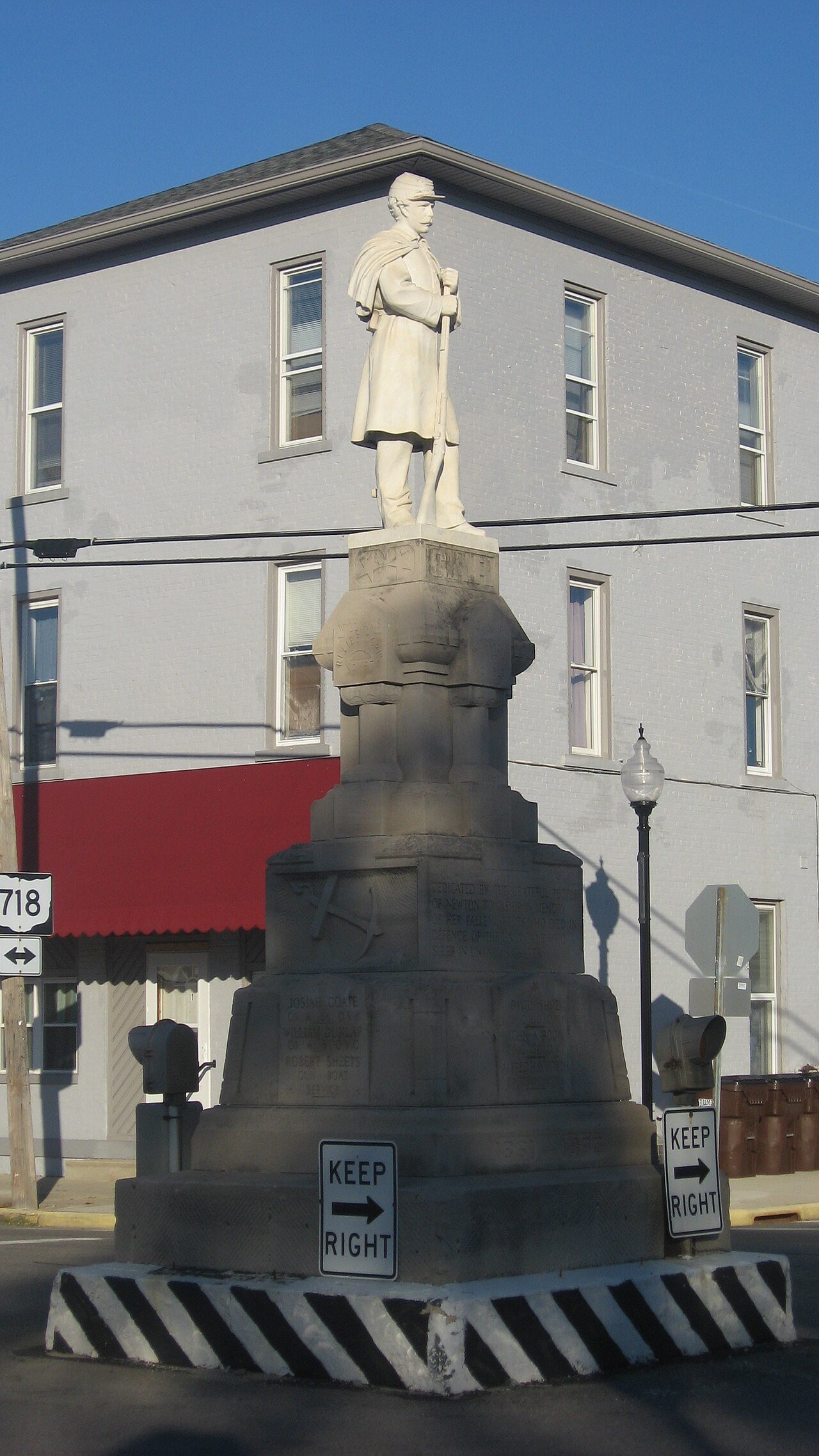
The Grand Army of the Republic memorial on the village green is the kind of marker plain towns keep — a promise that what mattered gets maintained across generations — and it makes a fair emblem for how Pleasant Hill approaches its buildings, its school and its land. Long-memory towns are prevention towns by temperament: they already believe in the unglamorous annual work that keeps failures from happening, which makes the pest conversation here refreshingly short. The September anchor visit is the memorial-tending of the pest calendar — quiet, scheduled, faithfully repeated — and the ledger backs the temperament: prevention in this housing stock costs tens of dollars per season against the hundreds an established infestation demands, or the thousands that termite repair costs in hand-built wood. The pricing pages publish the math; the village’s own habits already agree with it.
Do it yourself, or call?
The honest split, hill edition. Reasonable DIY: the reachable paper-wasp umbrella on the porch, a rain-week ant line, one mouse in a tight modern garage, the fall spider sweep of a dry hilltop basement — our guides cover them all without a service call. The call list: anything in a wall or soffit void (sealing an active entrance remains the classic self-inflicted disaster), any termite evidence in valley-edge stock, farm-scale rodent pressure (architecture beats teaspoons), bed bugs anywhere, bats every time (protected species, rabies protocol), October lawn nests (desperation-phase yellowjackets are the year’s worst DIY), and any problem outlasting its third store-bought remedy — recurrence means a condition, and conditions need diagnosis before chemistry. The photo line does the diagnosis free: (937) 569-3330.
Landlords and the township portfolio
Pleasant Hill’s rentals are few and specific — village doubles, a scatter of single-family leases, farmhouse rentals whose tenants don’t run the barns around them — and each gets the fitting slice of the landlord program: per-door pricing, direct-tenant scheduling, per-unit documentation, and for the farmhouse leases the campus-coverage clause that protects what the lease can’t reach. The township ledger quoted to every owner: one September exclusion pass per unit beats one February emergency call, every year, in every grain-ringed town on the roster.
Ludlow Falls next door: sharing the valley’s wildest mile
Two miles down the valley road, Ludlow Creek drops over its limestone ledge at Ludlow Falls — the county’s prettiest quarter-mile — and Pleasant Hill shares the falls’ watershed, its picnic traffic and a slice of its pest ecology. The creek corridor connects the two villages the way all the county’s waterways connect their neighbors: a moving strip of moisture, insects and wildlife that no property line interrupts. Practically, that means the lanes along the Ludlow Creek bottoms run the corridor profile even where the Stillwater is out of sight; that summer picnic traffic through the valley redistributes food-source pressure along the route the way small festivals do; and that the two villages sensibly share a loop day — the same truck reads the whole valley in one pass, which is exactly how a corridor should be managed. Neighboring villages, one watershed, one standard: the west county’s geography wrote the routing, and we just follow it.
From the hilltop’s dry grid to the valley’s wooded edge, Pleasant Hill’s two climates are read, quoted and covered — plainly, punctually, and with the September calendar already open. The hill kept its name honest; we’ll keep the winters quiet.
The two-climate rule, generalized: why address-level reading matters
Pleasant Hill’s hilltop-versus-valley split is the clearest illustration on our whole roster of a principle that governs every town we serve: pest pressure is a property of the fifty feet around your foundation, not of your zip code. Franchise pricing treats a village as one number; the actual biology treats every address as its own watershed — drainage, canopy, distance-to-corridor, era-of-foundation, neighbor habits — and two houses on one street can honestly deserve plans that differ by half. Reading at that resolution is slower to quote and better to own: the dry hilltop ranch isn’t subsidizing the valley Victorian, the Victorian isn’t under-protected by the ranch’s average, and both households know exactly why their plan says what it says. It’s the difference between selling coverage and practicing a trade — and a township with one school, one green and one long memory is precisely the place where practicing the trade properly gets noticed, remembered and recommended down the lane.
That address-level habit is the whole promise here: your hill, your valley, your fifty feet, read for what they are and defended accordingly — season after season, at prices posted in daylight. Pleasant Hill, the west-county loop already climbs your hill weekly; one photo to the triage line puts your address on it, and the plain village’s quiet winters take care of the rest.
Good ground, good bones, good neighbors — the hill was always the easy part; now the pests are too.
Who actually turns up in Pleasant Hill: Greater Dayton Pest & Rodent is owned and operated by Bryan Camden, licensed by the Ohio Department of Agriculture — firm #115079, commercial applicator #170858, categories 10A, 10B and 12. When you call, you talk to the person who does the work. No call center, no rotating crews, and the same technician on every visit.
Frequently asked questions
Do you provide pest control in Pleasant Hill?
Yes — the Newton Township village sits on the Miami County rotation weekly; village and surrounding farms alike.
What pests are most common in Pleasant Hill?
Farm-belt village standards: the harvest-and-frost rodent surge, older-core foundation mice, bean-field stink bug flights, township barn wasps, and the Stillwater-tributary moisture patterns the low spots carry.
How much is pest control in Pleasant Hill?
County formula: most homes $39–$55/month quarterly; one-time flat; farm campuses walked. Free: (937) 569-3330.
Why does every fall bring mice here?
The acreage equation — harvest displacement plus first frost, aimed at the village’s heated structures through the older stock’s accumulated doors. September sealing is the calendar answer.
Do you treat the surrounding farms?
As campuses — the recruitment-system model with harvest-aware scheduling and the deer-mouse outbuilding protocol standing.
How fast can you reach Pleasant Hill?
Weekly rotation — days typically, priority arranged, no travel charges.
Do you serve village businesses?
Yes — storefronts and ag operations on matched programs with documentation.
What about carpenter ants in the big village trees?
The mature canopy supplies the fifty-foot staging bases — dusk trail-traces and the moisture-audit pairing apply; firewood-and-stump discipline pays.
Is the stink bug flight bad here?
Flyway-certain — surrounding beans launch the September wave; barrier-plus-seal before Labor Day, annually.
How do I start service in Pleasant Hill?
Instant quote, free photo ID, or (937) 569-3330 — free estimates, route days, first visits typically within the week.