
There are two honest ways to hire a pest control company, and most companies blur them together until the fine print bites somebody. We would rather draw the line in public. One-Time Service is exactly what it sounds like: a scheduled visit, a clear price, professional treatment of the problem in front of us — with honest, up-front talk about whether that problem’s biology will need a follow-up, and what the follow-up costs. The Protection Plan is our subscription program: scheduled visits on your property’s real calendar, every covered pest handled as it appears — and the strongest promise we make anywhere on this site: if covered pests come back between visits, so do we, free. This page explains both options completely — what each includes, what each costs relative to the other, the biology that makes the difference matter, and how to pick. No fine print at the bottom; the whole page is the print, in full-size type.
Why one visit sometimes can’t be the whole answer (the biology, straight)
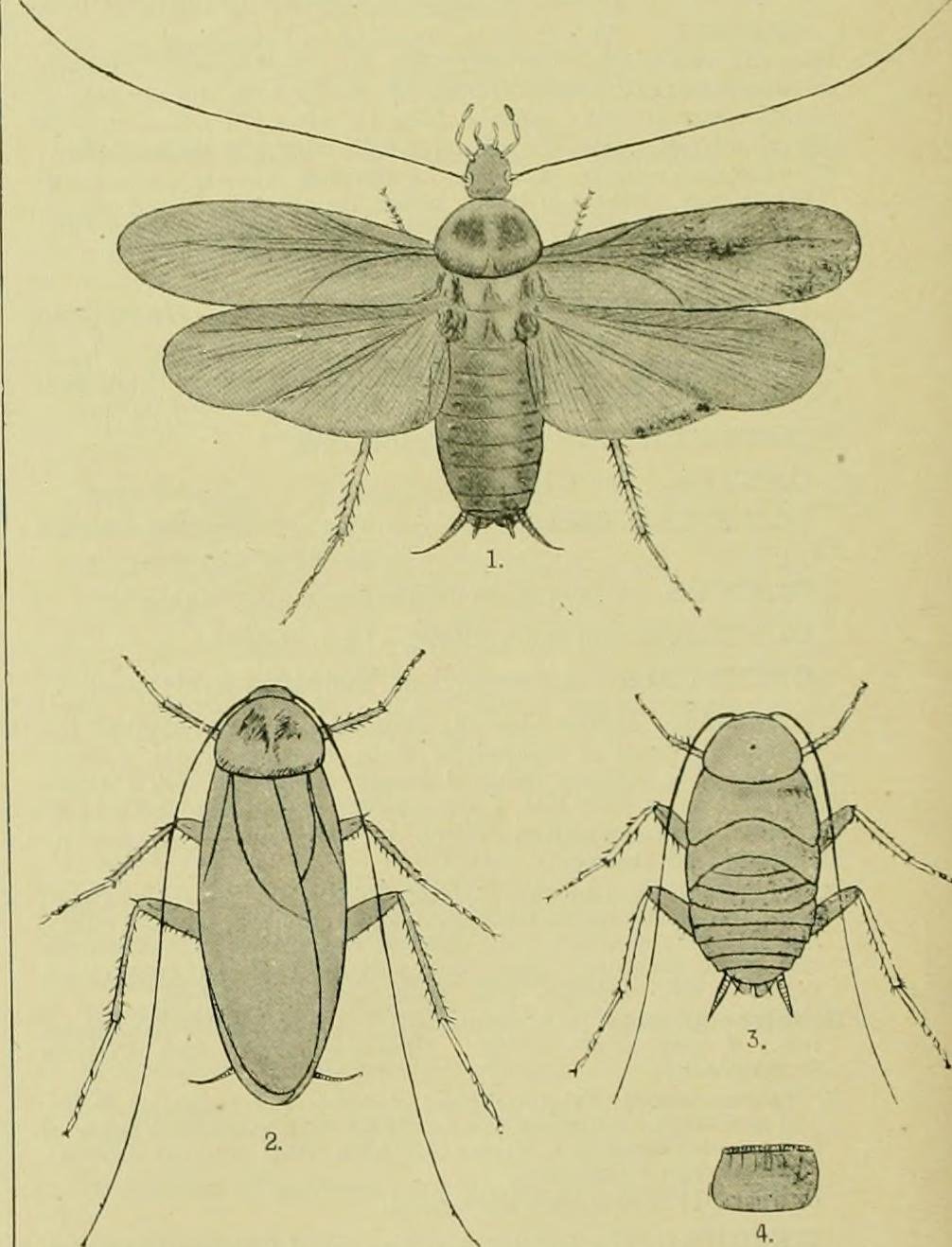
This is the part most pest websites mumble, so here it is plainly: some infestations cannot be ended in one visit by anyone, at any price, because of how insects reproduce. The clearest example is the German cockroach. A roach egg case (the ootheca) is a sealed capsule — treatment sprays and baits do not penetrate it, and no professional product changes that. Treat a roach kitchen perfectly on Tuesday and the egg cases laid before Tuesday still hatch on their own schedule over the following weeks; if the hatch happens as the initial treatment’s residual is fading, the survivors walk unpoisoned floors and start the cycle again. The same arithmetic runs through bed bug eggs (cemented, spray-resistant, hatching 6–10 days after any first strike), flea pupae (cocooned and nearly untouchable until they emerge), and the multi-queen ant networks that re-bud under pressure. Follow-up visits are not upselling — they are the treatment arriving in the right number of chapters. Any company promising one-and-done roach or bed bug elimination is promising something biology does not sell.
Option one: One-Time Service
The right tool for a huge share of real situations: the wasp nest over the door, the mole season, the mouse exclusion on a sealable house, the WDI inspection a closing needs, the ant invasion a single professional baiting campaign genuinely ends. How it works: you call or text a photo, we quote the job free and firm, we schedule it (same-week as the norm, priority response when it is urgent), and the visit is priced as a visit — one set of pricing, no subscription required, no pressure toward one.
And the honesty clause that makes it work: where the pest’s biology requires more than one visit, the quote says so before you book. Two forms of that. For treatments that are inherently multi-visit protocols — bed bugs above all, heavy roach work often — the follow-up is built into the quoted price: you are buying the protocol, both chapters, one number, because selling chapter one alone would be selling a coin flip. For treatments where a follow-up is possible but not certain — the moderate roach job, the flea season, the stubborn ant network — the quote names the follow-up price up front, so if the hatch beats the residual you already know the number and nobody feels ambushed. What One-Time Service does not include is unlimited free returns: a single-visit price cannot honestly contain an open-ended promise, and we would rather tell you that here than surprise you in month two.
Option two: the Protection Plan (where the big guarantee lives)
The Protection Plan is the holistic version of everything this site teaches: scheduled visits timed to the Miami Valley’s actual pest calendar — the spring perimeter, the summer nest patrols, the September barrier-and-exclusion visit every rural and edge-lot page on this site calls the year’s anchor, the winter interior check — with covered pests handled as they appear, monitoring in place between visits, and the property’s whole file (entries, moisture flags, treatment history) maintained visit over visit. It is how our commercial accounts have always run, brought to households: defense on a calendar instead of reaction to a crisis.
And it carries the promise everything else on this site refers to: the re-treatment guarantee. If covered pests come back between your scheduled visits, we come back free — as many times as it takes, no visit fees, no fine print. We can make that open-ended promise on the Plan for exactly the reason we cannot make it on a single visit: the Plan’s scheduled cadence means the egg-cycle biology above is already accounted for — the follow-up window is never left uncovered, the residuals are renewed before they fade, and the monitoring catches the hatch before you do. The guarantee is not generosity bolted onto the program; it is the program working as designed, promised out loud. On the Plan, the timeline is our problem. That sentence is the product.
The two options, side by side
- Best for: One-Time — single, definable problems and project work (nests, exclusion, inspections). Protection Plan — ongoing defense, recurring-pressure properties (edge lots, farms, older homes), and anyone who wants pest control to be a solved subject
- Pricing: One-Time — per-job, quoted free and firm, follow-ups named or built in up front. Plan — flat scheduled-visit pricing, quoted for the year, no surprises
- Guarantee: One-Time — we stand behind the work performed, and multi-visit protocols include their follow-ups; returns beyond scope are quoted honestly. Plan — the re-treatment guarantee: covered pests between visits = free returns, unlimited
- Response: One-Time — same-week norm, priority for emergencies. Plan — members jump the schedule; between-visit calls are covered service, not new tickets
- Documentation: One-Time — service report per job. Plan — the running property file: photos, entries, findings, history
- Commitment: One-Time — none, ever. Plan — seasonal cadence you can adjust or cancel; we keep customers with results, not contracts
How to choose (our actual advice, not a funnel)
Call with the problem and we will tell you honestly which option fits — including, regularly, “this is a one-visit job, do not buy the plan for it.” The pattern from thousands of Miami Valley jobs: one-time buyers are the wasp nest, the mole year, the sealable ranch, the real-estate deadline — problems with edges. Plan households are the properties this site’s geography pages describe all day: the forest-edge lot whose pressure never stops, the farm campus with its September-anchored year, the century home whose architecture keeps a standing invitation open, the family that simply never wants to think about this subject again. And upgraders are common: a one-time job done well becomes a plan conversation naturally, and everything you paid stands on its own either way. No pressure lives on this page — just the map.
The guarantee, spelled out (this is the definitive version)
Because the phrase “re-treatment guarantee” appears across this site, here is its complete definition — the version every other mention refers to. On the Protection Plan: if pests covered by your plan return between scheduled visits, we return and re-treat at no charge, as many times as needed, for as long as your plan is active. Covered pests are listed on your plan agreement (the standard household plan covers the full common lineup — ants, mice, wasps, spiders, roaches, and the seasonal invaders; specialty pests like termites and bed bugs ride their own protocols and warranties, spelled out when quoted). On One-Time Service: we guarantee the work performed — treatments are executed to protocol, multi-visit jobs include every visit the protocol names in the price, and named follow-up pricing is honored as quoted. What a single visit does not carry is the Plan’s open-ended free-return promise, for the biological reasons this page opened with. Everywhere, both tiers: quotes are free and precede work; pricing is the job, never the mileage; and if we ever recommend the smaller option, that is the recommendation to trust — it is the one that costs us money.
Plan questions, answered before you ask
Is the Protection Plan a contract I’m locked into?
No lock-in — the plan is a scheduled-service arrangement you can adjust or cancel; annual quoting exists so you know the year’s cost, not to handcuff you to it. The retention strategy is the quiet house.
I had a one-time treatment and the roaches came back three weeks later. Was the treatment bad?
More likely the egg math did what this page said it would: the ootheca hatch outlasted the residual. If your quote named a follow-up price, that visit is the designed next chapter at the number you already have; if the situation has outgrown single visits, we will say so and credit the honesty both directions. This exact scenario — and Bryan’s insistence on being straight about it — is why this page exists.
Do plan members really jump the schedule?
Yes — between-visit calls from members are covered service on priority routing, which is easy to promise because the plan’s scheduled defense makes member emergencies rare. The program sells fewer crises; the queue-jump is mostly ceremonial, and we like it that way.
Can businesses use these tiers?
Commercial accounts are effectively Plan-native — restaurants, property managers, and warehouses run scheduled programs with documentation by default, with one-time response available for discrete events. The same guarantee logic applies at commercial scale: programs carry the standing promise; single interventions carry honest scoping.
Start either way: (937) 569-3330 — free quotes, free photo identification, and an honest read on which option your situation actually needs. Greater Dayton Pest & Rodent, Ohio licensed — ODA Pesticide Business License #115079.
Frequently asked questions
What does the Protection Plan include?
Quarterly service visits running four jobs each — exterior barrier renewal, trained inspection, exclusion maintenance, and monitoring stations — plus free re-service between visits if covered pests break through. The covered-pest list spans ants, spiders, wasps, mice and rats, roaches, fleas, and the seasonal invaders.
How much does the Protection Plan cost?
Pricing is computed from your actual property — square footage, stories, and foundation perimeter, since exterior defense scales with wall length — and most Dayton homes land in the $39–$55/month range on quarterly service. The instant quote tool prices your exact address in seconds.
Is there a contract or cancellation fee?
No long-term contract and no cancellation fee — the plan is month-to-month by design. A service built on the claim that prevention beats reaction ought to let you test the claim continuously.
What does “free re-service” actually mean?
If a covered pest shows up between quarterly visits, you call, we come, no invoice — that is the re-treatment guarantee, and it lives exclusively on the plan. It is sustainable precisely because quarterly prevention makes breakthroughs rare.
Why quarterly? Is that often enough?
Quarterly matches Ohio’s pest calendar: spring wake-up, summer peak, the critical fall exclusion window, and winter’s indoor files. Each visit lands ahead of its season’s pressure, and the free re-service backstops anything between. Bimonthly and monthly cadences exist for properties that need them.
What is not covered by the plan?
The honest carve-outs, stated up front: termite treatment (available bundled as monitoring), bed bug treatment, and mosquito programs are priced separately — industry-wide, these are never genuinely risk-pooled into general plans. Quarterly inspections still watch for all three at no charge.
What if I already have an active infestation when I sign up?
Established infestations get a knockdown course first — an initial treatment plus the retreatments the biology requires, priced as its own line — and the plan’s guarantee keeps you clear from there. Folding emergency labor into a monthly rate is how other companies’ guarantees go hollow.
Do I need to be home for service visits?
No — the quarterly visit is primarily exterior, and interior work happens on request or by arrangement. You get a service report either way, and anything the inspection flags comes with photos and a plain-English explanation.
What happens in winter visits — is there anything to even treat?
Winter is the indoor quarter: rodent activity at its annual peak, monitoring stations, storage-area checks, the egg-sac sweep, and the draft-audit that cold weather makes easy. Skipping winter is how February wall-scratching calls happen.
Is the plan worth it versus calling when something shows up?
The arithmetic: infestations price by age, and two reactive calls a year roughly equal the plan — without the prevention, the monitoring, or the guarantee. Properties near fields, woods, or water, older homes, and anyone on their third emergency in two years are where the plan pays hardest. Newer, tight builds with no pressure history can honestly skip it, and we say so.
Does the plan cover my garage, shed, or other buildings?
The attached garage is always in scope — it is the front line. Detached outbuildings can be added; farm-adjacent properties get campus pricing after a walk-through, because outbuildings are the recruitment pool for the house.
Can I add termite monitoring to the plan?
Yes — stations ride along on visits we are already making, which makes the bundled rate genuinely cheaper than standalone monitoring. It is the most cost-efficient way in our catalog to own both coverages.
How do seasonal treatments change through the year?
Spring: barrier ahead of ant and wasp season plus termite-conducive-condition checks. Summer: peak-pressure renewal and moisture audit. Fall: the big one — exclusion review and rodent stations ahead of the October rush. Winter: indoor files and monitoring. Same four parts, re-weighted by calendar.
What areas do you serve?
Montgomery, Greene, Miami, Clark, Warren, Butler, Preble, and Darke counties — Dayton, Kettering, Oakwood, Beavercreek, Fairborn, Huber Heights, Centerville, Springboro, Troy, Piqua, Eaton, and everywhere between. The service-areas page lists every community with local detail.
Who actually comes to my house?
Bryan Camden — the owner, a licensed applicator — not a rotating crew. Two-person company by design: the person who quoted your property is the person treating it, visit after visit.
How do I pay, and can I pause service?
Card on file billed on schedule through the customer portal, where every visit report and invoice lives. Pausing (a sale, a season away) is a phone call, not a penalty — month-to-month means exactly that.
What if I am not happy after a visit?
Call and we return — the re-service guarantee covers dissatisfaction, not just re-infestation. A two-person company’s reputation is its entire marketing budget; we act like it.
Do you offer plans for rentals and commercial properties?
Yes — landlord plans with the documentation Ohio habitability standards want, and commercial programs (restaurants, offices, warehouses) with station maps and inspection-ready logs. Both are priced by property type on the same honest-formula basis.
How is this different from Orkin or Terminix plans?
Same service category, different economics and accountability: no franchise overhead in the rate, no annual escalator surprise, the owner on every job, and a published pricing logic you can actually read. National scale is real; so is being one of two people whose name is on every visit.
How do I start?
Run the instant quote on this site for your exact address, or call (937) 569-3330 — the estimate is free, the first visit schedules within days, and if your property honestly does not need quarterly service, we will tell you that on the first call.
Weighing the plan against just booking a one-time visit? We wrote the comparison we’d want as a customer: Spot vs. Permanent — both prices, both trade-offs, and the honest guidance on which fits which house.