
Ohio is home to dozens of cockroach species if you count the woodland wanderers, but only four routinely live in our houses — and telling them apart is the single most useful cockroach skill an Ohio homeowner can have, because the four species live in different places, arrive by different routes, and require completely different responses. One of them is a genuine infestation emergency; one is mostly a plumbing report card; one is a closet oddity; and one isn’t even trying to live indoors at all. This guide covers all four Ohio roaches in detail — identification, behavior, what each one says about your house, and what actually works against each — written from years of kitchen-by-kitchen experience across Dayton and the Miami Valley by the team at Greater Dayton Pest & Rodent. (Ohio-licensed, free quotes, and a full cockroach control service when the answer turns out to be the emergency one.)
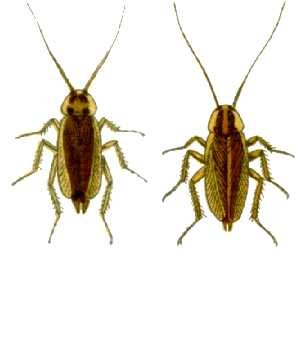
Species one: the German cockroach — the only one that infests
If Ohio had to reduce its cockroach problem to one sentence, it would be: the German cockroach is the whole emergency. Half an inch long, tan-to-caramel with two dark racing stripes on the shield behind its head, the German roach is the only Ohio species that lives, breeds, and builds populations entirely indoors — it cannot survive an Ohio winter outside and doesn’t try. It arrives as freight: cardboard boxes, grocery bags, used appliances and furniture, a visit from an infested apartment. And then it demonstrates the reproductive math that makes it the most serious structural pest insect in the state: females carry their egg case until nearly hatching (protecting it from most sprays), each case holds thirty to forty young, and the generation time in a warm kitchen runs under two months. Two roaches in March is a population in June and a crisis by September. Every fact about German roaches points the same direction — early response. Nymphs the size of a pepper flake near the fridge hinge, pepper-dot droppings in a cabinet corner, a musty odor in a closed cupboard: any of those signs is the week to act, and the difference between that week and month six is the difference between a modest baiting program and a whole-kitchen campaign. Our cockroach service page covers the gel-bait-and-growth-regulator program in depth; the short version is that German roaches are very beatable with professional baiting and nearly unbeatable with a spray can, because repellent sprays scatter the colony deeper into the structure while the egg cases ride out the assault in wall voids.
Only one of the four breeds indoors in numbers, and it needs a different plan from the other three. That plan is cockroach control in Dayton.
Species two: the American cockroach — the basement “waterbug”
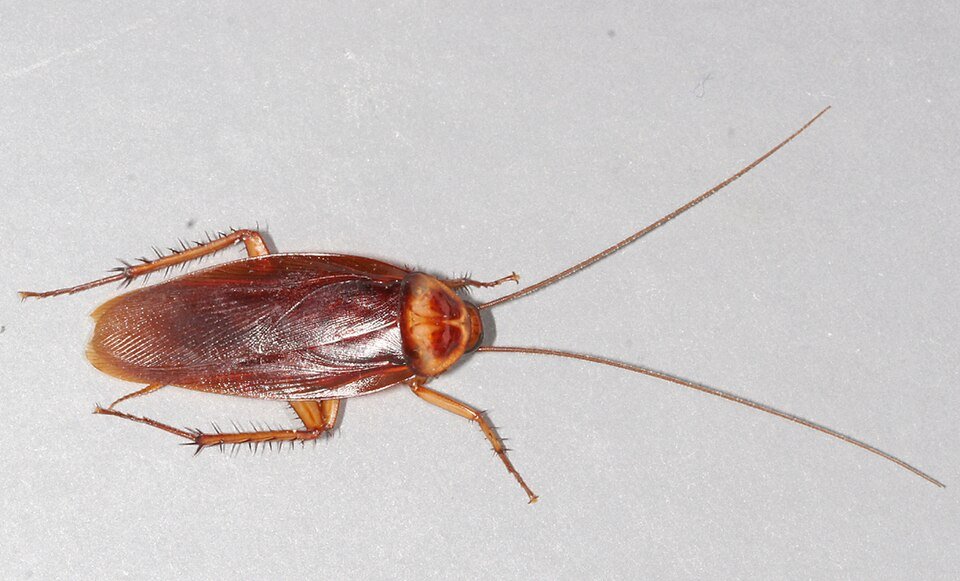
The one that makes people scream isn’t actually the dangerous one. The American cockroach — reddish-brown, up to two inches, capable of a horrifying glide-flutter when disturbed — is Ohio’s giant, and the roach most Miami Valley residents mean when they say “waterbug.” Americans live primarily in municipal infrastructure: sanitary and storm sewers, steam tunnels, floor drains, sump pits, and the chronically damp corners of older basements. They wander up into houses rather than colonizing them — a breeding population in your living space is rare outside of severe moisture situations — which means an American roach sighting is usually a building report card rather than an infestation alarm. The report usually reads one of three ways: a floor drain somewhere has a dry trap (the water seal evaporated, opening a literal highway to the sewer); a sewer lateral has a breach (tree roots and clay-pipe age do this across every pre-1960 neighborhood in Dayton, Miamisburg, and Lebanon); or a basement is running damp enough to qualify as habitat. The fixes follow the diagnosis: a quart of water (plus a spoon of mineral oil) down every rarely-used floor drain monthly, a camera scope when sightings persist in an older home, dehumidification below fifty percent, and perimeter-plus-drain treatment from us for the traffic itself. Kill the individual, sure — but read the report card, because it’s telling you something about pipes, not pests.
Species three: the Oriental cockroach — the cold-cellar specialist
Ohio’s third house roach is the Oriental cockroach — an inch long, glossy black to deep mahogany, slower and clumsier than its cousins, with stubby non-functional wings that ground it permanently. Orientals are cool-moisture specialists: where German roaches want your warm kitchen and Americans want the sewer main, Orientals want the damp cool margins — window wells, exterior stairwells, meter boxes, crawlspace mouths, the mulch against a shaded foundation, and unfinished basements with weeping walls. They peak in late summer, often appearing indoors after heavy rains push them out of saturated soil habitat, and their old folk name — “water bug,” shared confusingly with the American — reflects the same moisture bond. Two practical notes distinguish Oriental response. First, they’re the most outdoor-connected of the domestic roaches, so perimeter treatment and moisture correction carry more of the load: window-well covers, cleared foundation mulch lines, graded drainage, and door sweeps at the walk-out and garage. Second, they travel floor-level through damp infrastructure and carry the same sanitation concerns as their relatives, so a persistent Oriental presence in a finished basement earns the same seriousness as any roach — with the inspection focused on where the water is, because with Orientals, the water is always the answer.
Species four: the brown-banded cockroach — the dry-closet outlier
The rarest of Ohio’s four is also the rule-breaker. The brown-banded cockroach — German-sized but lighter, with two pale bands across the abdomen and no pronotum stripes — wants nothing to do with your kitchen sink. It prefers warm and dry: closet shelves, picture frames, electronics, furniture voids, ceiling-corner trim, and bedroom clutter, often well above floor level and scattered through the house rather than concentrated at plumbing. That distribution is exactly why identification matters: a German-roach baiting program aimed at kitchen moisture zones misses a brown-banded population living behind the den’s bookshelf entirely. Brown-bandeds arrive with furniture and electronics (used TVs and game consoles are classic vectors), breed indoors like Germans though more slowly, and respond to the same bait-and-growth-regulator chemistry — placed where they actually live, which our inspections map room by room. If your roach sightings are in bedrooms and living areas rather than kitchen and baths, or the roaches you’re seeing carry bands instead of stripes, say so when you call: it changes the treatment map on day one. (This species earns a dedicated deep-dive page of its own on this site — it’s underdiagnosed across the Miami Valley precisely because everyone assumes all small roaches are Germans.)
The outdoor cast: wood roaches and the porch-light visitors
Every June, Miami Valley homeowners meet a roach that genuinely isn’t a problem: the Pennsylvania wood cockroach. Males are strong fliers drawn to porch lights from the woods and wood piles where they actually live — the wooded lots of Bellbrook, Beavercreek, and Oakwood see them most — and one flapping into the living room on a summer evening triggers understandable German-roach panic. The reassurance is structural: wood roaches cannot breed indoors (too dry), don’t infest, and die on their own within days. Identification: flatter and browner than a German, no pronotum stripes, males with wings longer than the body, and a June-July porch-light arrival pattern. Response: warm-spectrum exterior lighting, firewood stored off the ground and away from the house, and patience — not treatment. Knowing this species exists saves Miami Valley families real money every summer, and telling you a pest doesn’t need us is exactly the kind of honesty the rest of this site runs on.
Ohio cockroach identification chart: telling the four apart at a glance
- Small (½”), tan, two dark stripes behind the head, kitchen/bath sightings: German — the infestation species; act this week, professional baiting, never repellent sprays
- Huge (1½–2″), reddish-brown, basement or drain sightings, may glide: American — infrastructure wanderer; fix drain traps and moisture, scope old laterals, perimeter treatment
- Large (1″), glossy black, slow, damp cool areas, late-summer surge: Oriental — moisture specialist; window wells, drainage, exclusion, perimeter program
- Small (½”), pale bands across the back, bedroom/living-area sightings up high: brown-banded — dry-warmth breeder; whole-house bait mapping, check electronics and furniture
- Brown, flat, flies to porch lights in June, wanders indoors and dies: wood roach — harmless visitor; lighting and firewood management, no treatment needed
Why Ohio’s climate shapes the whole roach story
Ohio’s roach ecology is defined by our winters: hard freezes mean no year-round outdoor breeding populations of the domestic species, which concentrates everything on structures and infrastructure. German and brown-banded roaches survive Ohio only indoors — every infestation traces to transported freight, never to the yard — while Americans and Orientals persist in the frost-free refuges our cities provide: sewer mains, steam and utility corridors, heated basements, and the warm margins of commercial buildings. This is genuinely good news for control. It means an Ohio German-roach problem has a finite, findable indoor boundary; it means winter doesn’t pause your kitchen infestation but does pin the whole population inside your treatable envelope; and it means sewer-connected species can be firewalled with drain discipline and exclusion because they need the infrastructure connection to sustain themselves. Compare the Gulf states, where outdoor breeding populations of multiple species besiege every structure year-round, and Ohio’s roach hand is enviable — four species, clear roles, and a climate that fights on the homeowner’s side five months a year.
Health stakes: the part that isn’t cosmetic
Whichever species you’re hosting, the health file reads the same direction. Roach droppings, shed skins, and fragments degrade into airborne allergens that rank among the leading triggers of childhood asthma in American housing — the German roach, living densely in kitchens, is the primary offender, and the allergen persists in dust long after the insects die. All four domestic species mechanically transfer bacteria (Salmonella and E. coli among them) from drains and refuse to food surfaces along their nightly routes. Ohio’s health districts treat roach evidence in food facilities accordingly, and households with asthmatic kids should treat a German roach sighting with the same seriousness as the restaurant operators we serve treat theirs. Elimination plus cleanup — HEPA vacuuming of harborage zones, hot-washing exposed textiles, wiping down the cabinet interiors the colony used — is the full health response, and our treatment visits walk you through the cleanup half specifically because the allergen story doesn’t end when the insects do.
Ohio roach questions we answer weekly
I saw one roach. How worried should I be?
Identify first, worry second. One wood roach in June is weather. One American in a basement is a drain-trap reminder. One German in a kitchen is a genuine early warning that deserves a same-week response — because with German biology, the visible one percent implies the hidden ninety-nine. A phone photo settles which story you’re in, and our identification line is free precisely because this fork in the road is worth getting right.
Do roaches mean my house is dirty?
No — they mean your house has food, water, and warmth, which describes every occupied house in Ohio. Germans arrive as freight regardless of housekeeping; Americans follow pipes; wood roaches follow porch lights. Sanitation affects how fast a German population grows and how well baiting competes, which is why our program includes the short realistic checklist — but arrival was never about your standards, and we’ve treated spotless kitchens and cluttered ones in the same week on the same street.
My apartment building has had roaches for years. Is that just apartment life?
It’s untreated-building life. German roaches move through connected units via plumbing chases, so single-unit treatment in a multifamily building buys weeks, not solutions — the fix is building-coordinated baiting with the adjacency logic our property management page details. Ohio habitability practice puts building-level infestations on the owner; report in writing, and point your landlord at that page — the building version costs owners less than the whack-a-mole version they’re currently funding.
What actually kills roaches — and what’s a waste of money?
Works: professional gel baits in rotation, insect growth regulators, crevice-applied dusts in voids, monitors that turn guesses into counts, drain and moisture correction for the infrastructure species, and exclusion. Wastes: repellent surface sprays (they scatter Germans deeper and contaminate bait placements), foggers (open-surface product for crack-dwelling insects, plus a real fire hazard), ultrasonic plugs (fail every controlled test), and bay leaves, cucumbers, and the rest of the folklore shelf. The professional program isn’t magic — it’s just the correct tools aimed by an inspection, which is why it wins in weeks against problems the spray-can cycle feeds for years: (937) 569-3330, free quotes across the Miami Valley.
A Dayton-area field note: where each species shows up on our route
After years of kitchen-by-kitchen work across the Miami Valley, the species map is almost predictable enough to print. German roach calls concentrate where housing density and turnover run highest — the rental corridors of Dayton and Trotwood, student housing in Fairborn, and the apartment communities of every suburb — because freight-borne pests travel with people. American roach calls track infrastructure age: the pre-war basements of Dayton’s historic districts, downtown Miamisburg and Lebanon, and anywhere clay sewer laterals outnumber PVC. Orientals follow moisture geography — window wells in Kettering’s basement blocks, the damp foundations of Englewood’s river-adjacent streets. Brown-bandeds surface randomly, riding secondhand furniture into any zip code. And wood roaches own the wooded-lot porch lights of Bellbrook and Beavercreek every June. Wherever your address falls on that map, the response starts the same way: a photo, a free identification, and an honest answer about which of Ohio’s four roach stories you’re in — from the local company that’s already read the ending of all of them.
The prevention baseline that suppresses all four
Different as the four species are, one household baseline suppresses them all, and it takes an evening to establish. Seal the freight route: inspect cardboard at the door, break boxes down fast, and quarantine secondhand appliances and furniture for a flashlight check before they join the household. Close the water ledger: fix drips, dry sinks overnight during any active concern, keep floor-drain traps wet monthly, and hold basements under fifty percent humidity. Manage the food margin: sealed containers for pantry bulk goods, nightly garbage discipline, pet bowls picked up between meals. And harden the envelope: door sweeps, sealed penetrations, screened vents, window-well covers — the same exclusion list that runs through every page on this site, because the roach door and the mouse door are usually the same door. None of this replaces treatment when a German population is already established; all of it determines whether a stray arrival becomes a population at all. An hour of habits, a caulk gun, and a monthly quart of water down the basement drain: that’s the whole civilian defense, and houses that run it make our professional visits rare, short, and boring — which is the outcome everyone’s actually shopping for.
Wood roach vs. German cockroach: the two-second fork
The comparison the summer searches run: wood roach — tan, daylight-active, flies to porch lights, wanders indoors and dies (cannot breed inside; no response needed beyond the bulb swap); German — smaller, darker, twin pronotum stripes, strictly indoor, night-active, kitchen-bound, and the species the two-visit protocol exists for. Venue and clock settle it: porch light in June = wood roach, relax; cabinet hinge at midnight = German, act. The photo line arbitrates the dim-light ties same-day.
Frequently asked questions
What kinds of roaches are in Ohio?
The house roster: German (the kitchen colonist — small, tan, striped), American (the big mahogany infrastructure traveler), Oriental (the dark basement “water bug”), brown-banded (rare, warm-dry rooms), and the outdoor wood roaches that visit porch lights harmlessly each June.
Which Ohio roach is the worst to have?
German, decisively — fastest breeding (sixty-day generations, forty eggs per case), fully indoor-adapted, and the species behind essentially every serious kitchen infestation. The big scary ones are tourists; the small tan one is the tenant.
Are roaches common in Ohio homes?
Common enough to keep us busy year-round: German importations ride the cardboard-and-appliance economy into every zip code, and the infrastructure species walk into older housing stock’s basements each summer. No neighborhood is exempt; the origin routes are democratic.
Do Ohio winters kill roaches?
Outdoor populations of the tropical species, yes — German roaches cannot survive an Ohio winter outdoors, which is exactly why every German infestation is an importation event and why winter never solves an indoor colony living at a comfortable 68 degrees.
What attracts roaches in Ohio houses?
The universal triangle — warmth, moisture, calories — delivered locally as: appliance voids, dry floor drains (the American doorway), damp basements (the Oriental climate), and any kitchen’s grease film and crumb economy. The species pages break down each address.
Where do Ohio roaches come from?
Two routes, fully mapped on our origins page: importation (boxes, secondhand appliances, luggage, shared apartment walls) for Germans, and infrastructure (sewers via dry drain traps, foundation gaps) for Americans and Orientals. The route determines the entire fix.
Are Ohio roaches dangerous?
The health file is respiratory and sanitary: roach debris is a documented asthma trigger (children especially), and kitchen tracking is real contamination. No bites, no stings — the danger is chronic, not dramatic, and it is the honest reason to treat seriously.
How do Ohioans get rid of roaches?
The doctrine that runs our whole roach wing: gel bait on the night routes, growth regulator for the breeding cycle, sanitation and drying, drains watered, gaps sealed — and never foggers or baseboard sprays, the two products that scatter colonies deeper.
Do I need year-round roach protection in Ohio?
Households that have had one German cycle, multifamily buildings, and older-basement homes benefit most — the Protection Plan’s quarterly inspections catch importation events at first-sighting stage. Tight, roach-history-free homes can honestly run on habits alone: drains, cardboard, vigilance.
Who treats roaches across the Dayton area?
We do — all eight counties, species-first protocols, both-visit pricing stated up front, and the free photo ID that sorts your basement “water bug” from your kitchen problem in one text: (937) 569-3330.