
The roach wing’s pages have each held one corner of the war — the species court, the nymph-and-egg file, the basement euphemism, the flight myths — and this page is the one they’ve all been pointing at: how to get rid of roaches, the complete campaign, start to verified finish. The doctrine up front, earned across the whole wing: roach elimination is bait-and-biology warfare, never spray-and-hope — the German cockroach’s crack-optimized, ootheca-armored, cannibalism-recycling economy defeats every aerosol ever pointed at it and loses reliably to gel baits, growth regulators, sanitation leverage and the two-visit calendar that respects the egg case’s clock. What follows: the species-first fork that scales everything (the answer differs by an order of magnitude between a wood-roach June and a German kitchen), the seven-day opening (audit, monitors, water discipline — the moves that make treatment cheap), the bait-and-IGR core with its placement craft and its three classic saboteurs, the apartment chapter’s shared-wall honesty, the timeline that keeps week two from feeling like failure, and the verified ending — because “we haven’t seen one lately” is a feeling, and monitor counts are a fact. Greater Dayton Pest & Rodent, the two-visit protocol’s home: (937) 569-3330.
Species first: the fork that scales the whole answer
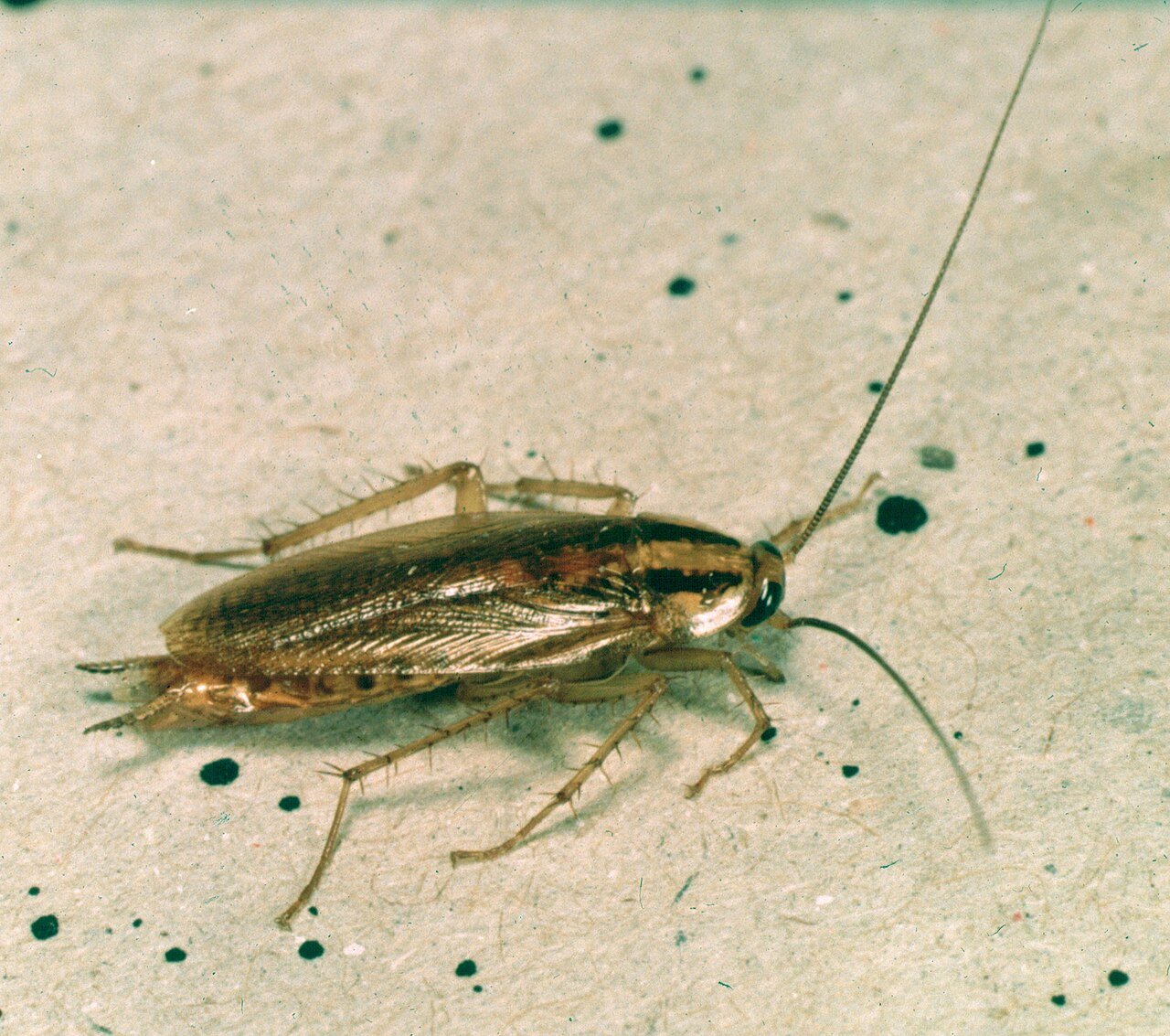
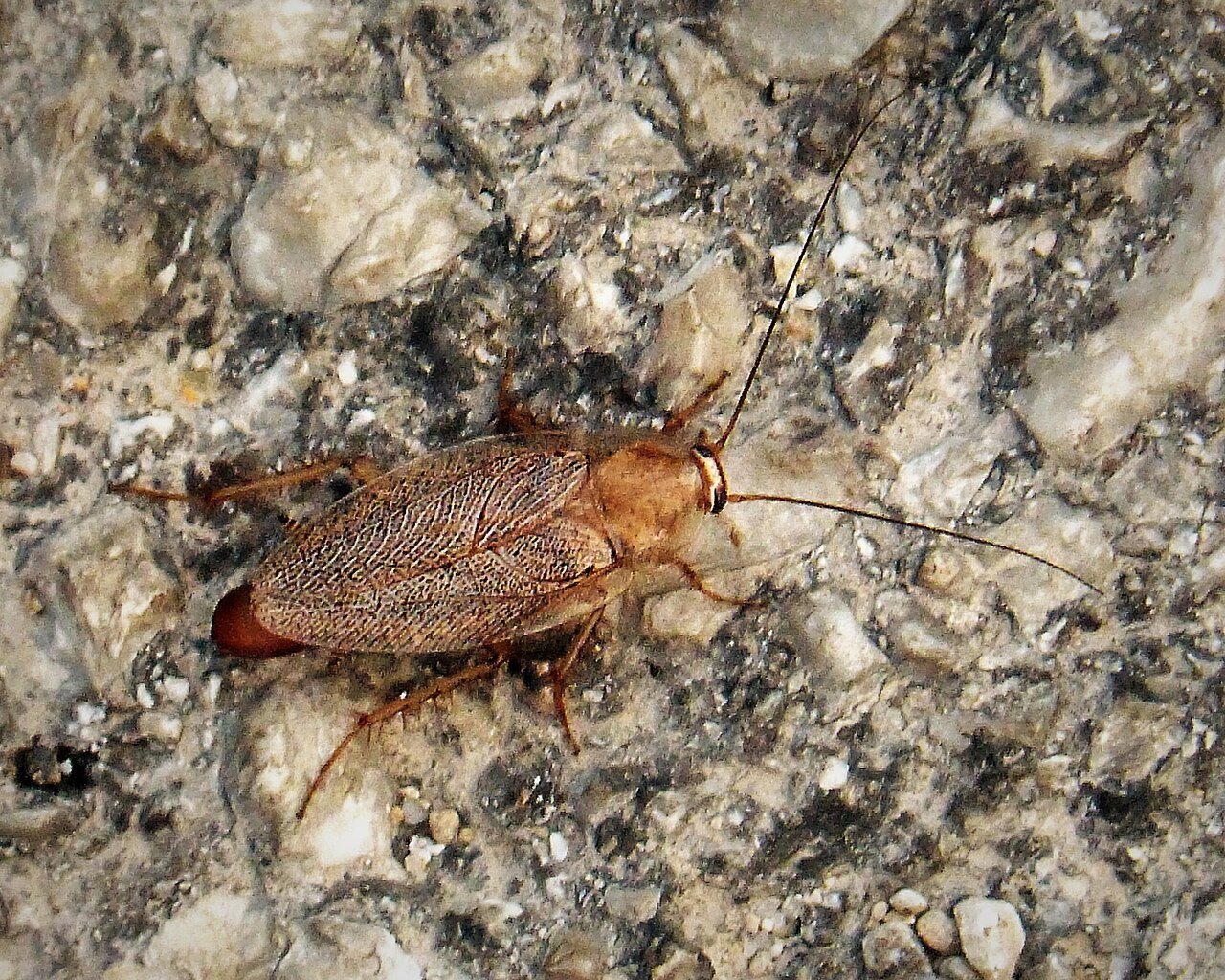
Every roach campaign starts by naming its enemy, because the responses run from “change a bulb” to “full protocol”: wood roach (tan, daylight, porch lights, June) — no campaign exists or is needed; the species guide’s happiest verdict. Oriental or American (the dark basement “waterbugs” and the two-inch infrastructure glider) — the moisture-and-drain campaign: water the traps, dry the basement, seal at grade, bait the void margins; population math slow, urgency moderate. Brown-banded (the warm-and-high specialist) — the furniture-and-electronics audit with baits placed at shelf height. And German — the twin-striped kitchen resident whose 30-to-40-egg oothecae and six-week generations make it the only local species that genuinely infests — the full campaign below, deployed at first confirmed nymph, because the compounding arithmetic between a one-ootheca week and a six-month population is the most expensive delay in household pest control. The fork’s tools are the wing’s standing kit: venue and clock (porch versus cabinet, June versus midnight), the nymph check, the pepper-versus-pellet droppings read, and the photo line’s same-day species verdicts — ten minutes of identification that decides whether the next section costs you a bulb, a dehumidifier setting, or a protocol.
Bait and biology beat spray every time, and doing it properly across a whole house is cockroach control in Dayton.
The seven-day opening: audit, monitors, water
The campaign’s first week spends nothing on chemistry and decides most of its outcome. The flashlight audit (night one): the harborage tour in full — cabinet hinge-sides and top corners, the fridge’s warm compressor bay, the stove’s flanks, dishwasher housing, under-sink penetrations, and the crack lines where counter meets wall — mapping droppings concentrations, live sightings and any oothecae (mechanically destroyed on discovery) into the placement map every later step uses. The monitor grid (night two): sticky monitors at the audit’s flagged corners — the census instruments that convert “we see them sometimes” into station-by-station counts, grade the infestation’s geography honestly, and later serve as the campaign’s scoreboard (the interceptor doctrine, kitchen edition). The water war (all week, forever): roaches outlast famine for weeks but drought for days, so the moisture discipline hits harder than any food rule — the drip fixed, the sink dried overnight, the sponge wrung and racked, the pet bowl up after dinner, the dish rack drained — while the food side runs its standard hygiene (crumbs closed out nightly, cardboard evicted, the grease seams degreased so bait outcompetes them). The week’s output: a mapped, monitored, thirsty population primed to eat exactly what the next section places — and an honest severity read that occasionally ends the campaign early (a clean grid and one wood-roach corpse close files too).
The core: gel, growth regulator, and the placement craft
The elimination engine runs two chemistries in the crack world where the colony actually lives. Gel bait — pea-sized placements INTO the mapped harborage: hinge gaps, crack seams, void edges, appliance margins — never smeared on open surfaces (roaches eat where they hide; exposed bait dries, gathers dust and trains avoidance). The kill cascades: feeders die in harborage, the colony’s scavenging-and-droppings economy recirculates the dose, and the population’s own habits run the distribution the trophallaxis doctrine promised. The IGR — the anti-egg chemistry: growth-regulator placements alongside the bait sterilize the pipeline the gel can’t reach, converting the ootheca arithmetic from threat to countdown. The three saboteurs, named because they end more DIY campaigns than the roaches do: spraying anything near the bait (repellent aerosols contaminate placements and scatter the population — the fogger conviction’s kitchen clause: pick bait, spray nothing); too few placements too far apart (Germans forage inches, not rooms — a dozen pea-dots beat three grand smears); and stale bait left to harden (refresh weekly; a dried placement is décor). Rotate bait formulations if a placement goes ignored (bait-aversion strains exist — the professional matrix rotation our protocol carries answers them), dust the deep voids with the boric-acid film where gel can’t live, and let the monitors — not the sightings — call the score.
The timeline (and the week-two wobble)
Expectations, calendared, because the campaign’s classic failure is quitting mid-win: days 1–7 — the opening week above; sightings unchanged (nothing has died yet; everything has been mapped). Days 7–14 — bait-and-IGR deployed; sightings often BLIP UPWARD as harborage disturbance and bait recruitment move traffic — the week-two wobble that convinces households the bait “made it worse” precisely as the colony core starts dying (the day-two-surge doctrine at roach scale: hold, refresh, spray nothing). Weeks 3–4 — the crash: monitor counts fall by multiples, daylight sightings end, nymph sizes stop diversifying; the follow-up placement round lands here, timed inside the ootheca hatch window so the last sealed generation emerges onto fresh bait instead of an empty kitchen — the entire reason our professional protocol is two visits, both included in every quote: the second visit IS the treatment’s second half, not an upsell, and any one-visit roach job (ours or anyone’s) is a coin flip against the egg case’s calendar. Weeks 5–6 — verification: two consecutive weekly monitor reads at zero, no fresh pepper on the date-stamped stage, and the campaign files closed — with the monitors left standing as the early-warning grid that catches any re-introduction at the one-ootheca stage where this page’s whole arithmetic is cheapest.
The apartment chapter (the honest shared-wall clause)
Multi-unit buildings get the wing’s standing honesty restated at campaign scale: German populations commute through shared walls along plumbing chases, and a single unit’s perfect campaign against a building’s population is a subscription, not a solution — the bait-and-IGR core still runs (and still protects your unit meaningfully), but the ending requires the building: written reports with dates and photos (Ohio’s landlord-tenant framework routes multi-unit extermination duty to ownership), adjacent-unit inspections as the non-negotiable ask, and the coordinated bait-everywhere response our per-door programs run as standard — treat the introduction’s neighbors, not just its complaint. Renters’ half of the campaign: sanitation, monitors, documentation, persistence — the paper trail that compels the building-scale answer; owners’ half: the arithmetic that catching a one-unit problem before it’s a stack problem is the cheapest line in the maintenance budget. The shared wall was always the German’s best ally; the shared response was always its ending.
Roach campaign questions, answered
Can exterminators actually get rid of roaches for good, or is it maintenance forever?
For good, genuinely — in a detached home, the two-visit protocol plus the sanitation-and-exclusion homework ends German infestations with verification to prove it, and “forever” then depends only on the arrival routes (the cardboard-and-appliance quarantine habits). The maintenance-forever model belongs to two honest cases: multi-unit buildings without building-scale response, and commercial kitchens whose delivery volume makes standing monitoring rational. A company selling monthly roach service on a detached house without naming which case applies is selling its route density, not your necessity.
Do natural methods — baking soda, diatomaceous earth, essential oils — run this campaign?
The myth series’ verdicts assemble: baking soda underperforms its own folklore; DE and boric acid genuinely serve as the crack-dust auxiliary (thin, dry, invisible — placement or nothing); the oils repel briefly and end nothing. The campaign’s core — bait, IGR, sanitation, calendar — has no natural-aisle substitute, and the honest natural claim was always sanitation itself: the degreased seam and dried sink out-treat every spray bottle in the aisle.
One roach after the campaign verified clean — start over?
Grade before restarting: a single adult near a door or grocery bag reads as a fresh introduction (the monitors and one bait refresh handle it — this is exactly what the standing grid exists for); a nymph, or pepper on the clean stage, reads as a survived pocket and warrants the follow-up round. The distinction is the campaign’s dividend: with monitors standing and the map drawn, “starting over” never means week one again — it means one placement round, aimed by instruments, at introduction scale.
The campaign, closed
How to get rid of roaches, complete: name the species (the fork that scales everything), spend week one on the map-monitor-moisture opening, run the gel-and-IGR core in the crack world with the three saboteurs banned, respect the ootheca’s calendar with the two-visit structure, ride out the week-two wobble on instrument readings, and close the file on monitor zeros — then leave the grid standing, because the cheapest campaign is the one the early-warning catches at a single egg case. The wing’s pages built the enemy’s file; this one spends it. For the two-visit protocol with both visits in every quote, the building-scale coordination, and the species verdicts that start everything: (937) 569-3330, Greater Dayton Pest & Rodent, Dayton and all eight counties — where the bait outlasts the wobble, the monitors call the score, and the kitchen’s crack world changes management for good.
The severity self-grade (which campaign are you actually running?)
- Tier 0 — the June flyer: wood roach at the porch light; bulb swap, screen check, no campaign. The species fork’s free exit.
- Tier 1 — the straggler: one adult, no nymphs, clean monitors after a week — an introduction that didn’t take; quarantine habits reviewed, grid left standing.
- Tier 2 — the establishment: any nymph, pepper at multiple stations, night sightings weekly — the full campaign above, DIY-viable for the disciplined, two-visit professional for everyone who’d rather buy the calendar than run it.
- Tier 3 — the population: daylight sightings, multi-size nymphs, odor, droppings spread — the protocol tier, where placement count, matrix rotation and the follow-up timing genuinely need the equipment and the license; DIY here donates weeks.
- Tier 4 — the building: multi-unit spread, repeat reinfestations across units — the per-door coordinated response, paper trail mandatory, unit-by-unit heroics retired.
- Every tier: the photo line grades the evidence free, and the grade IS the budget — the wing’s oldest arithmetic, applied one last time where it pays the most.
Five tiers, one fork, one campaign scaled honestly — the self-grade that turns this page from reading into planning, pinned where the flashlight audit starts.
Why the spray aisle keeps losing (the engineering summary)
The campaign’s doctrine deserves its closing argument, because the spray aisle’s failure is structural, not accidental. The German cockroach’s war economy runs four defenses no aerosol answers: the crack world — the thigmotactic, credit-card-gap habitat where the population actually lives sits beyond every surface spray’s reach (the mist treats the highway shoulders; the colony holds the tunnels); the ootheca — the armored egg case that shrugs off contact chemistry entirely, guaranteeing every spray-only campaign its two-week sequel; the resistance treadmill — decades of pyrethroid exposure have bred survivor strains across the exact product class the aisle stocks deepest, while the bait-and-IGR track’s different chemistry and delivery keep working; and the repellency trap — most sprays actively repel, scattering populations into new voids and adjacent rooms, converting one harborage into five (the fogger’s sin, sold by the can). The bait track inverts all four: it reaches the cracks by recruitment, beats the ootheca by calendar, sidesteps resistance by class, and concentrates rather than scatters. The aisle’s products aren’t weak — they’re aimed at the visible fraction of an enemy whose whole strategy is invisibility, which this library has now said about foggers, folklore and fizz alike, and says here one final time where it matters most: treat the biology, not the sighting, and the sighting ends — the roach wing’s constitution, ratified where its pages always pointed.
A eight-county campaign report
The local pattern, from the protocol files: German campaigns cluster in the rental-and-turnover stock (the moving-box and secondhand-appliance arrival routes writing most founding stories, the shared-wall clause writing most long ones), the restaurant-adjacent blocks where delivery volume runs standing pressure (the courthouse squares’ commercial programs holding the line the residential campaigns inherit), and the waterbug basements of the historic districts whose Oriental files run the moisture campaign at its slowest, steadiest scale. The resolution ledger closes the wing’s way: two-visit protocol files verify closed on schedule at rates the one-visit era never printed, the DIY-disciplined households’ monitor photos grade clean by week six, and the week-two-wobble rescue calls — the households talked off the spray can at the campaign’s exact turning point — run as this page’s standing service before it was even written. The crack world keeps its physics; the calendar keeps its clock; and the eight counties’ kitchens, one verified grid at a time, keep changing management. The wing pointed here; the campaign delivers; and the roach file — species to sighting to zero — closes complete.
Species named, map drawn, gel placed, wobble survived, zeros verified: the campaign the whole wing was building toward, run start to finish on instruments instead of adrenaline. The crack world never changed its strategy; the household finally changed its aim; and the kitchen’s midnight light switch goes back to revealing nothing but a kitchen — which was, across every page of the file, the entire war aim. Bait beats spray; calendar beats panic; and the monitors, standing quiet guard over a closed case, keep the score at zero where it belongs.
And for the reader who arrived tonight, flashlight in one hand and this page in the other: the audit starts at the hinge side of the sink cabinet, the monitors go down before the bait does, and the sink gets dried before bed — three moves, twenty minutes, and the campaign’s opening night complete before the adrenaline fades. The roaches have run this war ten thousand times; you’ve now read the ending once — and once, with this doctrine, is enough.
Gel in the cracks, zeros on the grid, kitchen back in the family: campaign closed.
Page 197 of the library, and the first of its final four — the spiders, the wasps and the ants complete the how-to quartet next door.
Frequently asked questions
What is the fastest way to get rid of roaches?
Gel bait, placed tonight, on the routes the roaches actually use — cabinet hinge corners, the fridge motor void, under-sink pipe gaps. Bait outperforms every spray because roaches carry it home and poison the colony; a properly-baited kitchen shows a sharp drop within a week.
What kills roaches permanently?
The combination the pros use: gel bait to collapse the current colony, insect growth regulator to sterilize the survivors, sanitation to remove competing calories, and sealed entry routes (especially wet floor drains) to stop the resupply. Any one alone underperforms; together they end it.
Why do I have roaches when my house is clean?
Arrival and survival are different questions: German roaches ride in on cardboard, used appliances, and shared walls; American roaches walk in through dry drain traps. Cleanliness controls how well they prosper — it has almost nothing to do with whether they show up.
Should I use a fogger or bug bomb?
Never for roaches — foggers coat open surfaces the colony avoids, repel survivors deeper into walls, contaminate your kitchen, and reliably make baiting harder afterward. The fogger is the single most counterproductive product in the roach aisle.
Where do I put roach bait for best results?
Pea-sized dots within a foot of harborage: cabinet hinge-sides, drawer slide gaps, behind the stove and fridge, under the sink at pipe penetrations, and the dishwasher kick panel. Think crack-and-crevice, never open floor — and never spray anywhere near a bait placement.
How long does it take to get rid of roaches?
With a real program: noticeable decline in days, near-zero in two to four weeks, with a follow-up round timed to the 60-day egg-case cycle to catch hatchlings. Anyone promising same-day elimination is selling the spray-and-scatter experience.
Do roaches die in winter?
Not indoors — German roaches cannot survive Ohio winters outside, which means they never leave voluntarily either. A heated kitchen is a year-round tropical habitat; the eviction has to be active.
What attracts roaches the most?
Water first — the dripping faucet, the wet sink basin, the pet bowl — then grease film, crumbs, cardboard, and warm appliance voids. Dry the kitchen overnight and the colony’s world shrinks dramatically, which is also why drying is step one of the program.
Are roach infestations dangerous to health?
The real file is allergens and asthma — roach debris is a documented trigger, especially for children — plus bacterial tracking across food surfaces. It is a legitimate health reason to treat seriously and quickly, no dramatization required.
Does bleach or vinegar kill roaches?
On direct contact, bleach kills the one roach you drown — and nothing else. Neither touches the colony, both destroy the scent trails that make bait placement smart, and the fumes accomplish nothing. Cleaning products clean; baits kill colonies.
What is the white roach I saw?
A freshly-molted nymph — roaches are white for a few hours after shedding. It means breeding is active on-site, which upgrades the urgency: molting happens in harborage, so a white sighting means you are close to the nest.
Do roach traps work?
Sticky traps are instrumentation, not treatment — excellent for censusing which rooms and how bad, useless for elimination. Place them as monitors to grade your bait campaign’s progress; the catch trend tells the truth week over week.
How do I get rid of roaches in an apartment?
Bait your unit properly and push management for building-wide treatment — German roaches commute through plumbing chases, so single-unit victories in multi-unit buildings are temporary by physics. Ohio habitability law puts infestation treatment on the landlord; report in writing.
Can roaches come back after extermination?
The treated colony, no; new arrivals, always possible — which is why the endgame includes drain-trap discipline (a quart of water monthly), cardboard hygiene, and appliance inspection habits. Prevention is a behavior set, not a product.
What smell do roaches hate?
None reliably enough to matter — peppermint, bay leaves, and citrus folklore repel briefly at best and kill nothing. The scent aisle is where roach budgets go to die; spend on bait and a caulk gun instead.
Why are roaches worse in summer?
Heat accelerates the whole life cycle — faster breeding, faster maturation, more foraging — and American cockroach walk-ins peak as drains dry and heat drives them indoors. Summer is also when treatment shows results fastest, for the same metabolic reasons.
Do I need to empty my kitchen cabinets for treatment?
For our gel-bait work, mostly no — we need access to hinge lines and corners, not empty shelves. Heavy infestations sometimes warrant clearing specific cabinets; you will get the short list before the visit, never a whole-kitchen upheaval.
One roach ran across my counter. Am I infested?
Species decides: one German roach (small, tan, striped) means a colony is near — they never travel alone from outside. One big mahogany American in the basement is usually a solo drain tourist. Identify first; our guides and a photo to us settle it in minutes.
What do roach droppings look like?
German: black pepper grains and coffee-ground specks concentrated in corners and hinge lines. American: larger blunt-ended cylinders. Droppings mark harborage — wherever they concentrate is where bait belongs, which makes them the most useful evidence in the kitchen.
When should I call a professional for roaches?
Daily sightings, any daytime sightings, evidence in multiple rooms, apartments needing building-side pressure, or a failed DIY campaign (especially post-fogger) — those cases need commercial-grade placement, growth regulators, and the follow-up protocol: (937) 569-3330, free quote, no lectures about the fogger.