
Montgomery County is home base — our office sits on Salem Ave in Dayton, our densest routes run its streets daily, and more of this site’s pages describe its neighborhoods than any other patch of Ohio. This page is the county’s master index: every Montgomery County community we serve with its own dedicated page, the county’s four distinct pest geographies, and the coverage logistics that come with being the home county. If you already know your town, jump straight to its page below; if you are deciding whether a Dayton company really knows your corner of the county, the neighborhood-level depth linked here is the answer.
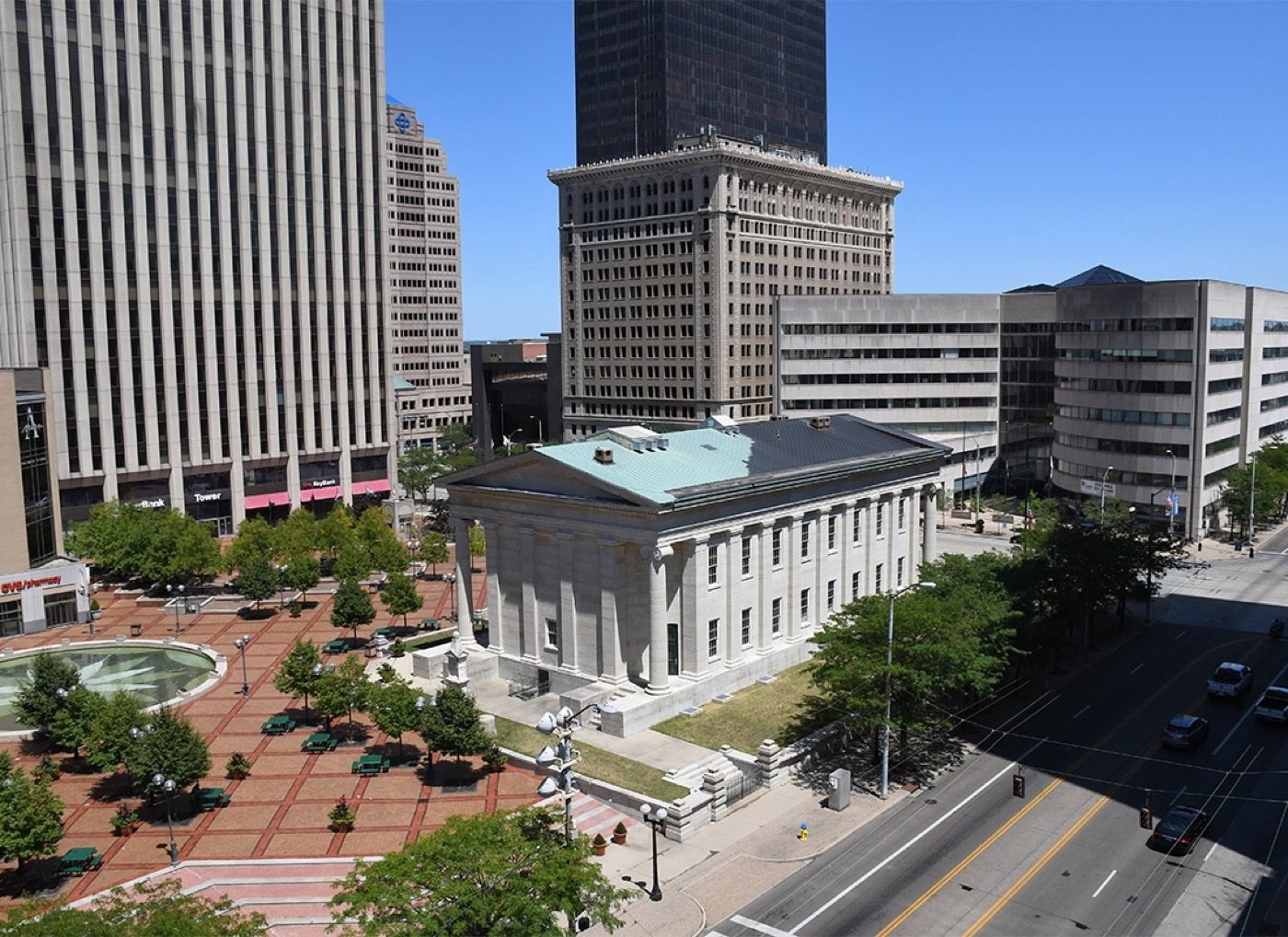
Every Montgomery County community, by name
- Dayton — the anchor, plus street-level guides for South Park, DeWeese, Greenwich Village, and downtown
- Kettering and Oakwood — with the Hills & Dales seam between them
- Centerville and Washington Township — including the larger-and-luxury-home guide
- Huber Heights · Miamisburg · Trotwood · Englewood · Vandalia
- Verona on the Preble seam — and every township address between: Harrison, Butler, Miami, Jefferson, German, Jackson, Clay, Perry — covered under the nearest community’s routing
The county’s four pest geographies
The urban core runs the connected-building logic our downtown page maps — converted lofts, shared walls, restaurant rows, and century infrastructure where the rule is treat-the-building. The historic first ring — South Park to Oakwood to old Kettering — is exclusion-craftsmanship country: stone foundations, balloon frames, slate roofs, and the preservation-grade sealing they reward. The postwar suburbs — the ranches and colonials of Kettering, Huber Heights, Miamisburg, Englewood, Vandalia — are the sealable stock where the twelve-doors playbook produces permanent results in an afternoon. And the edges and estates — Washington Township’s wooded lots, the river corridors, the field seams toward Preble — run the sustained-pressure defense our edge-lot pages prescribe: sealed structures, September barriers, and habitat respected rather than fought.

The rivers, and why the county’s pest calendar bends around water
Five rivers meet in or near this county — the Great Miami, Stillwater, Mad, Wolf Creek, and Twin — and the corridors they cut are the county’s standing pest infrastructure: mosquito seasons that run longer along the low ground, rodent populations that ride the greenways and surge upslope in wet years, the moisture economies that keep basement guilds thriving in valley neighborhoods, and the flood-memory basements whose elevated vigilance our creek-village and corridor pages describe. The practical read for a Montgomery County homeowner: know which geography your block sits in (most of the county is two at once), and let the matching page’s playbook set your calendar — the September visit for the edges, the moisture discipline for the valleys, the exclusion project for the old stock, the building-wide logic for anything with shared walls.
Home-county logistics: what daily routes actually buy you
Montgomery County is where our route density peaks, and the service shows it: same-day capability most weekdays across the core (the emergency page maps it honestly), next-day as the working norm everywhere else in the county, follow-ups and Protection Plan visits that slot in without scheduling gymnastics, and technicians who accumulate street-level pattern knowledge because they work the same map every week — the fairground-season wasp surge, the harvest push at the field seams, which neighborhoods’ alleys feed which blocks. Every promise on this site is county-wide, but physics is physics: home county means fastest response, and the neighborhoods pages linked above are the proof of how local the knowledge runs.
Commercial, institutional, and multifamily across the county
The county’s commercial spine — downtown’s restaurant rows, the retail corridors of Miamisburg and Huber Heights, the office parks of Kettering and Centerville, the warehouses along the interstates — runs on our commercial programs with the documentation inspectors and auditors expect. Multifamily portfolios from downtown lofts to garden complexes get the building-wide logic that ends unit-by-unit whack-a-mole. And the county’s institutions — schools, churches, clinics — get programs sized to their pressure and scheduled around their calendars, with the family-safety placement standards as default. One county, one standard, documented everywhere.
The eight-county map: Greene County · Warren County · Preble County · Miami County · full service area.
A Montgomery County year, geography by geography
- March–May: ant season opens everywhere at once — the supercolony species in every kitchen, termite swarms in the old stock (same-day photos, always), moles following the thaw across the estate lawns
- June–August: wasps scale on porches and rooflines; river-corridor mosquito season peaks; the urban core’s roach and fly pressure hits its annual high; cicada killers patrol the sandy lawns performing harmlessness dramatically
- September–October: the county-wide double — rodent push at every edge and invader flights (lady beetles, stink bugs, cluster flies at the field seams) on every sunny wall; the September visit is the calendar’s anchor in all four geographies
- November–February: interior season — mice announce themselves, old-stock exclusion projects run best, and pre-listing WDI inspections queue ahead of the spring market
Montgomery County questions we hear
You cover four counties now — does home-county service get diluted?
The opposite mechanics apply: outer-county work rides scheduled route days precisely so the home county keeps its daily density. Montgomery routes are the trunk of the tree; everything else branches from them. The measurable version: home-county same-day capability and follow-up speed have only improved as the map grew, because route density — not territory size — is what drives response, and density here keeps rising with every new customer street.
Which page should I actually read for my house?
Start with your community’s page above — then let its links route you: the neighborhood guides if you are in Dayton proper, the edge-lot deep dive if trees own your property line, the larger-home guide if square footage is the story, the plans comparison when you are deciding how to hire us. The site is built as a map; the county pages are its legend. And the shortcut past all of it remains one photo to (937) 569-3330.
The housing-stock spread: why one county needs four playbooks
Montgomery County’s housing runs 180 years deep, and the pest implications sort by era more reliably than by zip code. The 1840s–1900s stock — South Park’s Victorians, the village cores swallowed by the metro, Oakwood’s early streets — carries stone foundations, lime mortar, and balloon framing: porous by design, permanently sealable only by craftsmanship, and worth every hour of it. The 1920s–1940s ring — the Tudors and four-squares of Oakwood, Kettering’s first blocks, Dayton’s streetcar suburbs — adds slate, plaster, and the moisture vigilance older custom construction demands. The postwar boom — the county’s biggest single cohort, from Huber Heights (once America’s largest community of all-brick homes) through every ranch-and-cape subdivision — is the efficiently sealable stock: finite entry lists, permanent results, the exclusion economics that make our favorite before-and-after stories. And the 1990s-forward edges — vinyl-and-foam construction on former field ground — trade old-stock porosity for new-stock quirks: unsealed line-sets, grade-level deck ledgers, and field-displacement pressure the new-construction myth section covers. Four eras, four failure patterns, one inspection discipline that reads them all — and a county where we have now written the manual for each.
The bottom line for the home county
Montgomery County gets the fullest version of everything this company does: daily routes, neighborhood-level published knowledge, all four housing-era playbooks, commercial and multifamily programs at metro scale, and the fastest response on the map — because this is the map we started with and the streets we drive home on. Every community above has its own page; every page carries the same promises (free quotes, free photo ID, the two honest ways to hire us); and the number that starts everything is the same one painted on the trucks: (937) 569-3330. Greater Dayton Pest & Rodent — Montgomery County born, four counties grown.
What the home county taught us (and what it gets back)
Everything distinctive about how we work was learned on Montgomery County streets. The photo-first triage habit came from Dayton landlords who needed answers faster than visits. The exclusion-over-spray doctrine came from the historic districts, where chemistry without craftsmanship just rents the same problem annually. The campus-scoping instinct that now serves Preble’s farms started with Washington Township’s outbuilding estates. The treat-the-building rule came from downtown’s shared walls; the September-anchor calendar from watching a decade of harvest pushes hit the county’s field seams; the no-crisis-markup policy from deciding early that a Kettering family with wasps at the door deserves a neighbor’s price, not a hostage negotiation. The county was the classroom, and the whole eight-county operation now runs on its curriculum — which is why every outer-county page on this site keeps linking back to lessons written here.
What it gets back: first claim on everything. New services pilot on Montgomery routes before they travel. The Protection Plan’s cadence was tuned to this county’s calendar. And when the schedule genuinely tightens — the August wasp crush, the October push — home-county density is what keeps every promise honest, because the truck is never more than a few miles from the next stop. Loyalty flows both directions on a route map; ours starts where the routes do.
Do you serve the Montgomery County communities without dedicated pages yet — Brookville, Clayton, West Carrollton, Moraine, Riverside, Union?
Every one of them, at full standard — routed under the nearest anchor community and quoted identically. Dedicated pages for the remaining municipalities are on the roadmap (the site grows by exactly this kind of request), and their residents lose nothing meanwhile: the geographies above already describe every one of those towns, and the phone number does not check for a landing page before answering. If your town is next on the map you would like to see covered by name, say so when you call — resident requests genuinely set the queue.
The county’s commercial corridors, mapped
For the facilities managers and operators reading: Montgomery County’s commercial pest load concentrates along knowable lines, and our route architecture mirrors them. Downtown and the Oregon District run the food-service-dense program described on the downtown page — alley-first rodent work, drain programs, inspection-ready binders. The interstate logistics belt — the warehouse and distribution stock along I-75 and I-70 through Vandalia, Huber Heights, Moraine, and West Carrollton — runs dock-and-envelope defense at warehouse scale, where one propped bay door writes the quarter’s rodent story. The retail-and-restaurant strips — the Dayton Mall orbit, Brown Street, the Far Hills corridor through Kettering into Centerville — carry shared-wall block dynamics at suburban scale, where coordinated storefront programs beat solo contracts on both price and outcome. And the medical-and-institutional cluster — the hospital corridors, the campuses, the county’s schools — runs documentation-first programs where the paper trail is half the product. Every corridor has its own pressure signature; all of them get quoted free, serviced on route days their business hours dictate, and documented to whatever standard their inspectors carry. The county’s businesses built our commercial book one referral at a time — the corridors above are where those referrals live.
One county tip worth the whole page: know your era, book your season
If a Montgomery County homeowner takes a single action from this index, make it this pairing: identify your house’s era from the four-playbook section above, then book its era’s highest-value appointment before its season — the exclusion project in winter for the old stock (contractors’ quiet months, walls accessible), the September barrier-and-seal for every edge and postwar home (ahead of the push and the flights), the spring moisture-and-termite review for the 1920s–40s ring, and the first-year baseline for anything newly built or newly bought. One era-matched, season-timed visit per year prevents the majority of what this county’s call log contains — and it is precisely what the Protection Plan automates for the households done thinking about it. The county taught us the calendar; this page hands it back.
The estate-and-edge tier: where the county’s pressure concentrates
One Montgomery geography deserves a closing deep-dive because it generates the county’s most persistent calls: the estate-and-edge tier where lot sizes grow and habitat presses close — Washington Township’s wooded acreage, the Hills & Dales seam, the river-bluff properties along the Stillwater and Great Miami, and every subdivision backing to the county’s surviving crop ground. These properties share the arithmetic our larger-home guide runs in full: more perimeter per household, more habitat per property line, quieter wings where problems establish unheard, and pressure that never expires because the source — the woods, the fields, the water — is the reason the family bought the lot. The tier’s playbook is the county’s most complete: campus-scoped inspections, September barriers as annual religion, exclusion built in steel and checked on schedule, vacant-home monitoring for the travelers, and the Protection Plan cadence that makes all of it automatic. It is also where the county’s referral networks run strongest — cul-de-sacs and township lanes talk, and a decade of estate-tier work compounds into the neighbor-to-neighbor book of business that lets a local company keep its prices honest. If your Montgomery address has trees at the line and acreage on the deed, the tier’s pages were written for you, and the inspection that starts everything remains free.
Reading this page from anywhere in the county
A closing orientation for the reader who landed here first: this hub is deliberately an index, and the county’s real depth lives one click down. Homeowners start at their community page and follow its links inward — every city page routes to the neighborhood guides, species deep-dives, and myth-testing articles its geography makes relevant. Businesses start at the commercial hub and its vertical pages. Landlords start at property management. Buyers and sellers start at the inspection suite. And anyone mid-crisis skips all of it for the priority-response page or the phone itself. The site now runs well past a hundred pages because Montgomery County’s pest reality genuinely contains that much local variation — and because we would rather publish the answers than gatekeep them behind a sales call. Read what your situation needs, ignore the rest, and know the free photo line short-circuits everything: (937) 569-3330, answered by the people who wrote every word above.
Licensed by the Ohio Department of Agriculture (Pesticide Business License #115079; applicator #170858 — categories 10A, 10B, and 12), insured, owner-operated from 733 Salem Ave, and on Montgomery County’s streets every working day since the first truck rolled: the home county’s page, finally written down. Monday–Friday 8–6, Saturdays by appointment, and the door is the same one it has always been.
Which Montgomery communities are next for dedicated pages?
Brookville, Clayton, West Carrollton, Moraine, Riverside, and Union head the queue, with the township crossroads behind them — and as the roadmap section above says, resident requests genuinely reorder it. Every one of them is fully served today under the nearest anchor’s routing; the pages simply make the local knowledge public, one community at a time, the way this whole site has been built.
Just upriver. The Mad River reaches Dayton from Clark County, which sits directly northeast of Montgomery and farms eighty-nine percent of its ground. If you own property on both sides of that line, the same crew covers it — and the fall pressure that arrives here on the calendar arrives there on the combine.
Downriver and upriver. The Great Miami leaves Montgomery and runs south into Butler County, and the 1913 flood that built Dayton’s conservancy district is the same flood that took Hamilton apart — more than two hundred dead there in a single day. The levee systems at both ends came out of the same decision. Northwest of us, Darke County runs Ohio’s top livestock country.
Frequently asked questions
Do you cover all of Montgomery County?
Every municipality and township — Dayton at the core, the ring suburbs (Kettering, Oakwood, Centerville, Huber Heights, Miamisburg, Vandalia, Englewood, Trotwood, and the rest), and the rural townships out to the county lines. Home county, densest routes, fastest scheduling.
What pests dominate Montgomery County?
The county’s housing-age gradient writes the map: century-stock foundation mice and sewer-line roaches in the urban core, mid-century slab ants and garage mice in the first ring, sod-line wasps in the newer plats, and farm-edge surges at the margins — each community’s page details its own version.
How does pricing work across the county?
One published formula everywhere — square footage and foundation perimeter compute the number, and no zip code pays a premium or gets a discount for its address. Most county homes: $39–$55/month quarterly; free instant quotes on any address.
Which Montgomery County communities have dedicated pages?
Fourteen and counting: Dayton (plus five neighborhood pages), Kettering, Oakwood, Centerville, Washington Township, Huber Heights, Miamisburg, Vandalia, Englewood, Trotwood — each with its housing-stock pest profile and honest local detail.
How fast is scheduling in Montgomery County?
Fastest on the map — home-base routing puts most county addresses within days, priority calls (sting risk, daytime roaches) frequently same-or-next-day, no travel charges anywhere.
Do you serve Montgomery County businesses?
County-wide — restaurant rows from the Oregon District to Austin Landing, the logistics corridors’ warehouses, offices, retail, and multifamily portfolios, each vertical on its matched program with documentation.
What is the county’s biggest seasonal pattern?
The October convergence — first frost sends the field-and-yard populations toward the county’s million heated structures at once: mice through garage corners, fall invaders onto sunny walls, wasps’ last defense of declining nests. The September visit exists for it; the county taught us that calendar.
Does the older housing stock change treatment?
Fundamentally — the urban core’s stone foundations and clay sewer laterals demand masonry-appropriate exclusion and infrastructure-first roach work, while the newer rings get precision two-door exclusions. Same science, different craft; the county contains both.
Do you handle Montgomery County rentals and Section 8 properties?
Yes — landlord programs with the documented quarterly inspections and habitability-grade paper Ohio expects, plus the building-wide protocols multifamily pest biology demands. Portfolio pricing scales.
How do I start service anywhere in Montgomery County?
Instant quote from any county address, free photo ID, or (937) 569-3330 — free estimates, honest triage, and the county’s fastest first-visit scheduling.