
Trotwood is ten minutes up Salem Ave from our office — literally our home road — so nobody reaches Trotwood faster. From the neighborhoods off Salem and Denlinger to the newer sections toward Sycamore State Park, we handle the full rotation: rentals with roach and bed bug pressure, and single-family streets fighting mice and wasps.
What we get called for
- Roaches in multi-unit housing — we treat buildings, not just single apartments, and work directly with property managers
- Bed bugs — discreet inspection and guaranteed follow-up for renters and landlords alike
- Mice — mid-century ranches with original garage seals and crawlspace vents are standing invitations every fall
- Wildlife-driven fleas — properties near the Sycamore State Park green corridor pick up flea pressure from raccoons and strays
Fastest response in our service area
Same-day and next-day slots go to close addresses first — and no address is closer than Trotwood. Landlords: ask about multi-property accounts.
Services: rodents · bed bugs · roaches · ants · wasps & hornets · spiders · fleas · termites · commercial programs
Nearby: Dayton · Englewood · Vandalia
Ten minutes up Salem Avenue: why Trotwood gets our fastest service
Our office sits on Salem Avenue, and Salem Avenue runs straight into Trotwood — which makes this the most responsive corner of our entire map. Same-day slots that are merely possible elsewhere are routine here, and that speed matters most for exactly the pest profile Trotwood carries. The city’s housing splits three ways: the mid-century neighborhoods of ranches and split-levels off Denlinger, Olive, and Free Pike, now sixty-plus years old with original garage seals, settled sills, and crawlspace vents rusted past duty; the apartment and townhome communities along Salem and Shiloh Springs, where multi-unit dynamics rule (bed bugs and German roaches commuting through shared walls, dumpster-corral rodents working toward ground-floor units); and the newer townhome-and-single-family pockets toward the Montgomery County line, running the young-subdivision profile of builder gaps and first-fall field mice. Three stocks, three playbooks — and one dispatch advantage that applies to all of them: when a Trotwood tenant reports bed bugs on Monday, the inspection can happen Monday.
Sycamore State Park and the green edge
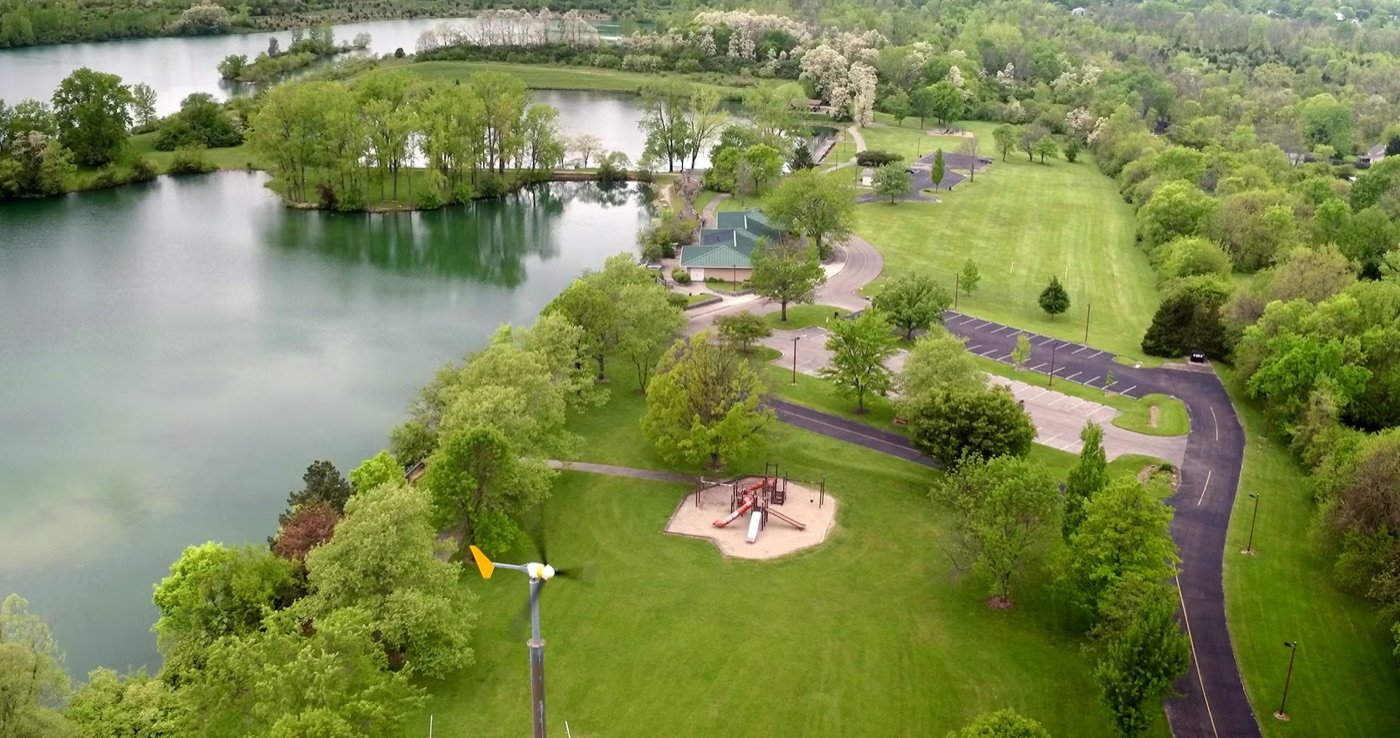
Trotwood’s western flank runs into Sycamore State Park’s twenty-three hundred acres of woods, meadow, and the Wolf Creek corridor — a permanent wildlife engine pointed at the adjoining neighborhoods. Raccoons, opossums, and stray cats patrol the creek line nightly, seeding flea pressure into fenced yards and denning under the decks and sheds nearest the park; deer traffic keeps tick awareness relevant on the trail-adjacent streets; and the meadow insect biomass loads spider webs on every porch light within a quarter mile of the tree line each September. Park-edge homes get our standard edge-property program — fall barrier, warm lighting, deck-skirting exclusion, pet prevention year-round — plus the wildlife-aware inspection that distinguishes mouse evidence from the larger visitors, because sealing a mouse gap while a raccoon owns the crawlspace solves the wrong problem first. Wolf Creek itself threads moisture habitat through the city’s heart, and the low-lying yards along it run damper basements and heavier camel-cricket, cellar-spider, and moisture-insect baselines than the uphill blocks; a dehumidifier and graded downspouts do more for those addresses than any spray, and we’ll say so at the inspection.
The Trotwood pest calendar
- March–April: odorous house ants surge through the mid-century kitchens; pavement ants work the older driveways; wasp queens test the eaves
- May–June: carpenter ant pressure from mature yard trees; flea season opens along the park and creek edges
- July–August: peak roach season in multi-unit housing; ground yellowjackets mature in lawns and landscape beds; spider webs load the park-edge porches
- September–October: the fall rodent push hits all three housing types at once; wolf spiders migrate off the meadows; dumpster-corral pressure peaks at the complexes
- November–February: indoor season — wall-void mice in the ranches, roach consolidation in the complexes, and the quiet months for exclusion work
Trotwood questions we hear
I rent, my landlord is slow, and the roaches are getting worse. What are my options?
Ohio habitability practice puts building-level infestations on the owner, and paper moves owners: report in writing with photos, keep copies, and point management to our multi-unit program — building-coordinated treatment costs owners less than unit-by-unit whack-a-mole, which is an argument that lands. If you’re authorized to arrange your own treatment, we work directly with tenants too, and we document everything either way.
Something is living under our shed by the park. Mouse program or something bigger?
The inspection tells us in minutes — burrow size, droppings, tracks, and gnaw evidence separate rodents from raccoon-scale wildlife. Rodents we handle end to end; larger wildlife gets a licensed nuisance-wildlife referral, after which we close the den site and treat the fleas the tenant left behind. Either way you get one plan, not a runaround.
How fast can you really get here?
Trotwood is the address where “call before ten, seen today” is most often literally true — we’re up Salem Avenue from you, and the schedule is built around that geography.
Property owners: Trotwood portfolios and the turnover rhythm
A meaningful share of Trotwood’s housing is investor-owned single-family rental — the mid-century ranches make classic portfolio properties — and pest control is quietly one of the levers that separates profitable Trotwood rentals from problem ones. The pattern we see across hundreds of local doors: units turn over, pest history doesn’t get addressed between tenants, and the incoming household inherits fleas from the previous dog, mice from the un-swept garage, or roaches from the fridge that stayed. Six months later it’s a complaint, a withheld-rent argument, or a review that follows the address. The fix is procedural and cheap relative to the alternative: a turnover pest visit while the unit is empty — flea treatment on exposed carpet, kitchen knockdown, exclusion check at thresholds and penetrations, documented with photos for the file. Our multi-property accounts schedule these straight off the move-out calendar, and Trotwood’s proximity to our office makes it the cheapest zip code on the route to service this way. Owners get per-property records and trend flags; tenants get a unit that starts at zero; and the mid-lease emergency calls — the expensive kind — mostly stop happening. For the accidental landlord with one inherited property or the operator with forty doors, the walkthrough quote is free and the math usually takes one minute of looking at it.
Who actually turns up in Trotwood: Greater Dayton Pest & Rodent is owned and operated by Bryan Camden, licensed by the Ohio Department of Agriculture — firm #115079, commercial applicator #170858, categories 10A, 10B and 12. When you call, you talk to the person who does the work. No call center, no rotating crews, and the same technician on every visit.
Frequently asked questions
Do you provide pest control in Trotwood?
Yes — Trotwood runs on the west-Montgomery rotation weekly, from the older Salem Avenue corridor blocks through the newer subdivisions and out to the rural western edges.
What pests are most common in Trotwood?
The west-side mix: post-war-stock garage mice, mature-landscape ant networks, farm-edge fall surges (rodents and stink bugs off the western acreage), and rental-property files (roach importations, documentation needs) along the corridors.
How much is pest control in Trotwood?
Standard published formula: most Trotwood homes run $39–$55/month quarterly; one-time flat by job; portfolio pricing for landlords. Free: (937) 569-3330.
Do you serve Trotwood rental properties?
Extensively — single-family rentals and small multifamily along the corridors get the landlord program: documented quarterly inspections, habitability-grade paper, and the building-wide protocols German roaches demand in attached units.
Why does my Trotwood house get mice every fall?
Edge geography plus era — the western farm belt’s field population meets post-war garage doors and settled foundations each first frost. September sealing (thresholds, steel wool, foundation detailing) beats the November scramble every year.
How fast can you reach Trotwood?
Days typically on the west rotation, priority faster, no travel charges.
Do you serve Trotwood businesses?
Yes — the Salem corridor’s restaurants and retail, the light-industrial spaces, and the institutional facilities each fit matched programs with documentation.
What about the rural western edges?
Campus treatment for the farm-adjacent properties — barns and outbuildings quoted as the system they are, harvest-calendar scheduling included; the rural-edge houses get the strongest exclusion emphasis on the route.
Is termite pressure real in Trotwood?
The older corridors’ age and mature landscaping keep conducive conditions common — free annual inspections for all, bait monitoring recommended for the established blocks.
How do I start service in Trotwood?
Instant quote, free photo ID, or (937) 569-3330 — free estimates, honest triage, first visits typically within the week.
Trotwood Pest Control, Service by Service
Trotwood’s pest files, written from the rebuild seam and the rural west — not from a template:
- Wasp & hornet removal in Trotwood — the remnant reservoir, swept in April
- Termite control in Trotwood — the split protection map, both sides read
- Ant control in Trotwood — the patchwork street, treated boundary-first
- Cockroach control in Trotwood — the replacement wave, checked at the threshold
- Rodent control in Trotwood — the remnant bank, its checks dishonored
- Termite inspection in Trotwood — what an inspection actually covers, what it costs, and why a sale here rarely forces one.