
If you live in the DeWeese area of northwest Dayton — the quiet residential streets around DeWeese Parkway, up the hill from the Stillwater River, near Wegerzyn Gardens MetroPark and the Boonshoft Museum — you are in the closest neighborhood to our office there is. We are based at 733 Salem Ave, minutes away. When a DeWeese homeowner calls about mice in the garage or wasps over the back door, we are often there the same day, because we drive these streets constantly anyway.
Looking for an exterminator in Deweese, Dayton? That is this, under a newer name — a licensed technician, not a subcontractor sent by a national brand.
What living next to the Stillwater River corridor means for pests
DeWeese sits on the wooded high ground above the Stillwater, with the river corridor, Wegerzyn’s gardens and wetlands, and DeWeese Ridgecrest green space all within a short flight or scurry. Green corridors are wonderful for the neighborhood and generous to pests: they hold standing water for mosquitoes, harbor rodent populations that push outward into adjacent blocks every fall, keep soil moist for the earthworms and grubs that feed moles, and support the insect life that draws spiders to every porch light on the street.
That does not make the neighborhood a lost cause — it makes the treatment strategy specific. Homes near sustained green space need their perimeter defended on a schedule, because the source pressure never goes away. A one-time treatment fixes the current problem; the corridor sends the next wave every season.
The DeWeese pest lineup
Mosquitoes
Proximity to the river bottom and the MetroPark wetlands means DeWeese yards see mosquito pressure that flat, dry parts of town never do. Our mosquito control service targets the shaded resting vegetation in your yard — the undersides of leaves, dense shrubs, ivy beds — on a monthly cycle through the season, and we point out every breeding site we find, down to the clogged gutter and the saucer under the planter.
Mice — and the garage problem
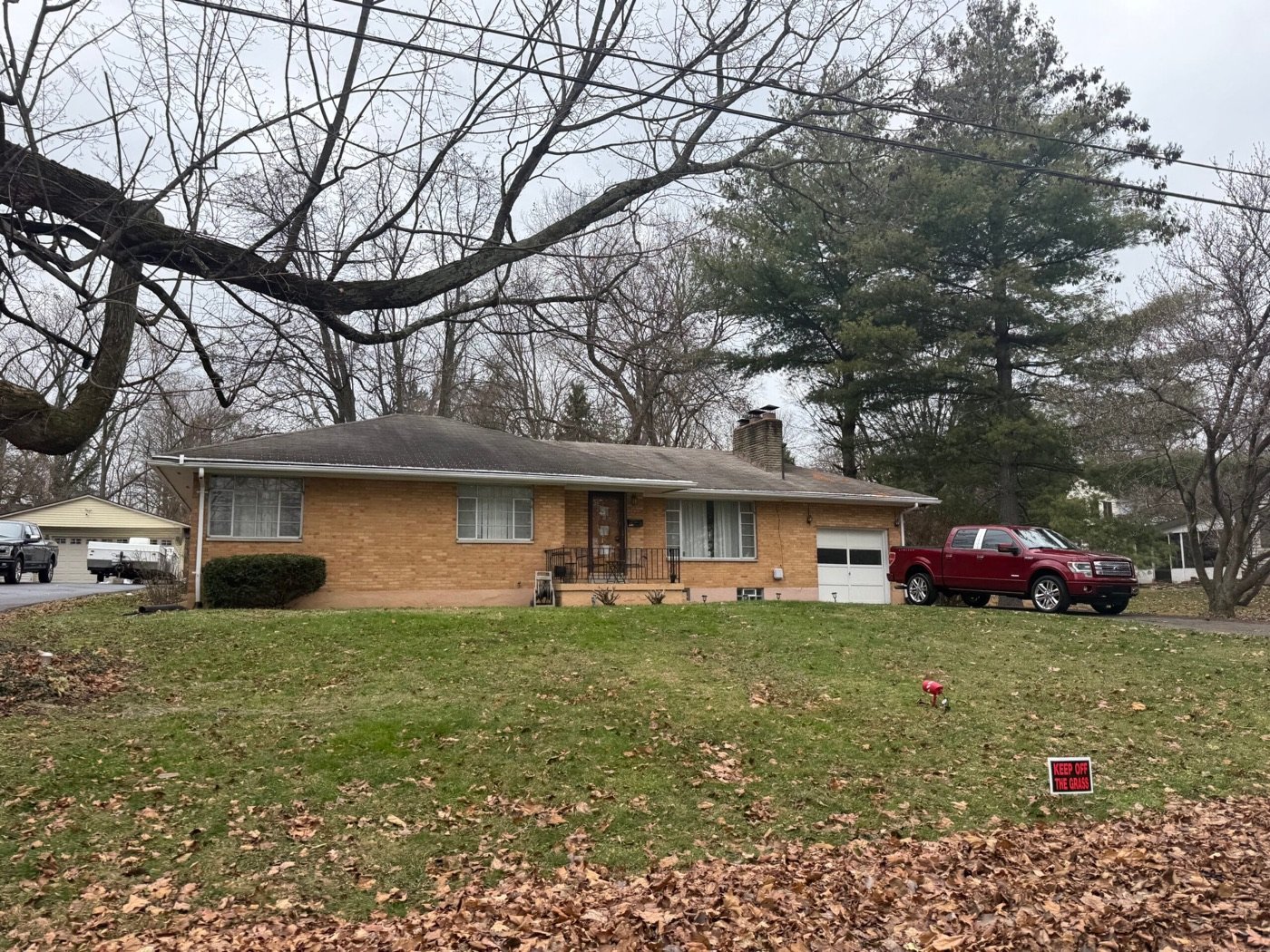
Much of DeWeese is solid mid-century construction: brick ranches and capes with attached garages. The attached garage is the neighborhood’s most common rodent entry — a weathered bottom seal on an overhead door gaps just enough at the corners, mice move in behind the storage shelves, and from the garage the door to the house or the gap around the furnace flue finishes the trip. We seal garage-to-house penetrations, replace the vulnerable corner gaps with rodent-resistant seal, and trap out whatever is already inside. Full details on the rodent control page.
Moles and voles
Lawns bordering green space get tunneled — it is that simple. Moles follow the earthworms, and the worm supply next to a river corridor is endless. We run a trapping program (the only method that reliably works — see mole control) and time it to spring and fall activity peaks.
Spiders, wasps, and fall invaders
Sunny brick faces make DeWeese homes magnets for fall invaders — stink bugs, boxelder bugs, and lady beetles massing on south and west walls every October looking for winter quarters. The same brick holds warmth for wasp nests under soffits and behind shutters. And healthy insect populations from the corridor keep orb weavers and cellar spiders well fed; our perimeter treatments cut the food supply and the webs at the same time.
Wegerzyn, the Boonshoft, and backyard pressure
It is easy to forget how much protected green space wraps this part of town until you look at a map: Wegerzyn Gardens MetroPark and its children’s garden, the wooded stretch along DeWeese Parkway by the Boonshoft Museum of Discovery, Island MetroPark downstream, and the river greenway linking all of it. Families move here partly for that. The honest trade-off is that your property line is also the front line — and the difference between a frustrating yard and a comfortable one is usually a defended perimeter and a couple of habits: keep bird seed in steel cans, do not let English ivy climb the foundation, and fix the downspout that keeps one corner of the yard soft all summer.
A DeWeese seasonal rhythm
- April–May: mole tunneling surges as the soil warms; ant trails appear on driveways; first wasp queens scout the eaves
- June–August: mosquito season peaks along the corridor; spiders web every exterior light; yellowjacket colonies grow from golf-ball to football size
- September–October: fall invaders mass on brick; rodents push in from the green space as nights cool; second mole surge
- November–March: interior mouse activity peaks; garages and basements are where winter problems announce themselves
The neighbor advantage
Most pest control companies treat northwest Dayton as a drive-through on the way to the suburbs. For us it is home base. Salem Ave is minutes from DeWeese Parkway, which means faster scheduling, easy follow-ups, and a technician who already knows the neighborhood’s quirks — which blocks back up to the ridge, which streets flood their gutters every spring, where the fall mouse push comes from. Quotes are free, we answer questions honestly (including “you do not need a contract for this, it is a one-visit fix”), and every job is guaranteed as quoted — and our Protection Plan adds the full re-treatment guarantee: on our Protection Plan, if covered pests come back between visits, so do we.
Not sure what you are looking at? Text a photo to (937) 569-3330 and we will identify it free — usually within the hour during business hours.
Nearby coverage: Dayton · Trotwood · Englewood · Vandalia · full service area list.
DeWeese questions we hear
Our yard backs up to the park — is mosquito treatment even worth it?
Yes, and this surprises people. Mosquitoes that bite you in the evening are resting in vegetation on or beside your property that day — they do not commute far from where they shelter. Treating your yard’s resting sites monthly cuts bites dramatically even when the breeding source is the river corridor you cannot touch. We measure success the way you do: whether you can sit on the patio at dusk in July.
Something is tunneling the lawn — mole or vole?
Raised ridges and volcano-shaped mounds mean moles; clean two-inch holes and surface runways chewed through the grass mean voles. Both thrive next to green space, and both respond to targeted trapping rather than the repellent gimmicks sold at the box stores. Send us a photo of the damage and we will tell you which one you have before we ever schedule a visit.
We get mice every October like clockwork. Can that actually stop?
When the entry points are sealed, yes. An annual fall mouse problem is not fate — it is one or two openings that get retested every year. Our exclusion work targets the garage door corners, the gap where the AC line-set enters, the dryer vent with the broken flap, and the utility penetrations behind the shrubs. Homes we have sealed simply stop having Octobers.
Free quotes, same-week scheduling, honest advice from the company closest to your street. That is DeWeese pest control done right.
Mid-century construction: honest strengths, known weak points
The DeWeese housing stock — late-40s through 60s brick ranches, capes, and split-levels — is some of the most pest-resistant construction ever put up in Dayton. Solid masonry, poured foundations, modest rooflines: these houses do not have the balloon-frame chases of the historic districts or the vinyl-over-foam vulnerabilities of the new suburbs. But seventy years of service life produces a specific, predictable set of weak points, and we find the same ones street after street. Original steel basement windows, now rusted at the frames, gapping at the mortar. Glass block replacements with unsealed vents. The seam where a later family room or breezeway addition meets the original brick. Chimney crowns cracked by seventy freeze-thaw cycles, opening flue-adjacent gaps into attics. Clay sewer laterals cracked by root intrusion — the quiet explanation for more than one “mystery” basement rodent story. And everywhere, the retrofit trail: central air, gas conversions, cable, fiber — each decade’s technology drilled its own hole through the brick, and almost nobody sealed them.
This is good news, practically speaking. A house with a finite, findable list of entry points can be genuinely sealed — not managed, sealed. Our exclusion work on a DeWeese ranch is usually a single focused visit: screen the basement window gaps, seal the retrofit penetrations, brush-seal the garage corners, cap check the chimney line, and the house is tighter than it has been since Eisenhower. It is the most permanent work we do anywhere in the city, and it is why mid-century neighborhoods are our favorite exclusion jobs.
The Stillwater flood factor
Living near a river corridor means living with its moods. High-water springs push ground-dwelling wildlife — rodents included — up out of the bottomland and into the adjacent blocks; the weeks after a flood event are reliably our busiest in the corridor neighborhoods. Wet years also supercharge the mosquito season and keep the soil soft for mole work deep into summer. None of this requires panic; it requires timing. If the Stillwater has been over its banks, that is the month to check your basement seals and make sure the garage doors meet their thresholds — and if you would rather we did the walk, a post-flood inspection is a quick, cheap visit that catches displaced-wildlife problems while they are still one animal instead of a family.
Yard habits that decide the season
On corridor lots, the yard is either working for you or for the pests, and the difference is a handful of habits. Bird feeding is the big one: a feeder is a rodent feeding station with better marketing, and on a street backing to green space it recruits from an infinite population. If feeding matters to you, do it the defensible way — steel seed cans, tray feeders emptied by dusk, and the feeder itself twenty feet from the house. Compost is the second: open piles near the fence line are winter housing; closed tumblers are fine. Firewood stacked against the house is the third — it is a carpenter ant and spider apartment complex pressed against your siding; get it off the ground and away from walls. Standing water is the fourth: one forgotten wheelbarrow breeds mosquitoes for the whole patio. And the fence line itself deserves a look each fall — ivy-covered fences and brush piles are the highways rodents ride from the corridor to your foundation. None of this costs money; all of it multiplies whatever treatment plan the house is on.
What a DeWeese first visit looks like
A thorough forty-five minutes to an hour. Outside: the full foundation lap — basement windows, retrofit penetrations, garage door corners, addition seams, chimney line from the ground, downspout terminations — plus the yard’s pest infrastructure: feeders, wood piles, compost, the fence line, anything holding water. Inside: the basement (the truth-teller in a mid-century house), the garage, the kitchen plumbing runs, and wherever you have seen activity. You get photographs, a plain-English diagnosis, and a written quote before anything is scheduled — and because these houses seal so well, the quote is often for a one-time exclusion visit rather than an open-ended program. When a quarterly plan genuinely fits — corridor-edge lots with permanent mosquito and rodent pressure usually qualify — we will say so and show you why; when it does not, we will say that too.
The neighborhood bottom line
DeWeese sits in a sweet spot: housing stock tight enough to seal permanently, next to green space wild enough to test the seals every season. The pests are predictable — mosquitoes off the corridor, mice at the garage corners every October, moles under the park-adjacent lawns, spiders at every light, invaders on the sunny brick — and the playbook is proven: seal the finite list of entry points, defend the perimeter on the neighborhood’s calendar, and keep the yard from recruiting for the other side. We are the closest pest control company to these streets, we photograph them ourselves, and we guarantee the work in writing. (937) 569-3330 — free quotes, free photo ID, same-week scheduling from right up Salem Ave.
Basements, glass block, and the window-well ecosystem
Half the mid-century basements in northwest Dayton have had their original steel windows replaced with glass block, and the difference for pests is worth understanding. Done well — mortared tight, vents screened and closable — glass block is the single best basement upgrade a homeowner can make: it deletes an entire category of entry point. Done cheaply, it just relocates the gaps to the vent frames and the mortar shrinkage cracks. Window wells add their own ecosystem: leaf-filled wells hold moisture against the foundation, breed the damp-loving insects (sowbugs, millipedes, springtails), shelter spiders that hunt them, and give mice a protected staging area at exactly foundation height. The maintenance is simple — wells cleaned each fall, covers fitted where drainage allows, vent screens checked — and it is on the homework list we leave after every DeWeese inspection.
Kids, pets, and the museum-district family standard
This is a neighborhood of families — the children’s garden at Wegerzyn and the Boonshoft crowds tell you that — and our treatment standards assume it. Products are applied per label into cracks, voids, and exterior lines, never broadcast where children and pets live; rodent work uses tamper-resistant equipment as a rule, not an option; and when a plan touches a vegetable garden, a swing set, a sandbox, or a dog run, those get stand-off buffers and a walkthrough explanation before anything is opened. We will always tell you what we are using, why, and where — and if there is a non-chemical path to the same result, exclusion and habitat work being the usual candidates, that path gets offered first. Effective and cautious are not opposites; in a family neighborhood they are the same standard.
What does a typical DeWeese job cost?
Less than the corridor location might suggest, because mid-century houses are efficient to work on. A one-time exclusion visit on a ranch with a findable entry list, a seasonal mosquito program sized to an ordinary lot, a mole season on a single lawn — these are all modest, quoted-up-front jobs. The quote is always free and always precedes scheduling, and because we are minutes away, DeWeese jobs carry no windshield-time premium. If two neighbors book together — common on these streets once one lawn’s mole problem becomes the block’s conversation — routing gets even easier and we pass that along.
Is the museum and park traffic a pest factor?
Marginally, and in a manageable way. Popular parks concentrate picnic waste in receptacles that wildlife learns to work, and event weekends at Wegerzyn or the Boonshoft add temporary food pressure to the immediate blocks. The MetroParks manage their side well; the homeowner’s side is simply making sure your own cans have tight lids and your patio crumbs get swept after the graduation party. Corridor pressure comes overwhelmingly from the habitat itself, not the visitors — the river does not take weekends off.
Greater Dayton Pest & Rodent — locally owned, Ohio licensed — ODA Pesticide Business License #115079 (categories 10A, 10B, 12), and headquartered closer to DeWeese than any competitor can claim. If it crawls, stings, tunnels, or scratches in the night, we are minutes away.
Frequently asked questions
Do you provide pest control in DeWeese?
Yes — the parkside neighborhood’s blocks ride daily core routing, ridge to park edge.
What pests are most common in DeWeese?
Parkside files: the preserve-edge baseline (deer mice toward the park, woodline wasps, tick margins), older-stock foundation mice, moisture-guild basements on the lower streets, and the fall flights on sunny facades.
How much is pest control in DeWeese?
Standard formula: most homes $39–$55/month quarterly; one-time flat. Free: (937) 569-3330.
Does DeWeese Park adjacency raise pest pressure?
The edge effect is real — park borders lift the wasp, rodent, and tick baselines a notch; the edge-lot program (exclusion emphasis, sentries, transition-zone care) matches the streets that need it.
Why do the older homes here get October mice?
Age plus edge — accumulated foundation doors meet the park-and-ridge field population at frost; September masonry-appropriate sealing is the annual answer.
How fast can you reach DeWeese?
Minutes — core routing, days at most, priority faster, no travel charges.
What about ticks on the park margins?
Transition-zone reality — the mowed-margin and barrier-band program for adjacent yards, permethrin-and-check discipline for the trail users.
Do the lower streets need the moisture program?
The ridge-to-valley drainage keeps some basements humid — dehumidifier-first, seepage triage, and the guild leaves with the water.
Is the Protection Plan right parkside?
Edge-adjacent blocks, clearly; interior streets triaged honestly — the first call sorts it.
How do I start service in DeWeese?
Instant quote, free photo ID, or (937) 569-3330 — free estimates, first visits typically within days.