
The Hills & Dales area — the wooded seam where Kettering, Oakwood, and southwest Dayton meet around Hills & Dales MetroPark — is some of the prettiest residential ground in the Miami Valley, and some of the most pest-pressured. Ravines and mature hardwood forest wrap directly around home lots. The MetroPark’s trails, the adjacent Community Golf Club fairways, and block after block of older, architect-built homes with slate roofs, stone foundations, and complex rooflines. We service this area constantly, and everything on this page comes from working it: which pests the woods send, where these particular houses let them in, and what actually keeps them out.
Exterminator is the word; pest control is the trade. Either way, Hills and Dales gets a technician out of the Salem Ave office rather than a call center in another state.

Living against a forest: the edge effect
Ecologists call it the edge effect: the boundary between forest and lawn holds more life than either side alone. It is why the birding is wonderful here — and why the pest pressure is structural, not situational. A home backing to the MetroPark ravines sits within the nightly foraging range of the forest’s entire rodent population. White-footed mice and deer mice — the woodland cousins of the house mouse — overwinter indoors given any opportunity, and unlike city mice they arrive in waves timed to acorn crops and cold snaps. Carpenter ants run parent colonies in every mature stand of oak and maple, sending satellites into structures along any branch that touches a roof. Paper wasps and bald-faced hornets nest at the wood line and work sunny house faces all summer. And the leaf litter that drifts against foundations every November is winter housing for spiders, millipedes, and the whole basement lineup.
The strategy that works against constant source pressure is layered: a sealed structure (exclusion), a defended perimeter (scheduled exterior treatment), and habitat management in the yard itself — firewood off the ground and away from walls, leaf litter cleared from the foundation line, limbs pruned off the roof. Any one layer alone gets overwhelmed. Together they hold, year after year, in homes literally touching the tree line.
What the golf course and open turf add
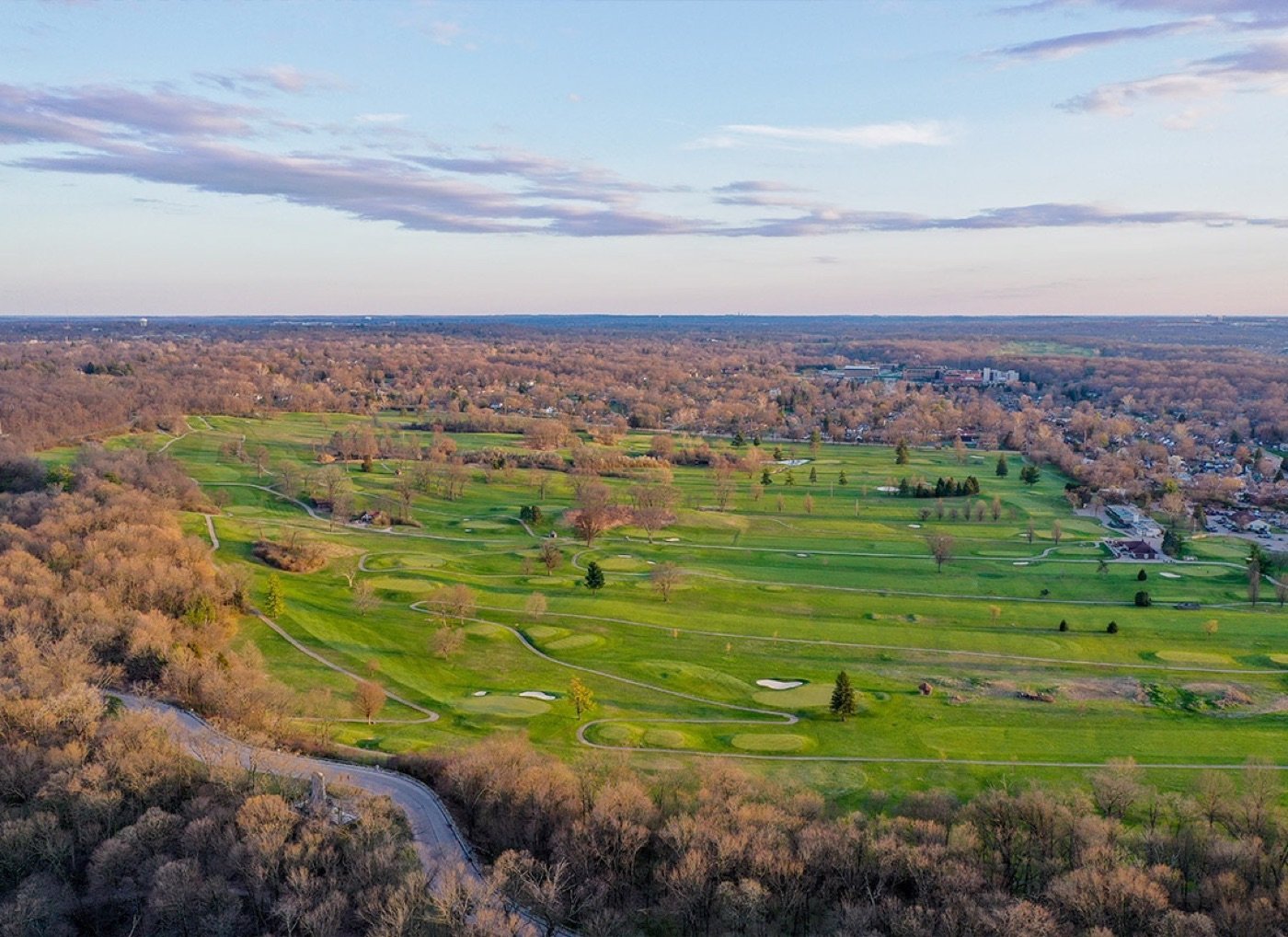
Irrigated, fertilized turf grows the densest earthworm and grub populations in the region, and earthworms are what moles eat. Homes bordering the golf course and the park’s mowed expanses see the Miami Valley’s heaviest mole pressure — raised feeding ridges across the lawn, volcano mounds in the beds, tunnels collapsing underfoot. Repellents, sonic spikes, and poison peanuts from the box store do not work on moles; correctly placed traps in active runs do, which is exactly what our mole control service is. Voles ride the same habitat, girdling shrubs and running surface trails under snow. If your lawn borders turf or ravine, assume the pressure is permanent and manage it seasonally rather than reacting to each new ridge.
Ticks are part of the deal now
The trails at Hills & Dales are a gift, and the deer that use the same ravines carry ticks into every yard along the edge. Blacklegged (deer) ticks — the Lyme disease vector — have established firmly in southwest Ohio, along with American dog ticks and the expanding lone star tick. Edge-lot yards deserve real tick habitat management: mow the transition zone, create a wood-chip border between forest and lawn, keep play equipment out of the shade line, and consider targeted barrier treatments of the tall-grass and brush margins in May and again in late summer. We fold tick work into perimeter programs for edge lots — ask when you call.
These houses are not builder-grade — and neither are their entry points
The housing stock around Hills & Dales runs from 1920s Tudor and colonial revival through mid-century custom homes, much of it architect-designed with the features that make the area distinctive: slate and tile roofs, copper valleys, stone and brick foundations, deep eaves, dormers, attached sunrooms, and rooflines that meet at angles a production builder would never attempt. Every one of those features is beautiful; several are also standing invitations.
- Complex rooflines — every valley, dormer cheek, and eave return is a protected pocket for wasp and hornet nests, and the junctions open small gaps into attic spaces as flashing ages
- Slate and tile roofs — durable for a century, but individual slipped tiles create attic access for mice and, in this area, flying squirrels; foot traffic breaks slates, so inspection has to be done right
- Stone foundations — lime mortar joints soften over decades; repointing seasons matter less to a mouse than the one joint nobody repointed
- Deep eaves and soffit returns — the classic overwintering entry for cluster flies, lady beetles, and stink bugs on sunny exposures
- Sunrooms and additions — the seam where an addition meets original structure is the most common ant and rodent highway we find in older custom homes
- Mature foundation plantings — fifty-year-old yews and boxwood hedges hold moisture against stone and hide every gap behind them
Our inspections here take longer than average and should. A technician who walks a 1928 Tudor the way he walks a 1995 vinyl colonial will miss the actual entries. We work the roofline with optics from the ground where slate is involved, map the mortar joints behind the plantings, and check every addition seam — because on these homes the fix is usually surgical: three specific gaps, sealed properly with materials that match the construction, rather than a generic spray-and-pray lap.
The Hills & Dales pest lineup, ranked by call volume
- Mice — the woodland push every October through December; edge lots see it strongest (rodent control)
- Moles and voles — year-round on turf-adjacent lots, peaking spring and fall (mole control)
- Carpenter ants — forest parent colonies, structure satellites; the area’s most underestimated problem (ant control)
- Wasps and bald-faced hornets — complex rooflines plus wood-line nesting (wasp & hornet removal)
- Overwintering invaders — cluster flies, lady beetles, stink bugs in the deep eaves (fall invader guide)
- Spiders — healthy forest insect life keeps orb weavers and wolf spiders busy at every exterior light (spider control)
- Ticks — edge-lot yards along the ravines and trail corridors
- Termites — older stock, buried grade lines, and additions demand real vigilance (termite control)
Termites and the older custom home
Homes of this era predate soil pre-treatment, and decades of landscape grading have buried original foundation reveals — on many lots the soil now sits against wood elements that were six inches clear when built. Add slab porches poured against the structure, sunroom additions on shallow footings, and the moisture that ravine lots hold, and the termite conditions are textbook. Subterranean termites work invisibly from the soil line up; by the time swarmers appear indoors, colonies are established. We are Ohio 10B licensed for treatment and Category 12 licensed for WDI inspections — and given the values in this neighborhood, a periodic professional inspection is among the cheapest insurance a homeowner can buy. If you are transacting real estate here, our NPMA-33 reports are accepted by every lender.
A Hills & Dales seasonal playbook
Spring
Snowmelt reveals the winter’s vole runways on lawns and the first mole ridges follow the thaw. Carpenter ant activity resumes in the trees, and warm rains bring swarm flights — any winged insect indoors gets a free ID from us, because the termite-versus-ant call matters most in exactly this housing stock. Wasp queens scout the rooflines. This is when perimeter and tick-margin treatments earn their keep for the whole season.
Summer
Hornet colonies at the wood line reach full size; mole activity moves to shaded, irrigated ground; mosquitoes work the ravines at dusk. On the houses, watch the sunny faces — sawdust frass at fascia or window heads means carpenter ant satellites are established overhead. Deep-eave homes should schedule their overwintering-invader barrier for late August.
Fall
The season this area is famous for, pest-wise. Acorn-year rodent populations crest just as temperatures drop, and the woodland push begins — edge-lot homes can intercept it entirely with September exclusion work. Cluster flies and lady beetles mass on southern exposures. Final mole surge before frost.
Winter
Attic sounds get diagnosed now: light scampering at dusk and dawn is usually mice; heavier daytime activity suggests squirrels; fluttering at windows on warm afternoons is overwintering flies emerging. Winter is prime time for exclusion carpentry and attic inspections — and the season when a slate-roof access point announces itself.
Discreet, careful, and guaranteed
Homes here deserve service that matches the property. That means unmarked-level discretion if you prefer, technicians who put down drop cloths in finished spaces, product placements chosen so children, pets, and gardens are never in contact, and honest scopes — if the fix is three sealed gaps and two traps, that is what we will quote. Every job carries plan-grade protection — see the re-treatment guarantee: if activity returns between visits, we come back free. Our office is on Salem Ave in Dayton, ten minutes up Far Hills — close enough that follow-ups actually happen on time.
Hills & Dales questions we hear
Mice come back every fall no matter what we do. Why?
Because trapping alone treats the symptom. Forest-edge homes face a new population every October — the fix is exclusion: sealing the specific mortar joints, slate slips, and addition seams your house has accumulated. Homes we seal stop having Octobers; it is the highest-value work we do in this neighborhood.
Can you treat around a slate roof without damaging it?
Yes — by staying off it. We inspect slate from ladders at the eaves and with optics from the ground, and when a slipped slate is the entry we coordinate with a slate roofer rather than walking a hundred-year-old roof. The pest fix and the roof’s integrity are both part of the job.
Is the golf course why we have moles?
It contributes — irrigated turf feeds the earthworm populations moles follow, and fairway-adjacent lawns are continuous habitat. But ravine lots without a fairway in sight get moles too. Either way the answer is professional trapping on a seasonal cadence, not repellents.
Nearby coverage: Kettering · Oakwood · Dayton · full service area list.
Why squirrels and attic wildlife get a different answer here
Wooded neighborhoods generate more attic-wildlife calls than anywhere else we work — gray squirrels through slipped slates and construction gaps, flying squirrels colonizing quiet attic corners, the occasional raccoon testing a fascia board. Our license covers small rodent work: mice, rats, moles, and voles we handle completely, including the exclusion carpentry that keeps them out. For larger wildlife we will identify what you have (attic sounds, droppings, and entry size tell the story), seal what should be sealed after removal, and refer the removal itself to a licensed wildlife control operator we trust. Nobody on our team will sell you a mouse program for a squirrel problem — the diagnosis is free either way.
The carpenter ant deep-dive this area deserves
If one pest defines forest-edge housing, it is the carpenter ant. The biology matters: a mature parent colony lives in moist dead wood outdoors — a snag in the ravine, an old pruning wound in a street oak — and once it exceeds a few thousand workers it establishes satellite colonies in drier protected voids, which is what your wall, porch column, or hollow-core door becomes. Satellites need no soil contact and no wet wood; they need only the highway, which is any branch touching your roof, any wire or fence line, any mulch bed bridging to the foundation. Workers forage up to a hundred yards at night, so the ants in your kitchen may commute from a tree you cannot see.
Treatment that works follows the biology backwards: find the satellite (moisture meters, frass piles, the faint rustle in a quiet wall at night), treat the void directly, bait the foraging trails with slow-acting products the workers carry home, and cut the highways — prune the limb, clear the mulch bridge. Spraying the visible ants accomplishes nothing but a week of false quiet; the colony simply reroutes. This is the difference between pest control that reads the label and pest control that reads the landscape, and it is why edge-neighborhood homeowners eventually end up with a company like ours after a season of box-store frustration.
One more Hills & Dales specific: because satellite colonies flag moisture, every carpenter ant find is also a building find. A satellite behind a window head means the flashing above it leaks a little; one in a porch column means the cap lets water in. We point these out every time — fixing the moisture is half the treatment and all of the prevention.
What a first visit looks like
Plan on a thorough hour for a typical edge lot. We walk the full exterior — foundation line behind the plantings, roofline with optics, addition seams, garage, and the yard’s pest infrastructure: the wood pile, the leaf line, the shade margins, the turf border. Inside, we check the basement or crawl space, the attic if access allows, and everywhere you have seen activity. You get photographs of what we find, a plain-English explanation of how it is getting in and why, and a written quote before anything is scheduled. If the honest answer is that you do not need us yet — it happens — you will get that answer and a prevention list instead of an invoice.
From there, most Hills & Dales homes choose one of two paths: targeted one-time work (a wasp nest, a mouse exclusion, a mole season) backed by the guarantee, or a quarterly program built around the seasonal playbook above — spring perimeter and tick margins, summer nest patrol, the September double of invader barrier plus rodent exclusion check, and a winter interior review. Edge lots genuinely benefit from the cadence; the pressure never stops, so the defense should not either. Free quotes, free photo identification, same-week scheduling: (937) 569-3330. Greater Dayton Pest & Rodent — locally owned, Ohio licensed (#170858, categories 10A, 10B, 12), and ten minutes from the park gates.
The bottom line for the neighborhood by the park
Hills & Dales trades a little pest pressure for a lot of beauty, and the trade is worth it — when the structure is sealed, the perimeter is defended on the neighborhood’s real calendar, and the yard’s edge habitat is managed instead of ignored. Woodland mice in October, moles on the turf lines, carpenter ants running the canopy, hornets at the wood line, invaders in the deep eaves: all predictable, all manageable, all covered by our re-treatment guarantee. The park stays wild; your house does not have to.
One last note for new arrivals to the neighborhood: get a baseline. A single inspection in your first season here — before the first fall push, ideally — maps your home’s specific vulnerabilities while they are still cheap to fix, and gives you a company that already knows your house the day something scratches in the ceiling. Call (937) 569-3330 and welcome to the woods.
Frequently asked questions
Do you provide pest control in Hills and Dales?
Yes — the wooded ravine streets between Kettering and Oakwood ride daily routing, and the neighborhood’s terrain writes its own pest chapter.
What pests are most common in Hills and Dales?
Ravine files: carpenter ants in the mature canopy (the signature — deadwood and moisture pockets within staging range of every house), woodline wasps and hornet cavities, deer-mouse edges, moisture guilds in the slope-cut basements, and the fall flights.
How much is pest control here?
Standard formula — the neighborhood’s substantial homes and perimeters read honestly: most run $39–$55/month quarterly. Free: (937) 569-3330.
Why is this carpenter ant country?
Terrain economics — ravine canopy means deadwood, moisture, and parent colonies within fifty feet of structures everywhere; dusk trail-traces, moisture audits, and the stump-and-firewood discipline are the neighborhood standards.
Do the slope-cut basements run damp?
Frequently — hillside construction meets ravine drainage; dehumidifier-first doctrine plus seepage triage leads, and the cricket-centipede guild leaves with the water.
How fast can you reach Hills and Dales?
Minutes — core routing between two of our densest territories; days at most, priority faster.
What about the European hornets in the old trees?
Canopy cavities host them — the night-flying giants at porch lights each August; off-structure colonies earn benign-neglect verdicts, wall-cavity cases get the professional protocol.
Does the ravine mean more mosquitoes?
Shaded, moist, vegetation-rich — yes; the resting-vegetation barrier program plus container patrol suits the terrain exactly.
Is the Protection Plan right for ravine lots?
Nearly always — standing woodline pressure and the carpenter-ant watch make quarterly rhythm the honest fit for most of the neighborhood.
How do I start service in Hills and Dales?
Instant quote, free photo ID, or (937) 569-3330 — free estimates, first visits typically within days.