
Every so often this library gets to answer a question asked purely for the thrill of the answer, and “what is the biggest cockroach in the world?” is the genre’s king — usually typed at midnight, frequently right after a basement encounter with a two-inch American cockroach that felt, in the moment, like a record-holder. So this page delivers the full championship bracket, honestly judged: the three legitimate title-holders (longest, heaviest, and biggest wingspan — three different species, three different continents, and the heaviest one weighs more than a house mouse’s newborn litter), the famous hissing celebrity that wins nothing but fame, the fossil giants the internet exaggerates, and — the section your basement actually cares about — how Ohio’s biggest roaches measure against the champions and why the two-inch monster by your floor drain, impressive as it looked at 11 PM, wouldn’t make the tournament’s qualifying rounds. Plus the practical payload smuggled inside the trivia: every size class in the bracket obeys the same biology this library treats weekly, and the reader who finishes this page knowing the champions also finishes knowing exactly what to do about the local contender on the drain line. Greater Dayton Pest & Rodent — where even the fun questions get real answers: (937) 569-3330.
The championship bracket: three titles, three champions
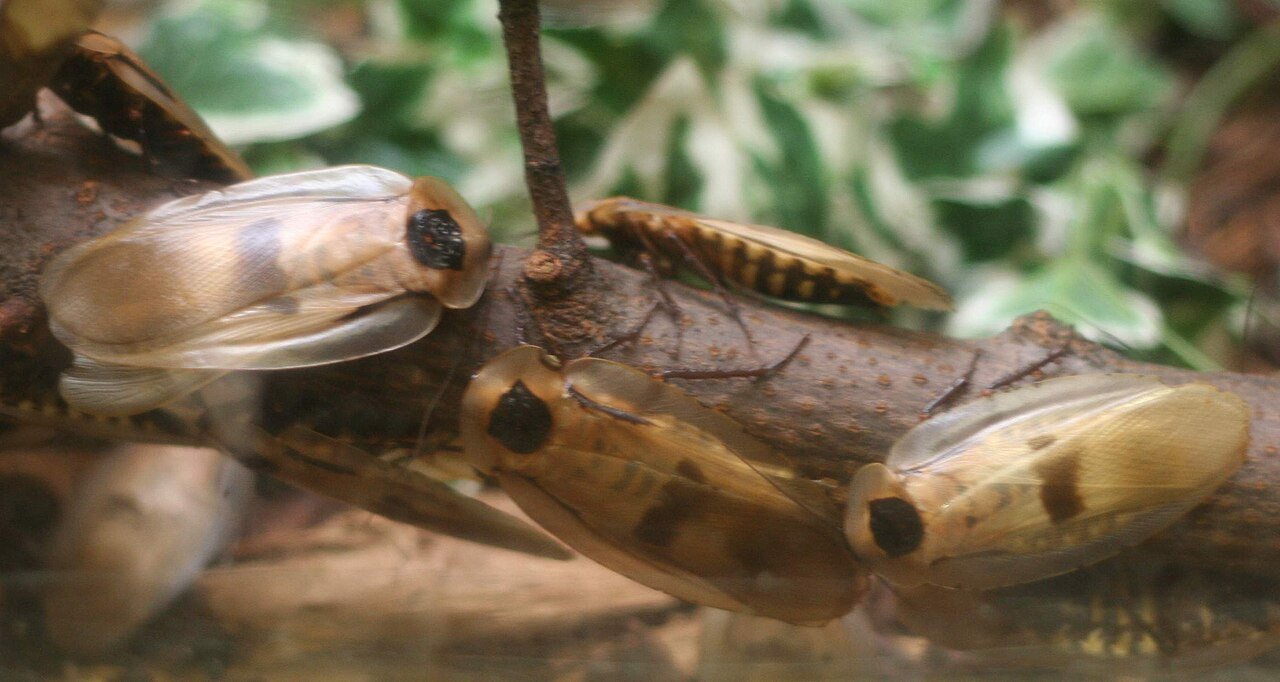
“Biggest” splits into three honest categories, each with its own champion. Longest body: the giant cave cockroach (Blaberus giganteus) of Central and South American caves and the Megaloblatta genus of the neotropics trade the crown — verified specimens run to roughly 3.5–4 inches of body, with Megaloblatta’s record-holders edging the tape; both are flattened, winged, and built for cave walls and forest litter. Heaviest: no contest — Australia’s giant burrowing cockroach (Macropanesthia rhinoceros, the “rhinoceros cockroach”) is the tank of the order: to 3.15 inches, wingless, armored, and weighing in past an ounce (30-plus grams) — the heaviest cockroach ever weighed, a burrower that digs a yard down, eats dry eucalyptus leaves, lives up to ten years, and is kept as a docile, remarkably clean pet by Australian hobbyists (a sentence that reorganizes most readers’ assumptions about the whole order). Largest wingspan: Megaloblatta longipennis again — wings spreading to 7-plus inches, the order’s condor. And the famous fourth: the Madagascar hissing cockroach — the movie industry’s and classroom terrarium’s star — runs a merely respectable 2–3 inches and wins no category, its celebrity earned entirely by the hiss (air forced through breathing pores — the only insect that vocalizes this way) and by being handleable enough for every zoo outreach program on Earth. Three champions, one celebrity — and not one of them within five thousand miles of your basement, which is the bracket’s first practical takeaway.
Ohio’s are far smaller and far more of a problem, because ours breed indoors. That is what cockroach control in Dayton deals with.
The fossil footnote and the deep-sea postscript
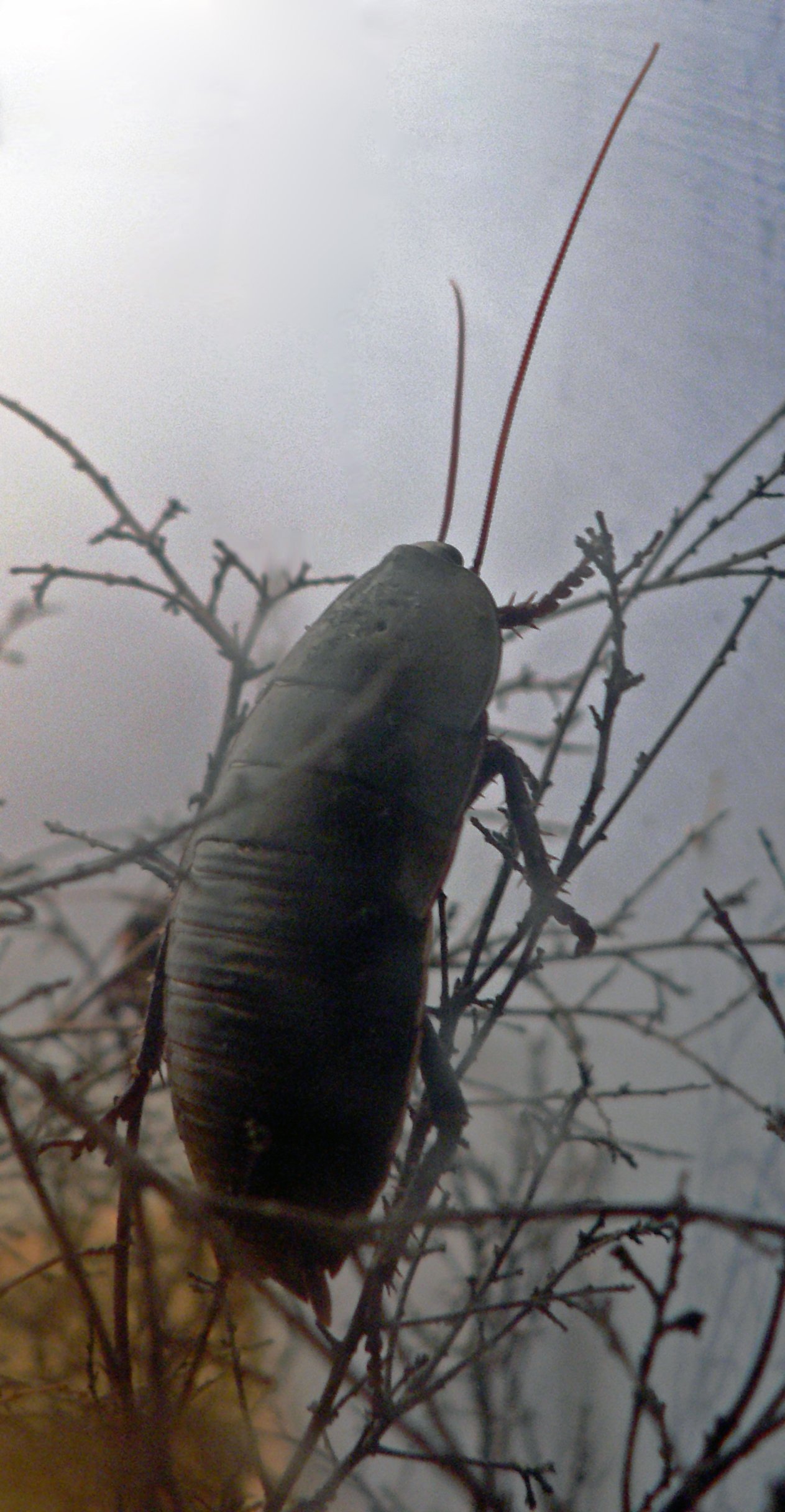
Two bracket-adjacent legends need their honest sizing. The “two-foot prehistoric roaches”: the Carboniferous’s famous giant arthropods — the dragonfly-like griffinflies with two-foot wingspans, the yard-long millipede relatives — have lent their reputation to the cockroach lineage unearned: the era’s actual roachoids ran large by modern standards (fossils to roughly 3.5-4 inches) but never approached the monster-movie sizes the internet assigns them; the oxygen-rich atmosphere that supersized other lineages left the roach body plan respectable, not gigantic. The largest complete fossil roachoid ever described would lose a tape-measure contest with today’s Megaloblatta — the champions, remarkably, are alive now. The “sea roach”: the internet’s other giant — the fourteen-inch deep-sea giant isopod — is no cockroach at all but a crustacean, the abyssal cousin of the backyard rolly polly (a lineage connection that page’s jar-keepers already know), and the “roaches of the sea” nickname does honest taxonomy no favors. The bracket stands as stated: the order’s genuine giants top out near four inches of body, an ounce of weight, seven inches of wing — magnificent, cave-and-burrow-dwelling, and universally uninterested in human kitchens, a distinction the next section makes structural.
The champions’ secret: why the giants aren’t pests at all
Here’s the bracket’s best-kept pattern, and the pivot to everything practical: not one of the world’s giant cockroaches is a pest species. The cave giants process bat guano and forest litter; the rhinoceros heavyweight recycles eucalyptus leaf-fall in burrows it digs itself; the hissers work Madagascar’s forest floor — all of them specialized decomposers in stable wild niches, none adapted to human buildings, and several (the rhinoceros especially) so benign they’re beloved pets. The world’s 4,500-ish cockroach species split roughly this way: about 30 are pests; the other 99 percent are wild decomposers doing the isopod guild’s work at insect scale, including Ohio’s own harmless wood roaches. The pest fraction shares a different résumé entirely — not size but synanthropy: tolerance for our buildings’ dryness, appetite for our omnivorous crumbs, crevice-shaped bodies, fast breeding, and the hitchhiking talent that moved them worldwide in cargo. Which inverts the midnight fear elegantly: the roaches worth worrying about are precisely the small ones — the half-inch German that breeds in your cabinet hinge outclasses every champion in this bracket as a household problem, and the bracket’s giants, dropped hypothetically into a Dayton kitchen, would simply die — wrong humidity, wrong diet, wrong world. Size was never the threat model; biology was, and the biology that matters fits behind a hinge.
Ohio’s qualifying rounds: how the local giants measure
Now the measurement your basement actually requested. Ohio’s size leader is the American cockroach — the “biggest American cockroach” searches land here — running 1.5 to 2 inches in typical adults, with the occasional well-fed 2.1-incher anchoring family legends; reddish-brown, fully winged, an occasional glider, and the “palmetto bug” of every euphemism file. Against the bracket: roughly half the length and a twentieth the weight of the champions — a regional semifinalist at best, though the 11 PM encounter multiplier (dim light, motion, surprise) reliably adds a subjective inch, a perceptual inflation our photo line corrects gently every summer (“three-inch roach” submissions measure two; the camera plus a coin settles it kindly). The rest of the local lineup descends from there: Oriental at an inch-and-a-quarter, the harmless outdoor wood roaches at an inch, German at a half-inch (maximum threat, minimum stature — the inversion again), and brown-banded smallest of all. The practical translations, bracket-informed: a genuinely large roach indoors here is essentially always an American, which means infrastructure — drains, sumps, steam tunnels, the moisture layer — and routes to the basement playbook (drains watered, moisture dropped, harborage treated) rather than the kitchen protocol; anything modest and fast near food is the German file, urgent in inverse proportion to its size; and anything tan blundering at the porch light in June is a wood roach owed an apology. The coin-photo habit converts every future “biggest roach I’ve ever seen” into a species, a size, and a playbook — which was the practical cargo this trivia page was built to deliver.
Biggest-roach questions, answered
Could the giant species ever establish here the way the tiger mosquito did?
No plausible path: the champions are humidity-locked forest-and-cave specialists with none of the synanthropic toolkit — the tiger mosquito succeeded on drought-proof eggs and container habitat; the giant roaches ship occasionally in cargo and die promptly in the continental climate. The pet-trade hissers survive only in terraria. Ohio’s roach roster is stable, small, and fully documented in the species guide — no bracket entrants pending.
My kid wants a hissing cockroach as a pet. Talk me out of it — or into it?
Into it, honestly: hissers are docile, hardy, allergen-lighter than furred pets, incapable of infesting a home (tropical humidity requirements — escapees desiccate), and educational in exactly the way this page trades on. The one caution is sourcing and containment basics (a secure lid, no releases — standard exotic-pet citizenship). As pest professionals we log zero hisser incidents ever; as biology enthusiasts we’re quietly delighted every time the question comes up.
What’s the biggest roach your crew has actually found in the eight counties?
The honest record: a shade over two inches of American cockroach in a steam-tunnel-adjacent commercial basement — a magnificent, well-fed institutional specimen photographed with a tape measure for posterity, and dispatched with the same drain-and-void program as its smaller colleagues. The takeaway the crew repeats: the record-holder took the same fix as the rookies, because size never changed the biology — which is this page’s whole thesis, field-verified.
The bracket, closed
So: the biggest cockroach in the world is three answers — Megaloblatta’s tape, the rhinoceros’s scale, the cave giant’s silhouette — every one a wild decomposer that will never see a kitchen; the fossil legends shrink under measurement; the sea-roach is a crustacean; and Ohio’s champion is a two-inch drain-dweller whose entire menace resolves through the basement playbook this library wrote pages ago. File the trivia for the next porch conversation, file the coin-photo habit for the next midnight encounter, and file the inversion permanently: in cockroaches, size is spectacle — biology is the threat model, and the half-inch hinge-dweller outranks every champion in the bracket. For the local contenders, whatever their tape measure: (937) 569-3330, Greater Dayton Pest & Rodent, Dayton and all eight counties — where the giants stay trivia and the basements stay quiet.
The gallery tour: meeting the champions properly
For the reader converted from alarm to curiosity — the conversion this library sells — the champions reward a fuller introduction. The rhinoceros cockroach’s decade-long life runs on virtues the pest fraction never evolved: monogamous-leaning burrow pairs, months of maternal care (females tend their young in the burrow — among the most developed parenting in the insect world), a diet of exactly one thing (dry eucalyptus litter, pulled nightly down the burrow like a lawn service in reverse), and a temperament so placid that Australian schoolchildren pass them hand to hand. The giant cave cockroach runs the opposite spectacle: colonies of thousands on Trinidadian and Amazonian cave walls, processing bat guano in darkness, with the deeply flattened build and sensory antennae of a lineage that solved cave life eons before bats existed — visitors describe the walls as moving wallpaper, which is either the best or worst travel recommendation this library has published. Megaloblatta stays the enigma — rarely collected, canopy-dwelling, its record wingspans known mostly from museum drawers and startled field notes. And the hissers’ fame economy deserves its footnote: Hollywood’s go-to “giant roach” for decades (wranglers keep colonies for exactly this), the classroom ambassador that has introduced more Americans to entomology than any textbook, and the annual star of at least one zoo’s Valentine’s roach-naming fundraiser — celebrity, as ever, orthogonal to the title belts. Four biographies, zero pests: the order’s giants, met properly, read less like monsters than like the isopods’ bigger cousins — specialized, ancient, and working niches no kitchen ever offered.
The size-perception file (why every basement roach gains an inch)
The “three-inch roach” reports our line measures down to two deserve their science, because the inflation is universal and innocent. The perceptual stack: motion amplifies — a sprinting roach’s speed (the crack-optimized body’s one flamboyance) reads as mass to a startled visual system; context scales — against a baseboard or drain cover, an unfamiliar insect borrows size from the fear rather than the ruler; antennae count — the American’s body-length antennae legitimately double its apparent span, and every honest measurement debate should specify body-versus-everything; and memory compounds — the retold roach grows annually, a folklore mechanism this library has watched operate on spiders, hornets and now the order’s giants alike. The corrective is the same instrument every time: the coin photo — which is why the champions’ verified records live in museum drawers with scale bars, and why your next impressive basement find deserves the same forensic dignity before it enters the family record at three inches and growing. (Send it to the line either way — the grading desk keeps a soft spot for magnificent Americans, and the species verdict rides along free.) Perception inflates; biology doesn’t; and the playbooks, mercifully, only ever needed the species.
The record book, one card
- Longest body: Megaloblatta / giant cave cockroach — ~3.5–4 inches, neotropical caves and canopy.
- Heaviest: Australian rhinoceros cockroach — 30+ grams, wingless burrower, lives a decade, kept as a pet.
- Widest wings: Megaloblatta longipennis — 7+ inch span.
- Most famous: Madagascar hissing cockroach — 2–3 inches, wins only the celebrity belt.
- Fossil truth: prehistoric roachoids ~4 inches max — the two-foot legends belong to other lineages.
- “Sea roach”: giant isopod — a crustacean; see the rolly polly page’s deep-sea cousins.
- Ohio champion: American cockroach — 2 inches, infrastructure-dweller, basement playbook applies.
- Actual local threat: the half-inch German — size and danger, permanently uncorrelated.
Card filed, bracket archived, and the midnight question answered at every scale from the cave wall to the drain line — with the practical inversion riding home one last time: measure the roach if you like, but identify it regardless, because the playbook always followed the species and never the tape. The champions keep their titles; the basements keep the coin-photo habit; and the library keeps its favorite bargain — wonder and pest control, one page, no extra charge.
Why curiosity pages live in a pest library at all
A closing note on method, since this page wears its purpose openly: the questions people ask for fun — the biggest, the fastest, the weirdest — are the same questions that, answered honestly, install the identification habits the practical pages depend on. The reader who arrives wanting the world’s biggest roach leaves knowing the synanthropy split (30 pests, 4,500 species), the size-threat inversion, the coin-photo protocol, and the exact playbook for the two-inch American that started the search — more working pest literacy than any service pitch delivers, smuggled inside a championship bracket. It’s the library’s oldest trade running in its purest form: curiosity in, calibration out, and a phone number attached for the day the trivia turns local. The scariest-bugs listicle ran the same play; the velvet ant and cicada killer files ran it on fear instead of wonder; and two hundred pages in, the pattern holds: every question is an entry point, every answer is an equipment issue, and the household that reads for fun ends up the household that reads its basement correctly — which was, all along, the entire business model of giving the answers away.
Four inches in a cave, an ounce in a burrow, seven inches of wing in a museum drawer — and two inches by your floor drain, thoroughly outclassed and thoroughly manageable. The bracket closes with the belts overseas, the playbooks local, and the midnight search bar, for once, sent to bed satisfied on both counts: the giants are real, and none of them are coming. Sleep well; measure with coins; and leave the drain light on for the semifinalist — the basement playbook opens at page one whenever you’re ready.
Frequently asked questions
What is the biggest cockroach in the world?
By mass: Australia’s giant burrowing cockroach (rhinoceros roach) at over an ounce and 3+ inches — a gentle, wingless soil-dweller kept as a pet. By length with wings: South America’s Megaloblatta, spanning nearly 8 inches wingtip to wingtip. By internet fame: the Madagascar hissing cockroach, the hissing 3-inch classroom celebrity.
How big do cockroaches get in Ohio?
Our ceiling is the American cockroach: up to two inches of mahogany glider — the “giant roach” of every Dayton basement story. Nothing tropical-grade lives outdoors here; Ohio winters cap the local roster at American-sized.
Is the giant roach in my basement one of these world-record species?
No — it is an American cockroach off the drain or sewer line, impressive at two inches but strictly local. The origins page explains its infrastructure routes; the fix is water in the traps and sealed gaps, not a passport check.
What is a palmetto bug — is that a giant roach?
Southern politeness for the American cockroach (and relatives) — same insect, coastal branding. Ohio transplants from Florida meet their old palmetto bug in our basements and recognize it immediately.
Why do tropical roaches get so much bigger?
No winter ceiling — year-round warmth, humidity, and abundant decay let tropical species run larger body plans that Ohio’s freeze-thaw calendar forbids outdoors. Indoors, our heated houses cap out at the species that ride our cargo, not our climate.
Could giant tropical roaches establish in Ohio homes?
Hissing roaches and similar pets escape occasionally and die out — they need tropical husbandry, not just warmth. The establishment-capable species are already here: German, brown-banded, American, Oriental. The exotic threat is a novelty; the tan half-incher is the career criminal.
Are giant cockroaches dangerous?
Even the world’s largest are harmless to humans — no bites worth the name, no stings, no venom anywhere in the order. The American in your basement carries the standard contamination file (allergens, bacteria-tracking) at any size; the drama is purely visual.
Do people really keep giant cockroaches as pets?
Enthusiastically — hissers and rhinoceros roaches are docile, long-lived (rhinos reach a decade), and standard in classrooms and collections. The pet trade’s roaches and your kitchen’s pests share an order and nothing else that matters.
What is the biggest roach infestation concern locally?
Scale of colony, not size of insect: a German infestation’s thousands out-problem any single two-inch American by every measure. The flashlight census and the species ID — not the shock value — set the response.
Who handles the giant roaches of Dayton?
We do, with the acquittal-or-treatment honesty the situation deserves: one August American is a drain-trap fix; recurring big-roach traffic is an infrastructure job; and the photo ID that sorts them stays free: (937) 569-3330.