
The library’s absentee files — the fire ants, the roof rats, the tarantulas — close their series with the desert’s ambassador: are there scorpions in Ohio? The clean answer: no established scorpion species lives in Ohio — the true scorpions’ American range runs the South and West (the southern devil scorpion’s Appalachian populations reach Kentucky’s corners, the closest the map comes), winter and habitat hold the line, and every “scorpion in my house” report our eight counties generate resolves into a short cast of impostors this page introduces properly. The cast is the fun half: the house pseudoscorpion — a genuine arachnid cousin the size of a sesame seed, pincers and all, living quietly in Ohio bookshelves and bathrooms and delivering the annual “TINY scorpion!!” photo our grading desk cherishes; the tailless whip scorpion — the search bar’s tropical celebrity (22,000 monthly searches on the strength of movie cameos), neither tailed, stinging, nor Ohioan; the devil’s crayfish and camel-cricket silhouettes that panic basement flashlights; and the hitchhiker file — the genuine-if-rare vacation stowaway with its own protocol. Plus the sting-risk answer for the traveling household, and the standing lesson the absentee series retires on. Greater Dayton Pest & Rodent: (937) 569-3330.
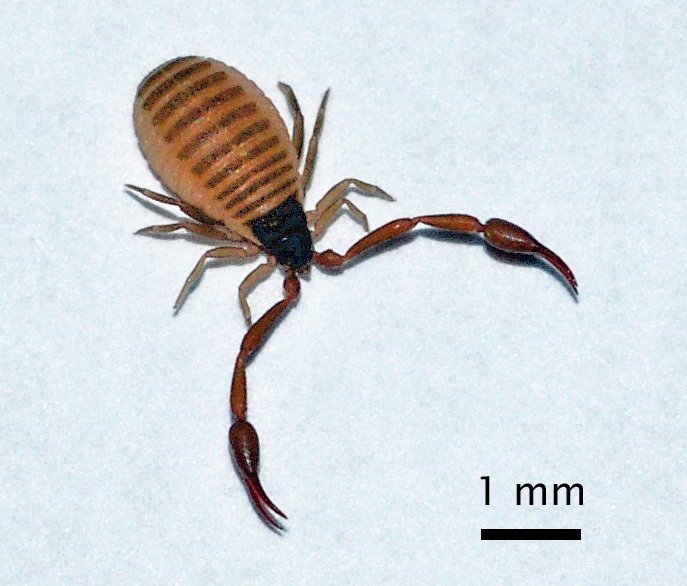
The range file: where the real ones stop, and why
True scorpions (order Scorpiones — the tailed, stinging original) run some ninety North American species, nearly all southwestern desert-and-scrub specialists, with two eastern outposts that define Ohio’s margin: the southern devil scorpion (a modest, mildly-stinging brown species) holds wooded Appalachian populations up through Tennessee and Kentucky’s southeastern corners, and the striped bark scorpion works the Ozark-and-prairie line into southern Missouri and Illinois — both stopping short of the Ohio River’s climate arithmetic (winter soil temperatures, humidity regimes, and the deep-freeze frequency that governs every range-edge file this library keeps). The asterisks, familiar in shape: hitchhikers arrive — the vacation suitcase from Arizona or the produce-and-freight route occasionally delivers a live bark scorpion to a Miami Valley address (a genuine-if-rare event with the protocol below), and heated structures could theoretically harbor a stray through winter without ever founding a population; the warming trend runs its standard fine print (the devil scorpion’s Appalachian creep is monitored, decades from relevance); and the reporting protocol stands as always — a credible Ohio scorpion (clear photo, tail and stinger visible, specimen contained under a glass) grades same-day and escalates on confirmation, with the streak to date reading exactly like the fire ants’ and roof rats’: zero established, several magnificent impostors, and one genuinely memorable Tucson souvenir in a duffel bag, released to the county naturalist with commemorative photos. The desert keeps its ambassador; Ohio keeps its winters; and the household keeps the cast below.
Ohio has no scorpions, so whatever you found is something else, and naming it correctly is the first thing pest control in Dayton does.
The pseudoscorpion: Ohio’s resident “scorpion,” at sesame scale
The state’s genuine scorpion-cousin deserves the introduction its annual discovery photos request: the house pseudoscorpion (Chelifer cancroides and kin) is a true arachnid of the scorpions’ broader clan, wearing the family pincers in perfect miniature — two-to-four millimeters of teardrop body and oversized pedipalp claws, no tail, no stinger, no venom delivery to anything larger than a booklouse — and living exactly where the discovery photos say: bookshelves, bathroom sinks, old paper boxes, and window sills, hunting the book-and-paper wing’s smallest residents (booklice, dust mites, springtail-scale prey) with venom-tipped pincers scaled to that economy. The biology runs charming all the way down: pseudoscorpions ride other insects between hunting grounds (phoresy — the sesame-seed hitchhiker gripping a fly’s leg is a documented commuting strategy, and the occasional bathroom arrival stepped off a housefly like a passenger deplaning), they build silk igloos for molting and winter, mothers carry brood sacs and feed young on regurgitated prey, and their household verdict is the library’s purest positive: a beneficial micro-predator whose presence signals nothing wrong and whose prey list reads like the archivist’s enemies register. Response protocol: photograph (the macro rewards it — the claws are Baroque at magnification), release or ignore, and file the find under the same heading as the centipede and the jumper: unpaid staff, discovered mid-shift. The “scorpion in my book box” was guarding the books; the library, in the most literal sense, approves.
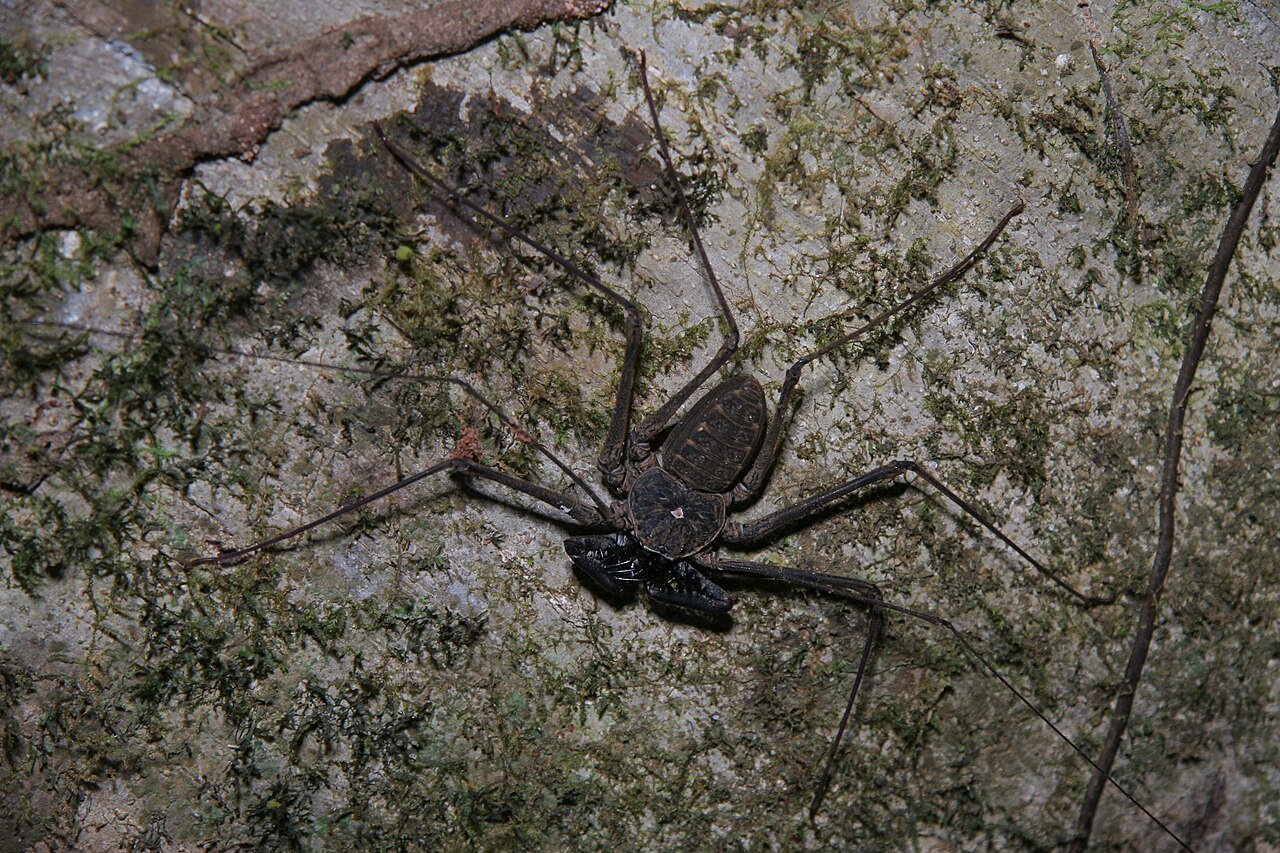
The celebrity file: the tailless whip scorpion (and the rest of the impostor cast)
The search volume’s heavyweight — the tailless whip scorpion (Amblypygi) — earns its section on fame alone: the flattened, crab-legged, whip-antennaed arachnid of movie-franchise cameos and reaction-video legend is a tropical-and-subtropical cave-and-bark dweller (Florida hosts the continent’s northernmost), possesses no tail, no stinger and no venom whatsoever (the fearsome pedipalps grab roach-scale prey; the “whips” are sensory forelegs reading the dark), and appears in Ohio exclusively via terrarium keeping — the hobby’s gentlest giant, and the grading desk’s standing answer to every “WHAT is this” screenshot from a nature documentary. The remaining cast closes fast: devil’s crayfish — the burrowing crustacean whose mud-chimney lawns and headlight-caught postures generate rural “scorpion” reports (claws yes, aquatic-lineage tail yes, scorpion no — and its chimneys are a high-water-table report the drainage files read); camel-cricket and wolf-spider silhouettes mid-flashlight-panic (the jump and the sprint resolving each per its page); and the earwig’s rear pincers completing the tail-adjacent confusion (the forceps file’s standing acquittal). One cast, one common thread: everything scorpion-shaped in Ohio is either harmless, beneficial, or fictional — and the photo line’s scorpion docket remains the library’s most reliably cheerful assignment.
The hitchhiker protocol and the traveler’s sting file
The two practical residues, handled in order. The stowaway: the genuine Ohio scorpion event is a luggage-or-freight arrival — the Arizona vacation’s duffel, the Texas relocation’s moving boxes, the produce pallet’s rare passenger — and the protocol runs calm: glass-and-cardboard containment (bark scorpions climb; the covered jar beats the open cup), no bare hands (the one context where Ohio soil hosts a live stinger, however briefly), the photo to the line for the species read (sting significance varies enormously — the bark scorpion’s genuinely medical venom versus most species’ bee-sting grade), and the naturalist-or-humane-dispatch ending per the find (established-risk zero either way: no stowaway founds a population against an Ohio winter, and the unpacking-in-the-garage habit the luggage protocols installed covers this passenger too — shake the Southwest’s boots before packing them, the desert’s own standing rule). The traveler’s sting file: for the household’s Southwest trips — the vacation-rental’s standing advice transplanted: shoes shaken and beds checked in bark-scorpion country, blacklight sweeps as the after-dark party trick that genuinely works (scorpions fluoresce blue-green under UV — the hornworm flashlight’s desert cousin, and the single best travel purchase the subject offers), stings treated with wash-cold-antihistamine plus prompt medical contact for children and for any bark-scorpion-country neurological symptoms. Ohio’s contribution to the file stays what the absentee series always delivers: the reading, the readiness, and the relief.
Scorpion questions, answered
My blacklight found something glowing in the basement. Scorpion?
The fluorescence party has other guests: certain millipedes, some beetle grubs, lint, tonic-water spills and half the laundry aisle all glow under UV — and Ohio basements add zero scorpions to the list. Photograph the glower under normal light and run the usual triage; the blacklight stays a superb desert-travel tool and a mediocre Ohio diagnostic, though an entertaining one. (The genuinely glowing basement find is usually a camel cricket photobombing in a detergent-dusted corner — the grading desk’s favorite genre of screenshot.)
Something sesame-sized with crab claws was on my bathroom sink. The pseudoscorpion?
Almost certainly — the sink discovery is the species’ classic venue (it stepped off a fly, or followed the booklice that follow the humidity), and the response is the full library treatment: macro photo, brief admiration, release to a bookshelf where the prey list lives. A pseudoscorpion population signals a booklouse-and-mite economy worth a humidity glance (the fifth messenger’s neighbors), but the hunter itself is staff — the smallest unpaid employee in the building, and the best-dressed.
Could climate change bring real scorpions here in my lifetime?
The honest range-math: the devil scorpion’s Appalachian line would need to advance across Kentucky against forest, competition and winter — a multi-decade proposition the monitoring literature treats as speculative even under aggressive scenarios, and a slower bet than the fire ant’s corridor or the tick’s established creep. The absentee series’ watchlist ranks accordingly: ticks now, fire ants eventually-maybe, scorpions academically — and the household’s vigilance budget, per the series’ standing counsel, spends where the trend lines actually run.
The verdict under the blacklight
Are there scorpions in Ohio? No — and the question’s full answer turned out, as the absentee files always do, to be a better inventory of what’s actually here: a sesame-sized bookshelf guardian wearing the family colors, a tropical celebrity famous entirely on looks, a chimney-building crayfish reporting the water table, and a hitchhiker protocol for the rare desert souvenir — every entry harmless, most beneficial, all photographable. The absentee series closes on its standing lesson: the scary question’s local answer is almost always a smaller, gentler, more interesting resident wearing the legend’s costume — and the household that photographs before panicking meets the actual neighborhood, one acquittal at a time. For the stowaway reads, the glowing-basement screenshots and the sesame-sized staff portraits: (937) 569-3330, Greater Dayton Pest & Rodent, Dayton and all eight counties — where the desert stays deserted, the bookshelves stay guarded, and the grading desk keeps its happiest docket.
The absentee registry, complete (the questions Ohio gets to skip)
With the scorpion filed, the library’s absentee registry stands complete enough to print — the region’s negative inventory, each entry a fear the eight counties get to retire: fire ants (held at the river by winter; field-ant impostors acquitted); roof rats (the aerialist absent; the attic roster sorted); tarantulas (the wolf-and-fishing-spider corrections standing); murder hornets (the European-and-cicada-killer photo streak unbroken); Joro spiders (the garden-spider double-takes graded); the established bed-bug-carrying mouse (the courier rumor retired with prejudice); and now scorpions (the pseudoscorpion wearing the costume beneficially). The registry’s pattern, stated once at its completion: every absentee’s search traffic outruns its local reality by orders of magnitude, every panic photo resolves to a resident this library has since acquitted, and every file’s practical payload was the same — the watchlist protocols, the hitchhiker habits, and the introduction to the actual neighbor. The region’s genuine risk table stays short and familiar (the yellowjacket’s August, the widow’s woodpile, the tick’s trend line, the termite’s soil); the legends stay legends; and the registry stands ready to grade the next headline the moment it crosses the state line — or, far more likely, doesn’t.
The pseudoscorpion appreciation panel (the resident the question deserved)
Since the page’s honest star is the sesame-sized resident, the fuller portrait science keeps of it: pseudoscorpions run three-thousand-plus species worldwide, from cave specialists to the book-dwelling cosmopolitans, with a fossil record reaching the Devonian — Aristotle himself noted the book-scorpions among his scrolls, making the bathroom-sink discovery a literary tradition older than most libraries. The biology’s deep cuts: the pincers’ venom glands sit in the movable finger (a scorpion’s kit relocated forward), the silk comes from the jaws rather than the abdomen (spinnerets are the spiders’ patent), courtship runs an elaborate paired promenade in many species (the male leading the female over a deposited spermatophore — ballroom protocol at millimeter scale), and the phoretic commuting extends to documented flights aboard beetles, flies and even harvestmen — the arachnid class’s smallest members running its most cosmopolitan travel program. The household ledger closes accordingly: a predator of booklice, mites, springtail-scale prey and carpet-beetle larvae at their smallest instars, incapable of harming anything human-adjacent, and present in most Ohio homes whether discovered or not — the library’s literal namesake resident, guarding actual libraries since Aristotle, and the finest possible answer to a question that arrived asking about stingers. The desert sent its legend; the bookshelf sent its guardian; and the household, one macro photo later, knows which one it actually lives with.
A eight-county scorpion report (the shortest in the library)
The local files, in their entirety: zero established scorpions, a pseudoscorpion photo docket running steady from the book-and-bathroom venues of every county (graded with congratulations, released to shelves), the crayfish-chimney reports of the wet-bottomland addresses (routed to the drainage conversations their mud towers actually document), a handful of terrarium whip-scorpions living their gentle celebrity lives in hobbyist care, and the standing hitchhiker file — the rare Southwest souvenir contained, graded and concluded per protocol, each one briefly the most photographed arthropod in its county. The report’s closing arithmetic mirrors the registry’s: the question’s search volume runs to the tens of thousands monthly; the region’s actual scorpion census runs to the occasional duffel bag; and the gap between them — the space where fear outruns fauna — is precisely the territory this library was built to close, one honest page at a time. The desert’s ambassador remains at his post, a state line and a winter away; the bookshelf’s guardian remains at hers, sesame-sized and on shift; and the eight counties sleep, as ever, under the gentler roster they actually host.
The scorpion-shaped triage card (the docket, pocket-sized)
- Sesame-sized, pincers, on a sink or shelf: pseudoscorpion — staff; macro photo, release, humidity glance for its prey base.
- Flat, crab-legged, whip antennae, on a screen: the whip-scorpion celebrity — tropical, stingless, terrarium-or-television only.
- Clawed, tailed, by the wet ditch at night: devil’s crayfish — crustacean; its mud chimneys report your water table.
- Humpbacked jumper in the basement: camel cricket — the spricket file’s standing acquittal.
- Rear forceps on a garden insect: earwig — the pinch that can’t.
- Genuinely tailed, genuinely stingered, fresh off a trip: the hitchhiker protocol — glass, photo, line, no bare hands.
- Every tie: normal-light photo, coin for scale, same-day verdict — the docket’s happiest guarantee, standing.
Seven silhouettes, one card, zero resident stingers — the scorpion question’s complete local law, pocket-filed where every absentee ruling lives: between the photo and the relief.
No tails in the state, one guardian on the shelf, and a question whose best answer was always the introduction it enabled — the absentee registry closes complete, the blacklight retires to the travel bag, and the library’s long day of building ends where its method always leads: with the legend graded, the resident acquitted, the protocols filed, and the eight counties knowing, one more species precisely, exactly what they live with — and exactly what they don’t. The desert keeps its distance; the bookshelf keeps its guard; and the grading desk, docket clear, leaves the light on for whatever the next search bar sends. It always sends something. It’s always smaller than it sounded. And it always, always gets its page.
Pincers without stingers, legends without residents, questions without emergencies: the scorpion file closes the way Ohio always answers the desert — politely, photographically, and from a very comfortable distance.
Registry complete; desk clear; state line holding.
Frequently asked questions
Are there scorpions in Ohio?
No established populations — Ohio sits well outside every native scorpion range, and no breeding colonies have ever been documented in the state. The occasional individual arrives as freight: potted plants, produce boxes, moving trucks, and luggage from the South and Southwest.
What did I find if it looks like a scorpion?
The usual suspect is a pseudoscorpion — a harmless, pincer-armed arachnid the size of a grain of rice, no tail, no stinger, found in books and bathrooms hunting booklice. Larger look-alikes are usually crayfish (yes, really — wandering after floods) or earwigs misremembered.
Can a hitchhiking scorpion survive in Ohio?
Individually, indoors, for a while — a stowaway can live months in a heated building. Establishing a population, no: winters, humidity, and the absence of mates end every hitchhiker’s line. Each find is an isolated traveler, not a vanguard.
What should I do if I find a real scorpion in my house?
Trap it under a glass (they cannot climb smooth surfaces), slide cardboard beneath, and either dispatch it or photograph it for us first — genuine finds are interesting enough to document. Then think back two weeks: which box, plant, or trip brought it?
Are the scorpions that reach Ohio dangerous?
The species that ride freight (mostly southern devil scorpions and bark scorpions’ milder cousins) sting at wasp-grade pain; the genuinely dangerous Arizona bark scorpion essentially never travels this far in freight. Medical attention for children, seniors, or any systemic reaction; ice and antihistamine for everyone else.
What is the tiny scorpion-like bug in my bathroom or books?
A pseudoscorpion — welcome it: it hunts booklice, mites, and small insects, cannot sting (no tail exists), and its pincers cannot break skin. One of the odder beneficials on the roster, and a genuinely fun find under magnification.
Do I need to worry about scorpions when moving from the South?
A shake-and-inspect on boxes packed in garage and outdoor storage — scorpions ride in exactly those — plus the standard advice for any Southern move (fire ant soil checks on plants, brown recluse awareness in stored furniture). Five minutes of diligence covers the realistic risk.
Could climate change bring scorpions to Ohio?
The northern-creep models run decades-to-centuries for scorpions — unlike some insects, their dispersal is slow and their cold tolerance hard-limited. Ohio’s scorpion status is safe for every reader of this page’s lifetime.
What Ohio pests get mistaken for scorpion stings?
Wasp and hornet stings (the pain grade matches), horse fly bites, and — indoors — the occasional masked hunter assassin bug, whose defensive poke is memorably sharp. A “scorpion sting” with no scorpion in evidence has an Ohio-native explanation every time.
Who do I call about a scorpion find near Dayton?
Us — photo first: (937) 569-3330. We will confirm the ID (pseudoscorpion verdicts are happy news delivered weekly), document the genuine articles, and check whether the freight route that delivered it brought anything else worth knowing about.