
The internet named it before science got a vote: “spricket” — spider plus cricket — the humpbacked, long-legged, alarmingly jumpy thing in the basement that looks like both and, worse, jumps toward you when startled. Every fall, a fresh cohort of Miami Valley basement-goers meets their first one and reaches for the search bar mid-flinch; this page is what they deserve to find. The short version: camel crickets (family Rhaphidophoridae — cave crickets, spider crickets, sprickets, all one clan) are harmless to humans in every way that matters — no bite worth the name, no sting, no venom, no disease — and their famous jump-at-you move is a defense strategy, not an attack (explained below, and genuinely fascinating). But unlike this library’s pure acquittals, the spricket earns a real management conversation: established populations chew fabric and stored goods, their droppings accumulate, and — the recurring theme of the basement wing — their presence is a humidity verdict: the third member of the moisture trilogy’s prey base, and one more argument for the dehumidifier that keeps closing these pages. The full file: species and ID, the jump explained, what they actually damage, the seasonal fall surge, and the dry-and-seal program that ends them. Greater Dayton Pest & Rodent, photo verdicts free: (937) 569-3330.
Meet the spricket: what’s actually standing in the basement corner
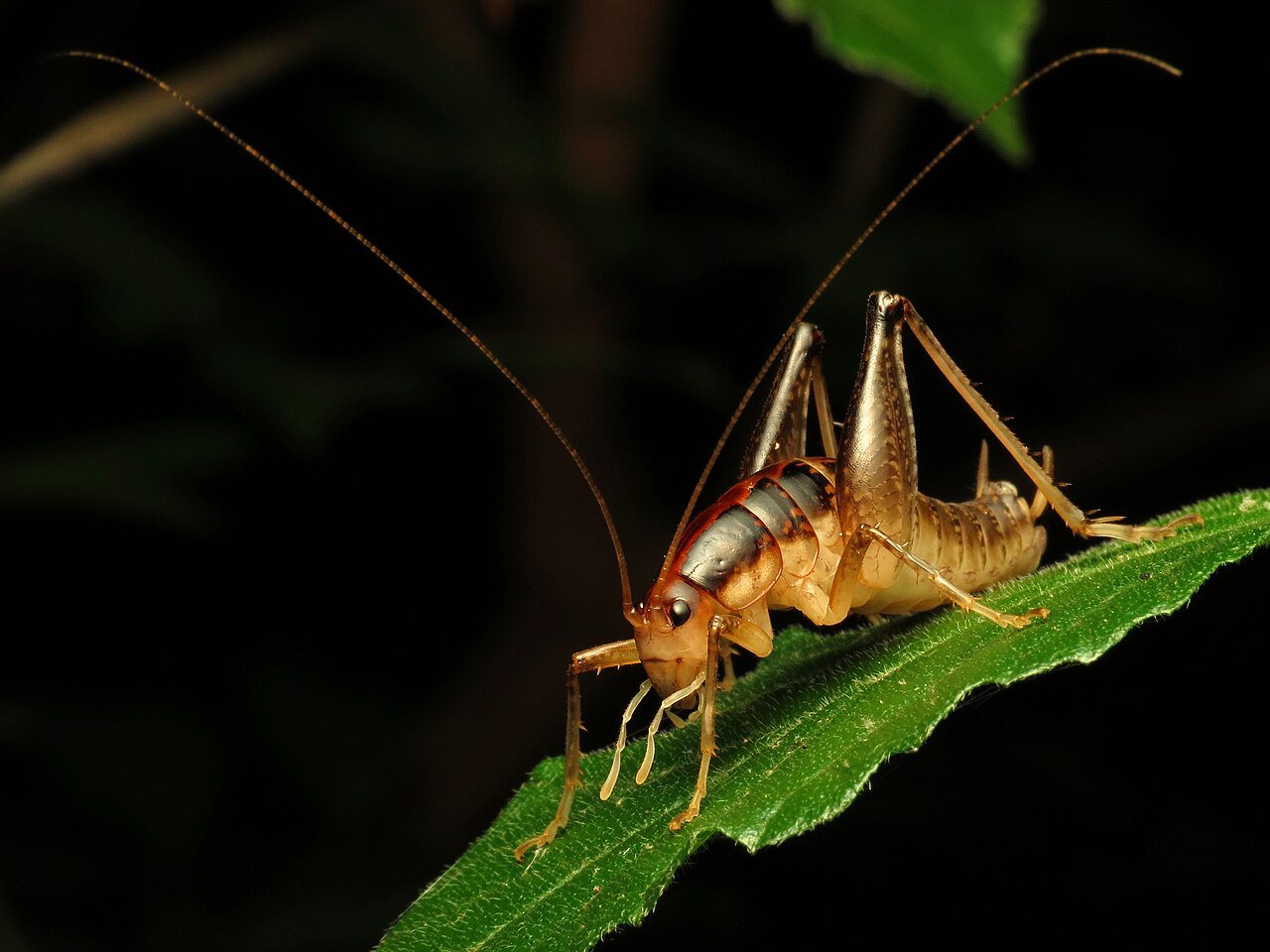
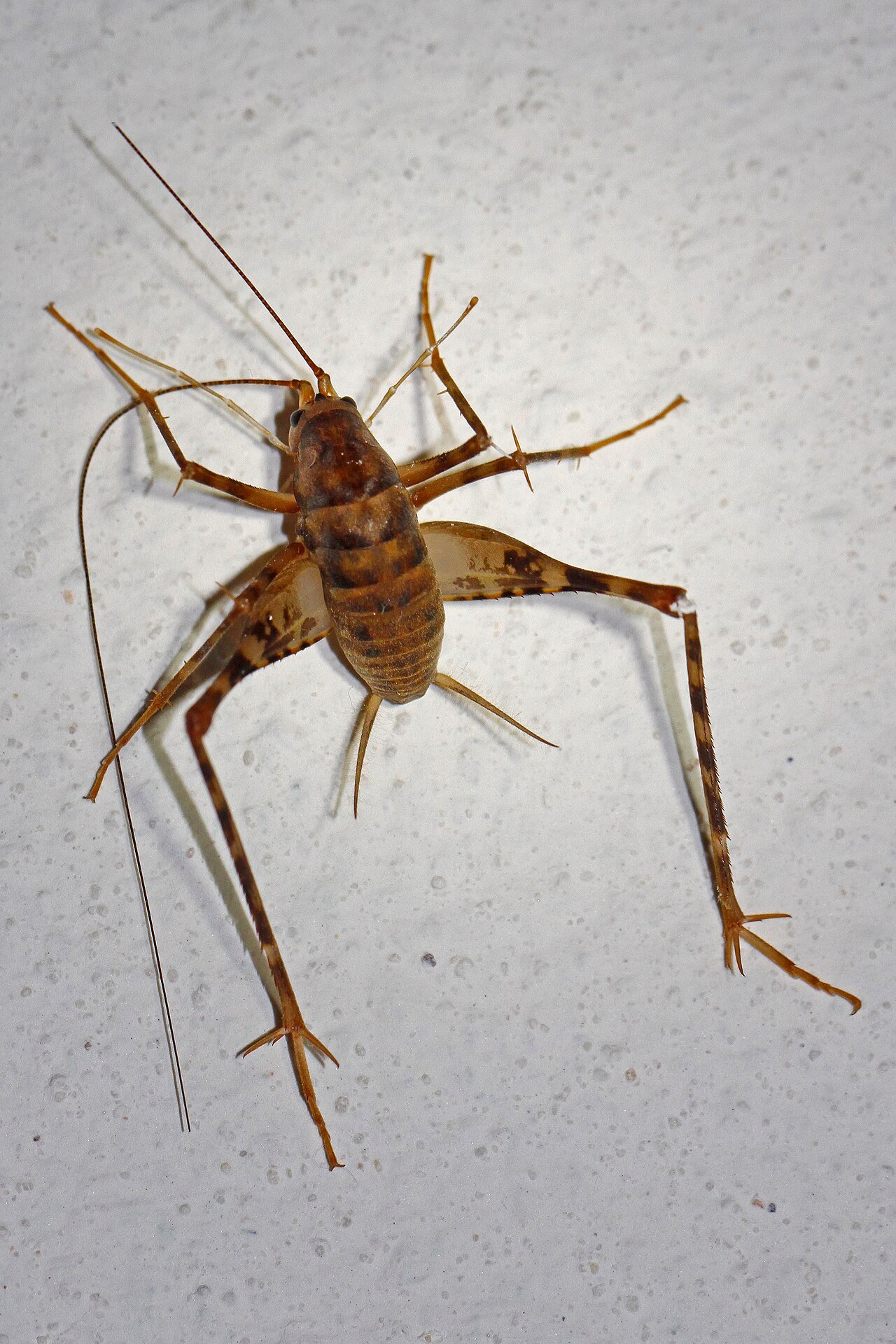
Camel crickets are crickets gone underground: an inch-plus of tan-to-brown insect with the namesake humped back, enormous drumstick hind legs, antennae longer than the body sweeping constantly (their world is dark; they navigate by touch), and — the detail that separates them from every “normal” cricket instantly — no wings and no chirp: the basement cricket is silent, and the chirping under the water heater belongs to a different insect (the house and field crickets, whose file gets a mention below). Ohio hosts native Ceuthophilus species — the classic cave crickets of sinkholes, woodpiles and stone foundations — but the basement population you’re most likely hosting is the greenhouse camel cricket (Diestrammena asynamora), an Asian import that citizen-science surveys found has quietly become the dominant camel cricket in eastern US basements: bigger, more banded, more prolific, and better adapted to the built environment than the natives it displaced — an invasion that happened under America’s houses without anyone upstairs noticing. Habitat requirements read like a basement listing: dark, damp, cool, still — crawl spaces, sump corners, garage walls, window wells, under-stair storage — because camel crickets are desiccation-fragile: no wings means no dispersal to better conditions, so they concentrate where humidity holds, eat whatever organic matter the dark provides (fungus, fabric, cardboard, each other — they’re unsentimental omnivores), and breed year-round indoors with the long generation times that make populations build slowly and stick stubbornly.
The jump, explained (it’s not what your nervous system thinks)
The spricket’s signature offense — leaping AT the human who found it — deserves its paragraph, because understanding it retires most of the fear. A camel cricket’s defensive toolkit contains exactly one tool: the jump — up to several feet, powered by those oversized femurs. But it’s a blind jump: eyes built for cave-darkness register your flashlight or the sudden overhead light as threat-direction data of nearly zero quality, and the insect’s strategy — documented in the behavioral literature and instantly recognizable to anyone who’s met one — is to startle-jump toward large looming threats rather than away: a predator lunging at a cricket that suddenly jumps at its face aborts the strike more often than not, and what works on a raccoon works magnificently on a human nervous system. The cricket isn’t attacking; it can’t attack — no biting mouthparts that break skin, no sting, nothing — it is deploying its entire defensive budget in a randomized direction that occasionally, memorably, includes your sternum. The flying-roach illusion and the centipede dart now have their third sibling: you are terrain and threat-shadow, never target — and the correct response, as ever, is a sidestep and the knowledge that the insect just spent everything it had on that move.
The honest damage file (small, real, and mostly about storage)
Unlike the library’s pure acquittals, the spricket carries a modest but genuine ledger. An established population — and basements can host hundreds unnoticed — grazes continuously on whatever organic matter shares the dark: stored fabrics lead the claims list (irregular surface-grazed holes in boxed clothing, canvas, and the dust covers of stored furniture — damage that gets blamed on moths and carpet beetles until someone counts the crickets), followed by cardboard (they eat the boxes AND live in them — the same double-duty the roach pages flag), paper goods, and in heavy infestations the edges of curtains and rugs in adjacent rooms. Add the droppings — dark smears and pellets accumulating below harborage that, at density, stain and smell — and the occasional midnight migration upstairs during drought weeks (they follow humidity; a parched summer drives them toward bathrooms and kitchens), and you have the honest case for management: not a health threat, not a structural one, but a storage-and-sanitation tax that compounds annually. The storage half of the response is already written — the archivist’s corner’s gasketed-tote doctrine defends against this grazer identically — and the population half follows the trilogy’s standing playbook, next section. One note for perspective: they also eat basement fungus and dead insects, performing minor janitorial work; the ledger nets negative once numbers build, but a lone spricket in the window well is doing more cleaning than damage.
The eviction program: dry, seal, trap, verify
Camel cricket control is the basement trilogy’s playbook with one addition, and DIY genuinely wins most cases. Dry — the lead intervention, as always: dehumidifier to 45–50% (the desiccation-fragile spricket cannot sustain populations in dry air; this single change collapses most infestations over a season), plus the crawl-space moisture work where the population’s reservoir lives under the house — a bare-earth crawl is a spricket factory, and the vapor barrier is the factory closure. Seal — the twelve-doors pass at ground level: door sweeps (garage-to-basement doors especially), window well covers (wells are spricket nurseries AND pitfall traps feeding the indoor population), foundation crack lines, and the utility penetrations. Trap — the addition, and it’s almost embarrassingly effective: glue boards along baseboards and wall junctions catch camel crickets in numbers nothing else matches (the blind-jumper biology that makes them alarming makes them trap-prone — they can’t see the board and land on it mid-hop); a dozen boards placed where droppings concentrate will census and cull simultaneously, and the catch-count trend is your verification data, same doctrine as every monitor in this library. The old folk version — shallow pans of soapy water — works on the same principle for free. What stays on the shelf: broadcast basement spraying (the recurring verdict — it kills the week’s visible crickets, leaves the humidity and the crawl-space reservoir, and books its own sequel); professional crack-and-crevice treatment earns its place in the heavy-infestation and crawl-space-reservoir cases, where our basement program pairs it with the moisture prescription that makes it stick, plan-covered as usual.
The fall surge and the chirping impostor
Two calendar notes complete the file. The September spricket surge is real and joins the library’s crowded fall roster: cooling nights and drying fields push outdoor camel crickets toward foundations exactly on the fall-invader and harvest-eviction schedule, so window wells and garage corners stock up in early autumn — the same two weeks the door-sweep audit pays for itself against mice, and one more entry on the September anchor visit’s consolidated invoice. The chirping in the basement is a different insect entirely: house crickets and field crickets — the winged, chirping, cricket-shaped crickets — also arrive in fall, announce themselves acoustically (only males chirp, wing-on-wing, and one behind the water heater can run all night), and rate even lower on the concern scale: field crickets die indoors within weeks (wrong habitat), house crickets persist only in warm humid corners, and the response is the same seal-dry-trap program plus, for the sleepless, the flashlight hunt the chirp itself guides. Neither chirper nor spricket justifies panic purchases; both justify the basement audit this wing of the library has now recommended five different ways — because the building that excludes and dries against one excludes and dries against the whole guild.
Spricket questions, answered
One jumped at my face. You’re certain they can’t hurt me?
Certain. No venom, no sting, mouthparts built for grazing fungus and fabric, not skin — the medical literature on camel cricket injuries is empty because there’s nothing to write. The jump-scare is the whole arsenal, and it’s spent the moment it happens. Your startle response is honest biology on both sides; only one of you was ever in danger, and it wasn’t you.
Why is my basement suddenly full of them when we never had any?
Three usual stories: a wet season raised the crawl-space or basement humidity past their establishment threshold (check the hygrometer — the crickets already did); the fall surge stocked the window wells and the door sweeps let the census in; or a stored-goods import — boxes from another basement, estate cleanouts, the classic routes — seeded a founding population. The response is identical in all three: dry, seal, boards, and the count tells you when it worked.
Do camel crickets mean my house has other problems?
They’re a message in the same envelope as the silverfish and centipedes: sustained humidity in the 70s-plus somewhere below grade — conditions that also invite the Oriental roach, feed the termite-conducive moisture file, and grow mold nobody wants. The spricket census is a free hygrometer with legs; read it as the maintenance memo it is.
My cat eats them. Problem?
None — cats find sprickets the best free entertainment the basement offers, and the crickets are nontoxic protein. The cat is participating in the trapping layer. (The dog that eats forty may revisit them briefly; moderation is apparently a feline virtue.)
The verdict from the basement corner
The spricket closes the basement wing as its most misunderstood resident: an insect armed with nothing, defended by a jump that works better on nervous systems than predators, guilty of grazing the storage boxes and testifying — always — to the humidity that let it settle. Sidestep the jump, run the trilogy’s program one more time (dry to 50, seal the ground floor’s twelve doors, board the baseboards, tote the textiles), and the population ends the way every moisture pest ends: quietly, permanently, and mostly for the price of an appliance this library has now sold more copies of than any dehumidifier company’s marketing department. For the heavy cases, the crawl-space reservoirs, and the photo of whatever just jumped: (937) 569-3330, Greater Dayton Pest & Rodent, Dayton and all eight counties. The basement is recoverable; the flinch was free; and the spricket — harmless, humpbacked, and honest to the last — never had a better offer than the window well it came from.
The invasion nobody upstairs noticed
The greenhouse camel cricket’s quiet conquest deserves its fuller telling, because it’s one of the era’s most instructive invasion stories and it happened, literally, under our feet. The species arrived from Asia over a century ago — greenhouse workers knew it by the 1900s — but nobody suspected its residential reach until a 2014 citizen-science project asked Americans to photograph and mail their basement crickets: the returns showed the import outnumbering native camel crickets in eastern-US homes by wide margins, in a distribution mapping tens of millions of households, all without a single control program, news cycle, or line item anywhere — an invasion detected only when scientists thought to ask the public what was living downstairs. The instructive parts: invasions don’t need to be dramatic to be total (the greenhouse cricket won on tolerance for dry-ish, warm-ish, food-poor built environments — outcompeting natives in the exact niche our houses accidentally build); citizen photos beat professional surveys for questions this distributed (the same photo-line principle this library runs on); and the ecological cost stayed mercifully low — the import eats what the natives ate and feeds the same basement predators, a rare invasion with more census than consequence. Your basement’s banded jumper is, in other words, a data point in an ongoing continental experiment — and if you photograph it for our line, you’re running the same instrument that discovered the invasion in the first place. Science by flashlight: the basement wing’s most fitting closing note.
The eight-county spricket map
Local distribution, for calibration: the stone-foundation belt hosts the deepest populations — the seeping masonry of Dayton’s historic districts, Oakwood and the courthouse-square towns runs the humidity these insects require year-round, and the cellar-corner colonies there are often decades old. The crawl-space housing of the farm belt and the mid-century ranches keeps its reservoir under the floor — the population upstairs is the overflow, and the vapor barrier is the intervention that reads on the glue boards within a month. The walkout-basement suburbs of Beavercreek and Springboro meet them mostly as fall-surge visitors through the patio-door sweep gap — the $12 fix — and the river towns’ flood-adjacent basements combine every factor and benefit most from the full trilogy program. Wherever the jump-scare happens on that map, the file now in your hands reads the same: harmless, humidity-flagged, storage-taxing at density, and evicted by the same dry-seal-board program the whole basement wing runs on. The flashlight’s next sweep of the corner is officially informed — and the corner, before long, officially empty.
The storage-box triage (the Saturday the sprickets pay for)
Since the damage ledger runs through stored goods, the practical closing: the basement-storage triage that defends against this grazer and its whole guild in one pass. Boxes come off the floor onto shelving (the six-inch rule from the archivist’s corner — floor contact is both moisture wick and cricket highway); cardboard converts to gasketed totes in order of contents value (textiles and paper first — the spricket menu — then everything else as budget allows); the dust-covered furniture gets its covers laundered and the upholstery vacuumed (grazing damage hides under covers for years); and the triage doubles as the census — every box opened is a droppings-and-damage inspection, and the corners that show evidence are where the glue boards go. Two hours, one Saturday, maybe eighty dollars of totes — and the household’s irreplaceables exit the menu permanently while the trapping layer deploys itself exactly where the population voted. It’s the same trade this library keeps offering in different currencies: a morning of method against years of slow loss, with the insects themselves drawing the map. The sprickets, to their credit, have never once hidden the evidence — humpbacked, honest, and jumpy to the end.
One hump, two drumsticks, zero weapons — sidestep, dry, seal, done.
Frequently asked questions
What are the giant jumping cricket-spiders in my basement?
Camel crickets — humpbacked, long-legged, antennae like whips, and the unnerving habit of jumping TOWARD threats (a blind-panic defense, not aggression; they cannot see well and leap randomly). Harmless, silent, and moisture-bound.
Do camel crickets bite or damage anything?
No bites, no stings, no chirping (they are the silent cricket) — and only modest damage potential at high densities: nibbled fabric, cardboard, and stored paper in damp storage. The main harm is cardiac, delivered at leg-height in dark basements.
Why is my basement full of camel crickets?
Cool, damp, dark, and undisturbed — a humid basement or crawlspace with cardboard clutter recreates their cave-and-log-hollow habitat perfectly. Populations build wherever those four conditions persist; they are yet another walking moisture-meter.
How do I get rid of camel crickets?
The dry-and-deny program: dehumidifier below 50%, sump and seep fixes, plastic bins replacing cardboard, ground-level exclusion (door sweeps, foundation caulk) — plus the gloriously effective low-tech killer: sticky traps along the walls, which camel crickets blunder onto in numbers.
Do sticky traps really work on camel crickets?
Better than any spray — wall-line glue boards catch them steadily, double as your population census, and make progress visible weekly. A dozen boards plus a dehumidifier out-performs every chemical option for this species.
What do camel crickets eat?
Nearly anything organic: fungus, plant debris, fabric, paper, each other — scavengers built for caves’ scarcity. Basement clutter is a buffet; the plastic-bin conversion removes most of it in an afternoon.
Why do they jump at me?
A cave-evolved bluff — eyeless-dark ancestry left them leaping blindly at looming threats in hopes of startling predators. It works magnificently on humans; it means nothing hostile.
Are camel crickets the same as spider crickets?
Same insect, regional names — spider cricket, sprickets, cave cricket, camel cricket all describe the humpbacked Rhaphidophoridae in your basement. The invasive Asian species now dominates most U.S. basements, slightly larger than the natives.
Do camel crickets mean my house has a moisture problem?
Almost always — like silverfish and centipedes, they only prosper where humidity stays high. Treat the population as a diagnostic: find the water (seepage, ventilation, grading) and the crickets leave with it.
When should I call about camel crickets?
When the census stays high after a real dry-out (hidden moisture hunting is our specialty), when crawlspace access defeats DIY, or when the population has simply passed tolerance: (937) 569-3330 — the visit fixes the habitat, not just the jumpers.