
The basement wing’s messenger corps announced four members; the roster was always five. Springtails — the pepper-grain jumpers of damp basement floors, bathroom grout lines and overwatered flowerpots — are the wing’s smallest, most numerous and most misidentified correspondent: a sixteenth-inch of primitive arthropod that pings away like static when approached (the tail-catapult that names them), masses in the hundreds where moisture concentrates, gets reported as “jumping fleas” weekly all summer — and cannot bite, sting, infest fabric, damage structure, or survive dry air, which resume this library’s regulars will recognize instantly: the springtail is a humidity reading with a jump, and its management is the dehumidifier doctrine’s fifth and final verse. The complete file: the flea-fork that matters (the jump-alike sorting that spares households a flea campaign they don’t need — and catches the one they do), the moisture map springtail masses draw for free, the KD-12 headline answer (yes — the dehumidifier is the treatment, again, and here most purely of all), the snow-flea winter cameo that confuses every thaw, and the honest escalation line where persistent indoor masses flag the plumbing-and-envelope failures worth finding early. Greater Dayton Pest & Rodent: (937) 569-3330.
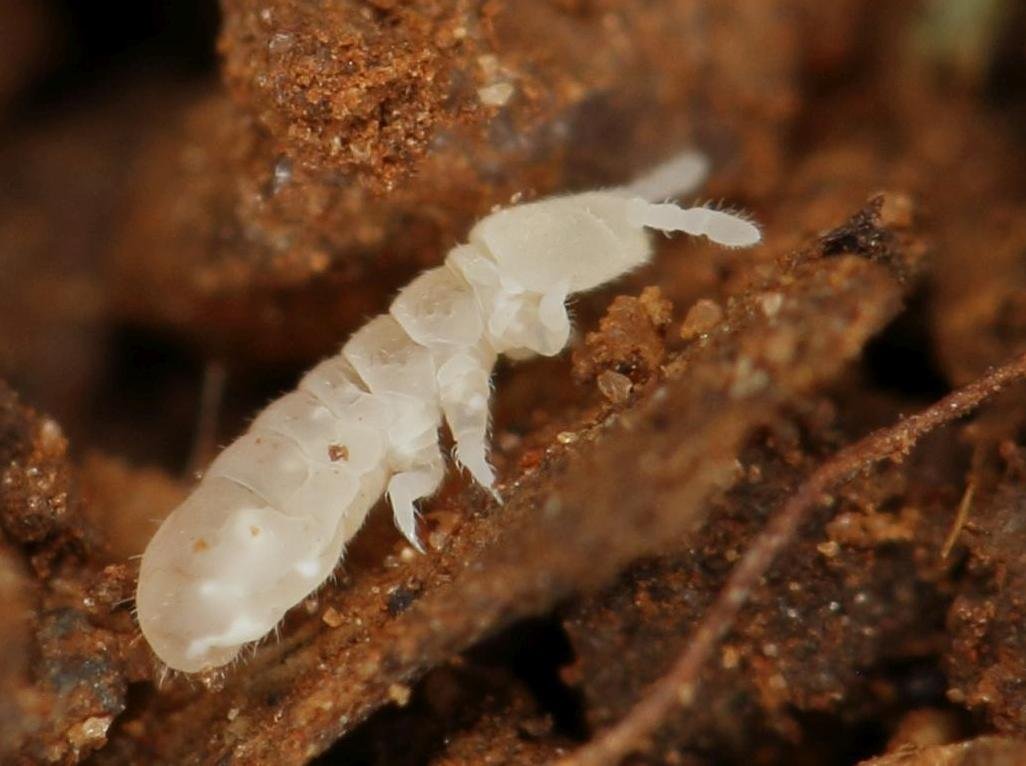
Meet the corps’ smallest member (and the catapult)
Springtails (Collembola — technically not even insects by modern classification, but an older six-legged lineage running parallel since before wings existed) are soil biology’s background radiation: among the most abundant arthropods on Earth, present by the hundred thousand per healthy backyard’s topsoil, processing fungi, algae and decay in the decomposer economy’s smallest denomination. The household-relevant anatomy: a furcula — a spring-loaded tail latched under the body that, released, catapults the animal dozens of body-lengths in a random direction (the “jumping” that triggers every flea comparison — and its tell: springtail jumps are chaotic pings without pursuit or landing precision, where fleas launch aimed and stick their landings); a moisture leash even shorter than the wing’s other members’ — springtails breathe through their cuticle and desiccate in hours away from damp, binding every indoor population to a wet source absolutely; and a diet of molds, mildews and biofilms that makes their indoor address list a fungus map: the sweating slab corner, the grout line’s soap-and-mildew film, the overwatered pot’s soil surface (the fungus-gnat page’s co-tenant, sharing the same pot and the same cure), the drain margin, the sump lip, and the window well’s wet leaf-pack. Harmless across every axis a household audits — no bite, no sting, no fabric, no wood, no disease — and informative across the only axis that matters: where springtails mass, water stands, and something — usually cheap, occasionally urgent — wants fixing beneath them.
The flea fork (the sorting this page exists to run)
The “tiny jumping bugs” report forks two directions with very different price tags, and the sort runs on four checks any kitchen counter can host. Where: springtails mass at moisture geography — floors, drains, sills, pots — and ignore animals entirely; fleas concentrate on and near hosts — pet bedding, carpet at rest zones, your ankles. Jump style: the chaotic ping versus the aimed launch — watch three jumps and the verdict usually lands. The crush test: a springtail smears soft; a flea’s armored capsule resists the fingernail audibly (the flea page’s lateral-compression body, field-tested). The white-sock walk: five minutes at ankle height — fleas board; springtails never do (nothing about you is damp enough). Sort springtail and the flea campaign’s vet-vacuum-IGR machinery stands down in favor of a hygrometer; sort flea and the 30-day calendar starts tonight — and the fork’s dollar value runs exactly that gap: the springtail household that buys the flea aisle spends real money treating a humidity reading, while the flea household that shrugs “just springtails” donates weeks to the 95-percent iceberg. Photos of the specimen (coin for scale, the macro-minute’s standing rules) grade the ties same-day — and the adjacent look-alikes round the docket: pepper-colored and NOT jumping = the nymph-and-speck differential; jumping at the shoreline of the fish tank or in the potted plants only = springtail with a hyper-local water source; winter specks on snow = the cameo two sections down.
The moisture map (read the mass before sweeping it)
The wing’s standing rule — read the messenger before dismissing it — pays best at springtail density, because mass placement is a free plumbing survey. The bathroom mass (grout lines, tub margins, behind the toilet base): reads chronic surface moisture plus mildew film — usually ventilation (the fan-discipline verse) and caulk-line renewal; a mass persisting after both flags the wax-ring and supply-line checks the phorid file runs one severity tier up. The basement-floor mass (slab corners, sump lips, drain margins): reads the wing’s classic below-grade humidity — the dehumidifier-and-vapor-barrier program’s home territory, with a localized corner mass earning the exterior check (downspout, grading, window-well drainage) at that compass point. The flowerpot mass: reads overwatering, co-signed by any fungus gnats present — the dry-down cures both tenants. The kitchen-sink mass: reads the cabinet’s hidden drip — the under-sink flashlight check this paragraph just scheduled. And the sudden whole-floor bloom after storms: reads saturated exterior soil pushing the yard’s population through every slab gap at once — the isopod dispersal event’s smaller sibling, self-resolving as the ground drains, door-sweep notes taken. Every mass is an arrow; every arrow points at water; and the household that follows three arrows usually finds two cheap fixes and, occasionally, the early leak worth this whole page.
The treatment (one appliance, fifth verse, purest case)
The KD-12 search that helped justify this page — “dehumidifier for springtails” — gets the wing’s most emphatic yes: of the five messengers, the springtail’s moisture leash is the shortest, which makes dehumidification not just the best treatment but functionally the only one worth money. The program, familiar and final: 45–50 percent below grade, hose-drained, hygrometer-verified (the full spec stands); the source-fix layer the moisture map just aimed — the caulk line, the fan discipline, the downspout, the dry-down, the vapor barrier where the crawl runs bare; the film removal that starves survivors — the mildew wipe-down and grout scrub that eliminates the diet alongside the humidity (the janitor’s box earning its keep); and the patience arithmetic — a dried zone’s springtail mass collapses in days (the cuticle-breathing leash enforcing itself), with the vacuum handling the evidence. What earns the standing no, stated once for the wing’s smallest member: sprays and foggers against springtails are the library’s purest waste case — the population replenishes from soil reservoirs beyond any interior treatment’s reach, the masses reassemble wherever moisture persists regardless of body count, and the perimeter-spray subscriptions sold against them monetize exactly that circularity. One appliance, some caulk, a sponge: the fifth verse, sung; the corps, complete; and the basement wing’s doctrine — dry the theater, dismiss the cast — closed at its smallest and cleanest proof.
Springtail questions, answered
They’re in my bed / on my skin — are you SURE they don’t bite?
Sure — the mouthparts graze fungus films and physically cannot pierce skin, and the on-skin reports resolve as incidental transit plus the itch of suggestion (the evidence-over-welts rule’s gentlest case). A bed sighting means a damp source within jumping range — the overwatered nightstand plant, the humidifier’s over-enthusiasm, the wall’s hidden wick — and the map, not the mattress, gets the attention. Genuine persistent bites route to the sleep-window differential, always.
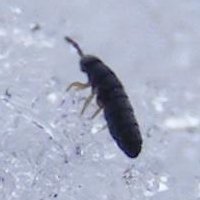
What are the jumping specks all over the snow in February?
The family’s celebrity cameo: snow fleas — dark springtails whose antifreeze proteins (glycine-rich molecules of genuine biomedical research interest) let them surface-forage on thaw days, peppering snow around tree bases by the thousand. Entirely outdoor, entirely harmless, gone with the refreeze — the winter’s best flashlight-free nature show, and no household action exists or is needed. Photograph freely; worry never.
The masses come back every summer no matter what I dry. Verdict?
Seasonal exterior pressure, not treatment failure: humid Ohio summers run the outdoor reservoir at maximum, and a below-grade space that hovers near the leash threshold re-qualifies each July. The durable fix is the margin’s architecture — the gravel-band foundation moat (fourth constituency: mites, voles, ants, now springtails), the mulch pulled back, the wells drained — plus the dehumidifier’s summer duty cycle. Recurrence means the humidity number crept, nothing more; the hygrometer arbitrates.
Do springtail infestations ever mean something serious?
The masses themselves, never — but their persistence occasionally testifies seriously: an indoor population surviving honest drying flags hidden water (the slab leak, the wall-void wick, the failed flashing) with the same early-warning value as the phorid’s tier-three — springtails just run it at lower stakes and higher frequency. The persistent-mass inspection — moisture meter, exterior walk, the borescope where readings demand — is the escalation, and the finds it makes pay for themselves in avoided drywall every time. The speck was free; the leak it found rarely is.
The corps, complete
The springtail closes the basement wing’s roster as its purest specimen: the smallest messenger, the shortest leash, the cheapest fix, and the clearest proof of the doctrine the whole wing runs on — that damp-loving arthropods are instrumentation, that the building writes its moisture report in whatever reads it, and that one appliance plus one weekend of source-work dismisses casts no spray ever touched. Sort the jump from the flea’s, read the mass’s arrow, dry to fifty, and let the specks’ disappearance verify the number the way they always announced it. For the persistent masses, the arrow-follow inspections and the flea-or-not photos: (937) 569-3330, Greater Dayton Pest & Rodent, Dayton and all eight counties — where the basement’s five messengers all deliver the same memo, and the household, at last, has read every copy.
The science panel: antifreeze, catapults, and the six-legged lineage that isn’t insects
The wing’s smallest member carries its largest scientific portfolio, worth the panel. The classification surprise: springtails aren’t insects — modern phylogeny places Collembola as a separate six-legged lineage (entognaths, their mouthparts recessed in a way true insects’ never are) running parallel to insects since the Devonian; the famous Rhynie chert fossils include springtails essentially modern in form at four hundred million years, making the basement’s specks among the oldest body plans a household will ever host — the silverfish’s only serious rival for the tenure record. The catapult engineering: the furcula’s latch-and-release mechanism accelerates the animal at hundreds of g’s — among the fastest movements relative to size in the animal kingdom — with the spin-stabilization and water-launching abilities (some species jump OFF water surfaces via a ventral tube’s adhesion tricks) that keep the family in the biomechanics journals and the micro-robotics citations. The antifreeze economy: the snow flea’s glycine-rich antifreeze proteins inhibit ice-crystal growth by a mechanism distinct from fish antifreezes — studied for organ-transplant preservation and frozen-food science, a research thread whose funding the February snow-peppering has quietly justified for decades. The ecological ledger: as fungal grazers and nutrient cyclers at planetary abundance, Collembola rank among soil health’s foundational engineers — the reason ecotoxicology uses them as standard test organisms, and the reason the healthy yard’s uncountable outdoor population deserves the same non-verdict as every reservoir this wing has mapped: the soil’s springtails are infrastructure; only the indoor mass was ever a message. Four hundred million years of practice, one damp basement corner at a time — and the library’s smallest resident, fully credentialed at last.
The basement wing’s final index (five messengers, one memo)
With the corps complete, the consolidated read gets its last update, printed where the fifth member filed: silverfish = humidity plus starch-and-paper diet (storage triage rides along); centipedes = humidity plus a prey base (census the cards); camel crickets = humidity plus dark harborage (declutter joins); isopods = floor-level moisture specifically (the reading that points below); springtails = moisture plus fungal film, at the finest resolution the building offers (the mass’s arrow pointing at the exact wet square foot). Five species, five sensitivities, one memo and one program — dehumidifier to fifty, vapor barrier where bare, seals at grade, storage in totes, films wiped, margins moated — run once, verified by the corps’ own departure. The wing’s parting arithmetic, five pages in the making: roughly $400 at the program’s ceiling against the mold remediation, joist repair, and perpetual-spray subscriptions the unread memo eventually invoices — the library’s best standing trade, co-signed now by every messenger the basement ever employed. Memo read; corps dismissed; wing closed dry.
A eight-county speck report
The local files, briefly: springtail calls crest with July’s humidity and storm weeks across every county (the whole-floor blooms after saturating rain lead the volume), with the stone-foundation districts running the standing masses their seeping walls sustain and the crawl-space belt supplying the vapor-barrier conversions whose before-and-after speck censuses make the wing’s cleanest testimonials; the snow-flea reports pepper February’s photo line from the wooded lots and farm lanes (graded with delight, treated never); and the flea-fork saves — the households sorted out of unneeded campaigns or into needed ones — run year-round as the page’s quiet dividend. The wing’s totals, closing: five messengers, five files, one appliance recommended more times than any product in the library’s history — and a eight-county basement stock measurably drier for the correspondence. The specks jump; the hygrometer settles; and the smallest resident’s page ends the way the wing always planned: with the water found, the cast dismissed, and the flashlight, for once, finding nothing at all.
Four hundred million years of catapult practice, defeated by a fifty-percent setpoint — the wing’s fifth verse ends on its purest note, with the specks pinging back to the soil economy that always owned them and the basement floor reporting, for the first time in the library’s tenure, nothing whatsoever. The jump was never a threat; the mass was never an infestation; and the memo — five messengers, one word, DRY — files itself at last in the only cabinet that matters: the household’s habits, where the hygrometer now lives, checked monthly, believed always. The corps stands relieved; the appliance stands guard; and the wing’s long correspondence closes with its shortest, truest line: the building told you everything, the whole time, in specks.
And should tonight’s flashlight find the pepper still pinging in a corner the program missed: follow the arrow, touch the wall, trust the meter — the wet square foot is within reach of the beam, the fix is usually within reach of a caulk gun, and the occasional deeper find is exactly the early warning the specks were always paid in fungus to deliver. Read, dry, verify: the wing’s whole liturgy, three words, said once more at its smallest altar — and the basement, five messengers lighter, finally quiet enough to store things in.
Ping, arrow, meter, dry: the speck file closes — and stays closed at fifty percent.
Frequently asked questions
What are springtails?
Tiny (1–2mm) wingless jumpers — moisture-dependent decomposers that launch via a spring-loaded tail (furcula) when disturbed. They are the flea impostor of record: dark, small, and jumping, but moisture-bound, non-biting, and harmless to everything you own.
Are springtails fleas?
No — the differential that saves treatment money: springtails tumble-pop randomly via tail-spring (fleas leap clean verticals with legs), cluster at moisture (sinks, plant pots, damp basements) rather than pets, and never bite. Jumping bugs plus zero bites plus damp venue = springtails.
Why are springtails in my bathroom and basement?
Standing moisture and the mold film it grows — their entire diet is fungi, algae, and decaying matter in wet zones: sink overflows, tile gaps, potted plants, condensation corners. They are a humidity gauge with legs; populations track wetness exactly.
How do I get rid of springtails?
Dry the habitat — that is the whole program: fix the leak or condensation, dehumidify below 50%, dry out overwatered plant pots, ventilate the bathroom, clear the mold film. Sprays kill visible clusters and change nothing; dryness ends the species locally within weeks.
Why are there thousands of springtails outside my foundation?
Wet mulch and organic-rich soil breed them at extraordinary densities, and rain or drought pushes visible masses onto patios and siding — alarming, temporary, and harmless. The foundation moat (mulch pulled back, drainage fixed) thins them permanently.
Do springtails bite humans or pets?
Cannot — no biting mouthparts for skin; documented “springtail bite” cases dissolve under examination into other causes. Persistent bite sensations with springtail sightings deserve the standard differential (fleas, mites, dermatitis) — the springtails are bystanders.
Can springtails infest my houseplants?
They colonize chronically wet potting soil (eating the fungus, not the plant) — a watering-schedule verdict, not a plant threat. Let pots dry between waterings and bottom-water for two weeks; the population starves quietly.
Why do springtails appear in sinks and tubs?
Following moisture films to their source — and then stranding on the porcelain like their spider and silverfish colleagues. Drain-adjacent clusters usually mark a slow leak or chronic splash zone worth finding for its own sake.
Do springtails damage anything at all?
Nothing structural, nothing stored, nothing living — heavy outbreaks are purely a moisture symptom. They are arguably the most harmless pest on this entire site; the damage file is empty by design.
When do springtails justify a professional visit?
When the moisture source hides — persistent indoor populations after honest drying mean concealed water (slab leaks, wall condensation, crawlspace humidity) worth professional diagnosis: (937) 569-3330. The springtails come free as witnesses.