The myth-testing series reconvenes for its most beloved defendant: does baking soda kill ants — and its kitchen-counter companion, does it kill roaches — the folk remedy with the internet’s most confident recipe (equal parts baking soda and powdered sugar; the sugar lures, the soda “reacts with their stomach acid and they explode”) and the series’ most entertaining verdict to deliver, because the famous mechanism is anatomically impossible: ants cannot explode from carbon dioxide for the elegant reason that ants vent gas freely — their digestive and tracheal systems exchange gases through spiracles along the body; there is no sealed pressure vessel anywhere in the insect for the fizz to burst — and the “stomach acid” the recipe requires runs far weaker than the legend needs. What the full trial finds: a mechanism borrowed from a different animal’s folklore, laboratory results that grade the mixture from “weakly, slowly, sometimes” (roaches, at high doses) to “essentially not” (ants, who mostly decline the bait), the sugar’s genuinely useful half smothered by its useless partner, and — the series’ standing service — the working alternative sitting one shelf over: the borax file’s proven chemistry, same grocery aisle, same price, actual endings. Plus the taxonomy the series keeps sharpening: where baking soda genuinely earns pest-adjacent work (cleaning, odor, and one legitimate deterrent-surface trick), and why this particular myth’s survival machinery — the explosion imagery, the pantry convenience, the occasional coincidental corpse — makes it folklore’s most renewable resource. Greater Dayton Pest & Rodent: (937) 569-3330.
The explosion that can’t happen: anatomy versus recipe
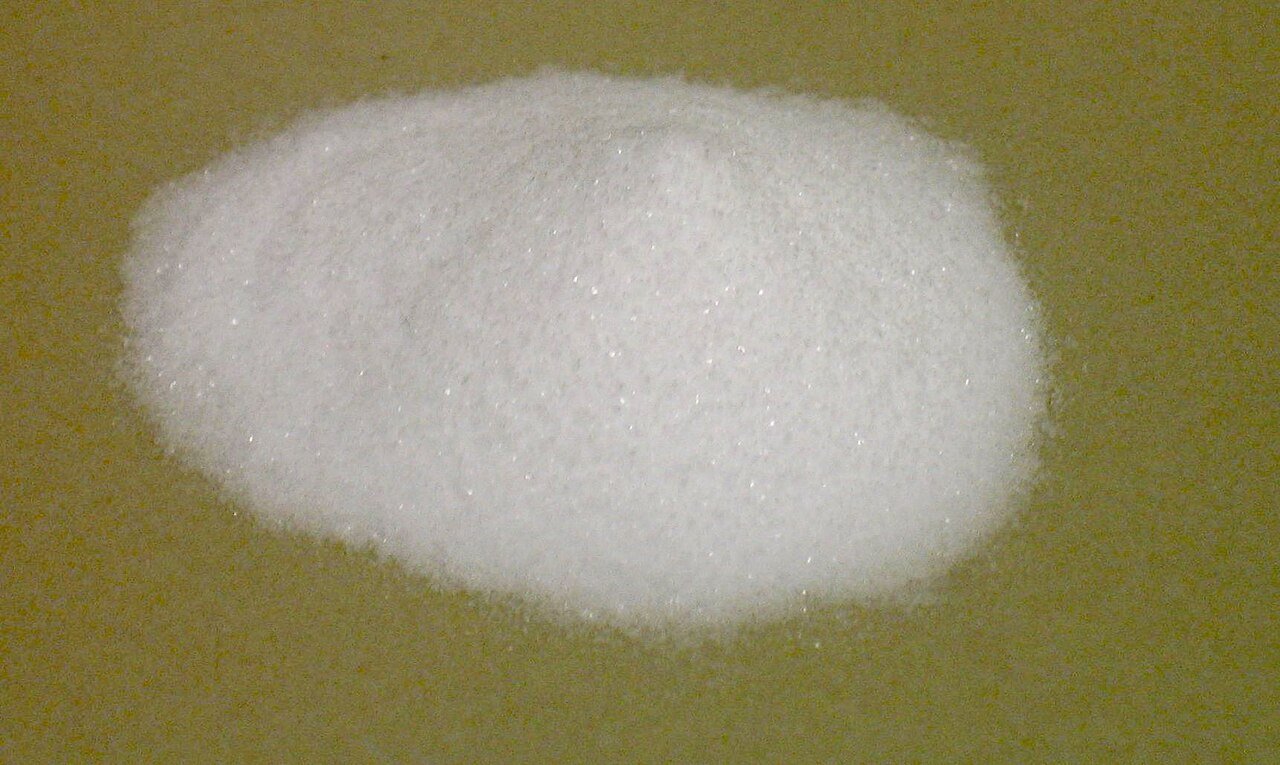
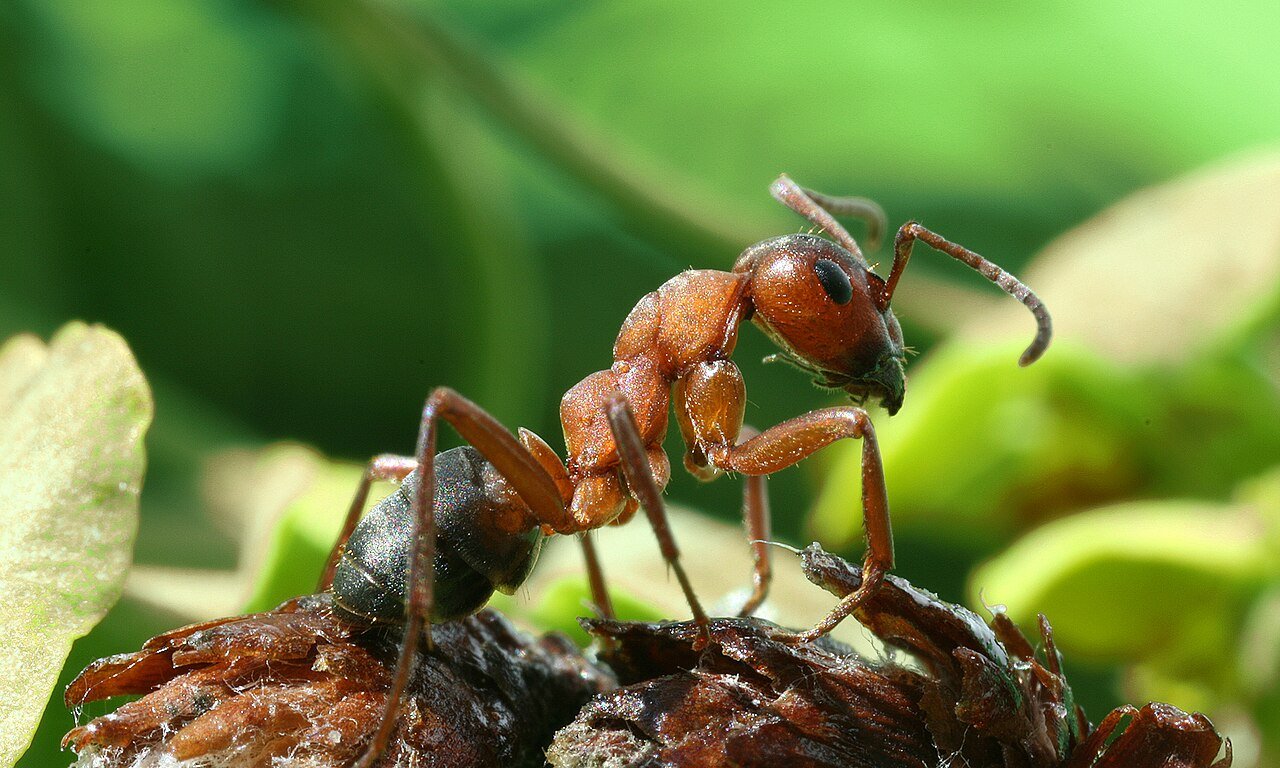
The legend’s engine deserves the full teardown, because its failure is a tidy anatomy lesson. The claim requires three parts: strong stomach acid (to react with bicarbonate), vigorous CO₂ generation (the fizz), and a sealed vessel (to convert fizz into rupture). The ant supplies none: its foregut crop — the “social stomach” the trophallaxis economy runs on — is a storage sac, not an acid vat; its midgut chemistry runs mild; and above all, the insect body is ventilated by design — the tracheal system’s spiracles exchange gases along the whole abdomen, and the digestive tract vents both directions without ceremony (insects, to put the science plainly, burp and pass gas with complete competence). Bicarbonate reaching an ant gut produces modest fizz, prompt venting, and a mildly inconvenienced ant — the laboratory literature on bicarbonate toxicity in insects finds effects only at sustained high doses via disrupted internal pH, a slow-and-weak mechanism nothing like the pop of legend. The mythology’s pedigree explains the confusion: the “fizz kills” imagery descends from the birds-and-rice wedding legend and the seagull-and-Alka-Seltzer schoolyard classic — vertebrate folklore (also largely debunked) transplanted onto an animal with a fundamentally different gas-handling architecture. The recipe’s sugar half, meanwhile, does its job perfectly — ants recruit to the pile enthusiastically — which produces the myth’s classic crime scene: a well-attended bait that kills approximately nothing, photographed mid-feast and captioned as working. Attendance was never the metric; the day-seven crash was — and baking soda never delivers one.
Baking soda does not make ants explode, and the myth costs people a whole season. Bait that works is ant control in Dayton.
The roach asterisk (where the folklore keeps its one receipt)
Intellectual honesty requires the roach paragraph, because the cockroach version grades a shade less dead than the ant one. Roaches will eat baking-soda-and-sugar mixtures more readily than ants (less discriminating palates), and sustained high-dose bicarbonate ingestion genuinely can kill roaches slowly — the internal-pH mechanism has some laboratory support at doses a free-feeding roach occasionally accumulates. The honest grading against the standards this library holds every method to: slow (days-plus, without the borax file’s colony-cascade payoff), weak (mortality fractions far below the gel baits’ near-complete knockdowns), unaimed (no ootheca effect, no egg-pipeline answer, no cannibalism-transfer bonus — the population mechanics that make professional baiting work are entirely absent), and outcompeted at its own price point — the boric acid sitting beside it at the store runs the same pennies with decades of documented results. Verdict: the roach asterisk earns the folklore its “sometimes, technically” footnote and nothing more; a German kitchen population treated with baking soda is a population granted weeks of reproductive runway, and the protocol exists because runway is the whole game. The series’ taxonomy files it precisely: not theatrics (something happens), not an orphaned professional (no professional ever used it) — a half-truth, the genre where a real mechanism’s trace results get promoted to a method by hopeful captioning.
Where baking soda genuinely serves (the redemption section)
The series pays its debts: baking soda earns real pest-adjacent work in three roles the legend never mentions. Sanitation power: the deodorizing-and-scrubbing chemistry is genuinely pest-relevant — the trash-can rim doctrine’s scrub, the fridge-and-drain odor management that removes the attractant layer, and the grease-cutting paste that strips the ant-trail pheromone highways from counters (washing the trail is legitimate AFTER a bait campaign concludes — the sequencing the borax file teaches); the gentle abrasive for cleaning interceptor cups and bait stations without residues that spook the customers; and the drain-volcano’s honest half — the baking-soda-and-vinegar fizz does modest mechanical loosening of light drain film (the drain-fly page’s brush still does the real work, but the fizz-then-flush ritual beats nothing, which is more than the ant recipe ever managed). The pattern completing the redemption: every legitimate use is cleaning — baking soda’s actual profession — deployed against the conditions that feed pests rather than the insects themselves. The pantry’s most famous box was never an insecticide; it was always the janitor, and the janitor’s work, this library’s every source-first page agrees, matters more than most sprays anyway.
The working alternative, one shelf over
The series’ standing service, rendered again: the household reaching for baking soda wants a cheap, kitchen-safe, grocery-store answer to an ant trail or roach sighting — and that answer exists, fully documented, at the same store: for ants, the borax recipe (1:2:6 borax-sugar-water, cotton balls, stations, spray-nothing patience) or the commercial gel baits that pre-engineer it — the trophallaxis-powered colony endings the fizz recipe cosplays; for roaches, boric acid’s invisible crack-dust plus gel-and-IGR — the protocol’s retail-accessible core; for both, the sanitation half the baking soda genuinely serves, run as the force-multiplier it is. Price the swap honestly: the boxes sit dollars apart, the recipes take identical minutes, and the difference is the entire outcome — a bait that ends colonies versus a lure that catered one. The myth’s only real cost was never the box; it was the weeks — the German population’s reproductive runway, the ant colony’s undisturbed satellite-budding season — purchased at folklore prices while the working chemistry waited one shelf over. The series’ oldest arithmetic, one more time: the cheap remedies aren’t cheap when they don’t work; the working ones were never expensive; and the aisle’s real cost axis was always the calendar.
Baking soda questions, answered
I used the recipe and found dead ants near it. Doesn’t that prove it works?
It proves ants die near things — the coincidental-corpse mechanism that renews half the aisle’s folklore: foragers die of age (weeks-long worker lifespans), weather and incidental causes constantly, and a monitored bait pile accumulates the neighborhood’s attrition photogenically. The metric that would prove it — trail collapse inside two weeks, the day-seven crash, the queen’s economy ending — is precisely what the recipe never delivers and the borax swap reliably does. Count trails, not corpses; the series’ whole epistemology in four words.
Is the mixture at least safe to try around kids and pets?
Safer than most of the aisle, honestly — bicarbonate’s toxicity profile is benign at any plausible exposure (massive canine ingestions warrant a vet call for the sodium load; the deployed teaspoons don’t) — and safety was never the objection: futility was. The same kitchen-safety instinct routes better through the borax file’s enclosed-station protocol — mild chemistry, engineered delivery, actual results — which keeps both the toddler and the timeline protected.
Does the vinegar-and-baking-soda combo do anything extra to pests?
The volcano neutralizes itself into salt water and spectacle — chemistry’s most beloved null result — and the pest applications inherit the null: vinegar alone has its own trial in this series (trail-erasing, modestly real; colony-killing, no), and combining the two mostly cancels the vinegar’s one working property. Keep them separated: vinegar for the post-campaign trail wash, baking soda for the janitorial roles above, and neither anywhere near the job description the folklore assigned.
Why does every generation rediscover this exact recipe?
Because its survival machinery is folklore’s best: a vivid mechanism (the explosion image is unforgettable precisely because it’s cartoon-logical), zero-cost trial (the box is already in the pantry — no purchase, no commitment), guaranteed attendance (the sugar works, so the pile always photographs busy), and coincidental corpses on schedule. Every element rewards sharing and none requires results — the same engine the mosquito hawk and bleach files documented, running at pantry convenience. The countermeasure is the one this library sells at every price point: a metric. Trails, not corpses; crashes, not attendance; and the folklore starves the way colonies should.
The verdict, fizzing gently
Does baking soda kill ants? No — the explosion is anatomically impossible, the attendance is the sugar’s work, and the corpses are coincidence photographed. Roaches? A slow, weak, technically-nonzero footnote outclassed by its shelf-neighbor in every dimension that ends infestations. The box keeps its honest portfolio — the scrubbing, the deodorizing, the trail-wash and the volcano’s fizzy assist — and surrenders the insecticide résumé it never earned, while the working chemistry waits one shelf over at the same price for the household ready to count trails instead of corpses. The myth series’ ledger updates accordingly: bleach, alcohol, foggers and the fizz — tested, filed, retired; borax — affirmed with instructions; and the aisle a little more legible each verdict. For the trails that outlast every recipe, and the kitchens ready for the day-seven crash: (937) 569-3330, Greater Dayton Pest & Rodent, Dayton and all eight counties — where the folklore gets its trial, and the colony gets its ending.
The kitchen-chemistry shelf, fully graded (the series’ consolidated card)
- Baking soda: insecticide no; janitor yes — scrubs, deodorizes, washes trails post-campaign. This page’s verdict.
- Vinegar: erases ant pheromone trails (real, temporary); kills colonies never. The full trial’s split decision.
- Bleach: kills on contact what it touches, solves nothing it can’t, corrodes what it shouldn’t — the series’ founding conviction, upheld across bed bugs and roaches alike.
- Rubbing alcohol: contact-kills and fire-risks in equal measure; the bed bug file’s standing warning.
- Essential oils: minutes of repellency, hours of confidence — the natural aisle’s recurring grade.
- Diatomaceous earth: real mechanism, placement-dependent — the thin-and-dry doctrine or nothing.
- Borax / boric acid: the shelf’s working chemistry — colony-cascade baiting done right per the restored instructions.
- The metric over everything: trails and crashes, never attendance and corpses — the one line that grades every future recipe before it wastes a week.
One card, eight verdicts, and the pantry’s entire folk-pharmacy sorted into janitors, half-truths and the single working chemist — print it inside the cabinet door where the recipes get googled, and the series’ years of trials compress into a glance. The kitchen keeps its chemistry; the colonies keep their appointments; and the fizz, at long last, keeps to the drains and the science fairs where it always belonged.
The eight-county folklore report
The recipe’s local career, from the intake notes: the baking-soda question arrives on our line in two seasonal waves — the spring ant surge, when the pavement-ant scouts and odorous-house trails send households to the pantry before the store, and the midsummer roach discovery, when the first nymph meets the first search result — and its case files end the same way across every county: the two-to-three folklore weeks, the persistent trail, the converted campaign, and the borax-or-protocol ending that was available on day one. The conversion stories carry the report’s useful number: households that called after a failed fizz campaign averaged weeks more tenure — and, for the German-roach files, generations more population — than the day-one callers, the runway cost this page prices into every folklore verdict. The report’s cheerful close: the question itself is free, the photo line grades it gladly, and the eight counties’ pantries hold everything the answer needs — the janitor’s box for the cleaning, the chemist’s box for the killing, and, pinned inside the cabinet door from today, the card that tells them apart. Folklore tested, shelf sorted, calendar returned to its owner: the series’ work, done again, at the price it always charges — one honest read.
A closing note on kitchen-safe instincts (they were right all along)
The impulse behind the recipe deserves its acquittal even as the recipe takes its conviction, because the household reaching for baking soda is expressing three instincts this library endorses completely: proportionality (a trail of ants shouldn’t summon industrial chemistry — correct, and the bait doctrine agrees), kitchen safety (nothing deployed near food should threaten the family — correct, and the enclosed-station protocol was built on it), and self-reliance (most pest problems should be solvable from the grocery store — correct, and half this library is the instruction manual). The folklore failed only at the fourth step — verification — and the fix was never to abandon the instincts but to arm them: the same shelf, the same minutes, the same safety profile, routed through chemistry with a mechanism and a metric. That’s the myth series’ real product across every trial it’s run: not debunking for sport, but the conversion of good instincts into working method — the trail-counter’s eye, the day-seven patience, the enclosed station, the janitor-versus-chemist distinction — at the cost of one read per recipe. The fizz was wrong; the impulse was right; and the kitchen that holds both verdicts holds the whole aisle’s answer, which is exactly where this page — and the batch of library it closes — was always headed.
No explosions, no exceptions, no hard feelings: the pantry’s most confident recipe retires to janitorial duty with full honors, the sugar keeps its lure license under new management, and the ants — vented, unbothered, and thoroughly documented — meet the shelf-neighbor with the actual mechanism next trail. The fizz was always for the volcano; the borax was always for the colony; and the cabinet-door card now remembers which is which so nobody’s calendar has to. Series adjourned — until the next recipe walks in asking for a trial, and gets one.
Count trails, not corpses; grade crashes, not attendance; and keep the janitor and the chemist in their labeled boxes — the whole verdict, fridge-magnet sized, for the next time the internet promises an explosion the anatomy never ordered. The ants vent; the myth doesn’t; and the kitchen, as ever, wins by reading first.
Next in the library’s new wing: the pantry moths, the clothes moths, and the springtails of the basement floor — three files, one weekend of reading, zero explosions promised.
Frequently asked questions
Does baking soda actually kill ants?
Barely and unreliably — the folk theory (internal gas production) is mostly myth, lab results are underwhelming, and the sugar-and-soda recipe delivers far less colony damage than any commercial borate bait. It kills some individual ants slowly; it does not kill colonies.
What is the baking soda and sugar ant killer recipe supposed to do?
Equal parts powdered sugar and baking soda, theory being ants eat both and the soda reacts fatally. In practice ants often separate the granules, the dose-to-kill is inconsistent, and the queens — the entire game — never receive any.
Why does borax work when baking soda doesn’t?
Borax (and boric acid) is genuinely toxic to ants at slow-acting doses they cannot detect — the delay is the feature, letting workers courier it to queens and brood. Baking soda has no comparable toxicity or delivery profile; the two get conflated constantly and perform nothing alike.
Is there any safe homemade ant killer that works?
Borax-sugar solutions are the one legitimate DIY recipe — concentration matters (too hot kills couriers at the dish, too weak does nothing), which is why $6 commercial baits with dialed formulations outperform kitchen chemistry. Everything else in the pantry (vinegar, cinnamon, soda) is deterrence theater.
Does baking soda at least repel ants?
Marginally, as a physical barrier line ants prefer not to cross — for a day or two, indoors, until traffic reroutes. As with every repellent on this site: rerouting is not solving, and for odorous house ants, harassment risks colony budding.
Is baking soda safe around pets compared to ant poison?
Safer than nothing but solving nothing — while proper bait placement (cracks, stations, behind appliances) makes actual ant control equally pet-inaccessible. The honest comparison is not soda vs. poison; it is placebo vs. placement.
What should I use instead of baking soda for ants?
The protocol from our ants-in-house guide: liquid or gel bait beside the intact trail, everything else cleaned, a week of patience, then seal the traced entry. Total cost under $10 — the same as the soda experiment, minus the second week of ants.
Why do so many sites say baking soda works?
Because ants near soda sometimes die (of many causes), content mills recycle each other, and nobody follows up at the colony level. The measure that matters is trail extinction in a week — soda fails it, bait passes it, every time we have watched both run.
Does baking soda work on any pests at all?
It has minor legitimate uses — deodorizing after infestations, a component in some roach folk recipes (where boric acid again does the real work). As a standalone insecticide, no pest on this site respects it.
Who do I call when the pantry remedies fail?
(937) 569-3330 — and no judgment: half our ant calls start “I tried everything under the sink.” The bait protocol usually fixes in a week what the remedy aisle spent a month rearranging.