
The short answer: bleach kills a roach you can drown or drench in it — and it will never kill a roach infestation, while actively sabotaging the methods that do. That second clause separates this page from its bed bug sibling: with roaches, bleach isn’t merely futile, it’s counterproductive, because roach elimination runs on baiting — patient, scent-driven, colony-level baiting — and dousing a kitchen in a harsh repellent oxidizer is the fastest way to make an entire colony refuse the bait that would have ended it. Add the fumes-in-enclosed-kitchens problem, the mixing hazards, and the roach’s own legendary chemical hardiness, and the household’s strongest-smelling bottle turns out to be the wrong tool at every level of the job. This is the complete honest answer from Greater Dayton Pest & Rodent — what bleach does to an individual roach, the drain question everyone actually means, why the repellency backfires, and the program that clears kitchens for real — with the free identification line standing by as always, because which roach you have changes everything: (937) 569-3330.
What bleach does to a roach — and what a roach does about it
Drench a cockroach in bleach and it dies: the oxidizer overwhelms its respiratory spiracles and chemistry as surely as drowning would — indeed, drowning is half the mechanism, since roaches submerged in any liquid suffocate. But the American cockroach is one of evolution’s great chemical survivors, and everything short of full immersion plays to its strengths. A splash or spray contact that doesn’t saturate is frequently survivable — roaches groom aggressively, shed contaminated cuticle wax, and shelter in crevices where liquid never follows. The famous hardiness statistics apply: roaches survive extended submersion by closing their spiracles, tolerate radiation and starvation benchmarks that became folklore, and — most relevantly — a German cockroach colony’s reproductive engine (each egg case carrying thirty-plus young, carried protected by the female until hatch, as our service page details) sits entirely beyond any surface application’s reach. The arithmetic mirrors every panic remedy in this series: the individuals you can reach were never the problem; the harborage population and egg pipeline you can’t reach are the entire problem; and bleach’s reach ends at the visible surface, minus wherever its fumes drove the colony deeper. Kill-on-contact was never in dispute. Strategy is what’s on trial, and the verdict repeats.
Bleach kills on contact and drives the rest deeper into the wall, which is the opposite of what you want. That is the case for cockroach control in Dayton.
The drain question: what people actually mean by “bleach for roaches”
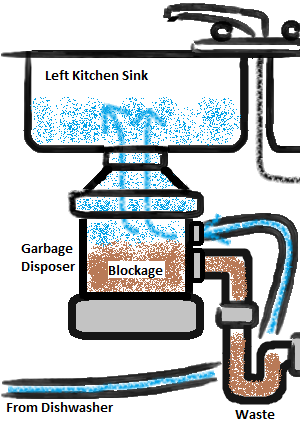
Half of this search is really a plumbing question — the big American cockroaches (“waterbugs”) appearing from basement floor drains and kitchen sinks in older Miami Valley homes, and the folk prescription of pouring bleach down the drain weekly. Here’s the honest audit. What it does: kills or repels the individual roaches present in the trap at that moment, briefly sanitizes the upper drain surfaces, and makes the basement smell like a pool. What it doesn’t do: reach the sewer-side population the drain merely connects to (the colony lives in the municipal infrastructure — a bleach pour is a rude doorbell, not an eviction), maintain any barrier once it washes through, or address the actual vulnerability, which is almost always a dry trap — the U-bend’s water seal evaporating in rarely-used drains and opening a literal highway from the sewer. The fix that works costs pennies and no fumes: a quart of plain water monthly restores the trap seal (a spoon of mineral oil on top slows evaporation), screens or drain covers physically exclude wanderers, and persistent traffic despite wet traps is the diagnostic red flag for a cracked lateral — a camera-scope conversation, as the Dayton page explains for our older housing stock. Bleach can be part of drain hygiene; it was never drain defense — water was, all along.
The backfire: how bleach sabotages the treatment that works
Here is the roach-specific twist that elevates bleach from useless to counterproductive. Modern German cockroach elimination — the professional standard on our cockroach page — is built on gel baiting: palatable bait placed precisely where roaches forage, eaten, carried home, and spread through the colony by its own food-sharing and scavenging habits, with insect growth regulators sterilizing the rebound. The entire system depends on roaches trusting their environment enough to feed normally — and bleach is environmental distrust in a bottle. Its harsh residual odor is repellent to roaches, redrawing their foraging maps away from treated zones (which is inevitably where the bait went, since both target the same kitchen); wiping down surfaces with bleach removes the aggregation pheromone trails that make bait placements findable; and the scatter response to fume exposure pushes harborages deeper into wall voids and adjacent rooms — the same dispersal disaster foggers cause, in slow motion. We see the signature on takeover jobs constantly: a kitchen that’s been bleach-scrubbed daily for a month, bait placements sitting untouched, and a colony thriving two voids over, warier than ever. The professional workaround is patience — placements shifted to un-bleached zones, matrices rotated, the household asked to stand down the bottle — and the weeks that costs are weeks the bleach bought. Sanitation matters enormously in roach work; the right version is dry-surface discipline, sealed food, and grease control — not chemical warfare on the very trails the bait needs.
What actually clears a roach infestation
- Identification first: German (kitchen breeder), brown-banded (whole-house dry-warmth), American (infrastructure wanderer), Oriental (moisture margins) — the Ohio roach guide sorts them, and each routes differently
- Gel baits in rotation: placed at harborage seams and travel routes, refreshed and rotated across visits to defeat bait aversion — the colony eliminates itself through its own habits
- Insect growth regulator: the birth-control layer that turns survivors’ offspring into a dead end
- Crevice dusts: voids, hinge gaps, and plumbing chases treated where liquids can’t persist
- Monitors: counted, dated evidence replacing impressions — the same verification spine as every service on this site
- Sanitation that helps baiting: dishes done, dry sinks overnight, sealed food, grease wiped — food competition down, bait attractiveness up, no repellent chemistry anywhere near placements
- The drain layer where relevant: wet traps, covers, enzyme treatment for organic film — the drain biology playbook, not the bleach pour
Bleach and roach questions, answered
Does the smell of bleach at least keep roaches away?
Briefly and locally — which is exactly the problem: it keeps them away from your bait and your sightlines, not your house. Repelled roaches don’t leave; they relocate deeper and keep breeding. A deterrent that redistributes an infestation while blinding your monitoring is worse than no deterrent, and that’s bleach’s honest job description in a roach kitchen.
Can I mop the floors with bleach during treatment?
Hold off in the treated zones — mopping strips bait placements’ supporting scent trails and can contaminate placements at floor seams. During an active baiting program, clean with plain detergent, keep bleach for the bathroom, and give the bait the two to four undisturbed weeks it needs to collapse the colony. Your technician will flag exactly which zones are bait-adjacent; everywhere else, clean normally.
A roach fell in my bleach mop bucket and swam. Should I be worried about what I’m up against?
Amused, not worried — closed spiracles buy a roach minutes of submersion, and the story says more about roach hardware than about your odds. The colony still loses to bait and growth regulator every time the program runs clean; no individual’s toughness changes the arithmetic that kills colonies.
The safety file, kitchen edition
The bed bug page’s safety warnings transfer here with a kitchen-specific sharpening. Roach panic-cleaning happens in the room with the most chemical neighbors in the house: bleach meeting the ammonia in many glass and floor cleaners generates chloramine gas; bleach meeting the acids in some descalers and vinegar-based sprays releases chlorine; and the “deep clean everything at once” response to a roach sighting is precisely the multi-product scenario poison control centers log every year. Enclosed under-sink cabinets — ground zero for both roach activity and chemical storage — concentrate fumes in exactly the space people stick their heads into while scrubbing. Food-contact surfaces add their own rules: bleach solutions for kitchen sanitizing are legitimate at proper dilution (food code relies on them), but panic-strength applications on counters, inside pantries, and across dish storage leave residues and odors where meals are made — the food-safety version of treating the symptom while contaminating the kitchen. And the fundamental mismatch remains: every fume risk is being run for a method that cannot reach the egg case behind the cabinet hinge. The safe kitchen protocol is almost boring by comparison — sealed food, dry surfaces, gel bait working quietly in the seams, monitors counting the collapse — and it has the notable advantage of also being the one that works. Ventilate what’s been bleached, mix nothing, and put the energy where the colony actually is.
The one-screen verdict
- Does bleach kill roaches? Drenched or drowned, yes — the individual was never the hard part; the colony never touches the puddle
- The roach-specific backfire: bleach’s repellent residue redraws foraging away from gel baits, erases the trails placements rely on, and scatters harborages deeper — it sabotages the winning method
- The drain truth: sewer roaches ride DRY TRAPS, not dirty drains — a monthly quart of water beats a weekly quart of bleach, and persistent traffic means a lateral worth scoping
- Kitchen safety: never mix with ammonia or acid products; ventilate; keep panic-strength bleach off food surfaces — fumes are a real cost for a method with no benefit
- What works: species ID → rotated gel baits + IGR + crevice dusts → monitors → sanitation that helps the bait — the full program, guaranteed
- During treatment: plain-detergent cleaning in baited zones; save the bleach for the bathroom until the monitors read zero
- The number: (937) 569-3330 — free photo ID (bands vs. stripes vs. waterbug changes everything), free quotes, same-week kitchens
Screenshot it, water the floor drain, and let the bait do what the bottle never could — quietly, completely, and without anyone holding their breath over the sink.
Why the roach version of the myth is the most expensive one
Among the panic-shelf legends this series has audited, the bleach-for-roaches myth carries a distinction: it’s the one whose collateral damage lands directly on the cure. The alcohol and bleach bed bug detours waste time and property while the real treatment waits unharmed; the bleach roach detour actively degrades the battlefield — repelled colonies, erased trails, deepened harborages, and bait aversion that stretches professional timelines by weeks. In takeover economics that’s real money: the un-bleached German kitchen typically collapses in four to eight weeks of baiting; the heavily bleach-conditioned one can need extra visits, extra matrix rotations, and extra patience before the colony resumes normal foraging over placements — all billed time that a quieter month would have avoided. The lesson generalizes to the whole category: before reaching for any strong-smelling response to any pest, ask what the effective treatment will be and whether tonight’s remedy helps or hurts it. For roaches the answer has been stable for decades — baiting wins, repellents lose, and the kitchen’s best contribution is sealed food, dry sinks, and chemical restraint. The colony is beatable on schedule; the schedule just needs the bottle to stay under the bathroom sink where its one legitimate roach-adjacent job — sanitizing what the infestation touched, after the monitors read zero — patiently waits: (937) 569-3330.
The restaurant corollary: why commercial kitchens learned this lesson first
Food-service pest control internalized the bleach lesson decades before the home internet re-litigated it, and the commercial record makes the case better than any lab. Restaurants sanitize with chlorine solutions nightly by code — and restaurants still get German roach infestations constantly, coexisting with more routine bleach exposure than any home kitchen will ever apply. What separates the clean commercial kitchens from the infested ones, as our restaurant program documents visit by visit, is never the sanitizer strength: it’s the baiting program’s placement discipline, the cardboard and delivery-intake rules that stop introductions, the dry-floor close that removes competing food, the monitor counts that catch pressure early, and the coordination that keeps sanitizer chemistry away from bait placements (commercial techs literally map placements so the closing crew’s spray bottles miss them). A professional kitchen is the controlled experiment the home myth never runs — maximum bleach, and the roaches only lose when the biology-shaped program shows up. Your kitchen obeys the same physics at smaller scale, which is why this page’s advice is the residential translation of what every health-code kitchen in the Miami Valley already practices: sanitize for sanitation, bait for elimination, and never confuse the two bottles’ jobs. The program that runs both correctly is a phone call away — home or commercial, same standard, same guarantee: (937) 569-3330.
Closing the series: the two bleach pages, one lesson
Read together, this page and its bed bug companion retire the household’s most-trusted bottle from pest duty on complete evidence: lethal to individuals, irrelevant to populations, hazardous in the enclosed rooms where panic deploys it, and — in the roach case — actively hostile to the baiting programs that win. But the deeper takeaway is the diagnostic habit the whole question teaches. Every “does X kill Y” search is really asking “can I solve this tonight with what’s under the sink,” and the honest answer across the entire cabinet is the same: you can kill tonight’s visible insects with almost anything, and you can solve the infestation with almost nothing you own — because infestations live in the gap between visible and actual, and closing that gap takes inspection, placement, residual tools, and verification that no retail bottle carries. The good news hiding in that answer: the gap-closing system exists, it’s local, its estimates are free, its results are guaranteed, and its phone number has ended every page in this series because it’s genuinely the shortcut the search bar was looking for. The bleach goes back to the grout, the dryer keeps its crown as the laundry room’s real weapon, the drain gets its quart of water — and the colony gets the bait it never sees coming: (937) 569-3330.
Postscript for the completists: the one place bleach genuinely earns a line in professional roach work is post-elimination cleanup — once monitors read zero, a properly diluted sanitizing pass over the harborage zones (cabinet interiors, under-appliance floors) addresses the allergen and bacterial legacy the colony left behind, which matters for the asthma-sensitive households our Ohio roach guide flags. Right chemical, right job, right week — after the war, as janitor; never during, as general. Sequence, as ever on this site, is the whole secret.
Frequently asked questions
Does bleach kill roaches?
A roach you drown in bleach dies — of drowning as much as chemistry — and the colony never notices. No residual, no bait effect, no crack penetration, fume hazards in application quantities: bleach is a cleaner moonlighting badly as a pesticide.
Does pouring bleach down the drain kill roaches?
It flushes and kills stragglers in the pipe while missing the actual mechanism: American roaches enter through DRY trap seals, and bleach does nothing to restore the water barrier. The quart of plain water your drain needed costs less and works completely.
Can I mop with bleach to keep roaches away?
Mopping degreases — genuinely useful for removing the food film — but the roach-repellent effect evaporates with the smell. Credit the sanitation, not the chlorine: unscented degreasers achieve the same subtraction without the fumes.
Does bleach destroy roach eggs?
No — egg cases are built to survive worse than surface chemistry, and they are glued in cracks your mop never enters. Egg survival is the universal relapse engine behind every spray-and-wipe strategy.
Is bleach dangerous to use for roaches?
In pesticide quantities, yes — enclosed-space fumes, splash hazards, and the never-mix-with-ammonia rule (toxic gas, hospitalizations annually). All risk, no colony impact: the worst trade in the cleaning aisle.
Why does my kitchen still have roaches after bleaching everything?
Because the colony lives in appliance voids and hinge cracks eating crumbs you cannot bleach away, running its night economy around your day cleaning. The flashlight census will show you what the mop misses; the gel bait will fix it.
What is the right role for bleach in a roach problem?
Post-victory sanitation — degreasing fecal focal points and contaminated surfaces AFTER the bait program empties the colony (their dropping pheromones recruit; removing them matters then). During the campaign, keep cleaners away from your bait placements entirely.
Does bleach work better than roach spray at least?
They fail identically as strategies — contact kills, zero colony logic — and the spray at least skips the fume-mixing risks. The honest ranking: gel bait, growth regulator, sanitation, drain discipline… and both liquids tied for last.
What kills roaches permanently if bleach doesn’t?
The unchanging stack: bait carried home by foragers, IGR breaking the sixty-day cycle, dry kitchen, wet drains, sealed gaps — run together, once, properly. Our how-to-get-rid-of-roaches guide gives the whole protocol free.
When should I skip the DIY chemistry and call?
Daytime sightings, multi-room evidence, handful-plus flashlight counts, or any post-fogger/post-bleach campaign that scattered the colony: (937) 569-3330 — the placement-and-IGR toolkit exists for exactly the cases the bottle collection cannot reach.