
Dayton’s ants work a century of infrastructure the suburbs simply don’t have: miles of vintage sidewalk and curb grid for the pavement ant empires, stone foundations whose mortar lines are galleried ant housing, alley economies feeding colonies year-round, and a housing stock whose accumulated moisture history — every old roof, every patched porch, every hundred-year gutter — writes the region’s deepest carpenter ant file. City ant work is masonry-and-moisture work, and the treatment that holds in a Beavercreek subdivision needs translation before it holds on a South Park block. Here’s the Dayton edition.
The City Roster
- The sidewalk empires: pavement ants own the vintage grid — May’s sand piles between slabs, the sidewalk-crack swarm battles, and foraging trails into every ground-floor kitchen adjacent to the network. The oldest neighborhoods run the densest colonies because the joints have had a century to deepen.
- The stone-foundation residents: mortar-line colonies in the pre-war basements — pavement ants and odorous house ants both — foraging up through sill gaps into first floors. Same managed-not-eradicated honesty as any historic masonry: crevice placements plus interior sealing beat any spray.
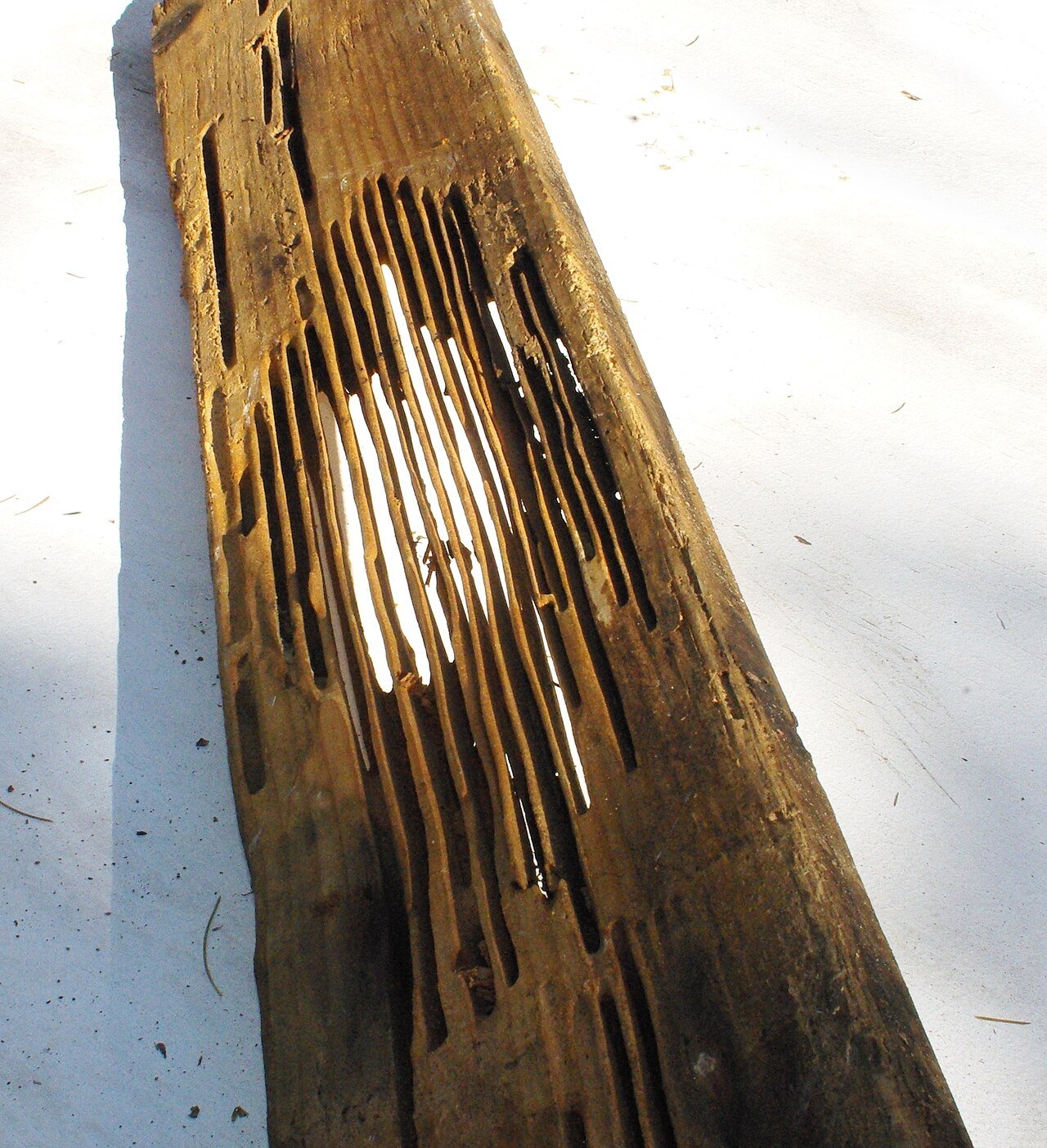
- The carpenter ant file, city edition: a century of moisture history means more softened wood per block than anywhere in the region — big black ants indoors in spring, frass below trim, night rustling in walls. The structural triage runs constantly here, and winged emergences get the termite check first, every time.
- The alley economy: trash staging and grease film keep colonies provisioned through droughts that thin suburban networks — the same infrastructure driving the city’s rodent and roach files feeds the ants a course behind them.
The Duplex Problem and the Building-Level Answer
Dayton’s connected housing runs the same structural logic for ants as for its other pests: odorous house ant networks span party walls and shared foundations, colonies budding across a duplex faster than either side treats alone, and the multi-queen biology that punishes repellent sprays (the budding problem) punishing them doubly where a scattered colony simply re-forms next door. The unit that baits while the neighbor sprays is running a relay race with one runner — so connected-building ant work gets the coordinated approach: baiting both sides in the same window, perimeter treatment at the shared foundation, and the documented findings that bring a landlord or the other household into the plan. For the city’s renters, the same habitability documentation we produce for roaches carries ant infestations that reach serious scale — less common, but the multi-unit kitchen with a permanent trail qualifies. The species-and-bait discipline stays universal: identification under magnification, chemistry matched to the craving, placements beside trails never on them, and the honest grades at vinegar and borax for the DIY-first.

The Method, Translated for Masonry
City jobs run the standard arc with urban tuning: crevice-first placement — gel and dust into the mortar lines, sidewalk-adjacent foundation joints, and sill gaps where city colonies actually live, since a stone wall’s colony ignores every counter-top bait card ever placed; interior exclusion as the force multiplier — sealing sill lines, utility penetrations, and the coal-chute-era legacies converts a building’s permanent masonry tenancy back into an outdoor curiosity, the same conversion our historic-district work runs on two-century stone; moisture counsel in writing — because the carpenter file is really a deferred-maintenance file, and the trail is pointing at the gutter; and perimeter banding scaled to lot reality — tight urban footprints put the treated band a stride from the kitchen, which is efficiency when placed right. Trails swell for a day as bait moves, collapse inside two weeks, and stay collapsed where the sealing happened — guaranteed under the Protection Plan either way.
The Dayton Calendar and Bottom Line
March–April: carpenter season opens across the old housing — the year’s most consequential sightings, and the city’s heaviest triage weeks. May: pavement emergence across the entire vintage grid at once — a citywide event. June–August: odorous house ant prime time, alley economies keeping colonies solvent through drought. September–October: peak baiting, and the sealing window before frost. Winter trails mean indoor colonies — in stone-foundation housing, usually literal ones. One flat price residential, coordinated programs for connected buildings, the method at ant control with the fundamentals at ants in the house — and the city’s whole file at Dayton pest control.
Trails on a Century-Old Block?
Masonry-first placements, coordinated where the walls are shared, and the moisture honesty the old housing deserves — one flat price, guaranteed, citywide.
Frequently asked questions
Why does my old Dayton house get ants every year?
A century of infrastructure: galleried mortar lines housing permanent colonies, deepened sidewalk joints running pavement ant empires, and accumulated moisture history feeding the carpenter file. The fix is masonry-aware — crevice placements plus interior sealing — not another season of spray cans.
Are the ants living in my stone foundation?
Very likely — mortar-line colonies are standard in pre-war basements, foraging up through sill gaps. They’re managed rather than eradicated (the housing is too good), and interior sealing converts the tenancy back into an outdoor curiosity.
What do big black ants in a South Park Victorian mean?
The city’s deepest file: carpenter ants reading a century of roof, gutter, and porch moisture. Spring indoor sightings, frass below trim, or night wall-rustling warrant the structural triage — and winged emergences get the termite check first.
Why do my duplex’s ants come back after every treatment?
Colonies span the party wall — odorous house ant networks bud across shared foundations, and one side’s spraying scatters colonies into the other. Coordinated same-window baiting on both sides is the version that holds; we document the case for the other household or the landlord.
What are the May sand piles all over the sidewalks?
Pavement ant emergence across the vintage grid — a citywide annual event, and mostly harmless theater. Treatment matters where trails run from the joints into ground-floor kitchens; crevice bait at the foundation line ends those.
Do the alleys really affect ant problems?
They provision colonies through droughts that thin suburban networks — grease film and trash staging are ant groceries. Alley discipline (lids, staging distance) debits the ants alongside the roach and rodent accounts.
Why did counter-top ant baits do nothing?
City colonies live in masonry and sills, not behind the coffee maker — bait has to sit at the crevice line the trail actually uses, in the chemistry the species actually craves. Identification and placement are most of urban ant work.
What does ant control cost in Dayton?
One flat price residential — identification, masonry-first placements, perimeter banding, and the moisture-and-sealing counsel in writing — with coordinated pricing for connected buildings and free re-treatment under the quarterly plan.