
The bathroom is the most reliable bug habitat in any Ohio home — a warm, humid, plumbing-riddled microclimate that recreates a cave ecosystem two steps from your toothbrush — and the small residents it recruits generate a steady stream of identical questions: what IS that silvery thing that raced behind the vanity, why do tiny moths keep appearing on the shower wall, what are the little jumping specks by the drain, and does any of it mean the house is dirty? (No — it means the house has water, which every house does.) This is the complete bathroom bug census from Greater Dayton Pest & Rodent: the seven regulars ranked by frequency, what each one’s presence actually diagnoses, the shared humidity-and-plumbing program that evicts the whole cast at once, and the two or three appearances that justify a phone call instead of a shrug. Bookmark it next to the medicine cabinet — the odds that everything you ever find in there is on this page run comfortably above ninety percent, and the photo line covers the remainder free: (937) 569-3330.
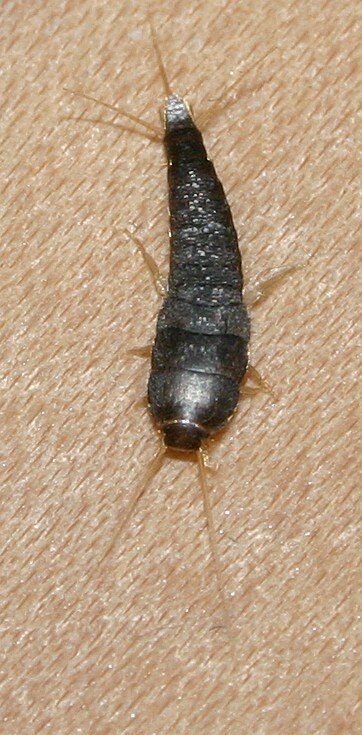
Resident #1: the silverfish — the flagship of the fixture
The silvery, wingless, teardrop-shaped sprinter that flows more than runs — three tail filaments behind, two long antennae ahead, a metallic scale-shimmer that leaves dust on a fingertip — is the silverfish, and it’s the bathroom’s defining resident for good reason: the species needs humidity above roughly 75% to thrive, cannot survive long in dry air, and the bathroom is the one room reliably serving cave conditions nightly. The biology is stranger than the encounter suggests: silverfish belong to one of the most ancient insect lineages on Earth — older than wings, essentially unchanged for hundreds of millions of years — they live for several years (remarkable for their size), molt throughout adulthood, and eat almost anything carbohydrate: paper and book bindings, wallpaper paste, cotton and linen, dandruff and hair, dried starches, and the mold films that humid rooms grow. The harm audit: no bites, no stings, no disease — their damage column is entirely material, and it’s real where populations meet storage: the box of photos in the humid basement, the bookshelf against a damp wall, the linen closet backing the shower. A silverfish in the tub (they fall in chasing condensation and can’t climb the glaze) is a specimen, not an outbreak; silverfish IN your stored fabrics and papers are a humidity verdict with a cleanup bill attached. Either way the sentence is the same one this library keeps handing down: dry the room and the ancient lineage moves on.
All seven trace back to moisture somewhere behind the finish, and finding that source is what pest control in Dayton is for.
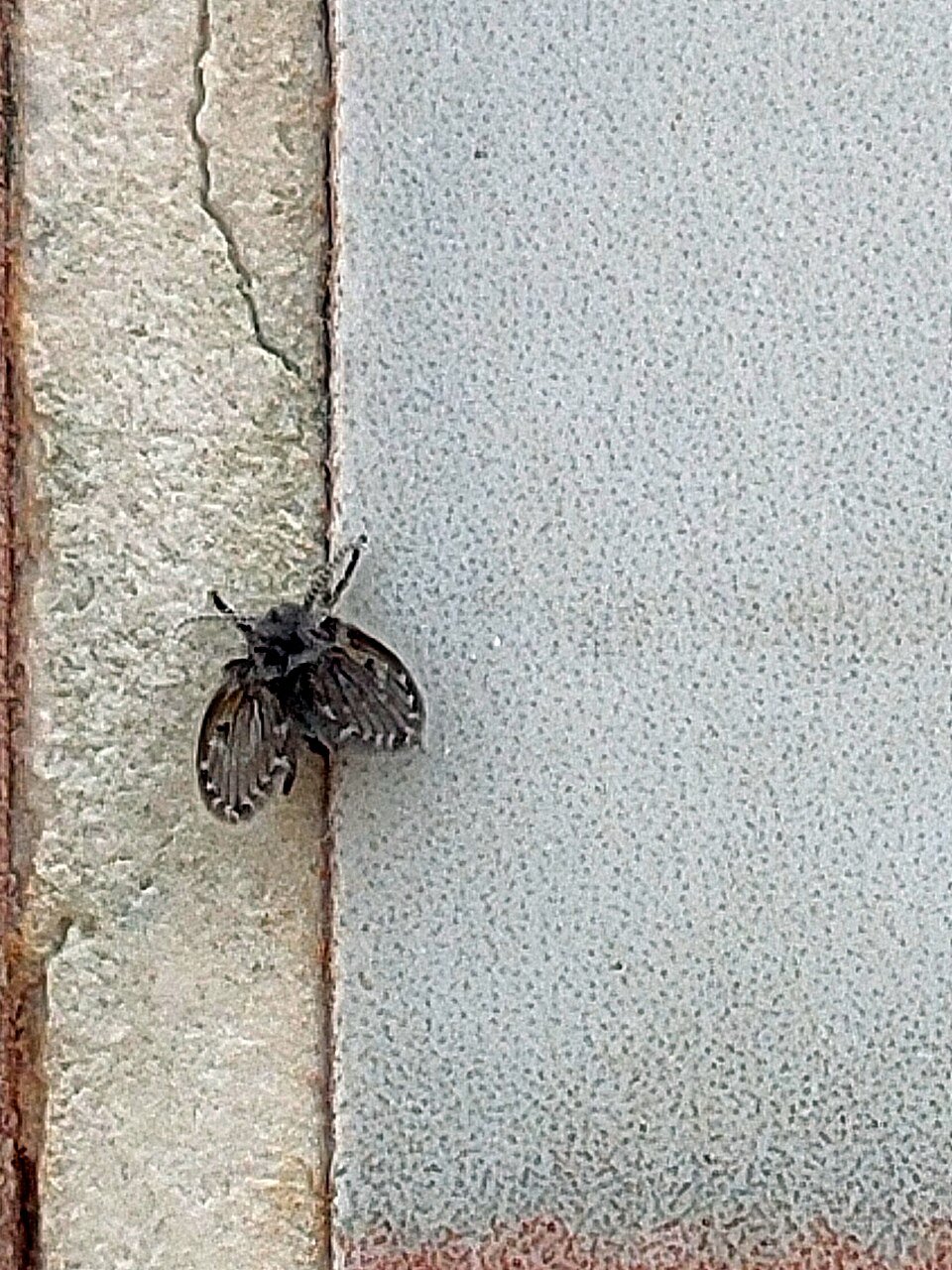
Resident #2: the drain fly — the fuzzy moth that isn’t a moth
The tiny gray-brown fuzzy triangles resting on shower walls and appearing near sinks — weak fliers that hop more than fly when swatted at — are drain flies (moth flies), and their story is entirely a plumbing story: eggs, larvae, and pupae all live in the gel film coating the inside walls of drains, overflow channels, and rarely-used traps, feeding on the organic slime itself. That biology dictates the whole response, covered in working detail on our fruit fly page’s species-sorting section: no fog, spray, or bleach pour touches the protected film — the fix is mechanical plus biological: a stiff drain brush breaking up the film, followed by an enzyme or bio-gel treatment digesting the residue, with boiling-water flushes as maintenance. The diagnostic gifts drain flies deliver free: a sudden hatch from one fixture maps the neglected drain precisely (the guest bath nobody uses, the floor drain behind the washer — restore its trap water while you’re there, per the dry-trap lesson); and a persistent population that survives real drain scrubbing is the classic early flag for a breach in the line — a cracked pipe or failed seal feeding a film you can’t reach, which is a camera-scope conversation that has caught more than one Miami Valley plumbing failure years before the water bill did. Harmless to people at household levels; priceless as informants.
Residents #3–#5: springtails, centipedes, and the cellar spider corner
#3, springtails: the pepper-fleck specks around the sink and tub that jump when disturbed — powered by a spring-loaded tail latch (the furcula) that flings them centimeters, which at their millimeter scale is a circus act. Springtails are moisture obligates that feed on molds and algae films; indoors they mark chronically wet spots with near-forensic precision — the slow leak under the vanity, the failed caulk line seeping into the wall, the overwatered plant tray — and a persistent springtail patch is worth a moisture-meter visit more than any spray, because the colony is drinking from something that shouldn’t be wet. Harmless outright; occasionally overwhelming in wet years, always informative. #4, the house centipede: the scariest-list silver medalist patrols bathrooms for exactly the residents this page catalogs — it’s the room’s apex predator, and its presence certifies a prey base worth thinning via the shared program below. #5, the cellar spider: the spindly ceiling-corner resident stringing wispy webs above the shower — a basement regular commuting upstairs for the same insect traffic, harmless beyond dispute (the “deadliest venom” legend attached to it is myth twice over, per the venomous spider guide), and self-limiting once the prey dries up. Note the food-chain shape those three form: moisture feeds films, films feed springtails and drain flies, those feed spiders and centipedes — the bathroom is an ecosystem, and every ranked resident is a link announcing the water at the bottom of it.
Residents #6–#7: the visitors that mean something else
#6, the American cockroach: the big “waterbug” emerging from a floor drain or appearing near the toilet base is the bathroom’s most alarming regular and the one with a full infrastructure chapter behind it — the Ohio roach guide covers the sewer-connection story, the dry-trap fix, and the older-plumbing pattern that makes this a Dayton and Miamisburg basement-bath classic. One is an intrusion; weekly sightings are a plumbing diagnostic demanding the wet-trap protocol and, if persistent, the lateral conversation. #7, the earwig: summer’s pincered tourist follows moisture gradients straight to bathroom floors — its own fresh page covers the foundation staging line and threshold fixes that end the visits. And two non-resident cameos worth naming: ants trailing to the bathroom (a satellite colony drinking at your plumbing — the dishwasher lesson transplanted), and the occasional psocid/booklouse dusting on a humid windowsill, covered among the bed bug look-alikes. The through-line across all seven residents and both cameos: not one of them is a hygiene verdict, and every one of them is a water verdict — the bathroom bug census is your plumbing and ventilation grading themselves, nightly, in the medium of small arthropods.
The one fix: the bathroom dry-down program
- Run the fan like you mean it: during every shower and 20–30 minutes after (a cheap timer switch automates it) — the single biggest lever on the room’s humidity curve, and the reason fan-less baths host the heaviest censuses
- Fix the drips and seeps: the vanity supply line, the toilet base seep, the failed tub caulk — every chronic wet spot is a resident’s lease; the springtail patch will show you where to look
- Brush and enzyme the drains quarterly: film gone, drain flies gone — and pour a quart of water down every rarely-used drain monthly to keep traps sealed against the sewer cast
- Declutter the damp storage: cardboard under sinks swaps for plastic bins; the linen closet backing the shower gets a passive dehumidifier tub; the magazine basket retires (silverfish read voraciously)
- Seal the entry seams: the escutcheon-plate gaps where pipes enter walls — a caulk-line afternoon that closes the wall-void highway every resident uses, roaches included
- Thin films where residents persist: a DE dusting behind the vanity kick and along dry seam lines picks off the crawler traffic — bathroom-legal because it’s crevice-only and bone-dry zones exist even here
- Escalate on the two flags: weekly American roaches (plumbing scope) and any census that survives a genuine month of the program (something’s wet where you can’t see — the moisture-meter visit finds it): (937) 569-3330
Bathroom bug questions, answered
Do silverfish or any of these actually bite people?
No — the entire seven-resident census is bite-free: silverfish and springtails lack the equipment, drain flies don’t feed on blood, centipedes and cellar spiders reserve trivial defensive nips for hand-capture, earwigs pinch at threshold-of-sensation, and even the American roach’s rap sheet is contamination, not biting. Overnight welts with a bathroom bug suspect in mind are almost always a different chapter — the look-alikes guide and its ten-minute bedroom test are the correct next stop.
Why does everything show up in the tub and sink specifically?
Two honest reasons: the glazed surfaces are traps (silverfish, spiders, and centipedes slide in chasing condensation and can’t climb out — the tub census overstates the room’s population), and the fixtures are the water sources the whole cast navigates toward. The practical upshots: a tub specimen is a free identification opportunity, not an outbreak marker, and the paper-towel-assisted release costs nothing while the fan-and-drip program addresses the actual attraction.
We renovated and now suddenly have springtails/silverfish. Did the contractors bring them?
More likely they sealed moisture in than carried bugs in — fresh drywall mud, new tile beds, and paint release water for weeks, and a remodeled bath runs humid until everything cures, throwing a temporary census spike that reads as infestation. Run the fan hard for a month, let the cure finish, and the population follows the humidity down; a spike that persists past curing season points to a plumbing connection the renovation disturbed — worth the moisture-meter visit before the warranty window closes.
Is the basement bathroom just doomed?
It’s handicapped, not doomed — below-grade baths start ten humidity points behind and share walls with the basement ecosystem, so they need the program’s full dose: fan on a timer, dehumidifier alliance with the main basement unit, quarterly drain care, and DE films in the dry seams. Run all four and a below-grade bath censuses like any other room; skip them and it’s the house’s wildlife refuge. The choice, as everywhere in this library, is infrastructure — never luck.
The one-screen bathroom census
- Silvery teardrop sprinter, three tails: silverfish — humidity verdict; protect stored paper/fabric, dry the room
- Fuzzy gray micro-moths on walls: drain flies — brush + enzyme the drain film; persistence past scrubbing = scope the line
- Jumping pepper specks: springtails — forensic wet-spot markers; find the leak they’re drinking from
- Fifteen-pair leg sprinter: house centipede — the room’s predator; certifies a prey base, shrinks with it
- Spindly ceiling-corner webs: cellar spider — harmless commuter; prey-limited
- Big roach at the floor drain: American cockroach — plumbing diagnostic; wet the traps, count the sightings, scope if weekly
- Pincers on the tile: earwig — foundation moisture memo, own page
- The universal fix: fan on a timer + drips fixed + drains brushed quarterly + traps watered monthly + damp storage converted + pipe-gap seams caulked + DE in the dry crevices
- The two escalation flags: weekly waterbugs, or a census surviving a month of the real program — (937) 569-3330, free evaluation, moisture meter included
Seven residents, zero biters, one water verdict, one fix — laminate the census, run the dry-down, and reclassify every future tub discovery from emergency to specimen. The bathroom was never infested; it was humid, and now you know the difference on sight.
The firebrat footnote, and the season the census flips
One resident variation and one seasonal rhythm complete the file. The firebrat is the silverfish’s heat-loving twin — mottled gray-brown where the silverfish shines silver, and drawn to warmth the way its cousin is drawn to damp: water-heater closets, furnace rooms, and the wall cavities behind them are firebrat country, and a “silverfish” population centered on the utility side of the basement bath usually carries the mottled passport. Same harmless profile, same program, one placement tweak — the DE films and decluttering follow the heat line instead of the water line. The seasonal flip: the bathroom census runs opposite to most of this library’s calendars — summer humidity peaks the moisture cast (springtails, drain flies, earwig tourists) while winter’s furnace-dried air thins them and concentrates what remains tightly around the room’s last wet spots, making January the easiest month to read the census diagnostically: whatever’s still active in deep winter has found genuine standing moisture, and its patch marks the leak with midwinter clarity. Two more entries for the pattern that runs this whole page — every resident is information, every season is a reading, and the room two steps from your toothbrush turns out to be the most legible ecosystem in the house: (937) 569-3330 when its verdicts call for backup.
Why the humblest page in the library might be its most useful
A closing word on why a room census earns twenty-five hundred words. The bathroom is where most households meet most of their bugs — not the dramatic porch monsters or the expensive bedroom emergencies, but the weekly tub silverfish and shower-wall moth that shape a family’s entire sense of whether the house is “buggy” — and that sense drives real behavior: the unnecessary spray purchases, the hygiene shame this page keeps dismantling, the panic calls about harmless specimens, and (the costly inverse) the numbness that later ignores a genuinely meaningful sighting. A household fluent in its bathroom census gets all four calibrations right: it spends nothing on the harmless seven, feels no shame over a water-based ecosystem every home on Earth hosts, reads the diagnostic residents (springtail patches, weekly waterbugs, post-scrub drain flies) as the maintenance flags they are, and recognizes true anomalies instantly because the baseline is known. That fluency — pest literacy at the room level — is this library’s actual product, page by page, and nowhere does it pay a better effort-to-value ratio than in the room you visit ten times a day. The fan timer costs twelve dollars; the literacy is free as of tonight; and the backup, as always, answers on the first ring: (937) 569-3330.
(Renters’ corner, one last time: every diagnostic on this page — the springtail leak-marker, the weekly waterbug, the post-scrub drain flies — is a maintenance request writing itself, and the room’s bug census is genuinely useful evidence in the written reports our property pages keep prescribing. Photograph the census, cite the page, and let the landlord’s plumber inherit the verdict; the bugs did the inspection free, which is more than most inspectors can say.)
Frequently asked questions
What are the bugs in my bathroom?
The moisture guild, in rough order of frequency: silverfish (starch-eating wrigglers), drain flies (fuzzy moth-like drain-film breeders), house centipedes (the fast many-legged hunters), springtails (tiny moisture jumpers), booklice, camel crickets, and the occasional cockroach or sewer visitor. One habitat, one diagnosis: your bathroom is the dampest room in the house.
Why does my bathroom get so many bugs?
Water, warmth, and food films — humidity feeds mold films (springtail and booklouse diet), drains grow organic gel (drain fly nurseries), and the whole buffet attracts the centipedes that hunt everyone else. The bathroom is a micro-ecosystem; the fan switch is its thermostat.
How do I get rid of bathroom bugs for good?
Dry the room and scrub the drains — the two-front program: exhaust fan run twenty minutes past every shower (or a humidity-sensing switch), leaks and drips fixed, grout and caulk gaps sealed, drains brushed and enzyme-treated monthly, floor drain traps kept wet. Every species on the list starves or leaves under that regime.
What are the tiny black or gray bugs around the sink?
Jumping when touched: springtails (moisture film grazers). Fuzzy and perched on walls: drain flies. Slim, wriggling, silver: silverfish. All three are harmless moisture flags with the same cure — the ID mostly determines whether the drain or the humidity gets first attention.
Do drains really breed bugs?
Drain flies, absolutely — the gel film inside pipes is their entire nursery (the tape-over-the-drain overnight test convicts the culprit). Roaches use dry drains as doorways rather than nurseries; both files close with the brush-enzyme-water routine.
Are bathroom bugs a sign of a plumbing leak?
Persistently, yes — populations that survive honest drying and drain-scrubbing mark hidden water: slab leaks, wall condensation, failed wax rings, crawlspace humidity. The bugs are cheap moisture meters; their persistence is the diagnostic that pays for the plumber.
Why do bugs appear in the tub and sink specifically?
The porcelain trap effect — centipedes, silverfish, and spiders follow moisture in and cannot climb the slick walls out; the tub is a passive pitfall trap censusing your bathroom’s population. Regular strandings = established residents nearby.
Do bathroom bugs spread to the rest of the house?
Only as far as moisture allows — the guild is humidity-chained, and dry hallways are their desert. Bathroom-plus-basement sightings map your home’s moisture geography; the dehumidifier and fan shrink the territory to nothing.
Which bathroom bugs are actually a problem?
Ranked honestly: cockroaches (treat seriously — the drain-and-gap program), drain flies at volume (scrub the nursery), silverfish near stored towels and paper (protect the goods). The centipedes and springtails are symptoms wearing legs — fix the water and forget them.
When should bathroom bugs prompt a professional visit?
Roach evidence of any kind, drain fly persistence after the tape-test-and-scrub cycle (hidden breach hunting), or the moisture mystery that outlasts your fixes: (937) 569-3330 — we read the guild, find the water, and treat what actually warrants it.