
Fruit flies are the pest problem everyone has solved a dozen times — which is exactly the tell that nobody has. The vinegar trap fills, the fruit bowl gets policed, the cloud thins for a weekend, and by Wednesday the little drifters are back at the sink like nothing happened. The reason is simple and almost universally missed: the flies you see are the advertisement, not the business. Somewhere within a few yards of that hovering cloud is a breeding site — a wet, fermenting film of organic matter turning out a new generation every eight to ten days — and until it’s found and destroyed, every trap in the kitchen is just harvesting the overflow. This is the complete elimination guide from Greater Dayton Pest & Rodent: the fast biology that explains the treadmill, the breeding-site hunt that actually ends it, the traps that help (and the exact recipe that out-fishes the rest), the drain-fly and fungus-gnat look-alikes that send people down wrong paths, and the honest line where a kitchen problem becomes a plumbing or professional one. Everything here is the same playbook our restaurant program runs on commercial kitchens, scaled to a house — and the identification photos, as with everything on this site, are free: (937) 569-3330.
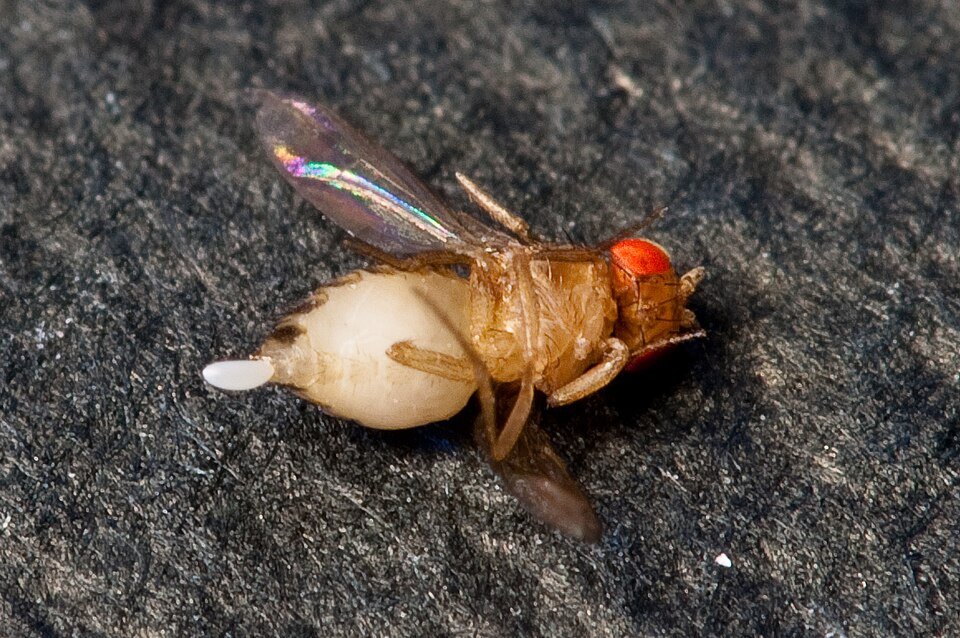
Eight days to a new generation: the biology that runs the treadmill
The fruit fly’s whole strategy is speed. A female lays around five hundred eggs in her few weeks of life, depositing them directly onto any moist, fermenting surface; eggs hatch within a day; larvae feed in the fermenting film for about four days; and in warm August conditions the full egg-to-breeding-adult cycle closes in as little as eight days. Do the arithmetic on one overlooked breeding site — half a cup of fermenting film in a recycling bin’s bottom seam — and it will outproduce any trap line ever assembled, forever. Two more biological facts complete the picture. Fruit flies need remarkably little: a film of residue does fine, which is why “we don’t even keep fruit out” households still get them (the name undersells the diet — anything fermenting qualifies, from juice spill to mop-bucket water to the potato liquefying quietly at the back of the pantry). And they’re superb hitchhikers with sensitive noses: most infestations start as eggs riding in on produce — the Miami Valley’s farm-market Augusts are peak import season — or as adults following fermentation odors in through screens, gaps, and doorways, meaning re-introduction is constant and only breeding-site denial keeps a house at zero.
Traps catch adults while the breeding site keeps producing more. Finding that site is pest control in Dayton.
The hunt: finding the breeding site in under an hour
Work outward from where the flies concentrate — they rarely stray far from the nursery — and check with a flashlight, in order of likelihood. The produce zone: the fruit bowl’s underside and the one going-soft item hiding in it; the potato-and-onion bin (the single most common culprit we find — one liquefying potato can run a six-week infestation); the crisper drawer’s back corner. The waste stream: trash and recycling bins — including the film under the liner and in the bottom seams (rinse cans and bottles going forward; the residue is the resource); the compost pail; the bag of returnables in the garage. The wet zone: the sink disposal’s splash guard underside (fold it back — the black film on its rubber skirt is a nursery); dish sponges and the drip tray under the dish rack; the mop bucket and the mop head itself; under-sink drips softening the cabinet floor. The forgotten liquids: a dribble of juice or wine in a “empty” bottle, the soda can in the home office, the pet-food gravy dried into the bowl’s rim, the vase water going swampy. The weird ones we’ve actually found: a pumpkin decomposing in a garage since November, a sippy cup under a car seat, a bag of onions hung in a Lebanon pantry, and a beer-brewing airlock doing exactly its job. When the site is found, the fix is disposal and a hot-water-and-detergent scrub of the surface it sat on — not a spray; the eggs and larvae die with their habitat, and the cloud collapses within days as the last adults age out childless.
Traps that actually help — and the recipe that out-fishes the rest
Traps are the mop-up crew, not the solution — but once the breeding site is dead, a good trap line clears the surviving adults in days instead of weeks, and running one is deeply satisfying. The winning recipe from years of side-by-side kitchen tests: apple cider vinegar with a splash of red wine or a chunk of overripe banana, one drop of unscented dish soap, in a small bowl or jar — the fermentation blend out-pulls plain vinegar decisively, and the soap breaks surface tension so landing flies sink instead of drinking and leaving. Cover variations matter less than placement: open bowls catch fastest; plastic-wrap-with-pinholes or a paper cone slows escapes if you’re trapping over days. Put traps at the former hotspots — the sink, the fruit zone, the bins — and refresh every two or three days once the catch slows, because a trap full of drowned flies stops advertising. What to skip: store-bought aerosol “fruit fly killers” (they kill the visible adults, which the nursery replaces by the weekend, and put pyrethrins on kitchen surfaces for nothing), bleach poured ritually down drains (it runs past the film that matters — see the drain section), and any plug-in or ultrasonic gadget (no). The only spray with a legitimate role is a pyrethrin space shot for a one-time mass knockdown in a sealed room after the site is destroyed — and even that is optional theater compared to three days of a good trap line.
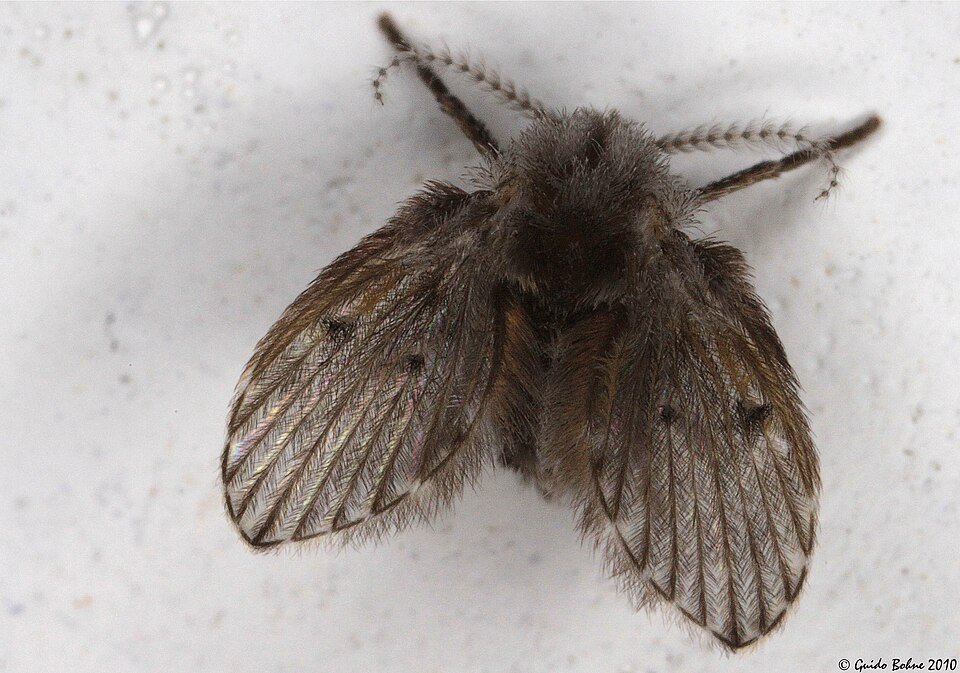
Fruit fly, drain fly, or fungus gnat? Three tiny flies, three different fixes
Half of stubborn “fruit fly” problems fail because the flies aren’t fruit flies. The sorting takes ten seconds. Fruit flies: tan-to-brown, classic red eyes on the common species, strong darting hover around food and drink zones — the subject of this page. Drain flies (moth flies): smaller-seeming, gray, distinctly fuzzy with moth-like wings held roof-wise, weak fliers found resting on bathroom and kitchen walls near sinks, tubs, and floor drains — they breed in the gel film coating drain walls and overflow channels, and their fix is mechanical: a stiff brush or drain-cleaning tool scrubbing the film, followed by enzyme/bio-gel drain treatment to digest what the brush misses (our restaurant drain program in domestic form); boiling water helps, bleach mostly doesn’t, and vinegar traps catch none of them. Fungus gnats: delicate, black, long-legged drifters around houseplants and windows — they breed in constantly moist potting soil, and the fix is horticultural: let pots dry between waterings, top-dress with sand or gravel, use sticky stakes, and apply BTI (mosquito-dunk bacteria) in water for stubborn pots. Aim the fruit fly playbook at either look-alike and you’ll trap nothing and scrub the wrong surfaces; aim each fix at its actual fly and all three problems are amateur-solvable within a week or two. A phone photo — even a smeared one on a paper towel — is enough for our line to call the species, free.
The 48-hour elimination plan, step by step
- Hour one — the hunt: run the flashlight checklist above until you find fermentation; trust the checklist over your certainty that “there’s nothing” — there is
- Hour two — destroy and scrub: dispose outside in sealed bags; hot-water-and-detergent scrub of every surface the source touched, including the bin it lived in; fold back and scrub the disposal splash guard while you’re there
- Same evening — deny the replacements: produce into the fridge or under cover for two weeks; rinse everything entering recycling; empty bins nightly during the campaign; dry the sinks at bedtime
- Set the trap line: two or three cider-vinegar-plus-soap traps at the former hotspots; refresh every 2–3 days
- Day two through seven — watch the curve: catches should climb for a day, then collapse; a cloud that persists past a week means a second breeding site (back to the checklist — garages, basements, and the car are the classic misses) or a misidentified fly (previous section)
- Week two — stand down slowly: keep one sentinel trap and the produce discipline through the next farm-market haul; August re-introductions are constant and the habits are the firewall
When it’s not amateur-solvable: the honest escalation line
Most household fruit fly problems die to the 48-hour plan, and we’d rather say so than sell visits — but three situations genuinely earn a call. The unfindable site: a cloud that survives two thorough hunts usually means fermentation somewhere access denies you — a juice spill that ran under the fridge or dishwasher, a breach in the disposal’s housing, a dead-space void where a mouse cached food (yes, really — our rodent and fly stories intersect more than you’d think), or a slow drain leak feeding a film inside the cabinet floor. We bring the tools and the pattern library: moisture meter, inspection scope, and several hundred prior hunts’ worth of weird answers. The drain-borne persistent: drain and phorid fly populations that shrug off scrubbing can signal a broken drain line under the slab — a plumbing diagnosis that starts with our species ID and ends with a camera scope, and one where the fly evidence routinely catches breaks years before the water bill does. The commercial-grade problem: bars, cafés, and anyone with a beverage gun, floor drains, and a health inspector — that’s not a bigger kitchen, it’s a different program, and it lives on our restaurant page with bioremediation dosing, trend monitoring, and documentation built in. The dividing line is simple: if fermentation you can find feeds flies you can name, this page is enough; if either half fails twice, the inspection is free and the pattern library is deep.
Fruit fly questions, answered
Where do they even come from — spontaneous generation?
The 1600s asked the same thing; the answer is eggs and noses. Eggs arrive invisibly on produce (a banana’s journey from tropics to counter is a fruit fly relay), and adults follow fermentation plumes in from outside through astonishing gaps — they can work through a standard window screen’s margin. Zero flies for months, then a cloud in days, is just biology doing its eight-day arithmetic on a new resource, not a mystery.
Are they dangerous, or just disgusting?
Mostly the latter, mildly the former: fruit flies shuttle between decay and your food, so they can mechanically move bacteria onto surfaces and into open drinks — reason enough for the campaign, shy of genuine alarm. The wine glass rule of thumb: if a fly landed in it, the drink’s fate is between you and your constitution; if flies are constantly in it, this page’s checklist is overdue.
Why does my garbage disposal keep producing them no matter what I do?
Because the splash guard is the nursery — the black film on the rubber skirt’s underside is fermentation heaven and survives every grind cycle. Fold it back monthly and scrub both faces (or drop it in the dishwasher if removable); follow with an enzyme drain gel, not bleach. Ice-and-citrus grinds freshen odor but don’t touch the skirt film — the brush does.
Do fruit flies die off in winter?
Outdoors, Ohio winters end them; indoors, your kitchen is a permanent tropics, and a heated house with a breeding site will run flies straight through January — which is a diagnostic gift: a midwinter cloud means an indoor source with certainty, and the hunt checklist has no seasonal excuses. The fall-invader flies bumping at winter windows are cluster flies, a different insect and page entirely.
August in the Miami Valley: the fruit fly high season survival kit
Our region’s fruit fly year peaks hard in late summer, and the local rhythm is worth planning around. Farm markets and garden harvests hit full flow — the 2nd Street Market hauls, the roadside sweet corn, the zucchini avalanche from every Washington Township garden — and every basket is a potential egg delivery; tomato-canning and salsa season runs fermentation projects on purpose; county-fair week and cookout leftovers stock the bins; and the same humid heat that drives the eight-day breeding cycle keeps windows open and plumes drifting. The high-season kit: refrigerate or cover the harvest surplus the day it arrives (the counter tomato queue is the season’s number-one nursery), run the bin-and-disposal discipline nightly through September, keep one standing sentinel trap by the sink from July 4 to first frost, and treat any canning or brewing project to the same sealed-and-scrubbed respect a bar gives its gun lines. Households that run the kit sail through the season the neighbors spend swatting — and given that this is also peak season for the pests with actual invoices attached, we’re happy for your fruit fly line item to stay a produce drawer and a bottle of cider vinegar.
The whole method on one screen
- The rule: visible flies are overflow from a fermenting breeding site within a few yards — traps harvest, only site destruction ends it
- The hunt order: produce (the hidden soft one, the potato bin) → waste stream (bin films, unrinsed recycling) → wet zone (disposal splash guard, sponges, mop) → forgotten liquids (bottles, cans, vases) → weird ones (garage, car, pumpkins)
- The kill: dispose sealed + hot detergent scrub of the site — no spray required
- The trap: cider vinegar + splash of wine or banana chunk + drop of dish soap, at the hotspots, refreshed every 2–3 days
- The look-alikes: fuzzy wall-sitters = drain flies (brush + enzyme gel); delicate houseplant drifters = fungus gnats (dry soil + BTI); wrong ID = wasted week
- The curve: collapse within a week or hunt again / re-ID; midwinter clouds always mean an indoor source
- The escalation: unfindable sites, drain-line suspects, and commercial kitchens — free inspection, (937) 569-3330
Eight-day insect, 48-hour method, one screenshot — and a kitchen that goes back to smelling like dinner instead of a science project. That’s the whole war, and the vinegar was never going to win it alone.
Why a pest control company wrote you a free solution
Fair question, since nine-tenths of this page argues you don’t need us. The answer is the same business logic running every guide on this site: fruit flies are the most common pest search in America precisely because the standard advice — trap harder — doesn’t work, and a company that hands you the method that does earns the call that matters later, when the flies turn out to be phorids over a broken drain line, or the kitchen is a restaurant with an inspector due, or the real problem behind the cloud is the mouse cache in the wall. Free identification, honest escalation lines, and playbooks that respect your ability to run them — that’s the trade, and the fruit fly page is its purest example: eight-day insect, forty-eight-hour method, zero invoice, and a phone number that answers when the method meets its limits. Ohio’s kitchens produce this problem by the tens of thousands every August; consider yours retired from the statistics, and pass the recipe to the neighbor still drowning in vinegar bowls: (937) 569-3330 for everything the recipe can’t reach.
Frequently asked questions
How do I get rid of fruit flies fast?
Remove the ferment and set the vinegar trap tonight: apple cider vinegar plus a drop of dish soap in a jar — the soap breaks surface tension and drowns what the ferment attracts. With the breeding source gone, a kitchen clears in three to five days as the adult lifespan expires.
Where are fruit flies coming from?
Something fermenting: ripening or damaged produce, the recycling bin’s residue, a drip of juice under the fridge, forgotten potatoes or onions, drain gunk, even a splash of wine or kombucha. They need only a film of ferment — the hunt is for teaspoons, not piles.
Does the apple cider vinegar trap really work?
It is the rare folk remedy with an A grade — fermentation scent is exactly what fruit flies navigate by, and the soap converts attraction into drowning. Red wine dregs and a banana slice under plastic-with-holes run the same play.
Why do fruit flies keep coming back after I clean?
A missed micro-source (the juice drip under the toaster, the onion at the bag’s bottom, the drain film) or re-importation on new produce — eggs ride in on store fruit constantly. Fridge-store your produce during an outbreak and the imports never mature.
How long do fruit flies live?
Adults run two to four weeks, but the egg-to-adult cycle takes just over a week in summer warmth — which is why a weekend’s neglected peaches becomes Tuesday’s cloud. Break the breeding for one full cycle and the population zeroes.
Are fruit flies the same as gnats and drain flies?
Different insects, different sources: fruit flies (red-eyed, tan) breed in ferment; fungus gnats (dark, delicate) in overwatered plant soil; drain flies (fuzzy, moth-like) in drain film. The ID names the fix — each has its own page here.
Can fruit flies breed in drains?
Yes — the film in a kitchen drain is fermented enough. The overnight test: tape a clear cup over the drain; flies in the cup by morning convict it. Fix with a stiff brush and enzyme cleaner — bleach pours past the film and solves little.
Do fruit flies carry disease?
Minor league compared to house flies — they can track surface bacteria, and their real offense is contaminating and accelerating the spoilage of produce. Health-file panic is not required; kitchen diligence is.
How do I prevent fruit flies permanently?
Produce ripens in the fridge or gets eaten promptly, recycling gets rinsed, drains get the occasional enzyme treatment, and counter spills get wiped same-day. Fruit flies are a supply-chain problem; the supply is yours to cut.
When are fruit flies a professional problem?
Commercial settings (bars, kitchens — where they find every tap drip and syrup line), and homes where “fruit flies” turn out to be phorid flies flagging a plumbing breach — the ID distinction our small-fly pages exist for: (937) 569-3330 when the trap-and-hunt week fails.