
Ohio is home to somewhere north of 600 spider species, and exactly two of them carry venom that matters medically: the brown recluse and the black widow. That ratio — two out of six hundred — is the single most important fact in this guide, and it cuts both ways. It means the spider in your basement tonight is overwhelmingly, almost certainly harmless; it also means the two exceptions are worth knowing cold, because both genuinely live in Ohio, both concentrate in exactly the places homeowners reach into without looking, and both are surrounded by enough folklore that real identifications drown in false alarms. This is the complete Ohio venomous spider guide from the licensed team at Greater Dayton Pest & Rodent — identification with the details that actually distinguish, honest medical context without the horror stories, the look-alikes that generate ninety percent of the panic, and what to do (and not do) about each. Free photo identification backs every word of it: (937) 569-3330.
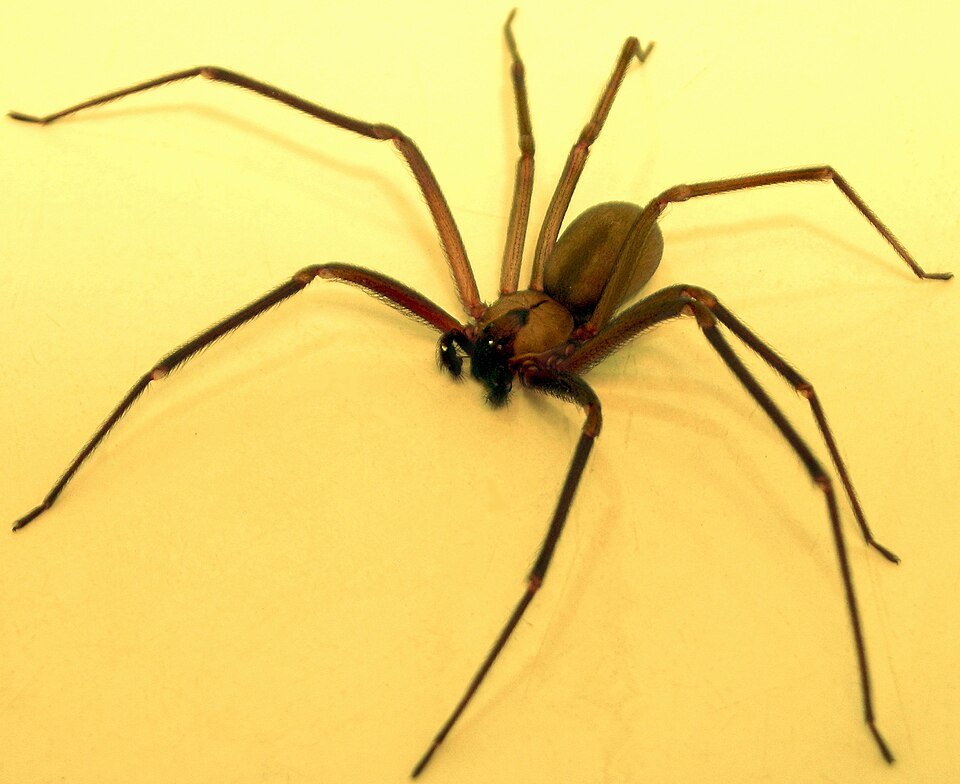
The brown recluse in Ohio: edge-of-range resident, chronically over-reported
Ohio sits at the northeastern edge of the brown recluse’s natural range, which makes our situation genuinely unusual: the species is established here — southwestern Ohio, including the Miami Valley, accounts for a disproportionate share of the state’s verified finds — yet it remains uncommon enough that most Ohioans reporting one have found something else. A real brown recluse is small-bodied (a quarter to half inch, legs spanning a quarter at most), uniformly tan-to-brown with no bands on the legs, no stripes, and no patterning beyond the famous violin: a slightly darker fiddle shape on the front body section, neck pointing toward the rear. The violin is subtle and often faint — the reliable field mark is the eyes, and it’s worth learning: recluses have six eyes arranged in three pairs in a curved row, where almost every other spider you’ll meet has eight. Habitat completes the picture. True to the name, recluses want undisturbed storage: cardboard boxes untouched for years, the gap behind a basement workbench, stored work gloves and boots, attic eaves, the folds of seldom-used fabric. They hunt at night, build no catching web (just loose retreat silk in crevices), and bite humans only when pressed against skin — the classic incidents involve putting on stored clothing, reaching into old boxes, or rolling onto one in bedding. An established Ohio population is patchy and building-specific: one house on a street can carry them for decades while the neighbors never see one.
Ohio has only two spiders worth real caution. For everything else, and for the webs that keep coming back, there is spider control in Dayton.
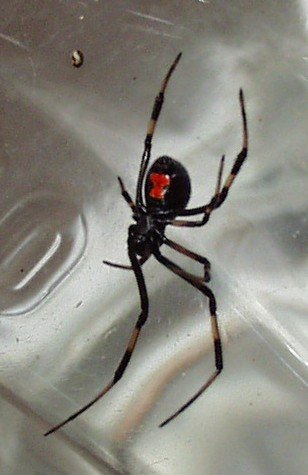
The black widow in Ohio: rarer, shyer, and unmistakable when you finally see one
Ohio hosts both the southern and northern black widow, and both are genuinely uncommon here — a working pest technician can go seasons between verified finds. The adult female (the only medically significant stage) is unmistakable at close range: glossy, patent-leather black, a rounded abdomen the size of a pea, and the famous red hourglass on the underside — which, note, means you often can’t see the mark on a spider sitting upright; northern widows may show the hourglass split into two separated patches plus a row of red spots down the back. The web is its own identification: widows build strong, messy, three-dimensional cobwebs of notably tough silk (pest techs learn the distinctive crackle of tearing widow silk), low to the ground in dark protected voids. Ohio habitat runs to exactly the places this page keeps returning to: woodpiles, meter and irrigation boxes, under stones and landscape timbers, crawlspace vents, garage corners behind stored junk, and the undersides of outdoor furniture and grill covers that sat all winter. Widows are profoundly non-aggressive — bites almost always involve pressing one against skin (gloves again, or reaching blind into a meter box) — and males and juveniles, streaked with red and white and frequently alarming to find, are functionally harmless.
The bite reality: medical honesty without the horror stories
Spider bite folklore inflates in both directions, so here’s the calibrated version. Brown recluse: most verified bites are minor — a bump that heals uneventfully. A minority develop the necrotic lesion the internet loves: venom-driven tissue damage that expands over days into a slow-healing ulcer. Serious systemic reactions are rare and skew toward children. The critical context is that “spider bite” diagnoses are wildly unreliable — studies of suspected recluse bites find most are actually skin infections (MRSA prominently), other insect bites, or vascular issues, and misdiagnosis delays the right treatment. The medical rule: a wound that ulcerates, spreads, or feels systemically wrong is a physician visit regardless of what caused it, and a captured spider (even smashed) turns guesswork into diagnosis. Black widow: the venom is a neurotoxin — bites rarely damage tissue but can produce latrodectism: waves of muscle cramping (abdomen and back classically), sweating, and blood-pressure spikes beginning within an hour or so. It’s intensely unpleasant, very rarely dangerous to healthy adults, and modern treatment (pain management, occasionally antivenom for severe cases) handles it well; the vulnerable groups are small children, the elderly, and cardiac patients, who should be seen promptly after any credible widow bite. In both cases the arithmetic deserves repeating: Ohio records zero to a handful of significant bites in a typical year, against tens of thousands of harmless spider encounters — the fear is real, the risk is small, and the response to both is the same identification-first calm this site sells.
The great pretenders: what Ohioans actually photograph
- Wolf spiders — the number-one “recluse” false alarm: big, hairy, fast, patterned (recluses never are), eight eyes with two headlights. Harmless hunters; October’s wanderers on our spider page
- Funnel weavers / grass spiders — fast, striped, and the “recluse” caught in the bathtub most September mornings; the sheet web with a funnel says it all
- Sac spiders — pale yellow-green wanderers on ceilings; can nip, mildly, and are the likeliest real culprit behind many minor “spider bites”
- False widows (Steatoda) — brown-black cobweb spiders with widow-shaped bodies but no hourglass; the most reasonable of all the false alarms, and still essentially harmless
- Woodlouse spiders — glossy red-brown with huge fangs, found under logs; alarming, harmless, and a frequent “what IS this” submission
- Cellar spiders — the spindly basement daddy-long-legs; the “deadliest venom but can’t bite” legend attached to them is pure myth, twice over
If you have them: what a real recluse or widow program looks like
Confirmed venomous spider work is methodical, and it starts with confirmation — a specimen or clear photo, because the program is too specific to aim at a guess. For recluses: sticky monitors placed along baseboards, behind furniture, and in storage zones establish whether you have a population or a stray (monitor catches are also how we verify elimination later); treatment is crack-and-crevice and void-focused — dusts and targeted residuals where recluses travel, never broadcast spraying, which they largely walk over; and the decisive human half is the storage overhaul from our spider service page — sealed totes replacing cardboard, storage off floors, clutter corridors opened, gloves and boots stored sealed or shaken by habit. Recluse populations starve and shrink under that combination; expect a season of monitoring, not a single dramatic visit. For widows: the program is exterior-focused — systematic de-webbing with egg-sac removal (each removed sac is dozens of spiders that never happen), treatment into the specific voids and boxes they favor, exclusion screening of vents and weep gaps, and habitat management for woodpiles and stored materials. Both programs carry the same guarantee as everything else we do, and both come with the honest baseline: even confirmed populations are managed to effectively zero encounters, not to a mythical spider-free property — Ohio has six hundred other species with opinions about that.
Where the two actually turn up around Dayton
Verified finds across our route cluster with real consistency. Recluse territory is old, dry, and undisturbed: the attics and storage rooms of pre-war housing in Dayton’s historic neighborhoods and Oakwood, the barn lofts and equipment sheds of rural Greene County and Warren County, commercial basements downtown, and — the modern classic — storage units and the boxes that come home from them. Widow territory is outdoor, low, and protected: woodpiles and landscape-timber walls in the big-lot townships around Centerville and Bellbrook, meter and irrigation boxes everywhere, crawlspace vents in Kettering’s basement blocks, and under the grills, furniture, and playset slides that overwinter uncovered. Neither species cares about housekeeping or neighborhood prestige — they care about undisturbed harborage, and every zip code on our map offers it. The through-line for prevention is disturbance: storage that gets touched, rotated, and resealed annually simply never builds a recluse population, and a woodpile restacked each fall never anchors a widow line. Gloves for the blind-reach jobs — meter boxes, stacked stone, long-stored boxes — close out the personal-risk side for pennies.
Venomous spider questions, answered straight
I found one brown recluse. Does that mean an infestation?
Not by itself — strays travel in boxes and furniture, and a single verified find in a recently moved item often ends there. The monitors answer the real question cheaply: a few weeks of baseboard sticky traps distinguishes a hitchhiker from a household, and that evidence — not the single specimen — is what should trigger (or cancel) a full program. It’s exactly the inspection-first sequencing we’d want aimed at us, so it’s what we sell.
Do recluse and widow bites need antivenom or the ER tonight?
Widow bites with significant symptoms — cramping waves, sweating, anyone in a vulnerable group — merit prompt medical care, and clinicians decide on antivenom case by case. Recluse bites have no antivenom; care is wound management, and the trigger for a visit is a lesion that ulcerates or spreads, or any systemic illness. For both: capture the spider if safely possible, photograph the bite’s progression, and skip the folk remedies — no cutting, sucking, or ice-only heroics. Calm plus documentation is the whole first-aid kit.
Can you just spray my whole house so nothing venomous can live here?
No one can, honestly — and broadcast interior spraying is precisely the wrong tool for crevice-dwelling species anyway. What works is what this page describes: verification, monitors, targeted crack-and-crevice work, de-webbing with sac removal, exclusion, and storage habits. It’s less dramatic than a fog and it actually ends encounters, guaranteed — which is the version of “safe” worth paying for: (937) 569-3330.
Teaching the household: the two-minute spider briefing for kids and everyone else
Families ask how to make children spider-safe without making them spider-terrified, and the briefing that works is short enough to teach over dinner. Rule one: look before you reach — into boxes, under stones, behind the woodpile, into the mitt that lived in the garage all winter. Nearly every Ohio venomous bite on record violates this one rule. Rule two: shake it out — shoes, boots, gloves, and sleeping bags that stored anywhere but a closet get one brisk shake by habit, forever. Rule three: don’t squish mysteries with bare hands — cup, card, and carry outside, which happens to be the same protocol that preserves specimens when identification matters. Rule four: webs low and messy in dark corners get reported to a grown-up, not poked — the one web type worth a second look in Ohio, and a fine excuse to teach what a widow cobweb’s structure looks like. That’s the entire curriculum. Kids who learn it treat spiders the way we’d want adults to: as neighbors requiring a glance and a habit, not a phobia — and households that run it, alongside the storage and glove practices above, have effectively retired their venomous-spider risk before we ever park outside.
The bottom line on Ohio’s two
Six hundred species, two that matter, both findable, both manageable, neither worth a single sleepless night in a house running the habits on this page. The brown recluse asks you to disturb your storage annually and respect the blind reach; the black widow asks for gloves at the woodpile and a fall de-webbing; medicine asks only that ugly wounds see doctors and captured spiders come along for the ride. Everything else — the identification uncertainty, the monitor verdicts, the targeted programs when a population is real — is our job, starting with a free photo ID that has cheerfully demoted a thousand wolf spiders from villain to neighbor: (937) 569-3330. Ohio’s spiders are overwhelmingly on your side of the pest ledger, quietly eating the insects we actually treat; know the two exceptions cold, and the other five hundred ninety-eight can get back to work.
The screenshot summary: Ohio venomous spiders in six lines
- Brown recluse: small, plain tan-brown, NO leg bands or patterns, six eyes in three pairs, faint backward-pointing violin; undisturbed dry storage; southwestern Ohio including the Miami Valley is its strongest in-state territory
- Black widow: glossy black pea-sized female, red hourglass UNDERNEATH, tough messy cobweb low in dark voids; woodpiles, meter boxes, crawl vents; uncommon everywhere in Ohio
- Everything patterned, striped, hairy, or fast is neither one — wolf spiders, funnel weavers, sac spiders, and false widows generate ~90% of reports
- Bites: recluse = watch for ulcerating wounds, see a doctor, no antivenom exists; widow = cramping/sweating within hours, prompt care for kids/elderly/cardiac; capture the spider either way
- Prevention: sealed totes not cardboard, annual storage disturbance, gloves for blind reaches, fall de-webbing with egg-sac removal, shake stored footwear
- Confirmed population: monitor-verified, crevice-targeted, guaranteed program — never broadcast spraying: (937) 569-3330, photo ID free
Six hundred Ohio species, two worth this page, one screenshot to keep — and a free identification line standing by for everything eight-legged that makes you hesitate.
A word on the “spiders in Ohio” bigger picture
Zoom out from the two headliners and Ohio’s spider fauna is one of the state’s quiet ecological assets: orb weavers rigging dew-strung wheels across September gardens, jumping spiders patrolling sunny sills with their disarming curiosity, fishing spiders skating farm ponds, and the vast anonymous workforce in every lawn and hedgerow consuming insect biomass at a scale no pest company could invoice. The seasonal rhythms that bring them to human attention — the October wolf spider wanderers, the autumn webs at porch lights, the basement cellar-spider colonies — are covered in working detail on our spider control page, along with the rural-edge geography that makes Washington Township and the Sugarcreek country the spideriest addresses on our route. The practical hierarchy this whole guide boils down to: learn the two, manage the habitat, and let the rest of the six hundred work — because in the honest accounting of an Ohio household’s pest ledger, spiders sit overwhelmingly in the assets column, and the company telling you so treats the liabilities for a living.
Frequently asked questions
What venomous spiders live in Ohio?
Medically significant: two — the black widow (uncommon, outdoor-adjacent) and the brown recluse (rare in Ohio, storage-zone dweller). Technically venomous: nearly all spiders; practically irrelevant: everything else on the roster, whose bites rank at or below bee stings.
Are brown recluses really in Ohio?
Documented but genuinely rare — Ohio sits at the species’ northern edge, with established populations mostly in scattered buildings rather than landscapes. The overwhelming majority of “brown recluse” reports here are misidentified cellar, wolf, or grass spiders; the violin mark alone misleads constantly.
How do I identify a brown recluse?
Six eyes in three pairs (the definitive mark — most spiders have eight), uniform tan-brown legs with no bands or spines, violin shape on the cephalothorax, and modest half-inch body. Any leg banding, spininess, or pattern acquits the suspect immediately.
What does a brown recluse bite do?
Most heal unremarkably — the necrotic ulcer of legend occurs in a minority of confirmed bites. Any bite developing a bullseye, blister, or expanding dark center earns medical attention with the timeline; so does any “spider bite” diagnosis without a spider, since MRSA infections routinely wear that label.
Which is worse — black widow or brown recluse?
Different weapons: widow venom is neurotoxic (systemic pain and cramping, treatable, rarely severe); recluse venom is cytotoxic (local tissue damage in the unlucky minority). Ohio reality check: your lifetime odds of either bite round toward zero with the glove habit.
What spiders are falsely accused of being venomous here?
The weekly lineup: wolf spiders (big and fast, harmless), grass spiders (recluse-shaped, banded legs), cellar spiders (“deadliest venom” myth — folklore, thoroughly debunked), and jumping spiders (charismatic, harmless). Our common-spiders page runs the full acquittal file with photos.
Where are you most likely to meet the two real ones?
The same address: undisturbed storage — widows in outdoor-adjacent boxes, meters, and woodpiles; recluses (where present at all) in closets, attics, and cardboard untouched for months. The gloves-for-old-boxes rule covers both species with one habit.
Should I spray my house for venomous spiders?
Preventively, no — broadcast spraying underperforms on all spiders and wastes money on species this rare. The evidence-based program: monitoring traps in storage zones, harborage decluttering, targeted treatment only on confirmed finds, and the annual glove-and-flashlight storage check.
What should I do with a suspected widow or recluse?
Photograph it (or trap it under a jar), do not handle, and send the image: identification is free and same-day, and confirmation triggers the precision protocol rather than panic. False alarms outnumber confirmations heavily — the best outcome we deliver weekly.
Who treats venomous spiders in the Dayton area?
We do, with priority scheduling for confirmed finds and the storage-zone inspection that maps actual risk: (937) 569-3330 — and the standing promise that when your scary spider turns out to be a grass spider, we say so and charge nothing for the photo.