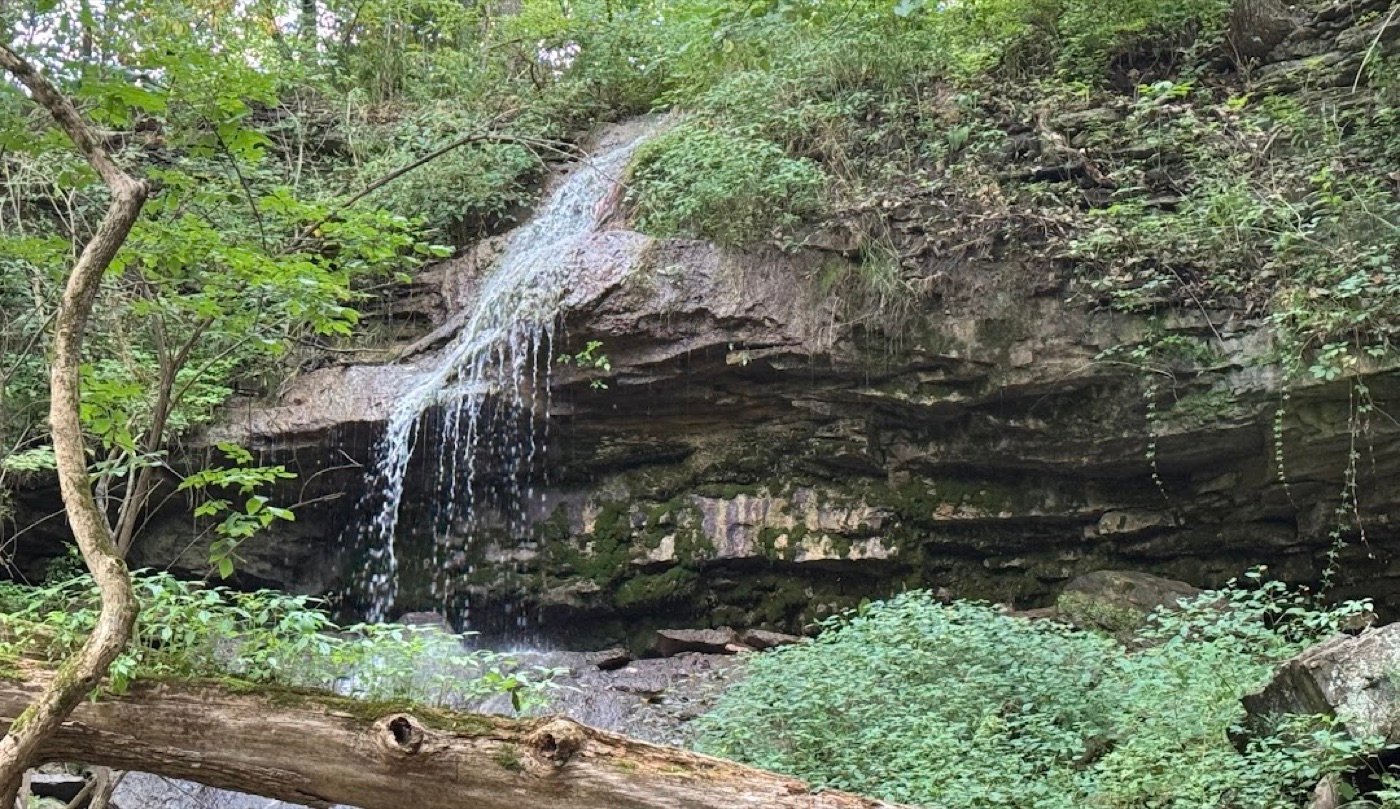
Englewood sits where the Stillwater River’s wooded corridor meets tidy postwar neighborhoods — and Englewood MetroPark is a beautiful, permanent wildlife reservoir next door. Green space that big keeps the whole town’s pest cycle running: overwintering invaders on sunny brick, mice moving in every fall, and spiders working the tree lines.
Exterminator is the word; pest control is the trade. Either way, Englewood gets a technician out of the Salem Ave office rather than a call center in another state.
What we get called for
- Fall mice — ranches and split-levels from the 50s–70s with original utility penetrations; exclusion pays for itself here
- Spiders — homes backing the MetroPark and river corridor collect orb weavers and cellar spiders all season
- Boxelder bugs and stink bugs — sun-facing walls near the tree lines load up every September
- Yellowjackets — ground nests in established lawns and landscape beds late every summer
National Road neighbors
We cover Englewood, Clayton, and Union along the US-40 corridor — same free quote and guarantee across all three.
Services: rodents · bed bugs · roaches · ants · wasps & hornets · spiders · fleas · termites · commercial programs
Nearby: Vandalia · Trotwood · Dayton
Living beside five thousand acres of habitat
Englewood MetroPark isn’t a park in the backyard-barbecue sense — it’s a five-square-mile complex of old-growth forest, wetland, and the Stillwater River’s flood-control lands, and it makes Englewood the most habitat-adjacent suburb in the north metro. That’s the town’s glory and its pest arithmetic in one. The park’s wildlife economy — deer, raccoons, opossums, mink along the river, barred owls in the sycamores — runs nightly commutes through the adjoining neighborhoods, and every commute distributes fleas, seeds tick habitat at the yard margins, and tests deck skirting and shed foundations for denning vacancies. The wetland complexes breed the midge and moisture-insect biomass that loads spider webs on every porch within a half mile of the river corridor, and the seasonal pulses — spring emergence off the wetlands, fall’s field-to-foundation migration — hit Englewood a notch harder and a week earlier than the drier suburbs east of it. None of this is a complaint about the park; it’s the service design brief. Englewood homes get the full edge-property program by default: fall barrier treatment, warm-spectrum lighting audits, deck and shed exclusion, pet flea prevention without gap-months, and the wildlife-aware inspections that tell a mouse gap from a raccoon door.
Postwar bones: the National Road suburbs
Englewood’s housing core — the ranches, split-levels, and colonials built from the 1950s through the 70s off National Road and Union Boulevard — has aged into a specific and very fixable pest profile. Sixty-year-old garage doors ride on original seals that mice treat as standing invitations; crawlspace vents with rusted screens breathe moisture and admit everything smaller than a chipmunk; sill plates have settled their gaps open; and the mature silver maples and oaks that make the streets beautiful run carpenter ant logistics over every roof they touch. The overwintering-invader calendar is vivid here too: sun-warmed brick west walls collect boxelder bugs and multicolored Asian lady beetles by the thousand each October, staging for their slip into attic voids — an event a September exterior treatment turns into a non-event. The through-line for this housing stock is that exclusion pays extraordinary dividends: these are solidly built homes with a fixed, findable set of sixty-year-old entry points, and one thorough sealing visit typically retires whole categories of future calls.
The Englewood pest calendar
- March–April: wetland insect emergence begins; odorous house ants surge; wasp queens work the eaves of the postwar streets
- May–June: carpenter ants peak under the maple canopy; flea pressure opens along the river and park edges
- July–August: spider populations climb hardest on park-adjacent blocks; ground yellowjackets mature in lawns and beds
- September–October: the big month — boxelder and lady beetle staging on brick, wolf spider migration, and the fall mouse push through original garage seals; book the barrier-and-exclusion visit by Labor Day
- November–February: indoor rodent season; damp-basement pests persist along the low river blocks; prime exclusion project window
Englewood and neighbors, asked and answered
We’re three blocks from the MetroPark. Is a one-time treatment pointless?
Not pointless — right-sized for a specific problem like a nest or an active trail. But for the ambient edge pressure, the honest product is the seasonal cadence; the park reloads the neighborhood every year, and the program is what keeps the reload outside your walls. We’ll tell you plainly which purchase your situation calls for.
Do you cover Clayton and Union too?
Yes — Englewood, Clayton, and Union form one service pocket on the National Road corridor: same pricing, same guarantee, no travel math. The Northmont area is a single trip for us.
Ticks from the deer — your department or not?
Yard tick pressure responds to habitat management (mowed margins, brush clearing, play equipment away from tree lines) plus targeted treatments of the transition zones, and we fold that into edge-property service honestly: meaningful reduction, not eradication promises. Personal and pet protection still matter on top — we’ll give you the straight rundown at the walkthrough.
Flood-plain history, basement present
Englewood exists in its current form partly because of water management — the great Englewood Dam is one of the five flood-control structures built after 1913, and the neighborhoods nearest the Stillwater’s managed floodplain sit on some of the area’s highest water tables. For pest purposes that means basements and crawlspaces that run damp by geology, not by neglect, and damp under-structures are the foundation of half the pest complaints in town: camel crickets and cellar spiders as permanent residents, millipedes and sowbugs surging inside after every saturated week, springtails around floor drains, and the moisture-softened sill wood that carpenter ants scout. The mechanical fixes outrank the chemical ones here and we say so on every relevant inspection: a properly sized dehumidifier holding under fifty percent, sump discharge and downspouts run genuinely away from the foundation rather than one foot past it, vapor barrier intact in the crawl, and gutter capacity matched to the big-tree leaf load. With the moisture story corrected, our perimeter and interior work stops being a treadmill and starts being a finish line — and an Englewood basement that’s dry, sealed, and monitored is as pest-quiet as any in the Miami Valley, five thousand acres of neighbors notwithstanding. Free walkthroughs cover the moisture read alongside the pest one: (937) 569-3330.
Who actually turns up in Englewood: Greater Dayton Pest & Rodent is owned and operated by Bryan Camden, licensed by the Ohio Department of Agriculture — firm #115079, commercial applicator #170858, categories 10A, 10B and 12. When you call, you talk to the person who does the work. No call center, no rotating crews, and the same technician on every visit.
Frequently asked questions
Do you provide pest control in Englewood?
Yes — the northwest-Montgomery routes cover Englewood weekly, from the older National Road core through the newer plats toward the reserve.
What pests are most common in Englewood?
The northwest pattern: Stillwater-corridor moisture pests (the reserve’s floodwater mosquitoes reach adjacent yards after storms), garage mice in the post-war blocks, mature-landscape ant networks, and deer-mouse pressure on the woods-adjacent edges.
How much is pest control in Englewood?
Standard formula: most Englewood homes run $39–$55/month quarterly; one-time flat by job. Free: (937) 569-3330.
Does living near Englewood MetroPark mean more pests?
More pressure, manageable kind — reserve adjacency raises the floodwater mosquito waves, the deer-mouse edge population, and the fall rodent push. The edge-lot program (exclusion emphasis, season mosquito barrier, sentry traps) is built for exactly these blocks.
Why does my Englewood basement get camel crickets?
The Stillwater valley’s water table keeps the older blocks’ basements humid — prime cricket-and-silverfish habitat. Dehumidifier-first, seepage triage, sticky-trap census: the moisture guild leaves with the water.
How fast can you reach Englewood?
Days typically on the northwest rotation, priority faster, no travel charges.
Do you serve Englewood businesses?
Yes — the National Road corridor’s restaurants and retail plus the local offices, each on matched programs with documentation.
What about the fall invasion here?
Open-ground and reserve adjacency delivers the full September flight — the barrier-plus-seal package before Labor Day is the edge-lot answer, and Englewood’s sunny vinyl two-stories audition hard.
Is termite monitoring needed in Englewood?
Moisture-corridor geography says inspect annually (free) — the Stillwater valley’s conducive conditions are real; bait stations suit the woodier, wetter lots especially.
How do I start service in Englewood?
Instant quote, free photo ID, or (937) 569-3330 — free estimates, honest triage, first visits typically within the week.
Englewood Pest Control, Service by Service
Deep-dive guides to how each service plays out in Englewood specifically — the MetroPark edge, the postwar housing, and the patterns behind each pest:
- Spider control in Englewood — park-edge web pressure, the porch-light ring, and the strategy that manages both
- Rodent control in Englewood — preserve-edge pressure, the October wave, and the envelope math that ends it
- Termite control in Englewood — preserve-density pressure, the water table, and the standing ring
- Cockroach control in Englewood — the honest asymmetry: why the park doesn’t matter for once
- Wasp and hornet removal in Englewood — commuters vs. residents, and the free driveway sort
- Ant control in Englewood — the dam gradient, moisture-first
- Bed bug treatment in Englewood — the marketplace mile, checked at the driveway
- Flea treatment in Englewood — the trailhead exchange, broken at the house
- Termite inspection in Englewood — what an inspection actually covers, what it costs, and why a sale here rarely forces one.