
Englewood’s rodents commute from a nature preserve. The MetroPark’s thousand-plus acres of woods, wetland, and Stillwater floodplain sit directly against the town’s residential grid, sustaining a wildlife economy — and a rodent reservoir — that no amount of neighborhood tidiness can shrink. White-footed mice winter-shop the park-adjacent streets every October; the floodplain’s seasonal high water pushes ground-dwelling populations uphill into yards on wet years; and the postwar housing stock’s standard gaps — garage gaskets, utility penetrations, crawl and basement vents — stand between the reservoir and your walls. The Englewood equation is therefore pure exclusion math: the pressure is permanent (the park isn’t going anywhere, thankfully), so the building envelope does all the work. Here’s how we run it.
The Preserve-Edge Pressure System
- The park reservoir: woods and wetland sustain deer mice, white-footed mice, and the broader small-mammal economy at preserve density — a permanent source population that re-supplies the edge streets annually, no matter how many individual mice any household removes.
- The October shop: first hard frosts send the field-and-woods population toward heat, and the park-facing blocks take the front of the wave — the same houses, every year, until their envelopes close.
- The flood-year variant: high water on the Stillwater pushes ground-dwelling populations uphill ahead of schedule — wet autumns produce early, heavy rodent seasons on the low streets, a pattern worth knowing before the next one.
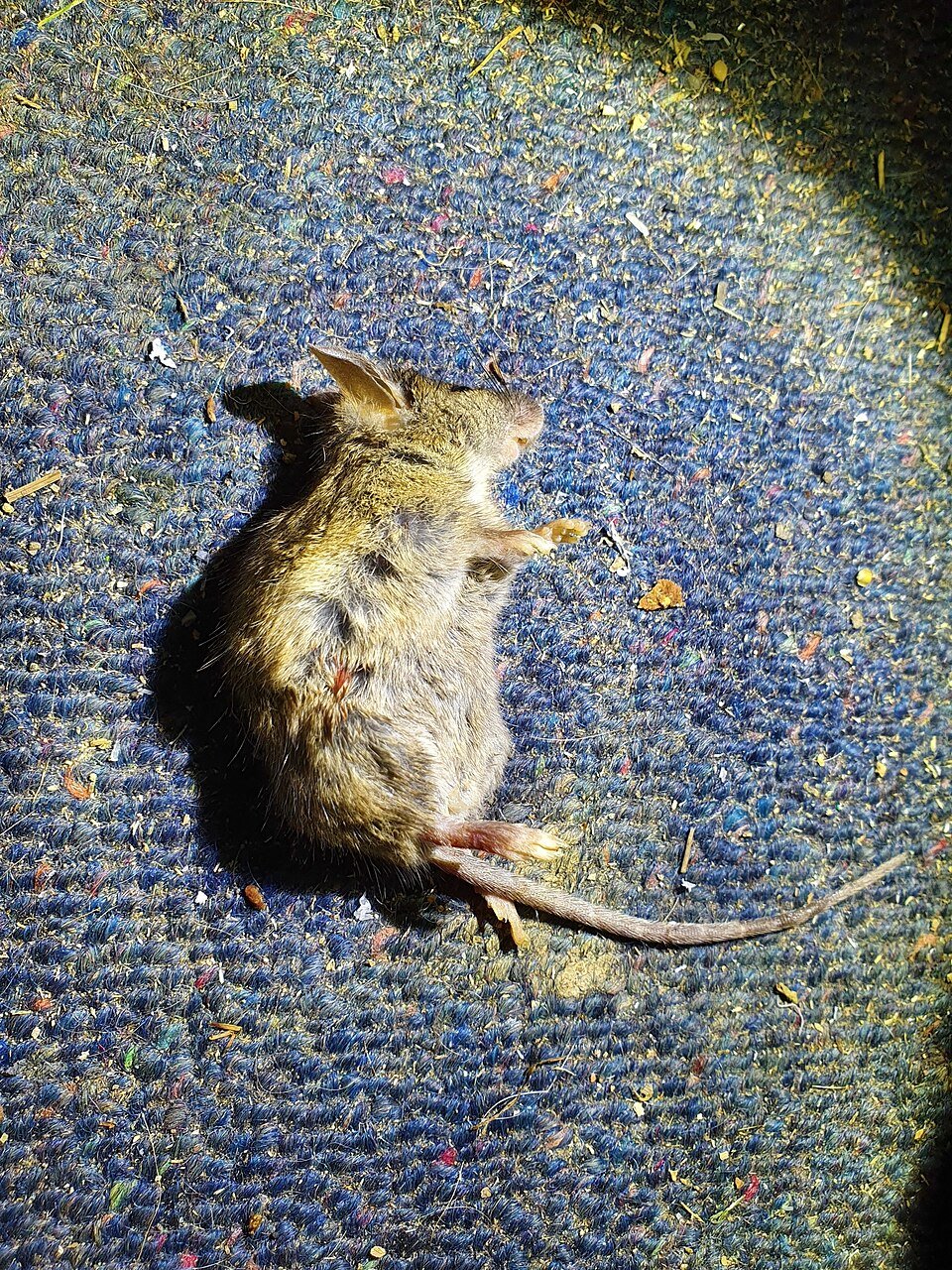
- The two-toned tenant: park-edge captures skew toward white-footed and deer mice — the pretty, big-eyed natives whose droppings upgrade cleanup protocol: wet methods, gloves, ventilation, never dry sweeping or shop-vacs. The species read comes first on every Englewood job.
Exclusion Math: the Envelope Does the Work
When the source population can’t be shrunk, control lives entirely at the building line — and the postwar stock’s gap inventory is mercifully standard. The garage front: overhead-door gaskets compressed by decades, the corner gaps first — the number-one entry on every park-adjacent street, refreshed for less than a service call. The utility front: AC linesets, dryer vents, cable penetrations — the dime-width audit with copper mesh and sealant. The foundation front: crawl and basement vents screened to quarter-inch hardware cloth, hatches fitted, sill gaps atop the block closed. The habitat margin: woodpiles off the house, birdseed in sealed bins (a feeder on a park-edge lot is a rodent commissary — feed the birds, bin the seed), and the brush line gapped back from structures. Trapping handles whoever’s already inside — snap traps on the runways, no poison in structures ever (the standing case: wall-void carcasses and secondary poisoning of the park’s owls, which are your best year-round rodent control, working free). The whole audit runs a page; done once to standard, it converts the annual October wave into a non-event, which is the entire Englewood value proposition.

The Preserve-Edge Extras
Park-adjacent living adds two files most rodent pages skip. The vehicle front: Englewood’s camper-and-boat households store their rigs against the same rodent pressure — engine bays, cabin filters, and wiring looms are winter housing, and the storage checklist (hard-surface parking, mesh in the exhaust and cowl, traps around not in, monthly starts) belongs on the same September calendar as the house audit. The honest wildlife boundary: preserve-edge attics occasionally host the heavier dawn-and-dusk sounds of squirrels or the summer flutter of bats — both wildlife-control work under different licensing, and both get an honest referral from us rather than a mouse program that won’t fit. The sound test sorts it in one night (light, papery, post-midnight scratching silenced by a ceiling rap = mice; heavy dawn thumping = the referral), and the droppings check — rice grains versus anything larger — confirms before any gear comes off the truck (the species guide, the evidence file).
The Englewood Calendar and Bottom Line
September: the audit month — envelope sealing, feeder-and-woodpile discipline, and vehicle storage prep before the frost migration. October–February: trapping season for whoever beat the sealing, led by the park-facing and low-lying streets. Spring: cleanup (deer-mouse protocol where the species says so) and verification. Wet years: everything two to four weeks early on the floodplain-adjacent blocks. The bottom line matches the geography: you live beside a preserve on purpose, the rodent pressure is the rent, and a to-standard envelope plus the quarterly Protection Plan’s fall audit makes the rent trivial — permanent pressure, permanent answer. One flat price, honest wildlife referrals where the evidence points that way, the method at rodent control — and the town’s whole file, spiders included, at Englewood pest control.
October Wave Hitting the Park-Side Streets?
Envelope sealed to standard, runways trapped, owls left on payroll — the permanent answer to permanent pressure. One flat price, guaranteed, across Englewood.
Frequently asked questions
Why do the same Englewood streets get mice every October?
The MetroPark reservoir is permanent — preserve-density populations re-supply the park-facing blocks with every first frost, and the wave repeats until a house’s envelope closes to standard. It’s exclusion math, not luck.
What kind of mice come off the park land?
Captures skew white-footed and deer mice — the two-toned, big-eyed natives — which upgrades droppings cleanup to wet methods with gloves and ventilation, never dry sweeping. The species read comes first on every preserve-edge job.
Does bird feeding attract mice on park-edge lots?
A feeder with loose-stored seed is a rodent commissary — but the fix is the bin, not the birds: sealed metal storage, catch trays, and ground-spill discipline keep the feeder without funding the mice.
Why no poison, especially in Englewood?
Wall-void carcasses aside, the park’s owls and raptors eat dosed mice — secondary poisoning of the best free rodent control in town. Snap traps on runways kill as effectively, retrievably, with the owls left on payroll.
What about the heavy thumping in my attic at dawn?
That schedule and weight suggest squirrels — wildlife-control work under different licensing, and you’ll get an honest referral rather than a mouse program that won’t fit. The overnight-scratching, ceiling-rap-silenced sound is the one that’s ours.
Do wet years really change the rodent season?
On the floodplain-adjacent blocks, measurably — high water pushes ground populations uphill early, and wet autumns run the season two to four weeks ahead. The September audit matters most in exactly those years.
How should I store the camper against mice?
Hard-surface parking away from the brush line, mesh in exhaust and cowl openings (tagged for removal), zero food aboard, traps around — not in — the rig, and monthly engine starts. Same September calendar as the house audit.
What does rodent control cost in Englewood?
One flat price: species-confirmed inspection, runway trapping, envelope sealing to the dime standard, and verification — with the quarterly Protection Plan’s fall audit holding the line against a reservoir that never empties.