
Englewood is a town built beside a flood-control dam, and its ants know it better than its residents do. The Englewood Dam holds the Stillwater River back from everything downstream, and the land around it — floodplain woods, wet-bottom preserve, the moist soil ribbon that follows the river corridor — runs a permanent moisture gradient right against the town’s west side. Moisture is the single strongest predictor of ant pressure in Ohio, and that makes ant control in Englewood a geography lesson: the closer a block sits to the corridor, the wetter its soil profile, the heavier its ant traffic, and the more the species mix tilts toward the moisture specialists. We treat this town by its gradient, not by its street grid.
Reading the Gradient
On the corridor side — the streets nearest the MetroPark land and the dam approaches — the dominant caller is the odorous house ant, the moisture-follower whose colonies bud into dozens of satellite nests wherever damp mulch, irrigation overspray, or a slow gutter keeps soil wet. These are the invasions that surge after every rain week and reappear two doors down after a DIY spray, because spraying a budding species is colony mitosis with extra steps. Move upslope and east, into the drier subdivision blocks, and the file shifts toward pavement ants working driveway joints and the occasional field ant mound at the lawn edge — steadier, slower, less rain-reactive. The treatment consequences are real: corridor-side houses get moisture-first service, where correcting the wet zone is half the job and non-repellent baiting does the rest; upslope houses get perimeter-and-joint work on a conventional calendar. Same town, two protocols, and the address tells us which before we arrive.
The Carpenter Question
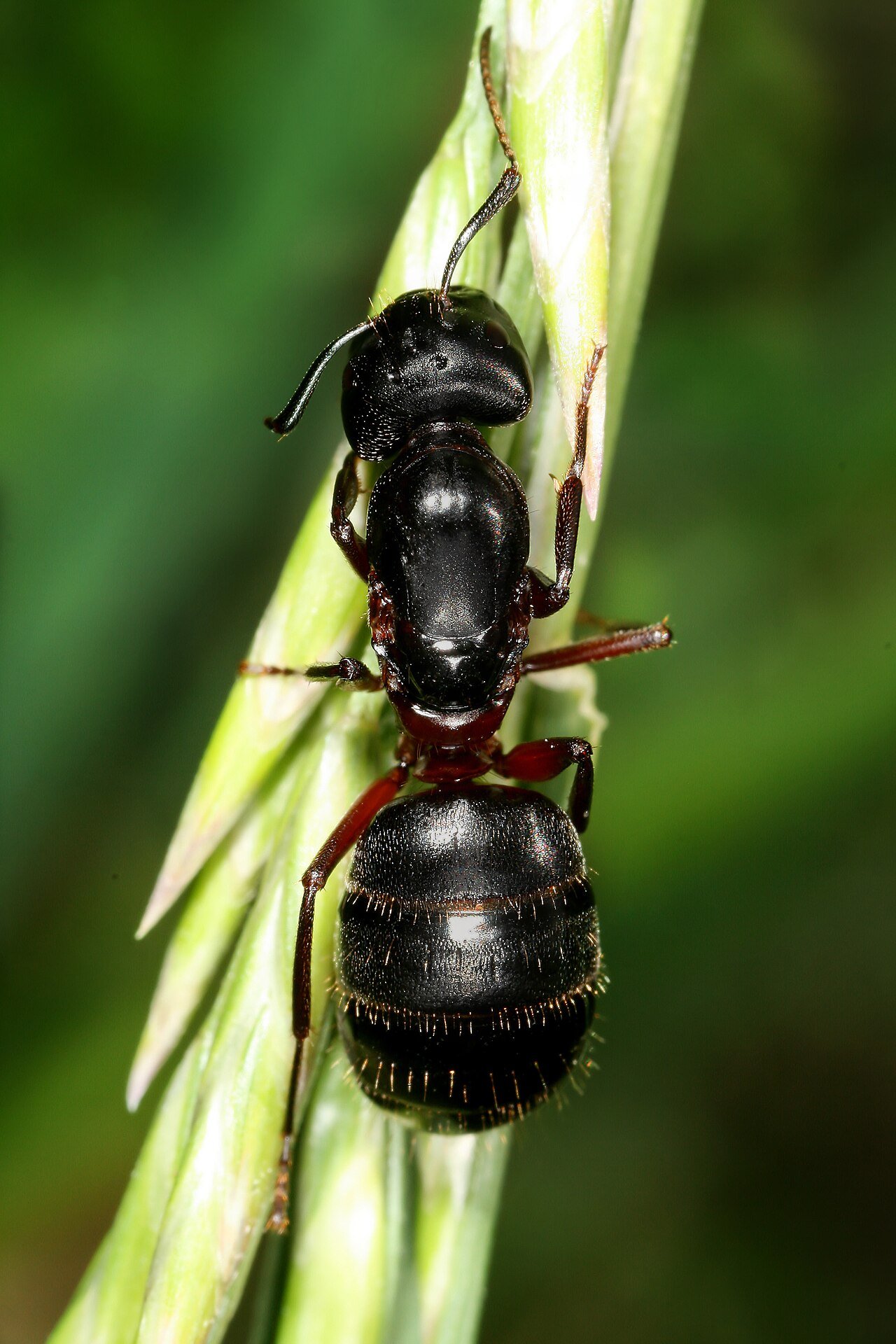
A floodplain forest next to a residential grid also means carpenter ants — big, black, and nesting in the corridor’s abundant dead wood. They forage into adjacent neighborhoods at night, and finding large ants in a kitchen near the preserve line is usually foraging traffic, not a home nest. The honest inspection distinguishes them: frass piles and rustling in a wall void mean the nest moved indoors into some moisture-compromised timber, and that is a structural conversation; a trail in from the yard is an exclusion-and-bait job. We say which one you have, because they cost different amounts and only one threatens your framing.
What Service Looks Like Here
- Gradient-matched protocol: moisture-first work (gutter, grade, mulch counsel + non-repellent baiting) corridor-side; perimeter-and-joint treatment upslope
- Carpenter ant triage: nest-location inspection separating foraging visits from resident colonies, with the structural verdict stated plainly
- No repellent sprays on budding species: the corridor’s odorous house ants get baits the colony carries home — the only approach that ends satellites instead of multiplying them
- Seasonal timing: spring pre-swarm baiting on the wet blocks, summer perimeter maintenance, fall exclusion before the indoor push
The neighboring files fill in the picture: the same preserve edge that drives ant moisture drives the rodent commute, and the same dead-wood inventory that hosts carpenter ants shapes the termite file — Englewood’s pest pressure is one hydrology story told three ways, and a provider who reads the dam’s geography services all of it on one visit.

The Rain-Week Rule
One practical habit worth adopting whether or not you ever call us: watch what a wet week does to your kitchen. Corridor-side Englewood houses that see ant surges within two days of sustained rain are watching soil-moisture displacement in real time — the colonies are outside, close, and reachable with exterior baiting before they ever establish indoors. Houses whose ant sightings don’t track rainfall are usually hosting something already inside: a satellite nest in a wall void, a slab-crack route, a moisture problem under a sink. That single diagnostic — does the rain move them? — tells us more in one phone question than most service calls learn in an hour, and it’s why our Englewood intake starts with the weather. The full local file lives on our Englewood service page.
Work With the Gradient
One call, one weather question, one protocol matched to your side of the moisture line — and baits that end colonies instead of scattering them. Free ID on any ant you can photograph.
Frequently asked questions
Why does my Englewood house get ants after every rain?
Because you likely sit corridor-side on the moisture gradient — sustained rain displaces soil colonies near the Stillwater corridor and pushes foragers indoors within a day or two. That rain-tracking pattern is actually good news: the colonies are outside and reachable with exterior baiting.
What kind of ants are most common in Englewood?
Odorous house ants dominate the wetter corridor-side blocks (small, dark, crushed-one-smells-like-rotten-coconut), pavement ants work the drier subdivision joints, and carpenter ants forage in from the preserve’s dead wood. Each gets a different protocol, which is why the free photo ID comes first.
Why did spraying make my ant problem worse?
Odorous house ants respond to repellent sprays by budding — the colony splits into satellite nests and reappears rooms or doors away. Non-repellent baits the workers carry home are the only approach that ends the colony instead of multiplying it.
Are the big black ants near the MetroPark side dangerous to my house?
Usually they’re carpenter ants foraging in from corridor dead wood — a trail, not a residency. It becomes structural only when a nest moves into moisture-compromised timber indoors; frass piles and wall-void rustling are the tells, and the inspection settles it honestly.
Do ants mean my house is dirty?
No — corridor-side ant pressure is hydrology, not housekeeping. Crumbs decide which counter they visit, not whether they arrive.
When is the best time for ant treatment in Englewood?
Spring, before swarm season, on the wet blocks — baiting then intercepts colonies at peak recruitment. Summer maintains the perimeter; fall exclusion beats the cold-weather indoor push.
Can I fix it myself with bait from the store?
Sometimes, on light pavement-ant traffic. Corridor-side odorous house ant networks usually outlast consumer baits — the colonies are too distributed and the attractant matters seasonally. If two weeks of DIY baiting hasn’t ended it, the network is bigger than the bait.
What does ant control cost in Englewood?
Flat-priced exterior programs for most homes, with the moisture-counsel piece included — and an honest word upfront when a gutter fix or mulch pull-back will do more than a second treatment would.
The Gradient Pays Twice
One closing note for the corridor-side homeowner weighing the moisture work: everything on the counsel list — the gutter repair, the grade correction, the mulch pulled back from the foundation line — pays a second dividend beyond the ants. Wet soil against a foundation is also the termite invitation, the camel cricket habitat, and the reason a sump runs hard every March. Englewood’s hydrology is not optional, but a house tuned against it drops its whole pest profile at once, which is why our ant service here spends as much time on water as on insects. Fix the moisture line once and the gradient starts working for you instead of against you — and the ant baiting that follows lands on colonies already losing their habitat argument.