
Here’s an Englewood pest fact that surprises people after our rodent, spider, and termite pages, which all run on the MetroPark’s pressure: for roaches, the park doesn’t matter. Ohio’s serious roach species are indoor animals — the kitchen species has no outdoor population at all, and the drain commuters live in plumbing, not preserves — so a thousand acres of woods next door contributes exactly one thing to the city’s roach file: June’s harmless wood roaches at the porch lights. What actually shapes Englewood’s file is the housing: settled postwar streets with low turnover (few importations), block basements with floor drains (the commuter route), and the secondhand economy every settled town runs. Low pressure, specific cases — and an honest page about which is which.
The Real Roster (and the Park’s One Contribution)
- The June wood roach: the preserve’s only entry — chestnut-brown, pale-edged, flying to porch lights from the wood edges, dying indoors without breeding. A dustpan event with a free identification, annually mistaken for the start of something.
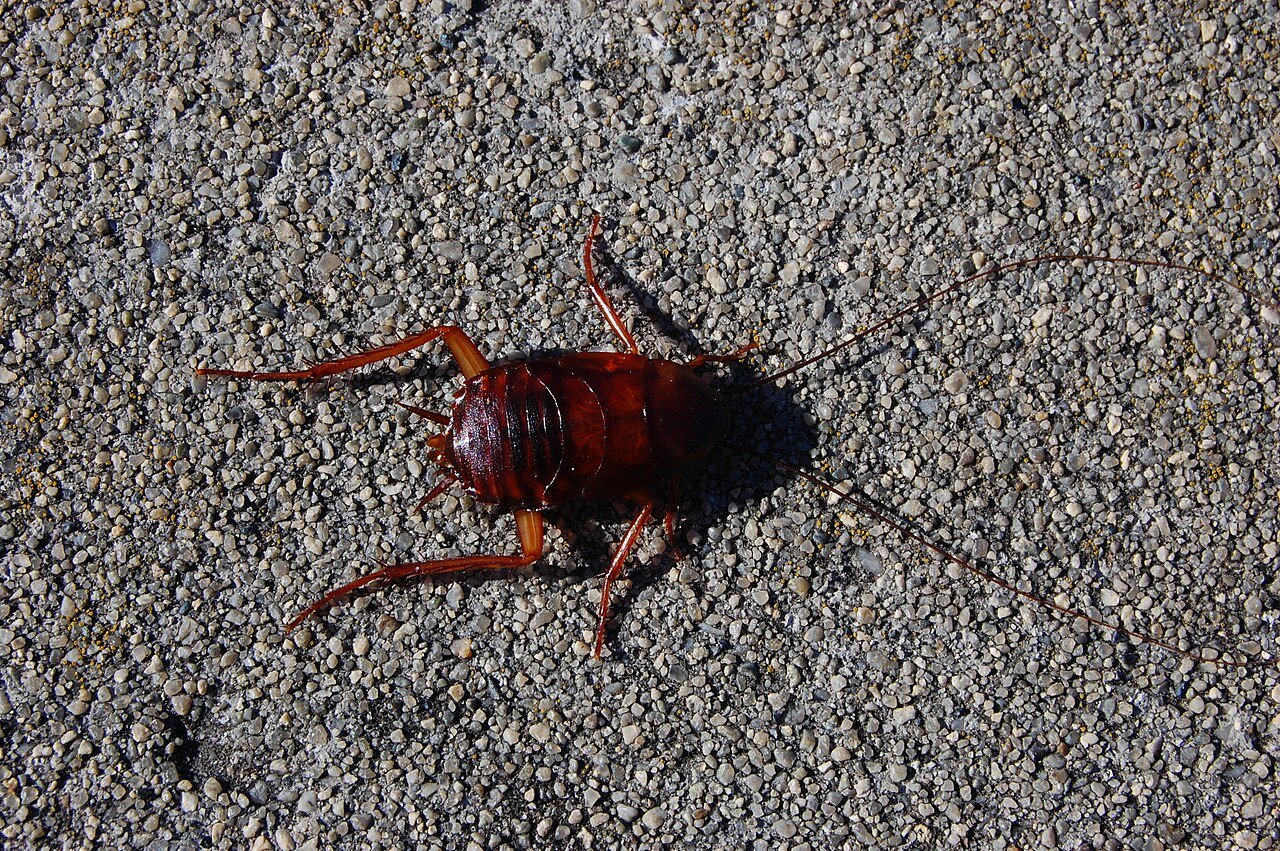
- The basement commuters: the postwar block basements’ floor drains, laundry corners, and sump margins host the glossy black drain roaches after storms — infrastructure traffic on the standard clock, heaviest on the older streets, closed by the water-the-traps protocol (the water bug file).
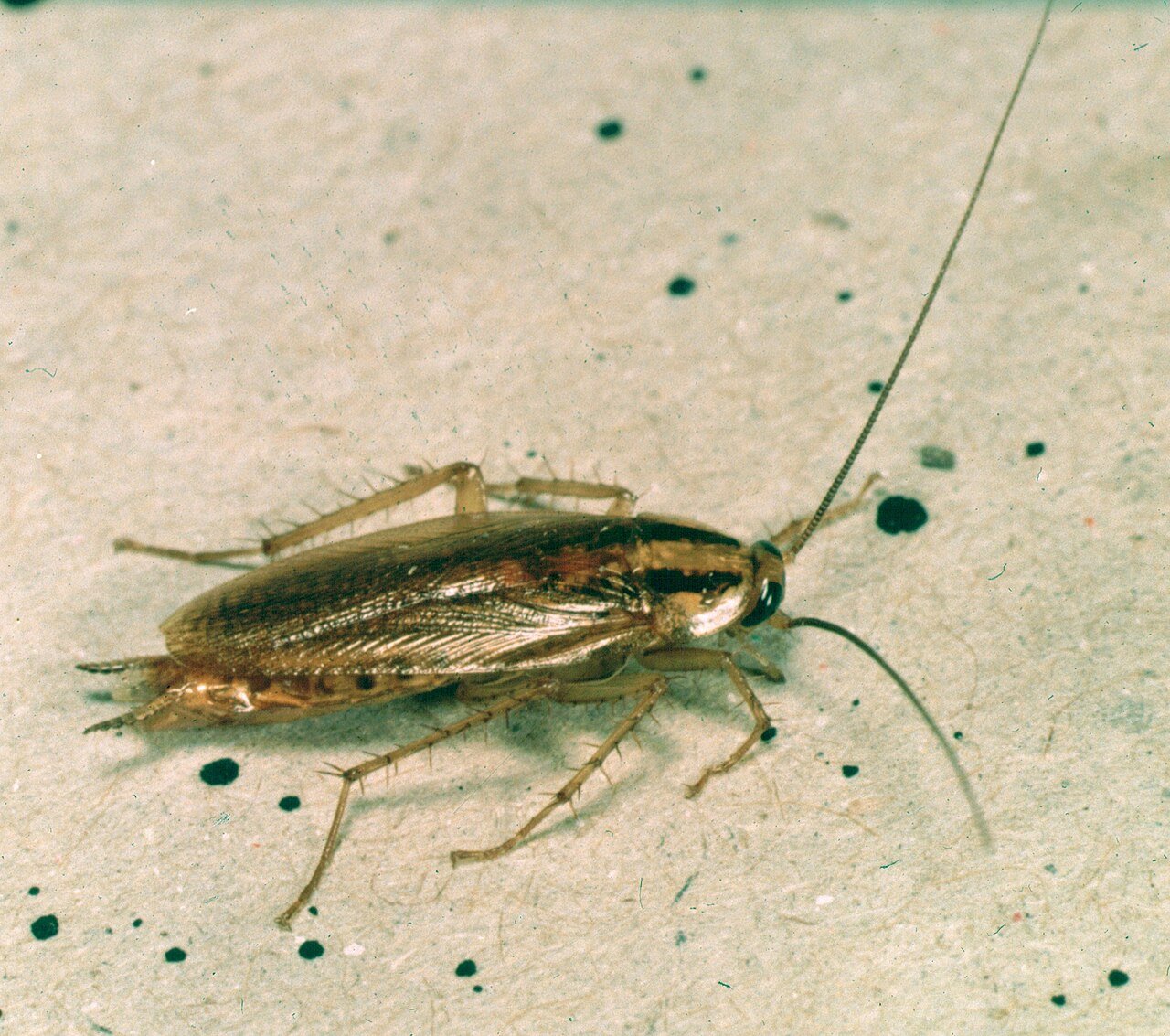
- The importation minority: the striped kitchen species arrives only as often as the moving boxes and secondhand appliances do — low volume in a settled town, but every arrival compounds on the same 50-day clock everywhere, and the two-stripe check settles every identification.
- The false-alarm gallery: ground beetles, crickets, and the occasional big American roach off the storm lines — sorted free by photo, with the visual calls at the Ohio lineup.
The Settled-Town Playbook
Englewood’s roach math mirrors Kettering’s more than any neighbor’s: detached housing (no party-wall repopulation — a cleared kitchen stays cleared), low turnover (introductions are events, not cycles), and a housing vintage whose original kitchens and basements decide the treatment map. The prevention kit is three habits: the secondhand-appliance inspection — flashlight into the motor void and a vacuum pass before anything plugs in, the settled town’s main importation route closed for free; cardboard discipline during moves and clean-outs; and the basement drain protocol — monthly water plus mineral oil in unused traps, screened sumps, and a dehumidified basement that strips the commuters’ required damp. When an importation lands anyway, the response is the placement standard: crevice gel baiting with insect growth regulator through the kitchen’s void system, monitors reading the trend, follow-ups inside the reproduction window — and the low-pressure environment typically clears cases in a single cycle. The don’t-do list holds its usual weight: no foggers (the indictment), no bleach-mopping placements, and no treating June’s porch-light visitors as anything but weather.
The Englewood Calendar and Bottom Line
The file runs quiet: spring storms bring the basement commuter surfacing on the older streets, June brings the wood roaches, moving season carries what importation risk exists, and winter’s only activity is whatever a heated kitchen already hosted — which, in this town, is usually nothing. The response windows match: the drain protocol ahead of storm season, the appliance habit year-round, and same-week verification (free, from a photo) for any striped sighting, because the one roach that matters here matters everywhere. One flat price, single-cycle clears as the local norm, the method at cockroach control with the early-warning file at baby cockroach — and the town’s whole ledger at Englewood pest control.
Stripes in an Englewood Kitchen — or Just June at the Porch Light?
Free photo verdicts sort the one that matters from the weather — and the placement program clears it in a cycle. Flat-priced and guaranteed across Englewood.
Why the Honest Asymmetry Matters
It would be easy — and profitable, briefly — to write this page the way the others run: the preserve as pressure, the perimeter as answer, a quarterly line item for a threat that doesn’t exist. We’d rather spend the credibility the other direction, because it’s the same credibility you’re trusting when we say the rodent pressure IS real. Ohio’s roach threat model is genuinely indoor: the kitchen species travels in commerce, the drain species travels in plumbing, and no volume of adjacent woodland changes either — which is why an Englewood address changes your mouse math and your web math but leaves your roach math exactly as suburban as anyone’s. The practical takeaway is a budget one: put the pest dollars where this town’s pressure actually lives (the fall rodent audit, the façade’s web schedule, the termite ring), keep the roach file closed with three free habits, and treat any striped sighting as the genuine event it is. A pest company’s most useful product is an accurate map — and on Englewood’s map, the roach territory is small, indoor, and entirely defensible. We’d like to keep it that way as much as you would.
Frequently asked questions
Does living next to Englewood MetroPark increase roach risk?
No — and this is the honest asymmetry of the town’s pest map: Ohio’s serious roaches are indoor animals (the kitchen species has no outdoor population; the drain species lives in plumbing), so the preserve contributes only June’s harmless wood roaches at porch lights.
What are the roaches at my porch light in June?
Wood roaches off the preserve edges — chestnut-brown, pale-edged, drawn to lights, and unable to breed indoors. They dry out and die within days; a dustpan and a free photo ID are the whole response.
What is the black roach in my Englewood basement after storms?
A drain commuter surfacing from the older streets’ plumbing — infrastructure traffic, not infestation. Monthly water plus mineral oil in unused traps, a screened sump, and a dehumidified basement close the route.
How would serious roaches reach a settled Englewood house?
Importation: moving boxes, grocery cardboard, and secondhand appliances’ warm motor voids. Low turnover keeps the volume low — and the flashlight-and-vacuum appliance inspection before anything plugs in keeps it near zero.
Is one striped roach in the kitchen a big deal here?
Yes — everywhere. The two-stripe kitchen species compounds on a 50-day clock regardless of zip code, and a single sighting justifies the placement program. The good news: detached housing and low pressure mean Englewood cases typically clear in one cycle.
Do I need quarterly roach service in Englewood?
Usually not as a standalone — the town’s roach pressure doesn’t warrant it, and we’d rather say so. The quarterly plan earns its keep here on rodents, webs, and the perimeter; the roach file stays closed with three free habits.
Why did my neighbor’s roach problem not spread to us?
Detached walls — the kitchen species moves through shared structure and commerce, not across yards. One house’s case stays one house’s case in this housing stock, which is why early treatment pays so cleanly.
What does cockroach control cost in Englewood?
One flat price when it’s genuinely needed: species confirmed free, crevice placement with growth regulator, monitors, and follow-ups inside the reproduction window — with single-cycle clears as the local norm and honest “it’s just weather” verdicts the rest of the time.