
Englewood’s wasps commute to the best hunting ground in Montgomery County. The MetroPark’s insect factory — the same mayfly-and-midge economy that staffs the town’s spider file — is a protein bonanza for the hunting wasps, and the preserve’s old-growth hollows host the region’s densest European hornet population: the big night-flyers at Englewood porch lights aren’t lost, they’re commuting from trunk colonies a quarter mile into the woods. The residential grid receives the season accordingly — heavy foraging traffic that mostly isn’t nesting on your property at all, plus the standard postwar file (eave umbrellas, lawn-burrow yellowjackets) that is. Sorting the commuters from the residents is the town’s first wasp skill, and this page teaches it.
Commuters vs. Residents: the Englewood Sort
- The commuter file: steady wasp presence over gardens and at lights without a visible nest — park-based colonies foraging the grid’s flowers, caterpillars, and porch-light insect traffic. No nest on your property means no treatment target: light management (warm bulbs, repositioned fixtures) cuts the visits, and the hunting itself is free garden pest control.
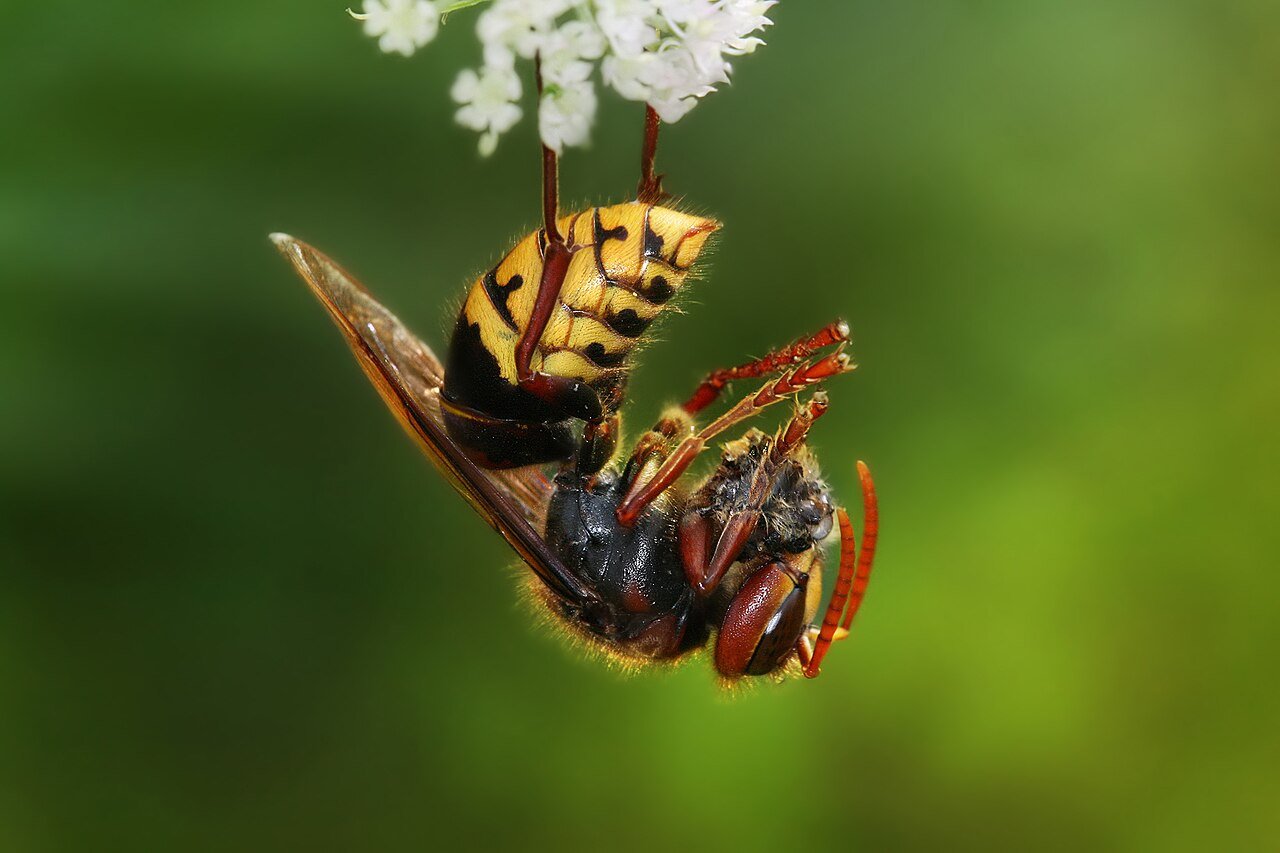
- The night-flyer commute: European hornets from the preserve’s hollows working lit windows and porches after dark — the town’s signature “giant hornet” call, resolved nine times in ten by killing the light rather than any colony. The tenth time — a hollow in a yard tree hosting the colony itself — gets the full hornet protocol.
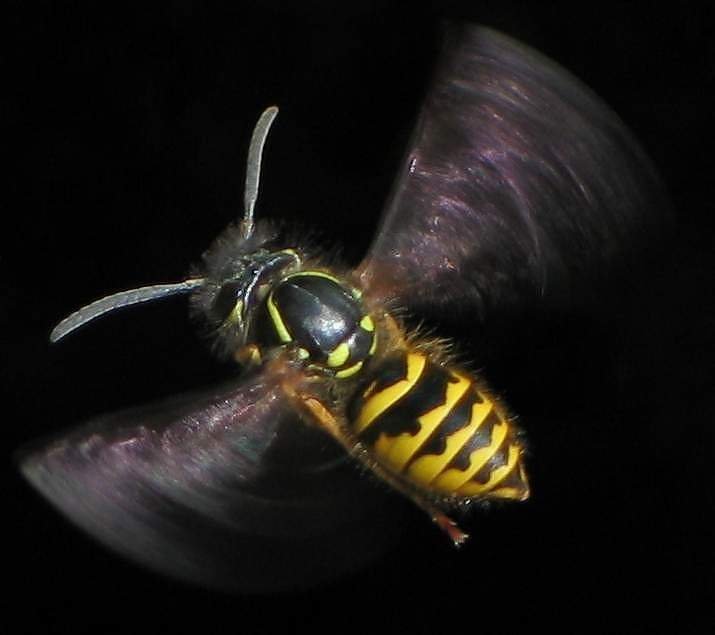
- The resident file: the postwar standards — paper wasp umbrellas under eaves, shutters, and rails (the April-through-June broom patrol), yellowjacket colonies in the established lawns’ burrows (the July walk, the pre-mow glance, September’s peak), and the occasional soffit-gap void colony treated on void rules: cavity treatment at dusk, never a sprayed entrance.
- The park-edge bonus: the canopy footballs — bald-faced colonies in the preserve-side trees, triaged by the standing altitude-and-traffic rules, with the park’s own trees left to the park.
The Method, Preserve-Edge Edition
The sort decides everything, so every Englewood call opens with it: nest or no nest, resident or commuter — a photo and a traffic-watch usually settle it from the driveway, free. Residents get the standard discipline: broom-stage removal on the spring patrol, dusk treatment with proper gear for established traffic-zone colonies, cavity rules for the soffit and wall-void cases, and the burrow protocol (treated at the entrance at dusk, never plugged) for the lawn colonies. Commuter pressure gets the honest counsel instead of an invoice: light strategy on the park-facing façades, covered drinks and prompt cleanup through the September sugar-switch, and the reassurance that a preserve-adjacent address simply runs more airborne traffic — the rent, again, on the county’s best backyard amenity. The escalation triggers stay universal: any nest in daily traffic, any sting-allergic household member (automatic same-week work), interior emergence from a void, and the mouth-and-throat sting emergencies covered at sting treatment. Honey bee swarms off the preserve’s wild colonies get the beekeeper referral, always — and the July giants over the sunny lawns get their standing free acquittal.
The Englewood Calendar and Bottom Line
April–June: queen season and the broom-stage patrol — the resident file’s cheap window. July: commuter traffic builds with the park’s insect peak; the lawn walk flags burrow colonies at hundreds. August–September: everything peaks — resident colonies at full garrison, the sugar-switch at the patios, the night-flyer commute at every lit window, and the year’s call volume with it. October: frost closes the residents; the commuters retire to the hollows; and the sealing-and-lights work closes the year. Same-week response, same-day for the automatic cases, one flat price quoted first — and the free driveway sort that ends half of Englewood’s wasp calls with a light-bulb recommendation instead of a treatment. The service at professional wasp nest removal, the taxonomy at wasp vs. hornet — and the preserve-edge ledger, now five services deep, at Englewood pest control.
Giant Wasps at the Porch Light — or a Stream From the Soffit?
The free driveway sort tells commuters from residents — then light strategy for one, dusk treatment for the other. Flat-priced and guaranteed across Englewood.
Frequently asked questions
Why does Englewood get so many wasps without visible nests?
Commuters — park-based colonies forage the residential grid’s flowers, caterpillars, and porch-light insects, then fly home to the preserve. No nest on your property means no treatment target: light management cuts the visits, and the hunting is free garden pest control.
What is the huge hornet at my window every summer night?
A European hornet commuting from the preserve’s old-growth hollows — the county’s densest population — hunting insects at your lit glass. Nine calls in ten end at the light switch; the tenth, a colony in a yard tree’s hollow, gets the full protocol.
How do I tell a commuter problem from a nest on my property?
The traffic watch: commuters arrive, forage, and leave in all directions; residents run a steady line to one entrance — an eave, a soffit gap, a lawn hole. A driveway photo and five minutes of watching usually settle it, free.
Do the park’s wasps make yards more dangerous?
Barely — foraging wasps away from their nests rarely sting; the risk lives at defended nests, and the park keeps its colonies in the woods. The resident file (your eaves, your lawn burrows) carries the actual sting math, same as any suburb.
What should I do about the yellowjacket hole in my lawn?
The standard burrow protocol: flag it, keep mowers clear, and book the dusk treatment that reaches the colony — never plug the hole, which reroutes thousands of workers through any gap they find. July discovery beats September discovery by an order of magnitude.
Are the wasps at my hummingbird feeder from the park?
Usually — sugar-seeking commuters, heaviest after the September switch. Feeder moats, bee guards, and relocating the feeder off the patio manage it; the colony behind the visits is likely a quarter mile into the woods.
When is Englewood’s wasp season at its worst?
August and September — resident colonies at full garrison, the sugar-switch driving foragers to patios, and the night-flyer commute at every lit window. The spring broom patrol and July lawn walk are what keep those months boring.
What does wasp removal cost in Englewood?
One flat price for the resident file — dusk treatment, cavity rules, sealing after — and the free driveway sort first, which ends half the town’s wasp calls with a light-bulb recommendation instead of an invoice.