
Centerville and Washington Township sit at the top of our southern loop — Uptown’s historic stone buildings, the mature-tree neighborhoods off Franklin Street, and the newer builds toward Yankee Trace. Those big old trees are Centerville’s signature, and they drive its pest profile: carpenter ants overhead, and steady fall invasions of mice and spiders as the canopy neighborhoods cool off.
If an exterminator in Centerville is what you are after, this is the page. The difference worth knowing is that a plan here includes coming back at no charge between visits.
What we get called for
- Carpenter ants — mature oaks and maples touching rooflines around the older streets keep them coming; we trace and treat the parent colonies
- Mice each fall — established ranches and two-stories with decades-old garage seals and utility gaps
- Wasps — deck and pergola neighborhoods from Normandy to Yankee Trace
- Stink bugs and boxelders — sun-facing brick walls collect them every September; exterior treatment before they slip inside
Washington Township too?
Yes — Centerville proper and Washington Township are both core service area, same free quote, no travel charge.
Centerville exterminator, and what the job actually involves
An exterminator in Centerville spends less time on emergencies than on the seasonal pattern: ants along the Far Hills corridor in spring, spiders in September, and mice moving in from the township fields the first cold week of October.
Which is why the visit is worth more than the spray. Knowing that the field edge is the source changes where you treat.
Services: rodents · bed bugs · roaches · ants · wasps & hornets · spiders · fleas · termites · commercial programs
Nearby: Bellbrook · Springboro · Oakwood
Centerville and Washington Township: where the suburbs meet the fields
Drive south from Uptown Centerville’s stone-front historic district and inside fifteen minutes the landscape changes twice — first into the mature-canopy neighborhoods that made Centerville famous for its trees, then into Washington Township’s semi-rural belt of large lots, horse properties, preserved farmland, and wooded ravines running toward the Sugarcreek valley. That gradient is the single most useful fact in local pest control, because pressure climbs with every step toward open country. The rural setting of Washington Township and southern Centerville makes spider control notably more prevalent here than in the mid-block suburbs to the north: field and meadow habitat produces enormous insect biomass, exterior lighting on large-lot homes concentrates that food supply against the house every night, and the resident spider population — funnel weavers silvering the lawns, orb weavers spanning porch columns, wolf spiders patrolling walk-out foundations — scales to match. Add the annual October field-to-foundation migration after harvest and first frost, and township homes see several times the spider activity of a comparable house in central Kettering. It’s the model example of a rule we apply across the Miami Valley: geography writes the pest program, and out here geography says de-webbing, egg-sac removal, prey-reduction at the lights, and a fall barrier aren’t extras — they’re the core.
The canopy neighborhoods: carpenter ant country
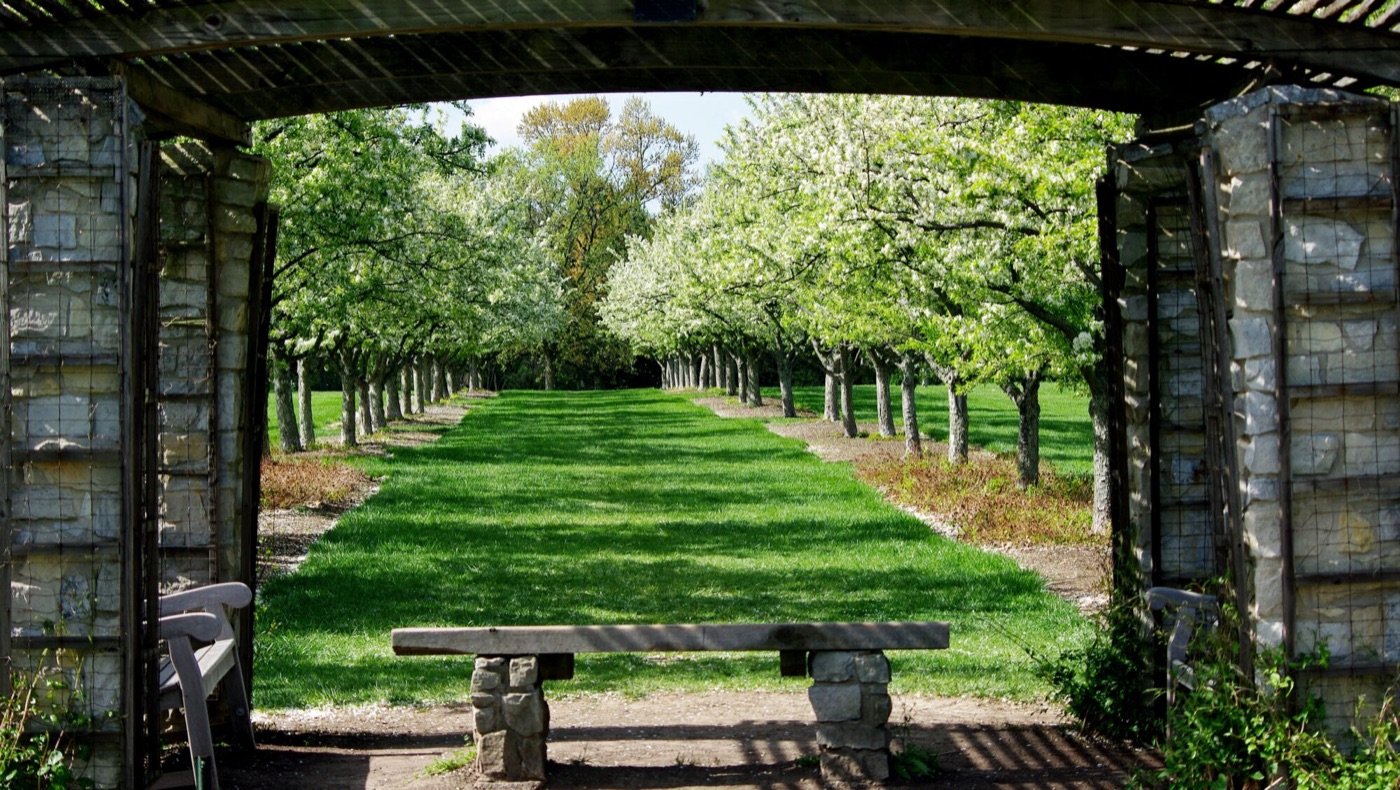
Centerville’s signature is its trees — the oaks and maples arching over the streets off Franklin and Main, through Normandy and the older Washington Township plats — and the signature pest follows directly. Mature canopy means dead limbs hosting carpenter ant parent colonies, branch-to-roof contact providing highways, and decades-old homes offering the moisture pockets (weather-side window frames, original wood trim, deck posts, gutter-line soffits) where satellite colonies excavate. Big black ants indoors between March and June, sawdust-like frass under a sill, or a dusk procession along a fence rail all point the same direction, and the fix is the mapping-based program on our ant page plus the honest arborist conversation about the limb over the roof. The same canopy drives fall invasions of a gentler kind — boxelder bugs and multicolored Asian lady beetles stacking on south-facing brick every September before slipping into attic voids — which a well-timed exterior treatment intercepts before the storm-door swarm stage.
Large lots, outbuildings, and the township checklist
Washington Township’s acre-plus properties carry pest infrastructure the quarter-acre suburbs don’t: barns and pole buildings (spider and rodent reservoirs), wood piles and stacked landscape timber (carpenter ant and widow habitat), horse and chicken setups (rodent feed pressure demanding sealed-bin discipline), long tree-lined drives (yellowjacket ground-nest territory), and well houses and detached garages where undisturbed clutter builds recluse-friendly conditions. Our rural-edge service extends past the back door by design — outbuilding de-webbing and framing treatment, exterior bait-station perimeters where feed attracts rodents, window-well covers and door sweeps on the structures that have them, and a walk-the-property scope rather than a glance-at-the-house one. Township clients hear the same honest framing every time: some field-margin activity is the cost and benefit of living against open land; the program’s job is a defended house and defended outbuildings inside that living landscape.
The Centerville–Washington Township pest calendar
- March–April: odorous house ant surges in the older neighborhoods; carpenter ant scouts on the canopy streets; wasp queens testing porch ceilings in Uptown
- May–June: carpenter ant peak; ground-nest establishment along drives and landscape walls; first orb weavers rigging the porch columns
- July–August: yellowjacket colonies mature; spider populations climb hard on the township edges; flea pressure in yards with deer and raccoon traffic
- September–October: the township’s signature season — harvest-driven spider migration into walk-outs, boxelder and lady beetle staging on brick, and field mice moving to foundations; book the fall barrier by Labor Day
- November–February: indoor rodent season in the older housing stock; recluse-audit season for barns and storage rooms while outdoor pressure sleeps
Local questions from Centerville and the township
Why does our house get so many more spiders than my sister’s in Kettering?
Distance to habitat. Her block is buffered by a half-mile of lawn and pavement in every direction; your lot line is the habitat. The gap closes with the edge program — lighting changes, de-webbing cadence, prey reduction, fall barrier — but a township address will always start from higher baseline pressure than a mid-grid one. The goal is spiders below notice, not spiders at zero.
Are the spiders out here actually dangerous?
Overwhelmingly no — the lawn and porch species are harmless hunters and web-builders. The township’s storage-heavy outbuildings deserve recluse-aware habits (sealed totes, gloves shaken before wearing, monitors in suspect corners), and woodpiles and meter boxes merit widow-aware ones. Both are managed risks, not reasons to fear the property — and photo identification is free, always.
Can you handle the whole property — house, barn, and shop — under one plan?
That’s precisely the shape of our township accounts: one seasonal program, every structure scoped, one guarantee across it. The walk-through quote is free and takes about an hour for a full acreage.
Uptown, schools, and the places pests meet the public
Centerville’s civic core carries its own pest logic. The stone buildings of Uptown — some of the oldest limestone architecture in the region — offer rodents and cellar spiders the same masonry gaps they’ve used for two centuries, and the restaurant row along Main and Franklin runs the full food-service slate: German roach pressure in line equipment, fly management in drains, and patio yellowjackets every August. Our commercial accounts here get the documentation-first program that keeps Montgomery County health inspections uneventful. Schools, daycares, and churches — and Centerville has a dense concentration of all three — get the sensitive-population version: restricted product selection, unoccupied-hours scheduling, and records formatted for licensing walkthroughs. Meanwhile the athletic-field and park edges that make the city livable (Bill Yeck, Grant Park, the Oak Grove corridors) act like the township edge in miniature: ground-nest habitat for yellowjackets, wildlife corridors for the raccoons and deer that seed flea and tick pressure into adjoining backyards. If your lot touches a park, treat yourself as an edge property — the pests already do.
One more Centerville-specific pattern worth naming: the multigenerational turnover of its housing stock. The 1960s–80s neighborhoods are changing hands from original owners to young families at a steady clip, and a house that ran forty quiet years under one meticulous owner often reveals its deferred pest maintenance — sill gaps, attic entries, dry-rotted trim — in the first winter under the next one. A pre-purchase pest walkthrough, or a first-year exclusion visit after closing, catches that transition cheaply. We’ve walked enough of these homes to know exactly where the 1972 builder left the gaps.
Larger home on an estate lot? See our dedicated guide to pest control for larger & luxury homes in Washington Township and Centerville.
Who actually turns up in Centerville: Greater Dayton Pest & Rodent is owned and operated by Bryan Camden, licensed by the Ohio Department of Agriculture — firm #115079, commercial applicator #170858, categories 10A, 10B and 12. When you call, you talk to the person who does the work. No call center, no rotating crews, and the same technician on every visit.
Frequently asked questions
Do you provide pest control in Centerville?
Yes — Centerville and Washington Township are daily territory, from Uptown’s historic stone buildings through the Normandy and Yankee corridors’ established neighborhoods.
What pests are most common in Centerville?
A two-era pattern: Uptown’s historic stone-and-brick stock runs the old-house suite (foundation mice, mature-canopy wasps), while the 70s-90s neighborhoods run established-landscape pressure — multi-queen ant networks, mulch-line invaders, and fall stink bugs on big sunny colonials.
How much is pest control in Centerville?
Published formula, property-computed: most Centerville homes land $39–$55/month quarterly given the area’s larger footprints; one-time flat pricing by job. Free instant quote or (937) 569-3330.
Why do Centerville’s big lawns get so many ant mounds?
Mature turf-and-mulch economies — decades-established landscaping funds the aphid farms and harborage that multi-colony networks live on. The outdoor triage program (collision-zone drenches, dairy takedowns, perimeter defense) fits Centerville’s lot scale exactly.
Do you know the historic Uptown buildings?
The stone tavern-era stock gets the same preservation-minded protocols as our Oakwood work — masonry-appropriate exclusion, reversible exterior work, and cavity-species (European hornet) experience the old walls occasionally require.
How fast can you reach Centerville?
Days typically — south-Montgomery routes run daily through Centerville and Washington Township. Priority calls jump the queue; no travel charges.
Do you serve Centerville businesses?
Yes — Uptown’s restaurants and shops, the office parks, and the medical corridor all run on our commercial programs; the restaurant documentation package fits the historic-building kitchens’ particular inspection pressures.
What about termites in Centerville?
The area’s mature landscaping and mixed-era foundations keep conducive conditions common — and the bigger-lot perimeters make the computed-perimeter quote worth getting right (we calculate rather than eyeball). Free annual inspections; bait systems for the monitoring-minded.
Is Washington Township covered too?
Fully — and it has its own page: the township’s newer estates and preserve-adjacent lots carry their own patterns (woodline wasps, deer-mouse edges) our routes know well.
How do I start service in Centerville?
Instant quote, free photo ID, or (937) 569-3330 — honest triage, free estimates, first visit usually inside a week.
Centerville Pest Control, Service by Service
Deep-dive guides to how each service plays out in Centerville specifically — the stone architecture, the mature lots, and the seasonal patterns behind each pest:
- Spider control in Centerville — stone-cellar spider dynasties, September web season, and the de-webbing service built for historic façades
- Flea treatment in Centerville — the manicured-lawn paradox: irrigated shade, rabbit routes, and the three-front fix
- Ant control in Centerville — irrigated margins, stone-wall colonies, and the treatment-plus-tuning method
- Wasp and hornet removal in Centerville — the stone-wall colony playbook, and no-damage work around what you’ve built
- Termite control in Centerville — the irrigation subsidy, and preservation-grade care for the stone district
- Cockroach control in Centerville — the entertaining-economy routes, and treatment scheduled around the party calendar
- Bed bug treatment in Centerville — the holiday convergence, and the hosting kit
- Rodent control in Centerville — the feeder subsidy, audited and closed
Buying or selling? A lender-ready termite and WDI inspection in Centerville is $99 flat on the NPMA-33, next business day, PDF the day we inspect.