Centerville’s spider situation is a tale of two housing stocks. The historic core holds one of Ohio’s largest collections of early stone architecture — and stone buildings, with their cool cellars, deep sills, and endless mortar-line crevices, are spider architecture: the cobwebbed corners of an Uptown basement have hosted unbroken spider dynasties since the Van Cleve era. Ring that core with mature mid-century neighborhoods and the newer developments toward the Springboro line — big landscaped lots, window wells, shrub masses, and woodpiles — and you have a town where fall means orb webs across every porch and a wolf spider crossing every garage floor. Almost none of it is dangerous; most of it is manageable to near-zero visibility; and this page covers the Centerville specifics of both facts.
Who’s Actually Living Here
- The cellar residents: long-legged, tremble-when-poked spiders draping the corners of stone basements and utility rooms — harmless cobweb builders whose real offense is the webbing itself, and whose population tracks the basement’s insect supply.
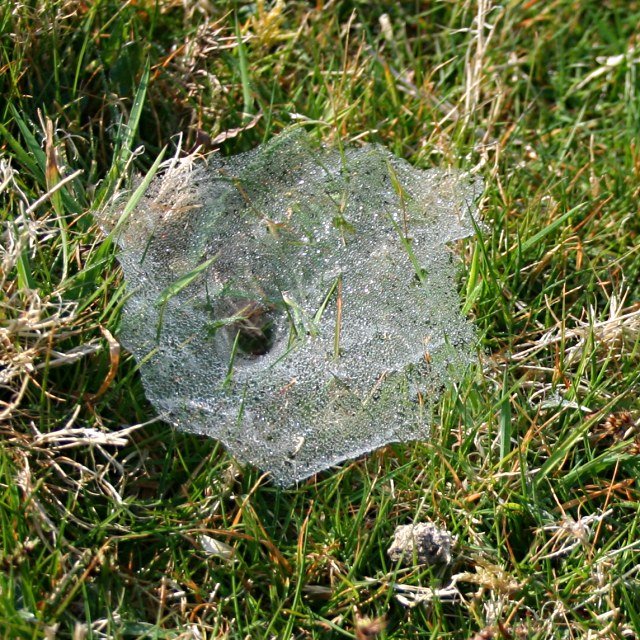
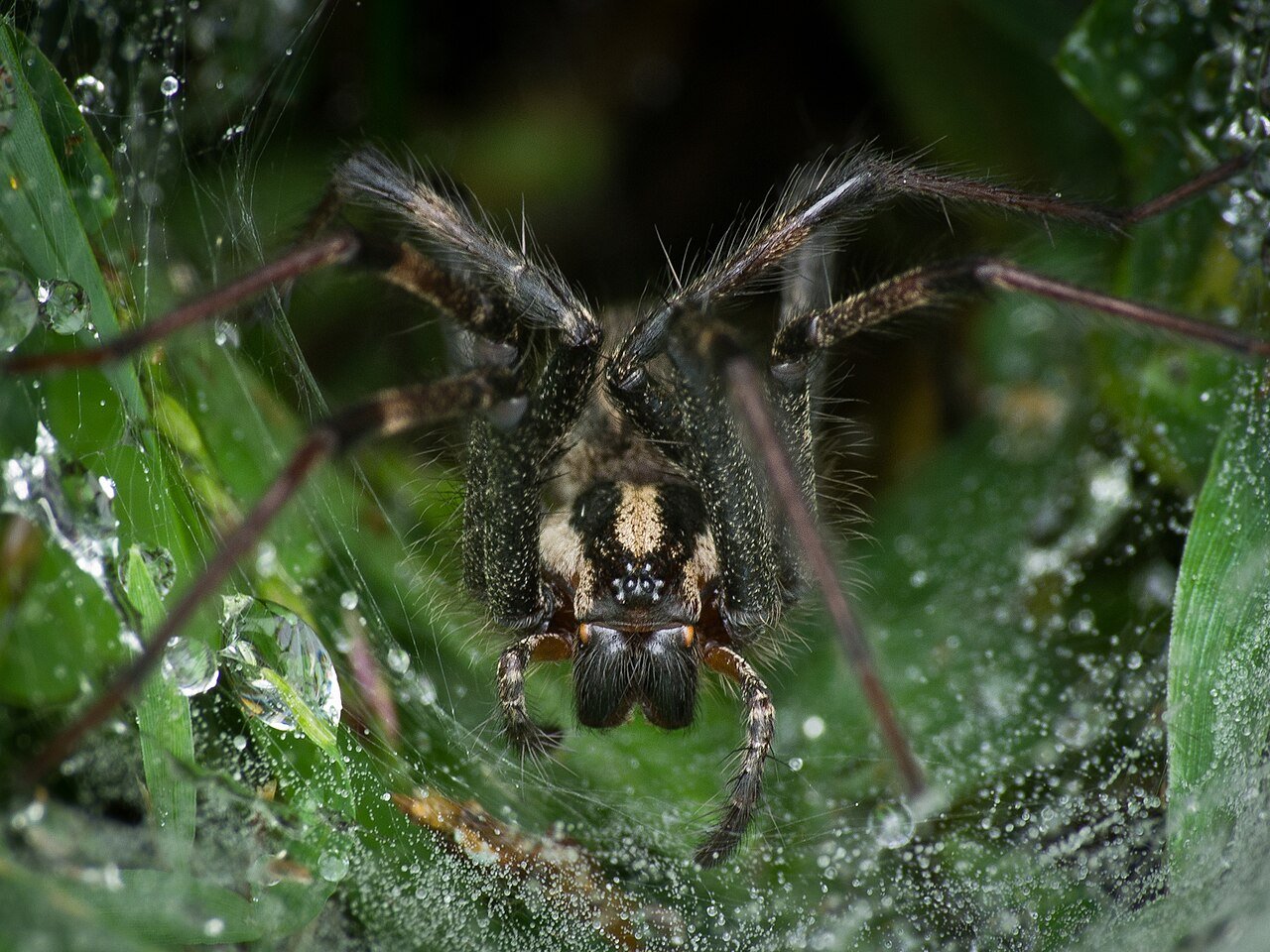
- The funnel weavers: fast brown spiders in sheet webs with a tunnel at the back, filling window wells, shrubs, and ground-cover beds — the number-one “is this dangerous?” photo we get from Centerville, and the answer is no; they’re the yard’s volunteer pest control.
- The fall wanderers: big wolf spiders crossing floors in September and October — mature males roaming for mates, alarming and harmless, profiled on our wolf spider page.
- The porch artists: orb weavers hanging wheel webs across walkways and porch lights from August to frost — peak “walked into a web” season, and peak beneficial-predator season, simultaneously.
- The rare file: black widows turn up occasionally in undisturbed woodpiles and meter boxes (know the look); verified brown recluses are genuinely uncommon here. The full threat calibration is on Ohio’s venomous spiders — and the honest summary is that Centerville’s spider risk is overwhelmingly cosmetic, not medical.
Why Stone and Landscaping Make Spider Pressure
Spiders follow prey, and Centerville’s two architectures both feed them. Stone construction breathes through mortar lines and stays cool and slightly humid below grade — ideal for the cellar insects (silverfish, springtails, millipedes) that spider populations eat, which is why an old stone basement’s web density is really an insect-supply reading. The mature-lot neighborhoods run the outdoor version: dense foundation shrubs, irrigated beds, landscape lighting that concentrates flying insects nightly, and window wells that function as pitfall traps with catering. The strategic insight our whole approach builds on: spider control is mostly prey control plus web management. Kill lights’ insect clouds, dry the damp margins, and clear webbing on a schedule, and the spider population relocates to better hunting — no heroic chemistry required. The deep-dive on that philosophy lives at how to get rid of spiders.
What Our Centerville Spider Service Actually Does
- De-webbing on a schedule: every quarterly visit includes physical web and egg-sac removal from eaves, porch ceilings, shutters, window wells, and the stone coursing the historic homes can’t caulk away — the single most visible result in spider work, and the part that protects façades.
- Prey-source reduction: perimeter treatment aimed at the insect supply — the foundation band, the lighting zones, the damp bed margins — because spiders starve out faster than they spray out.
- Targeted crack-and-crevice work where populations concentrate: basement sill lines, garage corners, crawl space accesses — placed materials, never broadcast spraying through living space.
- Lighting and habitat counsel in writing: warm-toned bulbs, fixtures pulled off doorways, shrub gaps at the siding, woodpile and window-well practices — the changes that make results permanent.
- Honest identification, always: photo verdicts are free, the harmless get named as harmless, and a verified widow or recluse question gets the serious targeted response it deserves — monitoring traps, harborage treatment, and follow-up verification.
The Centerville Spider Year
Spring hatches the year’s spiderlings into the beds — mostly invisible. Summer builds the outdoor population quietly while cellar species work year-round below grade. Late August through October is the season everyone notices: orb webs at face height, funnel webs silvered with dew across every shrub, wolf spiders wandering indoors, and the annual question of whether the house is “infested” — it isn’t; it’s October, and our winter spider page explains what happens next. Winter moves the action fully indoors to the stone cellars and utility rooms, where a January spider is living off the building’s own insect economy. The service rhythm matches: the fall visit carries the heaviest de-webbing load, the spring visit resets the season, and the quarterly Protection Plan keeps the whole cycle — webs, prey, and stragglers — below the visibility line year-round, with free re-treatment between visits if anything rebounds. Everything else we do in town is on the Centerville pest control page, and the service itself on spider control.
Webs Faster Than You Can Sweep Them?
Scheduled de-webbing, prey-source treatment, and honest identification — one flat price, guaranteed, from a crew that knows stone-house spider work.
Frequently asked questions
Are the spiders in my Centerville basement dangerous?
Almost certainly not — stone cellars host long-legged cobweb builders and fast funnel weavers, both harmless. Verified dangerous spiders are rare events here: widows occasionally in undisturbed woodpiles, recluses genuinely uncommon. Photo verdicts are free.
Why does my historic stone house have so many spiders?
Stone breathes and stays cool-humid below grade, feeding the cellar insects spiders eat, and mortar coursing offers endless web anchors that can’t be caulked away. The fix is scheduled de-webbing plus prey control, not chemistry against the architecture.
Why is my house covered in webs every September?
It’s the season, not an infestation — orb weavers and funnel weavers reach adult size in late summer, and web visibility peaks August through October before frost resets everything. The fall service visit carries the year’s heaviest de-webbing for exactly this reason.
What is the big brown spider that ran across my garage floor?
In fall, a wandering male wolf spider seeking mates — alarming, harmless, and not a resident; it wants back out. Garage door sweeps and reduced lighting cut the traffic; there’s no colony behind him.
Do you spray inside the house for spiders?
Sparingly and precisely — targeted crack-and-crevice placements at sill lines and corners where populations concentrate, never broadcast spraying through living space. Most of the result comes from de-webbing, egg-sac removal, and cutting the insect prey supply.
Can you remove webs from stone and historic trim without damage?
Yes — physical de-webbing with soft heads and extension poles is standard on every visit, and it’s the right method for irreplaceable façades: no pressure washing, no staining treatments on the stone.
What actually keeps spiders away long-term?
Prey and light management: warm-toned exterior bulbs, fixtures moved off doorways, dry bed margins, shrub gaps at the siding, and sealed ground-floor gaps. Spiders starve out and relocate faster than they spray out — and the change holds.
Is the spider in my window well protecting my house?
Honestly, somewhat — funnel weavers and orb weavers intercept the crickets, flies, and moths that would otherwise be indoor problems. Our service keeps them off the structure and out of sight rather than pretending the yard should be spider-free.
Reading the rest of Centerville’s files fills in the picture: cockroach control in Centerville, bed bug treatment in Centerville, and wasp & hornet removal in Centerville.