
The spider wing built the who’s-who — the roster, the two that matter, the walkers, weavers and watchers — and this page answers the question every acquittal deferred: how to get rid of spiders when the household’s answer to “they’re beneficial” is a firm “fine, elsewhere.” The doctrine that runs the whole program, stated up front because it inverts the aisle’s: spiders are population-limited by prey, not by spray — web-builders starve out of unproductive corners and hunters patrol only where hunting pays, so the campaign that works attacks the food economy and the architecture (lights, gaps, harborage, humidity) while the spray-first campaign kills this week’s visible spiders and inherits next week’s replacements. What follows: the two-second safety triage that gates everything (the campaign changes for exactly two species), the exterior program that halves indoor pressure at the porch light, the interior de-spidering (corners, wells and the vacuum’s honest supremacy), the deterrent aisle graded (peppermint, chestnuts and the ultrasonic verdicts), the phobia-grade program stated respectfully, and the September clause — because half of every year’s spider anxiety is one month’s wanderers, pre-explained. Greater Dayton Pest & Rodent: (937) 569-3330.

The safety gate (two species change the campaign; the rest change nothing)
Before any eviction, the triage the wing perfected: run the architecture read (wheel = harmless; funnel-sheet = harmless; chaotic tangle low and dark = the check; no web = a hunter) and the gloss check (shiny hairless jet-black with red = the widow protocol — gloved, contained, harborage-audited; tan, six-eyed, in undisturbed storage = the recluse workup, photo-first). Those two files — rare here, per the wing’s standing data — get their own pages’ careful handling; everything else in an Ohio house is a zero-risk eviction, which converts this entire campaign from pest control to housekeeping-with-a-method: cup-and-card for the individuals, vacuum for the webs and sacs, and the population program below for the households done with both. The gate’s practical dividend: it spends caution exactly where the stakes are (the woodpile gloves, the meter-pit lids) and everywhere else replaces dread with technique — the wing’s whole project, now with a broom attached.
The exterior program: starve the porch, dim the buffet
Indoor spider pressure is exterior spider economics leaking through gaps, so the campaign starts outside where the populations actually live. The light conversion — the single highest-leverage move on the page: porch and exterior fixtures to warm-LED bug bulbs (the 2200K doctrine’s fifth constituency), because every white light is an insect buffet and every buffet hires web-builders within the week — dim the buffet and the staff resigns without a single treatment. The de-webbing rhythm — the extension-pole cobweb head run monthly around eaves, fixtures, shutters and porch ceilings: mechanical removal that both evicts and discourages (rebuilt-and-removed sites read as unproductive; the broom-eviction cadence at whole-house scale). The harborage margin — the wing’s standing landscaping: firewood off the siding, ivy off the brick, shrubs trimmed off the wall, window wells cleared, the gravel moat’s sixth constituency enrolled — every wall-touching harborage is a spider apartment with interior access. The gap audit — door sweeps, screen repairs, weep-hole screens and the grade-level pass: hunters walk in at floor level and web-builders ride airflow through gaps, and the same dozen dollars that close the fall to everything else close it to eight legs too. The perimeter treatment, honestly placed — where pressure runs heavy, the professional exterior application at eave lines, weep courses and foundation seams knocks down the wall-line population and the prey base together; it’s a standing layer of the quarterly program, and the one chemical entry on this page — placed, exterior, and aimed at the economy rather than the individual.
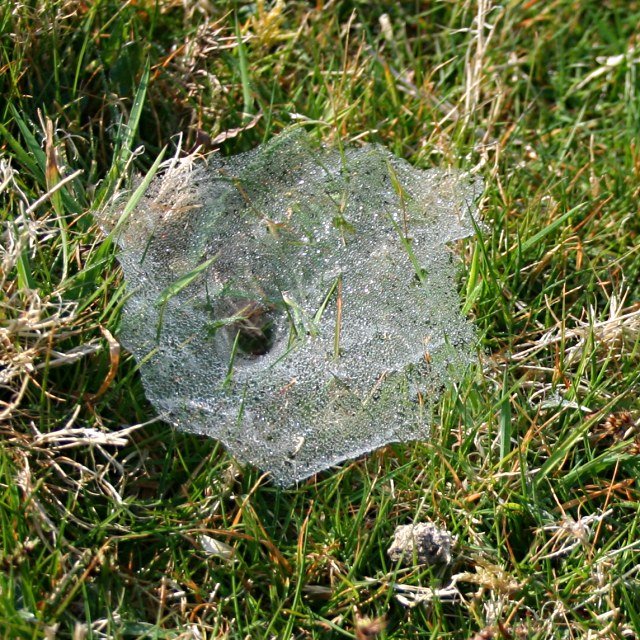
The interior program: vacuum supremacy and the corner rhythm
Inside, the campaign is mechanical and it is honest about it: the vacuum outperforms every interior spider product ever shelved — crevice tool through the ceiling corners, closet tops, window-frame angles, basement joist bays and under-furniture margins, taking webs, spiders and (critically) egg sacs in one pass; a monthly corner rhythm removes each generation before it graduates, and the sacs are the multiplier (one sac vacuumed = dozens of next month’s spiders pre-evicted — the egg-sac arithmetic run indoors). The supporting moves: declutter the dark — the basement-and-garage storage triage (totes over cardboard, the six-inch shelf rule) that the widow audit and spricket file already prescribed, because clutter IS spider habitat; dry the prey base — the dehumidifier doctrine’s final constituency: the basement food web that feeds the hunters starves at fifty percent, and the spiders follow their groceries out; and the sticky-monitor grid along baseboards where sightings run — census, cull and verification in one $10 strip (the glue-board physics catching hunters as reliably as jumpers). What the interior program skips, with the wing’s standing reasons: broadcast interior sprays (wandering hunters walk in weekly from the property line — the subscription-shaped non-solution), web-treating aerosols (kill one web’s owner, change nothing), and every plug-in the next section grades.
The deterrent aisle, graded one last time
The spider shelf runs the library’s familiar taxonomy, graded per the standing method: peppermint oil — the aisle’s bestseller: laboratory assays show genuine short-range avoidance in some species, field reality shows hours-to-days of effect and re-treatment forever — the repellent-myths grade (tactical nudge, never program), with the honest use-case being scent-refreshing the corners the vacuum just cleared; horse chestnuts / conkers — the folklore shelf’s autumn classic, tested and failed in every controlled look (spiders stroll across them on camera); ultrasonic plug-ins — the standing conviction, eight-legged edition (arachnids famously lack the hearing the devices assume); vinegar-and-citrus sprays — surface-cleaning with confidence attached (the janitor-not-chemist file); and diatomaceous-earth-and-boric perimeter dusting — the one shelf item with honest mechanics, graded per its own file: thin, dry, into the voids and sill gaps hunters transit, never broadcast. The aisle’s summary, one sentence for the whole wing: nothing in a bottle out-competes a bulb swap, a vacuum rhythm and a dry basement — the three moves that attack what spiders are actually responding to, at a fraction of the price and none of the re-application.
Spider program questions, answered
I want ZERO spiders inside, ever. Phobia-grade. What’s the real program?
Stated respectfully per the wing’s standing policy: the aggressive stack — full exterior program (lights, de-webbing, moat, perimeter treatment on the quarterly rhythm), complete gap-and-sweep exclusion, interior corner rhythm with monitors, basement dehumidification, and window-well covers — reliably takes interior encounters to near-zero, which is the number phobia management actually needs. The Protection Plan runs it standing with the re-treatment guarantee behind it; the phone script is one word (“spiders”) and no ecology lecture follows. The library defends spiders in general and defends your right to a spider-free living room with equal energy — the program exists, it works, and it’s a phone call.
Spray the baseboards or not? Every other company does it.
The honest split: interior baseboard spraying against wandering hunters is the industry’s highest-margin ritual — visible, expected, and structurally unable to intercept animals that arrive weekly from outside (the residual’s contact-time against a transiting wolf spider rounds to theater). Exterior placement — eaves, weeps, seams, the wall-line economy — is where residual chemistry genuinely earns; that’s where ours goes, and the difference is the whole reason our spider results survive their guarantee. Ask any provider WHERE the product lands before asking what it is; the answer grades the program.
It’s September and suddenly there are spiders everywhere. Did something fail?
The calendar arrived: September’s mating-season walkers and the fall-invader prey surge run the year’s peak traffic through every house in the county, program or no program. The stack absorbs it (sweeps catch the walkers, monitors count them, the corner rhythm clears the opportunists), and the month passes on schedule — the wing’s standing autumn reassurance, now attached to its campaign page: September is weather, not failure, and October files it every year.
The program, closed
How to get rid of spiders, honestly: gate the two species that warrant care, then run the economy — dim the buffet, sweep the architecture, starve the basement, seal the grade line, vacuum the corners monthly, and let the monitors verify what the sightings suggest. The aisle’s bottles lose to a bulb and a broom; the phobia-grade stack exists for the households that want zero and means it; and September stays September, pre-explained. The wing’s acquittals stand — the staff was mostly working for you — but the eviction rights were always yours too, and this page just filed the paperwork. For the perimeter rhythm, the phobia program, and the gloss-or-not photos that gate everything: (937) 569-3330, Greater Dayton Pest & Rodent, Dayton and all eight counties — where the corners get quiet, the porch light goes amber, and the wing’s last question gets its working answer.
The seasonal spider calendar (the program’s yearly rhythm)
- March–April: the exterior wake-up — first de-webbing pass, light-fixture check, the moat and margin work while the beds get their spring edit; interior corner rhythm resumes with the cleaning season.
- May–June: web-builder hiring season at every white light — the bulb conversion’s highest-return window; monitors refreshed; the widow-audit hour per its page, gloved.
- July–August: peak prey, peak webs — the monthly de-webbing earns double; the garden’s orb weavers get their broom-diplomacy placements rather than evictions (the beneficial split standing).
- September: the walker month — sweeps and monitors carry the load, the calendar clause pre-explains the traffic, and the phobia-stack households get their quarterly visit timed here on purpose.
- October: the outdoor cast dies back on schedule; egg-sac vacuuming pays its highest dividend (each fall sac is next spring’s population, pre-evicted); window wells cleared with the leaves.
- November–February: the indoor-resident minimum — cellar spiders and house spiders on maintenance rhythm, the basement’s dry-season program running, and the year’s spider anxiety at its floor. The corners rest; so can you.
One calendar, six entries, and the program converted from campaign to rhythm — the way every durable fix in this library eventually files itself: not as war, but as housekeeping with a doctrine.
The beneficial split, formalized (evict indoors, employ outdoors)
The program’s philosophical clause, stated once so the wing’s two truths stop arguing: the same household can — and should — run zero-tolerance indoors and full employment outdoors, because the spider economy’s value was always positional. The garden’s wheels intercepting the mosquito traffic, the lawn’s eyeshine census patrolling the foundation line, the window-glass jumpers working the fly lanes — that workforce runs your property’s pest suppression from exactly where you want it, and the exterior program above deliberately spares it (the de-webbing targets the door-and-eave conflict zones, not the garden stakes; the perimeter chemistry lands on the wall line, not the flowerbeds). Indoors, the same animals are staff out of position — and the eviction program returns them to post without apology. The split resolves the wing’s apparent contradiction cleanly: every acquittal stands, every eviction proceeds, and the property runs the arrangement civilization always ran with its working animals — valued in the field, escorted from the parlor. The spiders never minded the terms; they just needed a household that knew them — which, two hundred pages in, this one does.
A eight-county eviction report
The program’s local texture: the stone-basement districts run the cellar-spider-and-prey-base cases the dehumidifier program closes (the Oakwood joist-bay census leading the corner-rhythm converts); the porch-light suburbs supply the bulb-conversion before-and-afters that sell the exterior program better than any paragraph (the amber-light households’ eave webs thin within the month, on schedule); the wooded and field-margin addresses carry September’s walker files and the phobia-stack’s heaviest subscriptions; and the widow-audit finds stay the rare, gloved, meter-pit exceptions their page predicted. The report’s standing statistic mirrors the wing’s: interior spider complaints from full-program households run near the floor year-round, the September clause absorbs the annual spike by appointment, and the aisle’s peppermint budget, household by converted household, keeps migrating to bulbs, sweeps and tote bins — the library’s favorite kind of market correction. The corners quiet; the gardens keep their staff; and the wing’s campaign page files its first season’s results exactly as designed: mostly housekeeping, occasionally professional, never panic.
The weekend program, sequenced (the whole page in one to-do list)
- Saturday morning: the safety gate — the widow-habitat hour (gloved, woodpile-and-meter-pit, per its page) so everything after runs at zero stakes; then the bulb conversion at every exterior fixture.
- Saturday afternoon: the exterior pass — extension-pole de-webbing of eaves, shutters and porch ceilings; harborage margin cleared (wood off siding, wells cleared, shrubs off the wall); grade-level gap-and-sweep audit run.
- Sunday morning: the interior pass — crevice-tool corners in every room, closet tops, basement joists; egg sacs prioritized; monitors placed at the sighting baselines.
- Sunday afternoon: the basement economy — dehumidifier verified at fifty, storage triage to totes, the prey-base census read off whatever the monitors already caught.
- Monthly thereafter: the corner rhythm and de-webbing pass (twenty minutes combined); monitors glanced; September pre-explained to all residents.
- Quarterly, if subscribed: the professional perimeter layer riding the standing visit — the one chemical entry, exterior, placed.
One weekend, one monthly rhythm, one honest chemical layer for the heavy-pressure homes — the entire spider question, scheduled. The wing wrote the who; this page wrote the how; and the corners, from this weekend forward, answer to the household.
Gate the two, evict the rest, employ the yard: the spider question’s whole answer, run on a bulb, a broom, a vacuum and a weekend — with the phobia-grade stack standing by for the households that want zero, and the September clause standing by for everyone each fall. The wing acquitted the workforce; this page assigned the posts; and the parlor, at long last, belongs to the people — while the garden’s night shift, unbothered and amber-lit from a respectful distance, keeps working the property it always protected. Corners clear, wheels turning, case closed — page 198, and the quartet’s half done.
The two-minute triage card (the page’s working half, pocket-sized)
- Web = architecture read: wheel or funnel = harmless; low dark tangle = the gloss check before the vacuum.
- Glossy black + red, or tan-and-six-eyed in storage: the two careful files — their pages, their protocols, gloves first.
- Everything else indoors: cup-and-card or vacuum, zero stakes, no products required.
- Recurring sightings: the economy, not the individual — bulbs, sweeps, dehumidifier, monitors; grade by the grid.
- September: the calendar, not a failure — sweeps and patience per the clause.
- Wanting zero: the phobia-grade stack, by phone, one word, no lecture.
Six lines, the whole program’s gate-and-route logic, sized for the inside of the cleaning-closet door — where the vacuum, the campaign’s actual flagship, was parked all along.
Bulb, broom, vacuum, gate: four tools, two careful species, one quiet parlor — the program, complete.
Next in the quartet: the wasps, and then the ants — the library’s two hundredth page approaches.
Frequently asked questions
What is the best way to get rid of spiders in your home?
Remove what they need instead of chasing individuals: vacuum the webs and egg sacs (the vacuum is the single best spider tool ever made), dry the basement, declutter the storage zones, convert exterior bulbs to warm/amber, and seal the entry gaps. Spiders follow prey — shrink the food web and they leave.
What kills spiders instantly?
Direct contact with almost anything — but instant kills are the wrong frame: for every spider you see there are dozens in the voids, and residual sprays underperform on spiders (they stand tall on the surface and rarely groom). The program that works is mechanical: webs, sacs, moisture, light, and seals.
How do I get rid of spiders in the basement?
Run a dehumidifier — genuinely. Damp basements feed fungus gnats and silverfish, which feed cellar spiders; dry the air below 50% humidity and the food chain collapses from the bottom. Add a corner-by-corner vacuum pass and door sweeps, and the basement wing empties in weeks.
What scent keeps spiders away?
None durably — peppermint oil repels for hours, then habituation wins; controlled tests show no lasting effect for any scent product. The deterrent aisle’s entire budget is better spent on a $12 door sweep and a dehumidifier filter.
Why does my house have so many spiders?
Because it has so much spider food — a spider population is a census of your insect population. Bright white exterior lights, damp basements, and foundation-line mulch each feed the pipeline; fix those three and the census drops without a single product.
Are house spiders dangerous?
Ohio’s indoor regulars — cellar spiders, house spiders, wolf and jumping spiders — are harmless to people. The two careful species (black widow, brown recluse) live in undisturbed storage and outdoor-adjacent clutter, not on the living room ceiling; gloves for the boxes you haven’t opened since spring is the whole precaution.
Should I kill the spiders I see?
Collision-zone spiders, remove; the basement-corner cellar spider is quietly eating the insects you never see, free. Cup-and-card works for relocations, the vacuum for everything else — and squeamishness is a legitimate reason to call us; we don’t argue with it.
How do I keep spiders out permanently?
The four-season program: sweep webs and egg sacs monthly, keep the foundation moat clear of mulch and stacked material, run amber exterior bulbs, caulk the seams, and dry the basement. Permanence in spider control is maintenance — the same five moves, on a calendar.
What are the little white balls in the webs?
Egg sacs — each holds dozens to hundreds of eggs, making sac removal the highest-leverage act in home spider control. Vacuum or crush them; a winter porch-ceiling sweep cancels whole spring generations in minutes.
Do spiders come up through drains?
No — the water-filled trap blocks that route completely. The tub spider fell in hunting the moisture and cannot climb the slick porcelain; he is a stranded local, not a sewer visitor.
When are spiders worst in Ohio?
September — mating-season males wander into houses, orb-weavers hit peak size, and funnel-weaver webs carpet the morning lawns. The fall “invasion” is mostly this calendar event plus better indoor sightlines; it self-resolves as the wanderers’ season ends.
Do spider traps work?
Sticky monitors are excellent instrumentation — they tell you species, rooms, and trends, and they thin ground-hunters modestly. As sole treatment they lose to the vacuum; as a progress meter for the real program they earn their $8.
What is the giant fast spider that appears at night?
Almost always a wolf spider or giant house spider — alarming, fast, and harmless, hunting the same insects you want gone. Cup-and-card if you can, vacuum if you must; neither species wants anything to do with you.
Does killing a spider attract other spiders?
No — that folklore has no mechanism behind it. What actually recruits spiders is prey abundance; a dead spider’s only signal is a small snack for the ants.
How do exterminators treat spiders differently than DIY?
De-webbing poles that reach the second-story eaves, sac-sweep discipline on every visit, targeted treatment of confirmed widow/recluse harborage, perimeter product where the inspection earns it, and the prey-base read that tells us WHY your house recruits spiders. It is the same program, executed with better tools and a schedule.
Are spider infestations covered by your service plan?
Fully — quarterly visits include the de-web and sac sweep, the perimeter renewal, and free re-service between visits. Spider pressure is chronic in Ohio housing; the plan turns it into a maintenance line instead of a recurring project.
What about spiders in the garage?
The garage is the halfway house — sheltered enough for outdoor species, cool enough for storage clutter to sit undisturbed, and the top address for the careful-species check. Gloves for the box pile, monitors along the walls, and the door-gasket seal handle it.
Do spiders bite people in their sleep?
Almost never — the overnight “spider bites” people wake with are overwhelmingly other insects, irritation, or skin conditions; spiders have no interest in sleeping humans and bite only when trapped against skin. Confirmed spider bites are rare events with a spider in evidence.
How many spiders live in a typical house?
More than anyone wants printed — studies routinely find dozens per home, nearly all unseen cellar and house spiders in voids and corners. The visible population is the census error; the program above manages the real one.
When should I call a professional about spiders?
Climbing week-over-week sightings (a prey-base signal worth diagnosing), confirmed or suspected widow/recluse harborage, web pressure that outpaces your clearing, or a household that has simply had enough: (937) 569-3330 — identification from a photo is free, and honest.