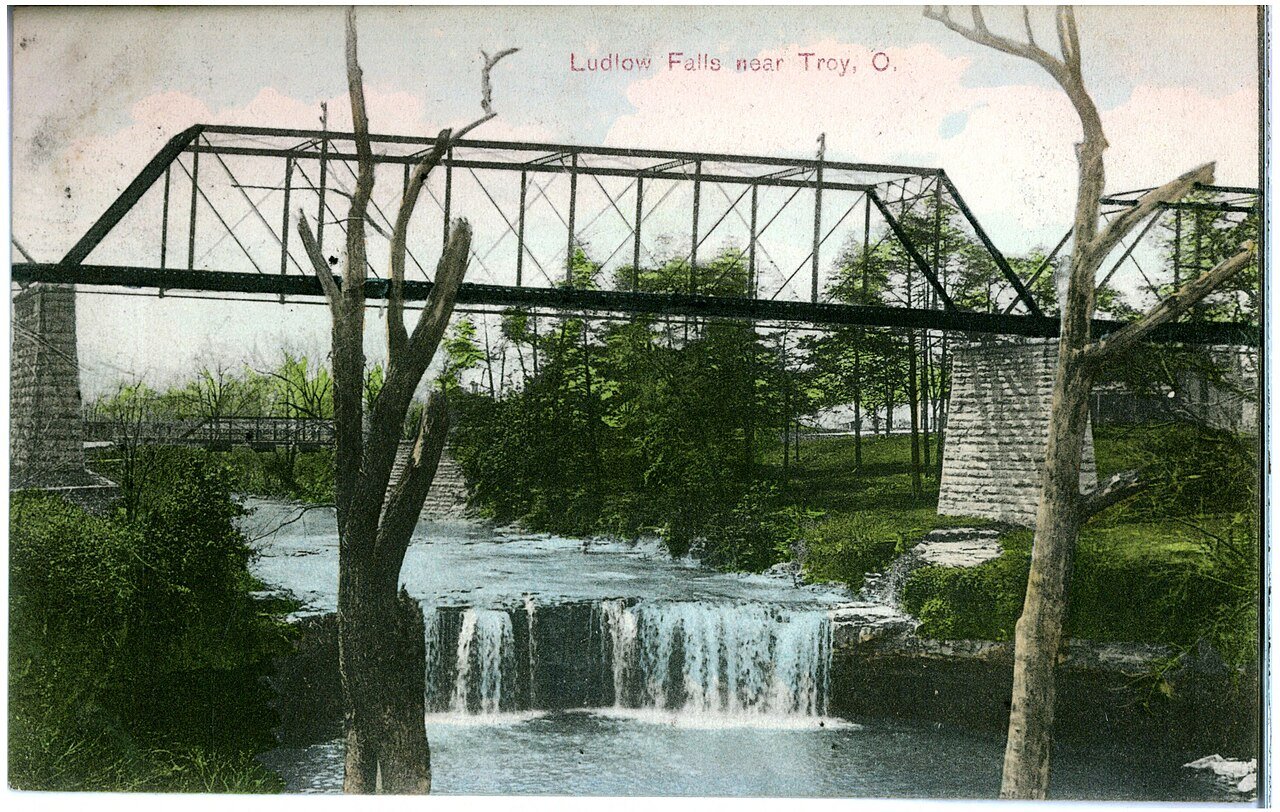
Ludlow Falls is the county’s postcard — a village of barely 200 gathered around the waterfall that names it, where Ludlow Creek drops over a Silurian limestone ledge into a shaded gorge that has drawn picnickers since the traction-line days and still glows every December when the village strings the falls with Christmas lights, a tradition generations deep. It is the smallest incorporated place on our whole eight-county roster, and it gets the entire standard anyway: ants, mice and rats, wasps, termites, mosquitoes, spiders, roaches and bed bugs, from Greater Dayton Pest & Rodent on the same west-county loops that serve West Milton, Laura and Pleasant Hill. (937) 569-3330, or book online.
Half of Ludlow Falls says pest control and the other half says exterminator. We answer to both, and the technician who turns up is the same either way.
Living beside a gorge: the microclimate doctrine
The falls are the village’s identity and its pest geography in one: a limestone gorge is a permanent microclimate — cool, damp, shaded, insect-rich — threaded through a village too small to be anywhere but beside it. Gorge-adjacent living runs the corridor doctrine at its most concentrated: the creek’s mist zone keeps nearby basements and crawlspaces running damp all season (spider and camel-cricket country, millipede surges in wet springs), the rock faces and ledges house the county’s densest cliff-swallow, bat and wildlife traffic, the plunge pool and slack water below the falls brew mosquito generations in dry-summer margins, and the wooded ravine moves rodents and raccoons along the water the way every corridor in the county does. None of this is a complaint — the gorge is why the village exists and why every porch faces the sound of water — it’s a read, and the read shapes the plan: moisture-honest inspections, corridor-side perimeter defense, annual exclusion checks as standing policy, and treatments placed with a working waterfall’s ecology — the swallows, the bats, the creek itself — explicitly off-limits.
The smallest village, the fullest file
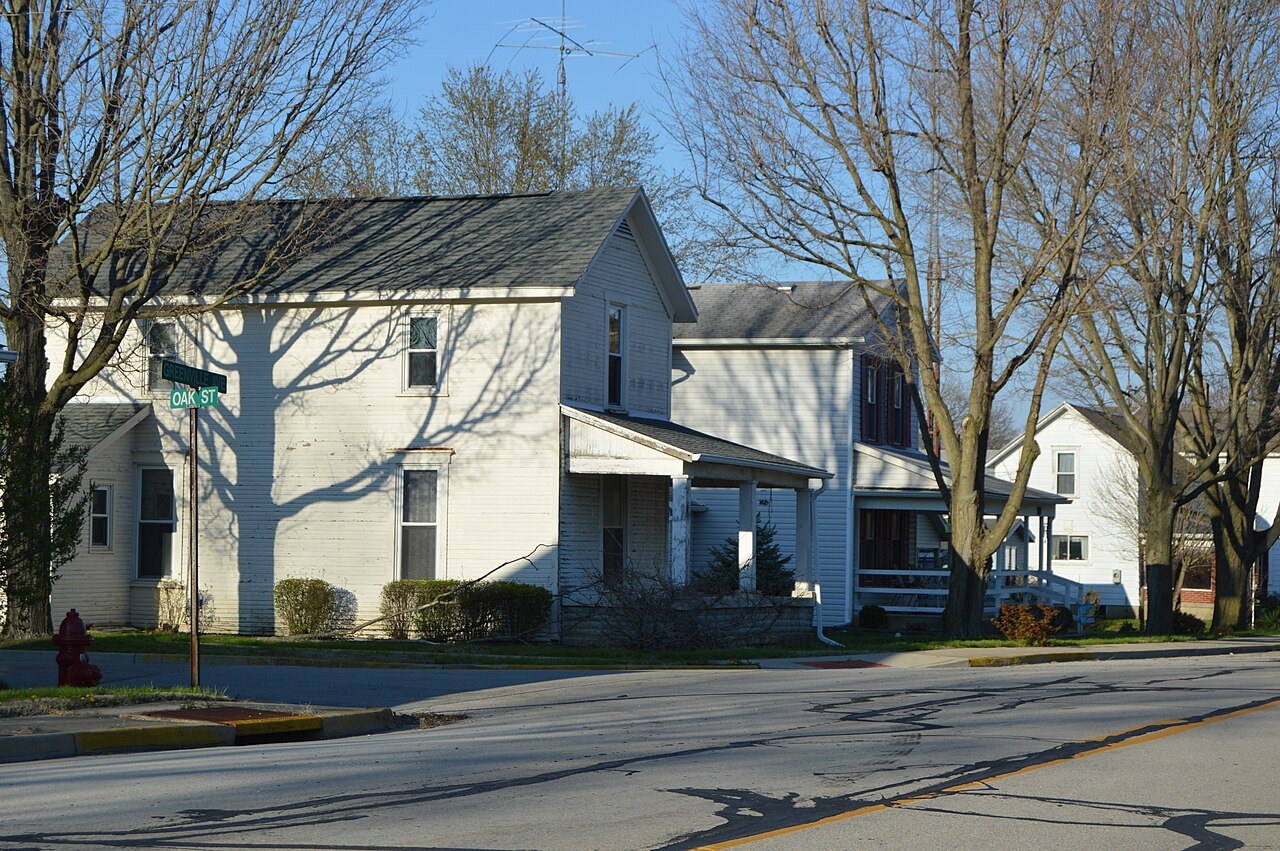
Two hundred people is a few dozen households, and at that scale the hamlet doctrine reaches its logical conclusion: the whole village is one knowable system. Every foundation’s era readable in a season, every gorge-side crawlspace mappable, the complete twelve-doors census achievable in a year of loop days — and the block-sealing arithmetic at its most vivid, where each sealed house measurably shrinks the winter carrying capacity for a grid you can see end to end from the falls bridge. The housing runs the west county’s catalog in miniature: creek-stone and frame survivors from the mill era (the falls turned wheels before they drew picnics), foursquares and cottages on the grid, and the gorge-side places whose crawlspaces live in the mist zone and know it. Mill-era stock beside water gets the full heritage treatment — reversible exclusion, moisture-first termite logic, monitoring where the damp warrants — and the upland edge of the village gets the lean plateau plan its dry cellars deserve. One village, both climates, fifty yards apart: the address-level read, working its smallest and clearest example.
Picnic season and the falls’ public year
The falls draw visitors every warm weekend — gorge-peerers, photographers, the picnic tables working full shifts — and December’s lighting tradition brings the year’s biggest crowds in its coldest month, an inversion no other festival-doctrine date on the roster matches. The warm-season version runs standard: visitor food waste feeds the gorge’s scavenger economy (raccoons, yellowjackets, the ant files to every table leg), so falls-adjacent households take their summer defense a notch higher than the village average and the park-edge bins earn their weekly discipline. The December version is happily pest-quiet — wasps dead, mice already housed, mosquitoes a memory — with one exception worth naming: holiday crowds in a cold snap mean idling cars and warm engine bays, the classic winter mouse taxi, so light-season visitors’ best pest advice is the same as their hosts’ — a sealed house doesn’t care what the driveway hosts. The village’s own December work is interior follow-ups and planning; the lights get the gorge to themselves.
Bats, swallows and the gorge’s protected tenants
A limestone gorge is wildlife housing by design — ledges for cliff swallows, crevices and hollow sycamores for bats, the rock’s microclimate for everything that likes cool and damp — and a village wrapped around one needs its pest company fluent in the difference between tenants and trespassers. Bats headline the file: gorge villages run the county’s highest attic-colonization pressure, bats are protected, and the response is strictly legal-and-seasonal — one-way exclusion outside the maternity season, sealing after confirmed vacancy, never poison, never panic. (A bat in the living room is a health-protocol event — call, don’t swat; the rabies conversation is short and worth having properly.) Swallow colonies on the rock faces are neighbors, full stop — they also eat their weight in mosquitoes. Raccoons working the picnic economy get exclusion-first handling at the soffit line. The doctrine’s core: the gorge’s ecology is the amenity — defense happens at the house envelope, not in the habitat, and a company that would fog a waterfall to quiet a porch doesn’t deserve the porch’s business.
The Ludlow Falls pest calendar
February–March: winter mice audible; exclusion weather; bat-exclusion planning (the legal window is seasonal — book ahead). April–May: swarm watch in the mist-zone stock; queen patrols clear porches and sheds; the gorge’s spring hatch feeds everything. June–August: picnic season’s scavenger economy at full song; mosquito defense on the slack-water margins; falls-adjacent households at the higher summer setting. September: the anchor — perimeter at yellowjacket peak, exclusion ahead of the harvest migration filing in from Union Township’s grain. October–November: seal-and-check; attic decisions in the county’s busiest bat corridor; post-harvest campus audits on the surrounding lanes. December: the lights, the crowds, and a pest calendar that finally rests — interior work and next year’s plan, priced under the glow.
Why the falls village calls us
- Smallest place, full standard: two hundred people ride the west-county loops at the same published prices and response classes as the county seat.
- Gorge fluency: microclimate-honest inspections, protected-species discipline, corridor defense at the house envelope — never in the habitat.
- Both climates read: mist-zone crawlspaces and dry upland cellars get their own honest plans, fifty yards apart.
- Two honest tiers: one-time jobs at posted prices; the Protection Plan’s re-treatment guarantee when the year should be owned.
- Photo-first triage: text the evidence to (937) 569-3330 — free identification always; honey bees to beekeepers, bats to the legal protocol, no exceptions.
Ludlow Falls questions, answered straight
Our crawlspace lives in the mist zone and never really dries. What’s realistic?
Realistic is managed, not arid. A gorge-side crawlspace can’t be argued dry, but it can be defended: vapor-barrier and ventilation honesty first (we’ll name what the space needs; half the fix is building science), then perimeter and exclusion tuned to the standing damp, monitoring where the moisture invites termite interest, and seasonal expectations set plainly — spring will surge, the program will answer. Mist-zone houses on the plan stay livable and quiet; the ones off it audition new occupants every year.
There are bats over the falls every summer evening. When do we worry?
Never about the gorge — those bats are the village’s free mosquito program, eating thousands a night. You call when they’re in the structure: droppings in the attic, scratching at dusk in a wall, or any bat inside living space (that one’s a same-day health protocol, no markup). Structural colonies get the legal seasonal exclusion; the gorge keeps its evening shift; everybody stays on the right side of both the law and the ecology.
Does the picnic traffic really change our pest year?
Measurably, on the falls-adjacent blocks: the summer scavenger economy runs richer where the tables are, so those households take the higher summer setting — tighter bin discipline, a notch more wasp vigilance, the post-weekend sweep mentality. It’s a gradient, not a grievance; the falls pay the village’s way, and the setting adjustment is a small tax on a large amenity.
The fossil ledge: what the limestone teaches
The rock the falls pour over is Silurian dolomite — four hundred million years old, laid down as a tropical seabed, and famously fossil-rich; the old Ludlow quarry’s trilobites sit in university collections, and sharp-eyed gorge visitors still read the ledges like a book. The stone earns its paragraph here because it explains the village’s pest physics: limestone country drains through fracture and seep rather than surface flow, which is why gorge-side basements can run damp in a dry August (the rock delivers water sideways), why the mist zone’s reach exceeds the spray you can see, and why moisture-first inspection matters more here than anywhere on the west loops. It also explains the houses: the mill-era stock was built from the gorge’s own stone, and creek-stone foundations run the fieldstone rules — few entries, but structural ones, closed properly once with reversible materials or open forever. Four hundred million years of patient water made the village’s postcard; the same patience is the pest program’s only real competitor, and the answer to both is the same — respect the stone, manage the water, and check the seams annually.
Landlords, cottages and the falls’ scattered doors
The village’s rental doors are few — cottages, a double or two, the odd creek-side place let seasonally — and they get the landlord program from door one: per-door pricing, direct-tenant scheduling, per-unit documentation, and for the gorge-side lets the mist-zone clause — the standing-moisture read written into the plan so a tenant’s spring camel-cricket surge is a scheduled response, not a lease dispute. The west-county ledger closes as always: one September pass per door beats one February emergency, every year, at every address the loop already passes.
Do it yourself, or call?
The gorge split, honestly drawn — and tilted a notch toward calling, because microclimate country punishes guesswork. Reasonable DIY: the reachable paper-wasp umbrella on an upland porch, a rain-week ant file, one mouse in a tight garage. The call list, gorge edition: anything in the mist-zone crawlspaces (moisture problems masquerade as pest problems and vice versa — the diagnosis is the value), all bat matters without exception (protected species, legal seasons, health protocol), any termite evidence in creek-stone or mill-era stock, wall and soffit voids always, bed bugs anywhere, and any recurring problem — recurrence in a microclimate means a condition with a geological patron, and those need reading, not spraying. The photo line reads free: (937) 569-3330.
The postcard, kept
Ludlow Falls closes the west loops the way the falls close the creek’s run to the Stillwater — the smallest, prettiest proof that the eight-county standard holds at every scale. The gorge read honestly, the protected tenants respected, the mist-zone houses managed, the September anchor kept, and the December lights left to their own quiet magic. Pleasant Hill, Laura and West Milton share the truck; the county page holds the roster; the eight-county map frames it all. Text a photo to (937) 569-3330, take the free identification and the honest quote, and let the village keep being the postcard — falls loud, walls quiet, lights on schedule.
Mill memory: when the falls worked for a living
Before the postcards, the falls were horsepower — the drop turned mill wheels for the settlement’s first generations, and the village’s bones remember the working era: the race lines readable in old property edges, creek-stone foundations quarried on site, the compact grid that clustered workers within earshot of the wheel. Working-water villages age into a specific pest inheritance. Mill-adjacent ground carries buried timber — race cribbing, footing wood, the sleepers of structures gone a century — and buried timber is the termite file’s quietest chapter: colonies work old wood below grade for years before scouting the standing houses above, which is why our inspections here ask historical questions (where did the race run? what stood behind the shed?) along with the structural ones, and why monitoring stations earn their keep on lots with working-era ground. The creek-stone cellars run the fieldstone rules; the frame stock above them runs the standard century read; and the whole inheritance rewards exactly what the village already practices — long memory, steady maintenance, and respect for what the water built. The falls retired from milling into beauty; the pest program just makes sure the retirement stays funded.
The Milton-Union thread and the quarter’s shared life
Like Laura and Potsdam, the falls village schools its children at Milton-Union — the buses climb out of the gorge every morning — and the shared district makes the southwest quarter one family-life system with one service standard to match: tamper-resistant everything, treatments placed where children and pets aren’t, school-run-aware scheduling, and the plain triage that separates five-dollar fixes from real jobs before anyone pays for the difference. The Protection Plan fits gorge-side life especially well — standing moisture means standing vigilance, and the plan makes vigilance a flat-rate rhythm with the re-treatment guarantee absorbing the microclimate’s surprises — while the upland cottages take the lean plan their dry cellars earn. Same falls, same school run, same posted prices; the only thing the address changes is the read, which is exactly as it should be.
And that completes the west loop’s roster: river anchor, plateau, hilltop, crossroads and gorge, each read for what it is, all riding one weekly truck. The smallest village on the map gets the last word because it proves the whole premise — if the standard holds at two hundred people beside a waterfall, it holds everywhere. Ludlow Falls, the file is open; one photo starts the season, and the falls will drown out whatever’s left to scratch.
A practical postscript: gorge-country home buying
The village’s occasional home sales deserve their own note, because gorge-country transactions carry reads a standard checklist misses. Buyers eyeing a creek-side cottage should price three questions into any offer: where does the mist zone reach (the crawlspace answer changes the maintenance budget), what does the lot’s working-era history hold below grade (the buried-timber termite question — ask for the monitoring record, or start one), and what’s the bat status of the attic (colonies convey with the deed, and the legal exclusion window may be months out). Bryan’s Category 12 WDI inspection covers the lender’s requirement; the gorge read covers the rest, free with any inspection visit, because a buyer who knows the microclimate going in becomes an owner who maintains it — and those are the houses that keep the postcard true. Sellers get the mirror advice: a documented pest file — sealed entries, monitoring history, legal bat handling — is worth real money in a village where every buyer’s first question is about the damp.
Four hundred million years of falling water, two centuries of village life, and one weekly truck that reads them both — that’s the whole arrangement, and the postcard stays true. See you on the loop, Ludlow Falls.
Falls loud, walls quiet, lights on time — the village motto we’d propose, and the one we service to.
Who actually turns up in Ludlow Falls: Greater Dayton Pest & Rodent is owned and operated by Bryan Camden, licensed by the Ohio Department of Agriculture — firm #115079, commercial applicator #170858, categories 10A, 10B and 12. When you call, you talk to the person who does the work. No call center, no rotating crews, and the same technician on every visit.
Frequently asked questions
Do you provide pest control in Ludlow Falls?
Yes — the waterfall village on Ludlow Creek rides the county rotation; tiny place, full program, favorite scenery on the route.
What pests are most common in Ludlow Falls?
Creek-gorge files: the moisture guild in village basements (the falls’ geography keeps things humid), floodwater mosquitoes off the creek, woodline wasps in the gorge canopy, and the farm-belt surges beyond the trees.
How much is pest control in Ludlow Falls?
County formula: most homes $39–$55/month quarterly; one-time flat; free estimates: (937) 569-3330.
Does the creek gorge change the pest picture?
Distinctly — gorge humidity feeds the basement guilds and the canopy supplies wasp economics; village protocols lead moisture-first (dehumidifiers, seepage triage) with the woodland-edge program alongside.
What about mosquitoes near the falls?
Creek-corridor honest management — barrier timing, resting-vegetation treatment, container patrol; the falls are worth the trade, and the program keeps patios usable.
How fast can you reach Ludlow Falls?
Weekly rotation with West Milton — days typically, no travel charges.
Do village basements here need dehumidifiers?
Mostly yes — gorge geography says run them below 50% and let the cricket-and-silverfish guild starve; it is the highest-value purchase in the village.
What is the woodline wasp situation?
Canopy-supplied — combs and cavities audition the village eaves annually; spring patrol and fall sealing carry it, globes get the honest triage.
Do outbuildings assume deer mice?
Creek-and-woods adjacency says yes — the protocol (ventilate, gloves, inspection-first) is standing advice.
How do I start service in Ludlow Falls?
Instant quote, free photo ID, or (937) 569-3330 — free estimates, route days weekly.