
Corwin is the smallest name on the Warren roster and one of the best-positioned: Waynesville’s across-the-river twin, holding the Little Miami’s east bank where the Scenic Trail runs right through the village — the old railroad grade that once made Corwin a depot stop now making it a trailhead community, with the antiques capital a bridge away and Caesar Creek’s country rising behind. The pest file is the valley’s in miniature: corridor economy at the doorstep, historic village stock on the compact grid, and the concentrated-pressure arithmetic of a few dozen structures holding the river’s east-bank line. Greater Dayton Pest & Rodent covers Corwin on the same lake-country loop as Waynesville and Harveysburg — full service list, two-tier structure, no mileage lines, and a page of its own because every community on this map gets one, whatever the population sign says.
Plenty of people in Corwin search for an exterminator rather than pest control. Same job, older word — and it is still the one most of our callers use.
The trail-twin file
Corwin’s geography writes a three-line file. The corridor at the doorstep: the village sits directly on the river-and-trail line, so the corridor doctrine applies at front-porch range — the long mosquito seasons, the valley’s moisture keeping cellars honest, the wet-year pushes, and the trail’s green-ribbon traffic of wildlife and cyclists alike. The depot-era stock: the village’s frame survivors and their successors run the compact-grid heritage file — cellar-era foundations, porch wasp calendars, and exclusion craftsmanship that a village this size can complete street by street. The east-bank edge: behind the village the country climbs toward Caesar Creek’s reach, lending the woodland lineup — deer mice, carpenter ants, tick margins — to every yard that backs uphill. River ahead, woods behind, history between: the smallest file on the county roster contains the whole doctrine, and the doctrine fits.
A Corwin seasonal calendar
- March–May: valley wet-season surges at doorstep range; ants wake the grid; termite swarms photograph same-day in the depot stock; the trail’s season returns with the riders
- June–August: corridor mosquito peak; porch wasps scale; the east-bank ticks hold their margins; spiders prosper on the river’s insect column at every light
- September–October: the twin double — woodland push off the east bank, valley push off the corridor, invader flights between, and Waynesville’s festival crowds a bridge away; the September visit anchors the whole miniature file
- November–February: interior mouse season; exclusion weather; the village’s finite gaps getting steel while the trail sleeps
Corwin questions we hear
Are we just a footnote to Waynesville’s coverage?
The page you are reading is the answer: every community on this map gets its own file, its own photograph, and its own honest read — the doctrine that built Verona’s page and West Elkton’s builds Corwin’s, because “probably covered under somewhere else” is the service philosophy this whole build-out replaced. Practically, the twin-town loop is an advantage rather than an afterthought: the lake-country day threads both banks, Corwin bookings ride Waynesville’s density, and the bridge between the twins is the shortest distance between any two route stops in the county. Footnotes do not get 2,500 words; villages do.
The trail runs right through town — what does that actually mean for us?
At front-porch range, three things: connectivity (the green ribbon moves the corridor’s economy past every yard it borders — the standard trail file, at the village’s closest dose), traffic (the riders’ season brings the refreshment-and-rest economy its patio-and-crumb calendar), and amenity (the county’s best evening walks start at your door, which is the whole point). The defense reads accordingly: perimeters on schedule, moisture discipline in the cellars, and the trail enjoyed rather than blamed — the corridor doctrine’s permanent trade, accepted at the trailhead itself.
Warren coverage: county hub · Waynesville · Harveysburg · Morrow · full service area.
The Corwin lineup, ranked
- Mosquitoes — the doorstep corridor’s signature; resting-site programs earn trailhead keep (seasonal service)
- Mice — two-source pressure on a tiny grid: corridor below, east-bank woods behind (rodent control)
- The moisture guild — valley cellars keeping the river’s honesty (the crustacean report)
- Wasps — depot-era porches on the August calendar (removal guide)
- Carpenter ants — the east bank’s timber within trunk-trail reach (their file)
- Ticks — trail margins and uphill edges meeting village yards
- Termites — valley moisture plus depot-era sills; annual vigilance, WDI reports on demand
- Fall invaders — lady beetles on the sunny east-bank walls (the October file)
What a Corwin first visit looks like
The miniature-file hour, complete: cellar first (the valley’s truth-teller at doorstep range), the compact perimeter lap, porch structures, the uphill margin read where yards climb toward the park country, and the storage file on the sheds and trailers a trail village keeps. Findings photographed, homework separated from invoice, quote before scheduling — and the two-tier read honest as ever: Corwin’s scale keeps most jobs efficiently one-time, while its doorstep corridor makes the Plan conversation legitimate for the river-facing blocks. The lake-country loop means booking rides Waynesville’s density; photo-first booking arrives equipped; and a village this size can genuinely run the seal-the-whole-village play in a single coordinated September — the smallest grid on the roster could become its best-defended, one bridge-side conversation at a time.
The depot inheritance: what the railroad left the trailhead
Corwin’s founding industry left the village its geography twice over — the railroad grade that became the trail, and the depot-era pattern of building close to the line that puts today’s village directly on the corridor’s green ribbon. The inheritance reads through the pest file: the right-of-way’s old ballast and margins run the corridor’s oldest wildlife highway (the same rail-line dynamics the Franklin mill-town file notes on the county’s other river), the village’s trackside stock carries the fast-built bones of depot-era construction — shortcuts our exclusion work still finds a century on — and the surviving rail-era structures deserve the pre-renovation inspections every revival project on this corridor earns. The trains stopped generations ago; the line they left keeps carrying the valley’s traffic — wheels and wildlife alike — and the village that grew against it defends accordingly: sealed trackside first, margins managed, and the inheritance enjoyed the way the trail’s thousands do every weekend, from the dry side of a well-kept line.
Family standard, twin-town edition
The site-wide bedrock rides every Corwin visit — placed applications, tamper-resistant equipment, the placement-over-potions doctrine — with the trailhead addendum: households whose children grow up on the river and the ride get the tick-and-margin briefing as standard, the water’s edges respected in every treatment plan, and the honest calibration that keeps valley childhoods outdoors where they belong. The village’s handful of rentals runs the small-portfolio playbook at its smallest honest scale; the trail’s seasonal traffic runs its patio calendar; and everyone shares the twin-town number that answers on the first ring.
DIY or call: the smallest fork on the roster
Corwin’s honest split, miniature edition. Genuinely DIY: the hygrometer-and-dehumidifier discipline (doorstep-corridor cellars reward it fastest), the tiny grid’s twelve-doors Saturday (few villages can finish theirs faster), the margin walk on the uphill edges, storage-protocol care for the trail village’s gear, and the reachable paper-wasp umbrella at dusk. Professional territory: the corridor’s established populations at doorstep dose, depot-era fabric’s exclusion and termite files, void and ground yellowjackets per the never-plug doctrine, and every third-failure pattern. The photo line arbitrates free either way — and a village where everyone knows everyone tends to crowdsource its identifications anyway; we just add the license number to the group chat’s verdict.
The bottom line for the trail twin
Corwin closes Warren County’s roster the way Verona closed Preble’s — smallest name, full standard, and the map’s promise kept to the last sign: corridor doctrine at doorstep range, depot-era craft on the grid, east-bank edge discipline behind, twin-town loop density a bridge away, and every site-wide promise (free quotes, free photo identification, no mileage lines, the two-tier guarantee) at strength the population sign never diminishes. (937) 569-3330, Monday–Friday 8–6, Saturdays by appointment: the trailhead covered, the county complete. Greater Dayton Pest & Rodent, Ohio licensed — ODA Pesticide Business License #115079 — eleven Warren communities, eleven pages, one calendar, zero footnotes.
The bridge economy: how the twins actually share their seasons
The bridge between Corwin and Waynesville carries more than festival traffic — it carries the twins’ shared pest economy in both directions, and reading the exchange helps both banks. The antiques capital’s district dynamics (the inventory files, the shop-block programs, the Sauerkraut surge) pulse across to Corwin’s trail-stop businesses each season; the east bank’s wilder margins send their woodland pressure west whenever the fall push runs; the river between them runs one mosquito season for two zip codes; and the twin-town loop day that services both banks turns the bridge into the county’s most efficient route segment. Households and businesses on either side profit from reading both pages — Waynesville’s for the district-and-heritage depth, this one for the corridor-at-doorstep file — because the twins’ problems commute like their people: freely, daily, and over one short bridge. Two banks, one valley, one calendar; the river never needed the villages to pick a side, and neither do we.
What does trailhead work cost?
The roster’s unchanged answer at its smallest address: job-priced, never map-priced, the cost guide’s ranges intact, the twin-loop density keeping Corwin’s scheduling as tight as the county offers, and the whole-village coordination economics at their most achievable on a grid this size. Free firm quotes before work, one number for both banks: (937) 569-3330.
The council house’s closing word
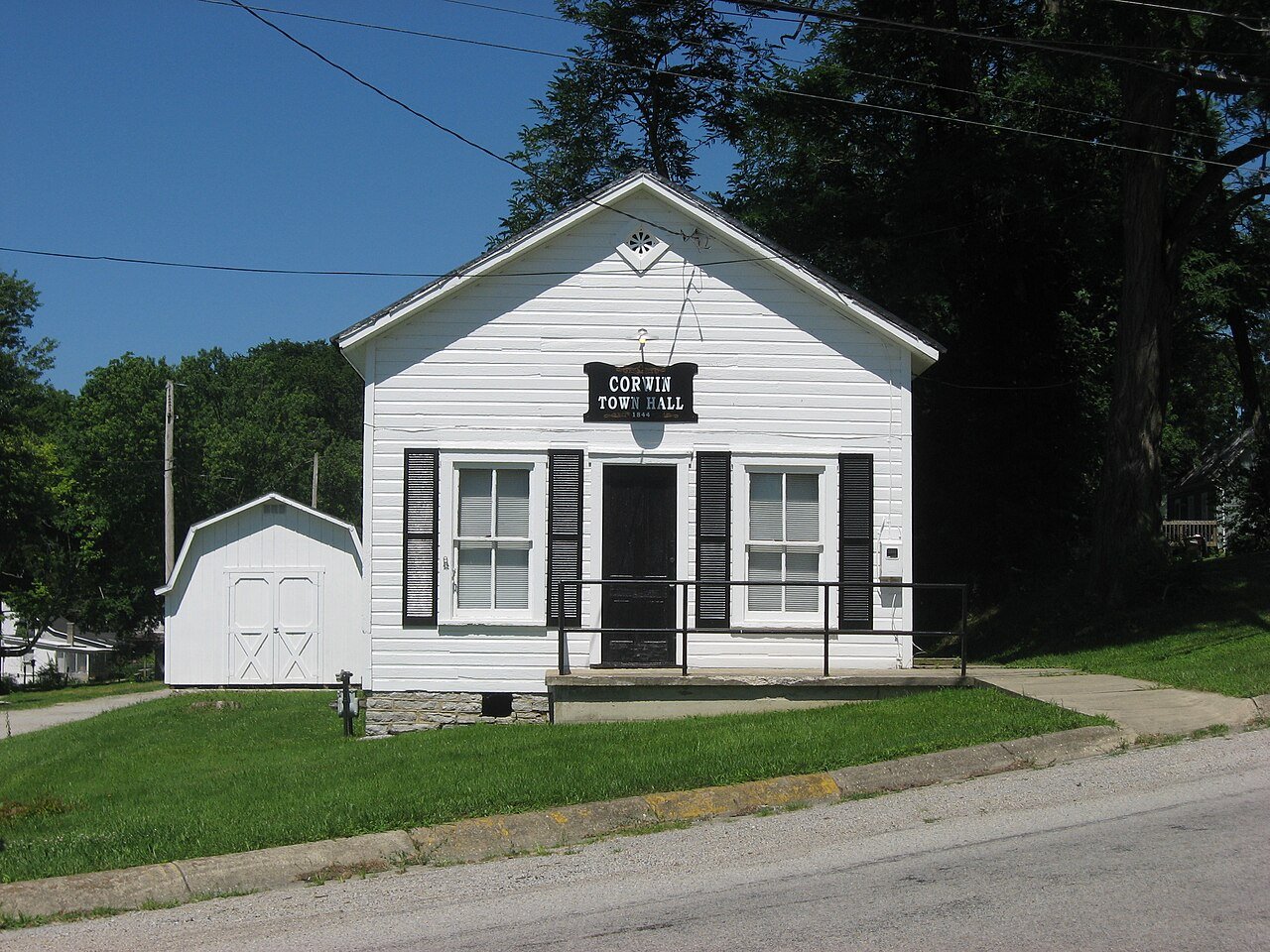
The little council house and jail in the photograph — a village’s entire civic apparatus in one frame — makes Corwin’s closing argument better than any paragraph: small places run on proportion, keeping exactly the institutions their size requires and keeping them well. The village never needed a city hall; it needed this, maintained. Its pest file runs the same way — no city’s complexity, just the valley’s honest fundamentals kept in proportion: the cellar dry, the grid sealed, the margins walked, the September booked, and the twin-loop’s number saved. This page closes the Warren build-out on the county’s smallest grid because the map’s promise was always proportional too: every community, whatever its size, gets its file written like it matters — because to the people whose porch the trail runs past, it does. Corwin, the county is complete, and you were never going to be the footnote. Welcome to the roster.
The east-bank margins: reading the climb toward the lake
Behind the village the ground climbs toward Caesar Creek’s country, and Corwin’s uphill yards read the gradient the Harveysburg file maps at its summit: edge pressure grading upward with the timber, the woodland lineup arriving in doses proportional to each lot’s climb, and the margin disciplines — brush managed, wood off the siding, limbs off the lines, the annual walk — scaling with the slope. The gradient hands the village a useful diagnostic: trouble arriving from uphill (deer-mouse caches, carpenter-ant frass, tick finds) reads woodland and answers with margin work plus sealing; trouble arriving from the flat (moisture-guild blooms, mosquito pressure, wet-year wanderers) reads corridor and answers with the valley playbook. Two directions, two checklists, one compact village between them — and the first visit’s inspection walks both, because doorstep-and-hillside is Corwin’s whole geography and the file was always going to be written in both directions at once.
When does the trail season actually change the village’s week?
Rider season runs the corridor’s warm months with weekend peaks, and the village’s share is proportion again: refreshment stops running their patio calendars, the trailhead’s parking pulse, and the amiable traffic of a route that delivers thousands of passing visitors without ever crowding a village this size. The pest translation stays modest — crumb-and-can discipline at the stops, the standard corridor season underneath — and the honest summary is that Corwin’s trail week changes less than its twin’s festival fortnight ever does. Small places absorb their seasons in proportion too; the calendar barely notices, and the porch views are worth every cyclist.
The whole-village September: the roster’s most achievable play
This page has mentioned it twice because Corwin is genuinely the county’s best candidate: the seal-the-whole-village September — every structure’s twelve doors checked and closed, every margin walked, the barrier laid grid-wide — is a one-loop-day project on a village this size, and its payoff compounds exactly as the West Elkton doctrine promises: a sealed grid gives the valley’s and hillside’s pushes nowhere to land, the whole village’s winter goes quiet together, and the coordinated pricing beats every door-by-door alternative. The organizing costs one conversation at the post office or the trailhead cafe; the calendar costs one shared loop day; and the result would make the county’s smallest village its best-defended per capita — a title worth more than its size suggests, and one we would be genuinely delighted to help win. The bridge twins have coordinated everything else for two centuries; September is just the next item on the shared list: (937) 569-3330, and bring the neighbors.
Storage, gear, and the river village’s working seasons
A trailhead village keeps a trailhead’s equipment, and Corwin’s sheds and side yards hold the full recreational inventory — bikes and their trailers, canoes and kayaks off the twin rivers’ liveries, the campers that summer at Caesar Creek a few minutes uphill — all cycling through storage on the deer-mouse protocol’s calendar. The village edition of the checklist reads quickly: haul-out inspections before anything winters, food and bait boxes emptied at the door, traps on cardboard beside the stored hulls, covers chosen for exclusion, and the spring uncovering run wet-method wherever winter tenants left their evidence. Add the woodpile discipline every uphill yard owes its margins and the gutter-and-barrel patrol every corridor block owes its mosquito season, and Corwin’s self-service file is complete — proportional, like everything here, and mostly free. The professional file waits behind it for everything the checklist cannot reach, one bridge-side loop day away.
Licensed by the Ohio Department of Agriculture (Pesticide Business License #115079; applicator #170858 — categories 10A, 10B, and 12), insured, locally owned, and threading the lake-country loop weekly — from the council house to the trailhead, the east bank rides the schedule now. Free quotes and photo identification every business day.
And with Corwin’s page live, Warren County’s roster closes complete: eleven communities, eleven files, the hub above them, and one calendar running the whole southern map — exactly as promised when the build-out began. The county that grows fastest now reads deepest; next stop, the north: Miami County, every community, the same standard. The map keeps its promises; the trucks keep the map.
Who answers when the twins call together?
The same voice, on the same first ring — twin-town calls routinely arrive in pairs (the bridge carries news fast), the loop day absorbs both banks by design, and the scheduling conversation that starts “my cousin across the river said” is the county’s favorite kind. Referral chains built this whole southern map; Corwin’s bridge just runs the shortest one.
One bridge, two banks, zero footnotes — Warren County, complete.
Who actually turns up in Corwin: Greater Dayton Pest & Rodent is owned and operated by Bryan Camden, licensed by the Ohio Department of Agriculture — firm #115079, commercial applicator #170858, categories 10A, 10B and 12. When you call, you talk to the person who does the work. No call center, no rotating crews, and the same technician on every visit.
Frequently asked questions
Do you provide pest control in Corwin?
Yes — the tiny river village beside Waynesville sits on the same Warren rotation; every address gets full service and the bikeway-corridor patterns get known treatment.
What pests are most common in Corwin?
Little Miami valley files: floodwater mosquitoes off the river margins, moisture guilds in the older village basements, woodline wasps, trail-corridor ticks, and the deer-mouse outbuilding pressure river-and-woods villages carry.
How much is pest control in Corwin?
Identical formula to everywhere — village scale changes nothing: most homes $39–$55/month quarterly, one-time flat, free estimates: (937) 569-3330.
Does the Little Miami location define Corwin’s pests?
Almost entirely — the river corridor delivers the mosquito waves, the valley moisture feeds the basement guilds, and the greenway’s woods supply the wasp-and-tick baseline. Corridor geography is the whole local chapter.
What about ticks along the bikeway?
Real seasonal pressure — trail-adjacent yards warrant the transition-zone program (mowed margins, barrier band, targeted treatment) and residents the permethrin-and-check discipline our tick page details.
How fast can you reach Corwin?
With the Waynesville route days — weekly or better, days typically, no travel charges.
Do you handle the village’s older housing stock?
Yes — the era’s foundations get masonry-appropriate exclusion and the moisture-first basement doctrine; small village, same preservation-minded craft.
Is mosquito season manageable this close to the river?
Honestly managed, not eliminated — barrier timing, resting-vegetation treatment, fans, and the container patrol carry river-village patios through the season; the floodwater waves get intercepted, not prevented.
Do outbuildings here need the deer mouse protocol?
Assume yes — woods-and-river adjacency makes two-tone mice the default shed tenant; ventilate-then-enter, glove the stored boxes, and let our outbuilding inspection lead.
How do I start service in Corwin?
Instant quote, free photo ID, or (937) 569-3330 — free estimates, route-day scheduling, first visits typically within the week.