Troy’s stinging-insect season has a texture all its own, and it comes from the town’s architecture. The historic core around the Public Square — brick Victorians, deep wooden porches, ornate eaves and soffits by the block — is a paper wasp’s dream of nesting real estate, while the mature trees shading those streets host the enclosed aerial nests and the big European hornets that hollow trunks attract. Ring that core with the newer south-side subdivisions and the barn-and-outbuilding properties at the edge of Miami County farmland, and one town runs the full Ohio wasp catalog in a single season. We remove nests across all of it — porch, soffit, ground, and barn wall — and this page covers where Troy’s nests actually turn up, which ones warrant removal, and how the work is done safely.
Where Troy’s Nests Show Up
- The historic porches and eaves: open umbrella combs under porch ceilings, window headers, and the deep cornice returns of the older blocks — the classic downtown-Troy call from May through September. Weathered wood trim supplies the paper pulp; the ornate architecture supplies a hundred sheltered angles per house.
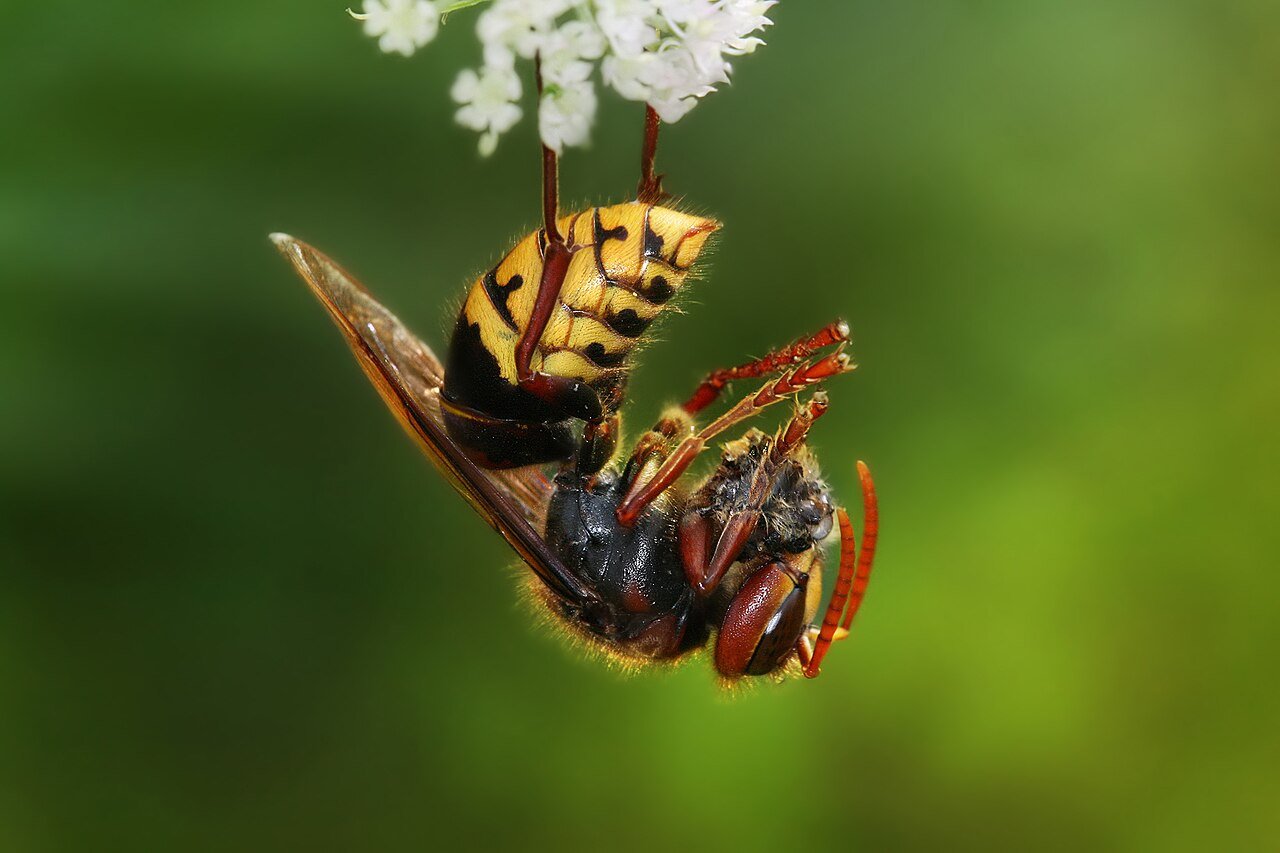
- The mature tree canopy: enclosed gray football nests emerging from summer foliage in August, plus European hornet colonies in the hollows of the old silver maples and sycamores — the inch-plus hornets at porch lights on summer nights are their scouts (our hornet guide has the ID).
- Established lawns: ground-nesting yellowjacket colonies in the older neighborhoods’ soft, burrow-riddled turf — the mower-triggered September emergency that fills our Troy schedule every Labor Day week.
- Barns and outbuildings: the county-edge properties add wall-void colonies in outbuildings, nests in equipment left idle, and the legendary hollow fence post. Farm structures get their own inspection rhythm.
- Sheds, grills, and mailboxes: the small-container nests everywhere — checked before first use each season, they stay small problems.
Which Nests Actually Need Removal
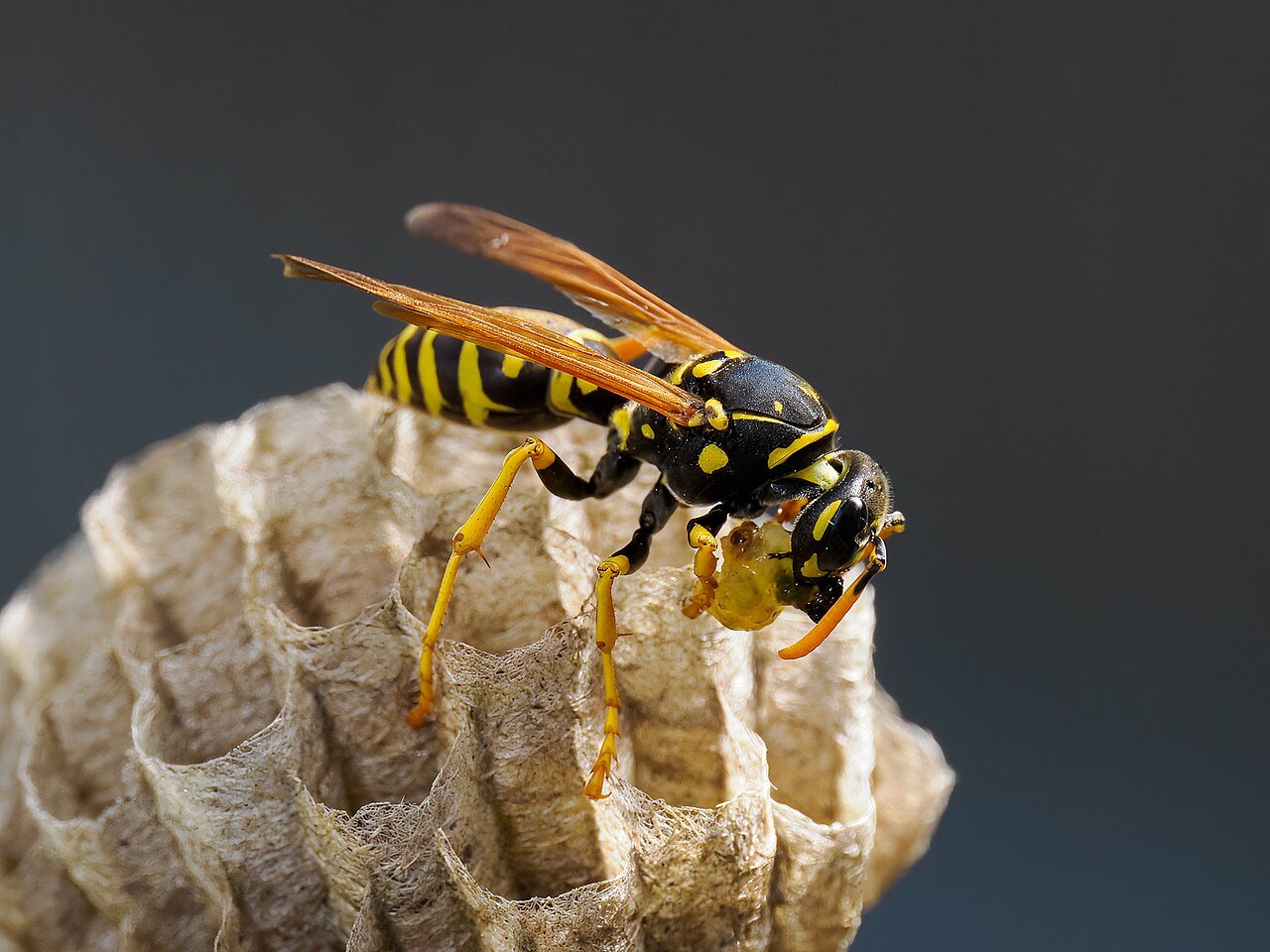
We give Troy homeowners the same honest triage we’d want ourselves. Remove: anything over a doorway, porch seating, play area, or mailbox; any ground colony in mowed lawn; any wall-void or soffit colony feeding into the structure; and any nest within reach of a household member with a sting allergy — that last one is automatic, same-week work. Leave: the football fifty feet up the back maple (it dies at frost and is never reused), the paper wasps on the detached shed’s far gable quietly clearing your garden’s caterpillars, and every cicada killer — the huge solo wasps hovering over sunny lawns in July are harmless despite the drama, and we decline that “removal” with a clear conscience. The identification step matters because the species sets the risk: our nest identification guide and wasp-versus-hornet comparison sort the players, and a photo texted from a safe distance gets you a free verdict before anyone climbs a ladder.
How the Work Is Done
Professional removal is a timing-and-equipment discipline. Nests get treated at dusk or dawn, when the full garrison is home and torpid — a daytime knockdown leaves hundreds of field workers returning to a grudge. Ground colonies get treated at the entrance and then excavated or collapsed; wall-void and soffit colonies get treated inside the void with materials that reach the comb, never just sprayed at the entry hole — the classic DIY error that traps angry workers inside the wall, sometimes chewing through drywall into the living room. Aerial nests come down whole after treatment; European hornet colonies in tree hollows and barn walls — the biggest-bodied job on the list — get full protective-gear treatment and a follow-up check. Every removal includes the prevention piece: sealing the void or gap that hosted the colony, because next spring’s queens shop the same real estate, and an unsealed soffit in Troy’s older housing is a vacancy listing. The full method and pricing live on our nest removal service page.
The Troy Season, Month by Month
April–May: overwintered queens start golf-ball nests under eaves — the cheapest removal window of the year, when a pole and a purposeful morning end what would be a July operation. Walk your porch ceilings and shed gables weekly. June–July: colonies build quietly; cicada killers appear over sunny lawns (leave them); European hornets begin night patrols at porch lights. August: the aerial nests emerge from foliage at full size — discovery season for the tree nests that grew unseen all summer. September: peak everything — maximum colony size, the yellowjacket sugar-switch that brings them to cider and cookouts, and the mower-versus-ground-nest incidents that make this our busiest Troy month. October: frost ends the colonies; queens tuck into bark and attics, and the season’s last job is yours: the gap-sealing weekend that cancels next year’s soffit nests. Prevention specifics live in our wasp prevention guide, and the DIY-appropriate cases in getting rid of wasps — with the honest line drawn where ladders, voids, and allergies begin.
Straight Answers, Flat Pricing, Local Crew
Troy wasp calls get same-week response — same-day where a sting allergy or a doorway nest demands it — at one flat price quoted before work starts, with re-treatment guaranteed if a treated colony rebounds. We’re on Troy’s streets weekly through the season, we know the difference between a downtown cornice job and a county-line barn job, and we’ll tell you honestly when the right answer is a pole, a beekeeper (honey bee swarms get referred, not treated), or a shrug at a harmless giant. Everything else we handle in town is on the Troy pest control page.
Nest Where It Can’t Stay?
Photo from a safe distance for a free verdict — then dusk removal, void sealing, and a guarantee. Serving Troy and all of Miami County.
Frequently asked questions
Who removes wasp nests in Troy, Ohio?
We do — same-week response across Troy and Miami County, dusk treatment with proper gear, the nest down and the hosting gap sealed, at one flat price quoted first. Doorway nests and sting-allergy households get same-day priority.
What is the huge wasp at my Troy porch light at night?
A European hornet — Ohio’s only true hornet, and the only big wasp here that flies after dark. Troy’s old hollow trees host their colonies; the porch-light visitor is a scout hunting insects, and the light going off usually ends the visits.
Why do older Troy houses get so many wasp nests?
The historic architecture: deep porches, ornate cornice returns, and weathered wood trim offer paper wasps both shelter and nest pulp by the block. Painting bare trim and sealing soffit gaps removes most of the invitation.
Should I knock down the gray football nest in my tree?
Only if it’s near traffic — a high nest in the back maple dies completely at frost and is never reused. Nests over walks, doors, or play areas are professional dusk jobs; whacking a live August nest is the region’s most reliable multi-sting event.
What are the giant wasps hovering over my lawn in July?
Cicada killers — two-inch solo diggers whose hovering males can’t sting and whose females essentially never do. We decline those “removals” honestly; manage the bare sunny soil they like and they thin out on their own.
Can I just spray a wasp nest in my soffit myself?
Spraying the entrance traps workers inside the void — sometimes chewing through drywall into the house. Void colonies need treatment that reaches the comb, protective gear, and post-job sealing; it’s the one nest category where DIY reliably backfires.
When is the cheapest time to deal with wasps in Troy?
Late April and May, when queens are building golf-ball starter nests alone — a broom-and-morning job. The same nest in August is a fortified colony requiring a dusk operation; weekly spring porch checks are the whole trick.
Do you handle wasps in barns and farm outbuildings?
Yes — the county-edge properties are a regular part of our Troy route: wall-void colonies, equipment nests, and hollow-post yellowjackets, treated with the same flat pricing and the practical scheduling farm work needs.
For the rest of what this town actually deals with, see flea treatment in Troy, ant control in Troy, and spider control in Troy.