
This library’s stinging-insect wing has covered the removals — the wasp playbook, the hornet triage, the ground-nest protocol — but the searches this page answers ask the smarter question: how do you prevent wasps from building at your house in the first place, and how do you deter them from the spaces you actually use? The honest framing first: total wasp prevention is neither possible nor desirable (the yard’s daubers, hunters and pollinator-adjacent species do real work, and airspace can’t be caulked) — but nest prevention at the structure is genuinely winnable, because wasp queens are real-estate shoppers with known criteria, a short shopping season, and a documented list of dealbreakers. This page is the prevention calendar in full: the April–May queen-scouting window where the whole season is decided, the eave-patrol habit that catches golf balls before they become footballs, the seal-and-screen work that closes the void-nest inventory, the deterrents graded honestly (the fake-nest trick’s real evidence, the essential-oil sprays’ partial credit, the brown-paper-bag folklore’s failing grade), the sugar-management that halves late-summer patio pressure, and the trap placement rule that decides whether traps help or recruit. Greater Dayton Pest & Rodent — whose Protection Plan runs exactly this calendar professionally: (937) 569-3330.
The queen’s shopping season: April–May decides everything
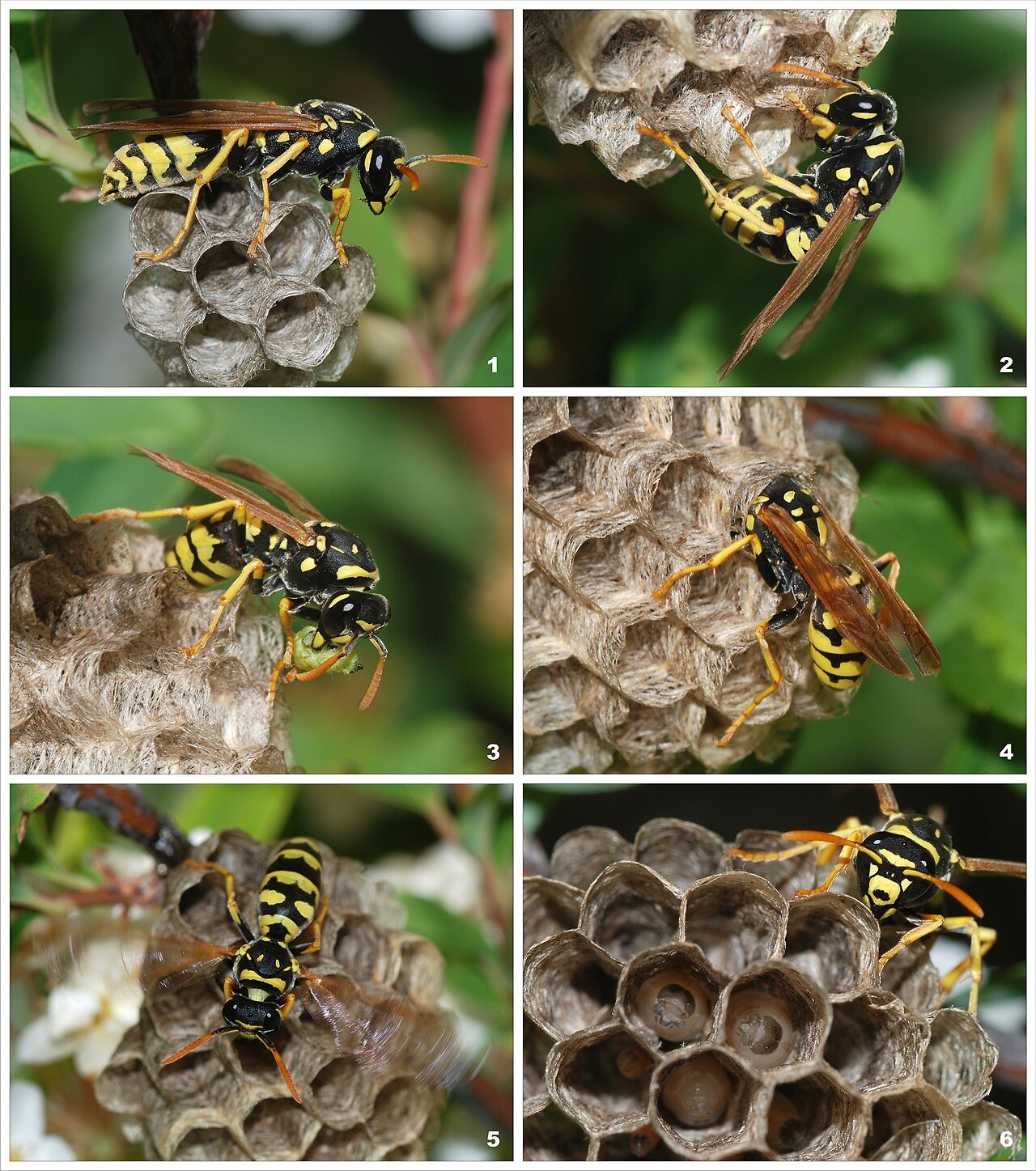
Wasp prevention runs on one biographical fact: every summer colony starts as a single overwintered queen making real-estate decisions in April and early May — and a queen deterred, evicted or defeated in that window is four hundred September defenders that never exist. Her criteria are consistent and exploitable: sheltered overhead cover (eave lines, porch ceilings, shutters, grill interiors, playset tunnels, the propane tank’s lid cavity), anchor texture (rough, matte surfaces — the gloss-paint aversion applies to paper wasps too), void access for the cavity nesters (the European hornet and yellowjacket file — soffit gaps, vent screens, siding seams), and quiet — queens abandon sites disturbed early. The prevention that follows costs ten minutes a week for six weeks: the eave patrol — a slow walk of the roofline, porch ceilings, shed gables and shutter backs every week through May, knocking down every golf-ball starter nest found (a broom or hose jet suffices at this stage — a founding queen defends nothing; she flees and, after two or three evictions from the same site, shops elsewhere, the orb-weaver eviction cadence with wings). The patrol’s arithmetic is the best in the stinging file: each two-minute May knockdown replaces an August removal appointment, and households that run the six-week habit report nest-free structures at rates the deterrent aisle never approaches. Mark the calendar at tax day; patrol till Memorial Day; own the season.
The structural layer: closing the void inventory
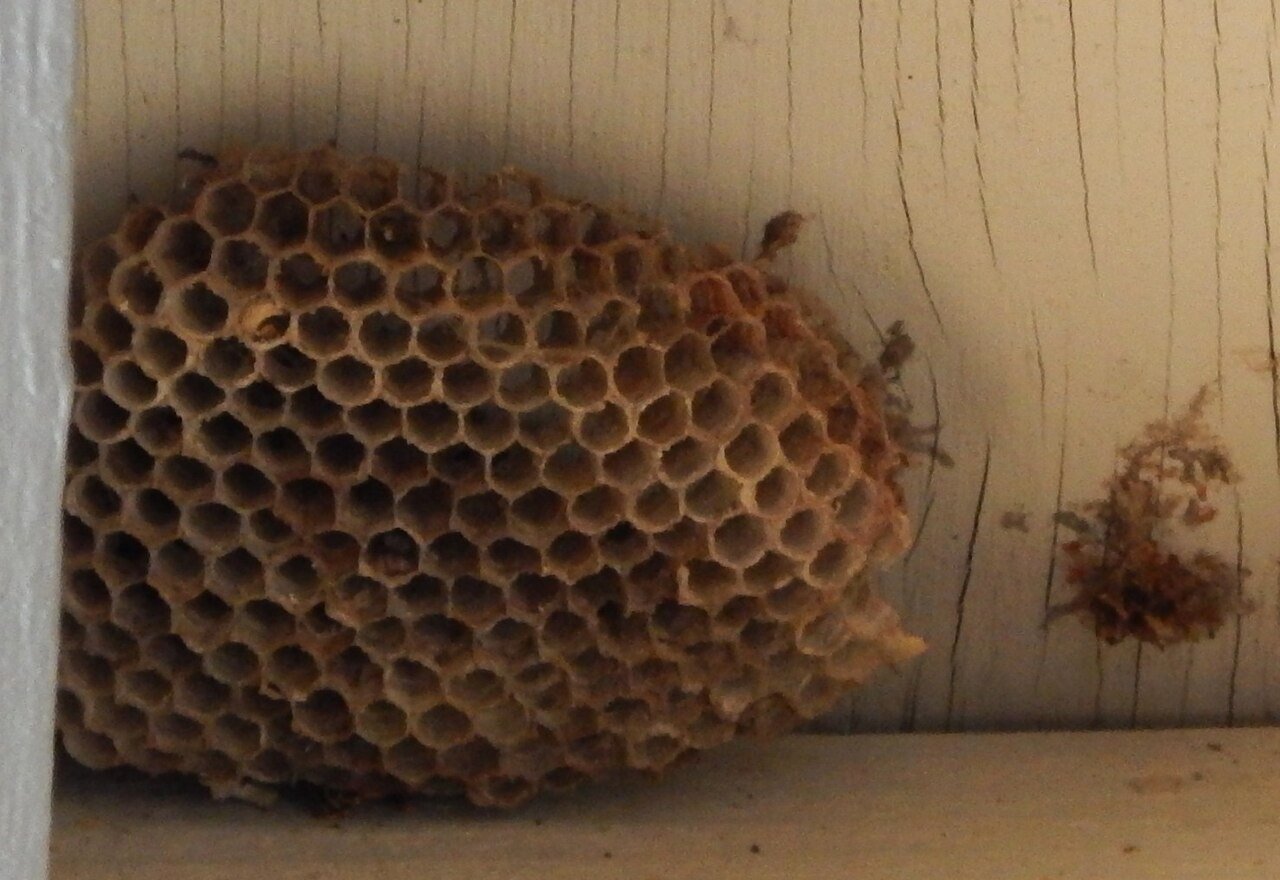
The patrol handles the visible nesters; the structural layer handles the dangerous ones — the cavity colonies whose wall-void files run this wing’s highest stakes. The audit is the twelve-doors pass aimed upward: soffit and fascia seams caulked where age has opened them; vent screens — gable, ridge, bathroom and dryer — verified intact (quarter-inch hardware cloth behind damaged louvers, the crawl-space standard at altitude); siding gaps and utility penetrations sealed at the top course where queens probe; shutters either snugged to the wall or accepted as patrol stops; and the ground-level inventory the yellowjacket file adds — rodent burrows collapsed and filled in spring (an old vole or chipmunk burrow is the ground-nest starter kit; the vole page’s habitat work pays a stinging dividend), railroad-tie and retaining-wall gaps stuffed where history warrants, and the shed’s door gaps swept. Timing rule, non-negotiable and repeated from every void page: seal only what’s verified empty — spring sealing (before founding) is prevention; summer sealing of an active entrance is the never-plug disaster this library keeps a standing warning about. The audit runs once in March, an hour with a caulk gun and a ladder-spotter, and it converts the structure’s cavity inventory — the only nest class that ever genuinely threatens a household — into a closed market before the shoppers arrive.
The deterrent aisle, graded honestly
The prevention searches meet a crowded aisle, so the library’s standard grading: The fake wasp nest (the paper lantern sold as territorial deterrent, and its folk version, the inflated brown paper bag): partial credit with honest mechanics — paper wasps and some yellowjackets do avoid founding within sight-range of what reads as an established rival colony, and field reports plus limited trials show modest founding reduction on the decorated side of structures; the honest caveats are that it deters founding (spring value only), does nothing to established colonies or foragers, and reads as décor to the void-nesters who never see it. Verdict: a cheap, harmless spring assist on porch ceilings — hung by April, never a substitute for the patrol. Essential-oil sprays (clove-geranium-lemongrass blends, peppermint): the one folk category with a real supporting study — the published clove-geranium-lemongrass work showed genuine repellency to scouting workers — graded per the natural-aisle standard: real, short-lived, reapplication-hungry; useful on specific surfaces (the grill cart, the playset beams, the porch ceiling’s favorite corners) as a patrol supplement, never a perimeter. WD-40, dryer sheets, mothballs, pennies-in-bags: the theatrics bin, complete. Traps: the bag-trap placement rule at stinging stakes — attractant traps genuinely catch yellowjackets by the hundred and genuinely recruit them first, so the fence-line-not-patio placement decides everything, spring queen-trapping (each spring catch is a colony) beats late-summer worker-trapping (bailing the ocean), and traps near doors or tables are self-inflicted wounds. Professional barrier treatments: the one chemical layer with honest spring returns — the eave-line and soffit application our anchor visits place in April deters founding on treated surfaces for weeks, the placed-not-broadcast doctrine at its usual address.
The sugar season: managing August’s foragers
Prevention’s second front opens in late summer, when the colonies you didn’t prevent (yours or the neighborhood’s) switch diets: through July, wasp colonies hunt protein (caterpillars — the garden’s unpaid help); from August, the dying colonies’ workers go sugar-desperate, and the patio economy decides your September. The management list, in leverage order: the drink rule — cans and cups are the sting-delivery mechanism of the season (the in-can ambush drives more August ER visits than nests do); mesh drink covers or clear cups, non-negotiable at gatherings; fruit discipline — the dropped-fruit orchard floor and the overripe patio bowl are yellowjacket festivals: same-day windfall pickup where trees drop, fruit served covered and cleared; the trash seal — lidded cans, rinsed recycling, the fly page’s rim-scrub doing double duty (an unrinsed soda can in an open bin recruits a forager patrol by lunchtime); hummingbird-feeder diplomacy — bee-guard ports and a relocation away from seating, or a September pause where pressure peaks; and the sacrificial station from the catering trade — a small dish of jam or cut fruit stationed twenty feet downwind pulls the scout traffic the discipline misses. None of this shrinks the neighborhood’s colonies; all of it redirects their September attention — and paired with the spring calendar that shrank the local inventory, it converts the patio’s worst month into ordinary outdoor life with a mesh dome on the lemonade.
Wasp prevention questions, answered
Do wasps come back to the same nest every year?
No — nests are never reused (the frost-ending file), but the SITE gets re-selected constantly: the eave that suited one queen suits her daughters, and last year’s nest marks prime criteria in every dimension. Knock down winter’s empty nests (free, zero risk), note their addresses, and give those exact spots the patrol’s first minutes and the gloss-paint or oil-spray treatment — prevention aimed by history beats prevention broadcast by hope.
A queen keeps rebuilding in the same porch corner despite knockdowns. Escalate?
Two more evictions usually settle it (the third-strike relocation is well-documented), but the persistent corner earns the surface fix: gloss paint or a hardware-cloth angle screen changes the anchor criteria permanently, and the clove-oil blend buys the interim. A corner that defeats all of that is announcing premium shelter worth a photo to the line — occasionally the “corner” hides a void entrance, which changes the file entirely.
Does killing early wasps around the yard help prevention?
Barely, and often backward — spring’s visible foragers include the solitary allies and the paper wasps quietly policing your caterpillars; swatting workers does nothing to colonies (only queens and nests count), and the patrol-and-seal calendar outperforms any amount of individual wasp combat. Prevention is real estate, never body count — the wing’s whole doctrine in six words.
What does the professional spring version add?
Three things the DIY calendar can’t: the eave-line barrier application (the treated-surface founding deterrent, placed at ladder heights and soffit lines weekend patrols skip), the trained-eye void audit (our techs read soffit gaps and vent failures faster than any homeowner checklist), and the standing rhythm — the Protection Plan’s spring visit runs patrol, audit and barrier in one pass, with the pre-festival patrol doctrine as its commercial-scale proof of concept. The DIY calendar genuinely suffices for most households; the plan version exists for the rest — and for everyone who’d rather spend April’s Saturdays otherwise.
The season, pre-decided
Wasp prevention, complete: knock the golf balls down in May and the footballs never form; seal the verified-empty voids in March and the dangerous class never founds; hang the paper lantern and oil the favorite corners for the margins; run the sugar discipline in August for the foragers the neighborhood sends regardless; and place any trap at the fence line or nowhere. It’s the library’s standing insight — the calendar beats the crisis — applied to its highest-adrenaline subject, and it works for the same reason everything in this wing works: the insects run on schedules and criteria, and the household that learns both gets to vote first. For the barrier scheduling, the void audits, the allergy-priority households and the photo of whatever’s founding on the porch right now: (937) 569-3330, Greater Dayton Pest & Rodent, Dayton and all eight counties — where April’s ten minutes keep outbidding August’s emergencies, season after season.
The prevention calendar, month by month
- February–March: the empty-nest sweep (knock down winter’s vacant paper, map the addresses) + the void audit and seal (verified-empty only) + burrow-and-wall-gap inventory at ground level. One Saturday, ladder weather permitting.
- April: hang the fake nests on the historic porches; first eave patrols as the 60-degree days wake the queens; the professional barrier pass where history or allergy warrants; spring queen-traps at the fence line (each catch = a colony).
- May: the patrol’s peak weeks — every roofline, shutter, grill, playset and shed gable, weekly; oil-spray the repeat corners; third-strike surface fixes on the stubborn ones.
- June–July: stand down to monthly glances — missed colonies announce themselves at softball size and route to the removal playbook while still mid-tier; the garden’s paper wasps police caterpillars on your behalf.
- August–September: the sugar discipline in full — drink covers, windfall pickup, trash seal, feeder diplomacy, sacrificial station; the location-over-size triage on every discovered nest; allergy households’ priority line standing.
- October: first frosts end every colony; the wing’s free-solution season — outwait what geometry allows.
- November–January: nothing. The queens sleep under bark and siding; the calendar sleeps with them; and February’s sweep restarts the cheapest victory in the stinging file.
Twelve months, two working Saturdays, six weeks of ten-minute patrols — the entire wasp season, pre-decided at golf-ball scale. Pin it inside the garage door, next to the broom that does most of the work.
The prevention paradox: what NOT to prevent
The wing’s conservation note belongs on its prevention page, because total success at this page’s program would cost more than it saves. The wasps the calendar deliberately spares — the mud daubers patrolling the widow habitat, the cicada killers’ July theater, the paper wasp colony on the back shed’s far gable policing the garden’s caterpillar load, the parasitoid legions from the samurai wasps down to the hornworm cocoons — run a pest-suppression economy this company competes with only in the sense that lighthouses compete with the coast guard. The calendar’s targeting discipline is therefore the page’s quiet centerpiece: it aims at structure-adjacent founding and void access — the geometry where colonies and households collide — and leaves the property’s wider wasp fauna employed, which is why the patrol walks the eave line and not the garden, why the barrier treats the soffit and not the flowerbed, and why the fence-line trap placement protects the foragers’ airspace along with your patio’s. Prevent the collision, keep the workforce: the stinging wing’s entire philosophy, and the reason its prevention page ends — like its removal pages, its acquittal pages and its emergency pages — at the same address every file in this library eventually reaches: proportion, applied on schedule, with the phone line holding the hard calls. The wasps were never the enemy; the geometry was — and geometry, unlike wasps, holds still for a caulk gun.
The eight-county prevention map
Where the calendar earns most locally: the historic porch districts — the deep eaves, beadboard ceilings and shutter stock of Oakwood and the courthouse squares are founding real estate at its finest, and the April patrol plus fake-nest layer runs there at maximum return; the farm campuses of Preble and Miami counties scale the patrol across barns and outbuildings (the equipment-cavity inventory from the dauber file doubles as the yellowjacket audit); the newer suburbs’ vinyl-and-soffit construction concentrates risk at the vent screens and deck-frame gaps the March audit closes in an hour; and the festival towns’ commercial version — the pre-event patrols of Troy’s strawberry June and the square economies — runs this exact page at municipal scale, which is how the doctrine was field-proven before it was written down. Every zone, one arithmetic: the ten-minute May knockdown against the August removal, the March caulk line against the September wall-void call — and the wing’s cheapest, calmest file standing guard over its most dramatic one. Patrol scheduled, voids closed, lemonade domed: the stinging season, solved in advance — which was always the best time to solve it.
A broom in May, a caulk gun in March, a mesh dome in August — the entire wasp season, won by appointment. The queens shop on schedule; the household that reads the listings first writes the market; and the wing’s loudest month arrives, at last, pre-quieted — four hundred Septembers’ worth of defenders, dissolved one golf ball at a time, by the cheapest ten minutes this library has ever recommended. Patrol on.
And should the patrol miss one — some always slip through, usually behind the shutter nobody checks — the removal wing stands ready with its triage, its published pricing and its allergy-priority line: prevention first, proportion always, and the season’s one honest guarantee holding either way — by the first hard frost, every colony in the county closes its books regardless, and February’s empty-nest sweep starts the cheapest victory over again.
Frequently asked questions
How do I keep wasps from building nests on my house?
Win in April: seal the gaps by late summer prior (siding laps, vents, railing ends, weep holes), cap hollow fixtures, fill old rodent burrows, knock down quarter-sized founding combs in May, and run spring queen traps. Every queen intercepted is an entire August colony canceled.
What time of year should wasp prevention happen?
Two windows: late August–September for sealing (before next year’s queens seek winter shelter, after this year’s colonies peak) and April–May for queen traps and founding-comb patrol. Mid-summer prevention is mostly too late; the colonies are chosen and growing.
Do fake wasp nests keep wasps away?
Weakly at best — the territorial-deterrence theory tests poorly, and established foragers ignore decoys entirely. They may slightly discourage spring nest-founding on the exact spot; they do nothing else. The caulk gun outperforms the paper lantern.
Do wasp traps work as prevention?
Spring queen-trapping genuinely does — a few traps out in April, when big slow overwintered queens prospect, buys more relief than a dozen traps in September. Summer traps are interception at most: hang them at the property line, never on the patio they would recruit to.
What smells keep wasps away?
None reliably — peppermint and clove folklore fails controlled testing, and no scent outlasts a season’s founding pressure. Wasp prevention is mechanical: seals, caps, patrols, and traps, in that order of value.
Why do wasps keep nesting in the same spot every year?
Nests are never reused, but proven sites re-audition — sheltered eaves, cavity entrances, and railing voids that worked once offer the same physics annually, and scent traces may assist the recommendation. Seal or cap the specific spot and the tradition ends.
How do I wasp-proof a deck or porch?
Cap open railing and fence-post ends (premium void real estate), seal the gaps where deck ledgers meet the house, check under-rail and furniture undersides on the Memorial Day walk, and treat grill and mailbox interiors as inspection points — the classic surprise nests live in exactly those.
How do I prevent yellowjackets in the ground?
Fill abandoned rodent burrows — the number-one ground-nest real estate — keep turf dense, and rake mulch shallow. A yard’s ground-nest count tracks its burrow supply almost linearly, which makes rodent control double as wasp prevention.
Does killing early wasps prevent colonies?
In May, decisively — each “wasp” you see then is likely a founding queen, and a quarter-sized comb with one tenant is a colony at its cheapest possible moment. The broom-flick or dusk-aerosol on founding combs is the highest-leverage wasp act of the year.
Can regular pest control service prevent wasps?
The quarterly rhythm fits perfectly: spring visits catch founding combs at golf-ball size, the sealing stays maintained, fall visits close next year’s cavities, and re-service between visits is free on the plan. Plan customers mostly never meet a mature colony.
What attracts wasps to a house in the first place?
Cavities and shelter (the nesting draw), sun-warmed south faces (spring queen real estate), open trash and fallen fruit (the food draw), and abundant caterpillar-and-fly prey (a healthy garden, honestly). You control the first three; the fourth is your garden working.
When should I call instead of preventing?
The moment prevention’s window closes: an active enclosed colony of any size, traffic into the structure, a globe forming, or any household sting allergy — prevention is a spring sport, and summer colonies are removal jobs: (937) 569-3330.