
“Wasp vs hornet” sounds like a trivia question, but the person typing it is almost never playing trivia. They’re standing at a window watching something large and striped patrol the deck, and what they actually want to know is: how much trouble am I in, and what do I do about it? The honest answer starts with a fact most articles bury: every hornet is a wasp. “Hornet” isn’t a different kind of insect — it’s a size-and-genus label for the biggest members of the social wasp family, the way “SUV” is still a car. What matters for your porch isn’t the taxonomy; it’s which species you’re looking at, because in southwest Ohio the label “hornet” gets slapped on three very different insects with three very different risk profiles and three very different playbooks. This page sorts them out for good: the real anatomical and behavioral differences, the Ohio lineup with field marks you can check from a respectful distance, the sting comparison everyone asks about, and which nest belongs to whom — with the honest line between watch-it, DIY-it, and call-us.
The one-sentence answer, then the real one
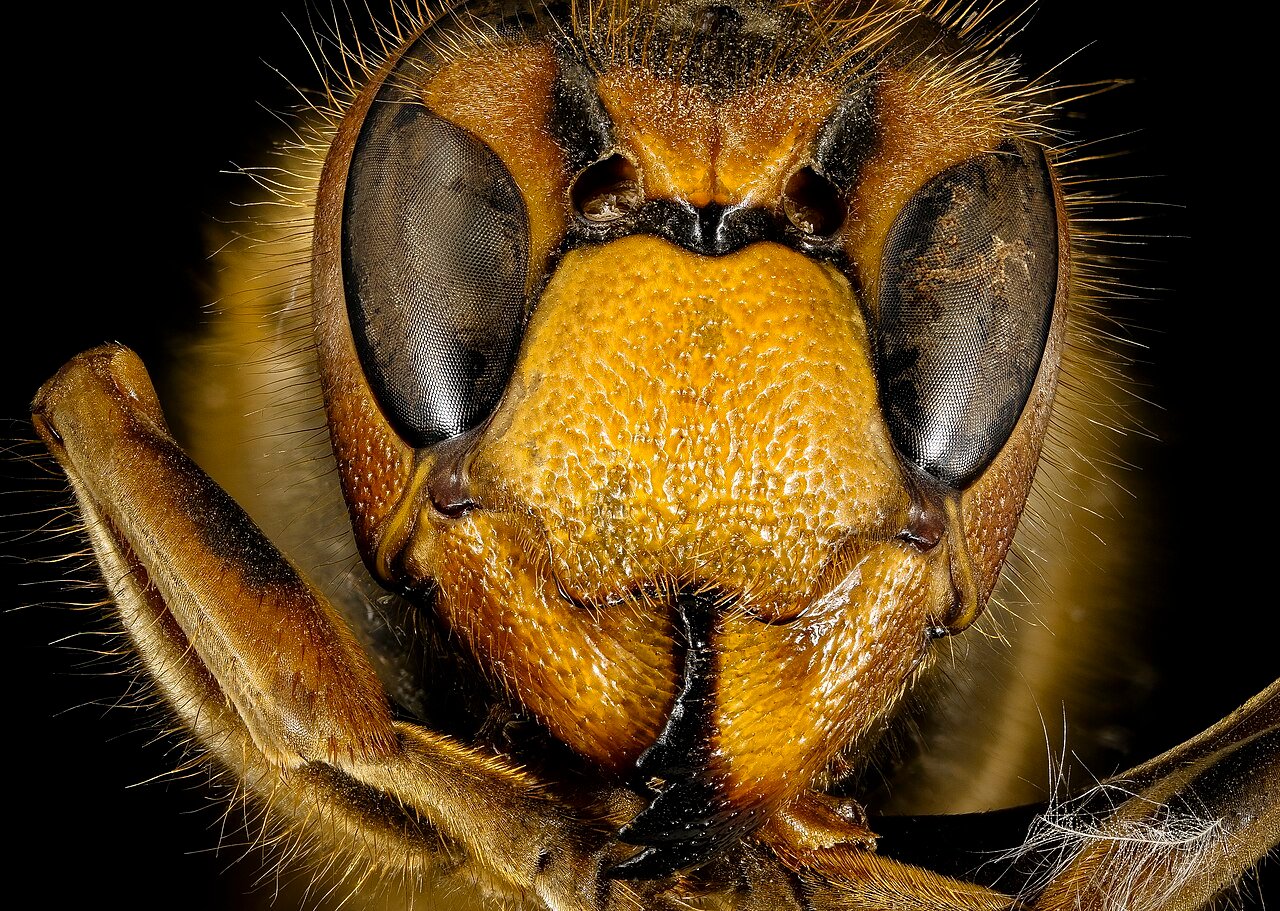
Short version: hornets are the largest social wasps, generally thicker-bodied, and they build enclosed paper nests; “wasp” in everyday speech usually means the slimmer paper wasps and yellowjackets. The longer, more useful version is a set of four differences you can actually observe. Size: a European hornet runs an inch to an inch-and-a-third — nearly double a yellowjacket, visibly heavier than a paper wasp. If your first reaction was “that is the biggest wasp I have ever seen,” the hornet file just opened. Build: hornets are barrel-chested with a wider waist and a broader head; paper wasps are the long-legged gliders; yellowjackets are the compact sprinters. Color: here’s the counterintuitive one — the classic bright yellow-and-black “wasp costume” belongs to yellowjackets and some paper wasps. Ohio’s true hornet is chestnut-brown and muted gold, and the “hornet” most people picture — the white-faced, black-bodied one — isn’t taxonomically a hornet at all. Nest: paper wasps build open combs you can see cells in; hornets and their kin wrap the works in a papery envelope — the football in the tree, the globe under the eave. Open architecture, small operation; enclosed architecture, big one. That single field mark predicts more about your weekend than any other.
The name matters less than the nest, its height, and how close it is to a door. All three are questions for wasp and hornet removal in Dayton.
Ohio’s “hornet” lineup: one real, one impostor, one out-of-stater
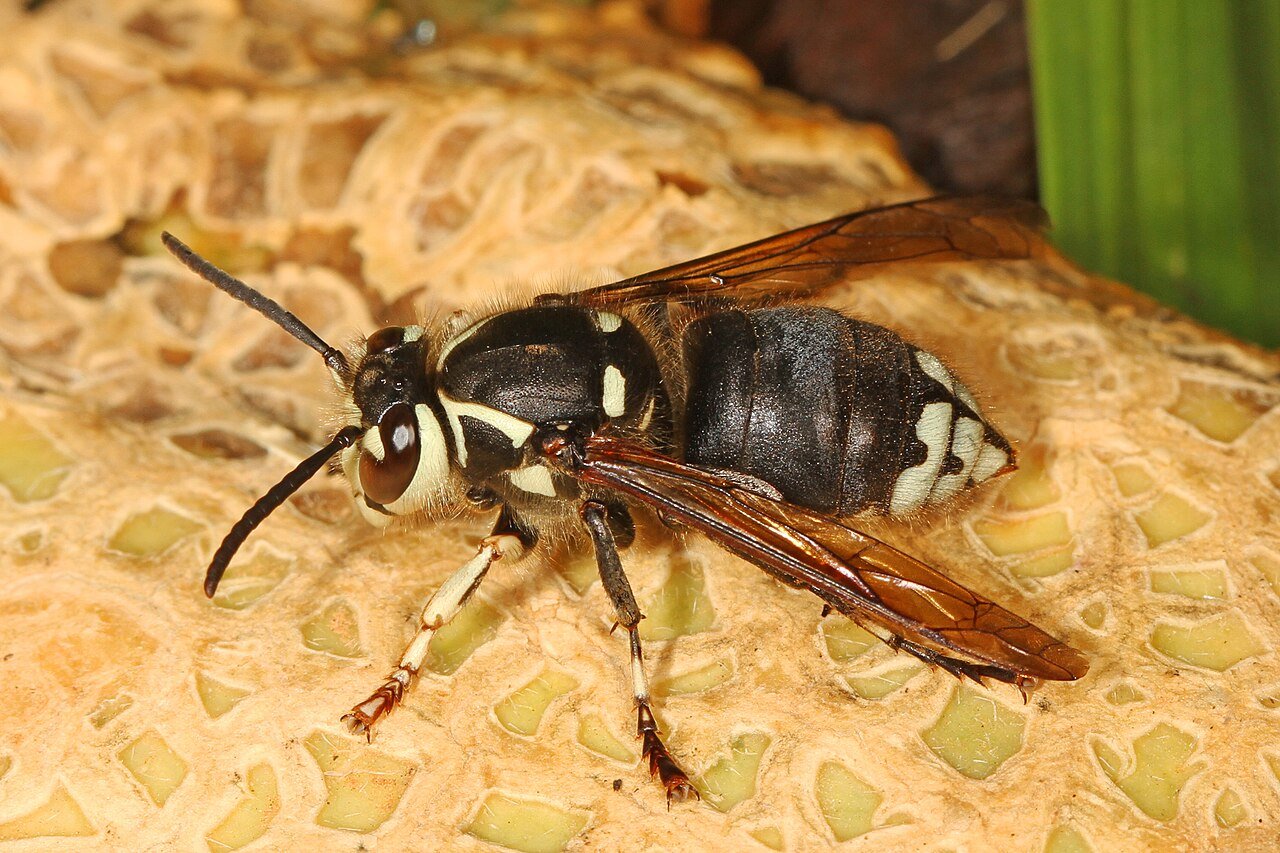
The European hornet (Vespa crabro) is the state’s only true hornet — introduced in the 1800s, established everywhere in the Miami Valley, and responsible for most of our “giant wasp” calls. Chestnut and gold, active after dark (it’s the wasp that thuds against your porch light in August), nests in cavities: hollow trees, wall voids, barn soffits. Colonies run a few hundred — modest by yellowjacket standards, but each member is enormous. The bald-faced hornet (Dolichovespula maculata) is the impostor: ivory face, black body, and the builder of the iconic gray basketball nest — but it’s actually an aerial yellowjacket wearing a hornet’s reputation. The reputation is earned in one respect: bald-faced colonies defend a wider radius around the nest than almost anything else in the yard, and they’re the species behind our firm never-DIY rule for paper globes. The “murder hornet” (northern giant hornet) is the out-of-stater: never found in Ohio, eradicated from the one corner of Washington State it reached, and living on exclusively in headlines. Every “murder hornet” photo we’ve ever been sent from a Dayton backyard has been a European hornet, a cicada killer, or once — memorably — a toy. Our hornets in Ohio guide goes deeper on all three; this page keeps the focus on telling them from their smaller cousins.
The everyday wasps, for comparison
To tell a hornet from a wasp you need the wasp half of the ledger too. Paper wasps (Polistes) are the porch regulars: five-eighths to three-quarters of an inch, long trailing legs in flight, colors from rusty brown to yellow-striped depending on species. They glide rather than dart, hover around eaves and railings, and build the open umbrella combs. Temperament: watchful but tolerant — they’ll share a deck with you all summer if the nest isn’t over the doorway. Yellowjackets (Vespula) are the compact ones — half an inch of high-contrast yellow and black, fast and twitchy in flight, ground and void nesters, and the source of essentially all “aggressive wasp” stories, especially in late summer when colonies peak in the thousands. If it’s at your picnic, on your soda can, or boiling out of a hole in the lawn, it’s a yellowjacket — hornets almost never work picnics. And mud daubers and other solitaries — the slender, thread-waisted ones building mud tubes in the garage — are wasps too, but they hold no colony, defend nothing, and essentially never sting; they’re on this page only so you can rule them out. The quick sort: huge and brown = European hornet; white face and black body = bald-faced; small, bright, and fast = yellowjacket; long legs and open comb = paper wasp; skinny waist and mud tube = ignore it.
The sting question, answered honestly
“Is a hornet sting worse?” Mostly yes, with an asterisk. A bigger insect carries more venom per sting, and European hornet stings reliably rate as more painful than yellowjacket or paper wasp stings — a deep, spreading burn rather than a sharp jab, with more swelling. But the asterisk matters more than the ranking: dose comes from numbers, not size. One outsized hornet sting is a bad afternoon; forty yellowjacket stings from a kicked ground nest is a medical event. The dangerous variable isn’t which species hurts more per sting — it’s how many defenders the colony can field and how touchy the trigger is, which is why the mild-mannered European hornet, despite the scariest sting on the roster, generates fewer injury calls than the yellowjackets a third its size. The non-negotiable caveat applies to every species on this page equally: for the roughly three percent of people with systemic sting allergies, hornet, yellowjacket, and paper wasp venom are all capable of triggering anaphylaxis, they cross-react for many patients, and the difference between species is a rounding error next to the difference between “local welt” and “hives, wheezing, 911.” Symptoms anywhere beyond the sting site mean emergency care, full stop — the complete first-aid file lives on our wasp control guide.
Nest vs nest: reading the architecture from thirty feet
- Open comb, cells visible, no wrapper, under a horizontal surface: paper wasp. Colony of dozens. The one DIY-viable file — dusk, jet aerosol, retreat path.
- Gray papery globe, football-to-basketball, hanging in a tree or off an eave: bald-faced hornet. Wide defense radius, thousands of sting-budget. Never DIY, at any size.
- Traffic in and out of a hole — lawn, railroad-tie wall, wall void, soffit gap — with no visible nest: yellowjacket. The enclosed fortress; the never-plug, never-spray file.
- Steady big-wasp traffic into a tree hollow or barn wall, plus night activity at lights: European hornet. Cavity nesters; treat as professional work — the cavity complicates everything.
- Mud tubes, organ-pipe or blob-shaped, on masonry: mud dauber. No colony, no defense. Scrape when convenient.
That’s the entire identification, and notice what did the work: not the insect’s color, not its attitude — the architecture. Open builds belong to small, manageable colonies. Enclosed and hidden builds belong to large, defended ones. When someone calls us saying “hornets,” our first question is never “what color?” It’s “describe the nest.”
Behavior: the differences that actually change your summer
Beyond size and nests, four behavioral splits are worth knowing. Night flight: European hornets are the only ones on the roster that fly after dark — a huge wasp banging the porch light or window screen at 10 p.m. is diagnostic, no other ID needed. Food runs: yellowjackets scavenge human food; that’s their September crime spree. Hornets and paper wasps almost never land on your plate — they hunt live insects (European hornets take flies, caterpillars, even yellowjackets, which makes them oddly useful neighbors) and sip sap and nectar. A “wasp problem” at the grill is a yellowjacket problem, always. Defense radius: paper wasps defend the comb itself — a few feet. Yellowjackets defend the entrance vigorously. Bald-faced hornets defend a bubble that can extend well beyond the nest, and they famously remember disturbances; the lawnmower that bumped the branch Tuesday gets escorted off the property Thursday. Seasonal arc: all of them run the same one-year colony cycle — overwintered queen, summer boom, frost collapse, nest never reused — which means every nest problem on this page has an expiration date. The question is only whether its location lets you wait for frost, and that’s a proximity call, not a species call.
“So which one is on my porch?” — the five most common calls, diagnosed
- “Giant wasps thudding against the window at night” — European hornet, working your porch light’s insect buffet. The nest is in a cavity nearby but usually not on your house; treatment is only warranted if you find the cavity on your structure.
- “A gray football is growing in my maple” — bald-faced hornet. If it’s high and away from traffic, frost solves it free in November; if it’s over the driveway or play area, that’s our visit, never yours.
- “Wasps keep coming out from under my siding” — yellowjacket void colony wearing a hornet costume in the retelling. The never-plug rule applies with maximum force.
- “Slow wasps hovering all over my deck rail” — paper wasps prospecting or tending small combs. The one file where a $9 dusk treatment is the right call.
- “I think I saw a murder hornet” — you saw a European hornet or a cicada killer. Send us the photo anyway; we answer every one, and we’d genuinely want to know if Ohio ever got a real one.
The playbook, by species
Everything this site teaches about wasp control compresses to a matching table. Paper wasp: DIY-viable per the protocol on the main wasp guide — dusk, jet aerosol, knock down the comb next morning. Yellowjacket, any enclosed nest: professional, because entrance-spraying and hole-plugging are the two ways DIY turns a hidden colony into an indoor one. Bald-faced hornet: professional at any size — the defense radius makes even “small” globes a swarm risk. European hornet: professional when the cavity is in your structure; benign neglect when it’s a hollow tree at the property line — they’re night-shift insect hunters, not picnic raiders, and the colony dies at frost anyway. Prevention, all species: identical, because they all start from a lone spring queen — the sealing, cavity-capping, and early-comb patrol from our wasp prevention guide works on the whole family at once.
Wasp vs hornet questions we actually get
Are hornets more aggressive than wasps?
Backwards, mostly. The European hornet — the biggest, scariest-looking insect on this page — is among the calmest; away from its nest it has essentially no interest in you. The bald-faced “hornet” is genuinely touchy, but it’s taxonomically a yellowjacket, which is the tell: aggression on this roster tracks yellowjacket lineage and colony size, not the word “hornet.” The most dangerous encounter in an Ohio yard remains the smallest insect discussed here, defending a ground nest you didn’t know existed.
Do hornets and wasps fight each other?
Constantly, and the big one usually wins. European hornets hunt yellowjackets and paper wasps as prey — one of the quiet reasons a resident hornet colony in a woodline hollow can coincide with a mysteriously wasp-light season on your patio. It’s not a reason to cultivate them, but it is a reason the “kill every hornet on sight” instinct sometimes works against you.
What about bees — how do I know it’s not a bee?
Fuzz and figure. Bees are furry and stout; wasps and hornets are glossy and waisted. It matters legally and ecologically: honey bee colonies get relocated by beekeepers, not exterminated, and if what’s in your wall is fuzzy and golden-brown, the right call is a bee removal specialist — we’ll happily tell you which from a photo before any treatment decision gets made.
A huge wasp is digging in my lawn. Hornet?
Cicada killer — a solitary digger with no colony and no interest in stinging you, holding a July lease it doesn’t renew. It gets a full acquittal in its own guide. The distinction from a yellowjacket ground nest is traffic: one wasp per burrow versus a rush-hour stream per hole.
The eight-county field report
European hornet calls cluster where the old trees are: Oakwood and Kettering’s mature oaks, Preble and Miami counties’ fencerow hollows and barn walls. Bald-faced globes hang biggest in rural maples but turn up on Beavercreek and Springboro house corners every August. Yellowjacket void work follows old housing stock in Dayton proper; ground nests follow the newer suburbs’ lawn-to-woodline seams in Greene and Warren counties. The identification framework never changes — only the frequency mix. Wherever you are on our map, the same three questions sort every call: how big, what nest, what location.
The bottom line
Every hornet is a wasp; the label that matters is the species, and the species reveals itself through size, color, nest architecture, and behavior you can read from thirty safe feet. Ohio’s true hornet is the big calm brown one; the notorious white-faced “hornet” is a yellowjacket in costume; the murder hornet is not here and never has been. Paper wasp combs are the one DIY file; every enclosed nest — globe, void, or cavity — is a phone call. If you’re still not sure which one owns your porch, text us the clearest photo you can get without climbing anything: (937) 569-3330. Identification is free, the estimate is free, and either way you’ll know exactly what’s wearing the stripes.
The side-by-side card (print this half)
- European hornet: 1–1.3″, chestnut/gold, cavity nests, flies at night, calm away from nest, painful but rare stings. Professional if the cavity is your wall; otherwise mostly a neighbor.
- Bald-faced hornet: 0.6–0.8″, black with white face, gray hanging globe, widest defense radius on the roster. Professional always.
- Yellowjacket: 0.5″, bright yellow/black, hidden ground or void nests, scavenges human food, thousands per colony by fall. Professional for any enclosed nest; never spray or plug an entrance.
- Paper wasp: 0.6–0.75″, long-legged glider, open umbrella comb, dozens per colony, tolerant. The one DIY file: dusk + jet aerosol + morning knockdown.
- Mud dauber: thread-waisted loner, mud tubes, no defense, no sting file. Scrape and forget.
- All of them: one-year colonies, frost amnesty, nests never reused, spring queens are the cheapest control of the year.
Six insects, six lines, and the whole argument of the page in miniature: the scary-looking one is mostly harmless, the harmless-looking one causes the emergencies, and the nest always tells the truth before the insect does.
Frequently asked questions
Is a hornet just a big wasp?
Taxonomically yes — hornets are the largest members of the social wasp family, the way SUVs are still cars. The label that changes your afternoon is species: Ohio’s true hornet (European), the impostor (bald-faced, actually a yellowjacket), and the everyday paper wasps and yellowjackets each carry different risk profiles and playbooks.
Which is more dangerous, a wasp or a hornet?
Per sting, hornets hurt more (bigger venom dose); per encounter, yellowjackets injure far more people — colony size and touchiness drive danger, not the scary label. The most dangerous insect in an Ohio yard is a small yellowjacket defending a ground nest you did not know existed.
What does a hornet look like compared to a wasp?
The European hornet runs an inch-plus, chestnut-brown and gold, barrel-chested; the bald-faced “hornet” is black with an ivory face; yellowjackets are half-inch bright yellow-and-black sprinters; paper wasps are slim, long-legged gliders. Size plus color sorts them from thirty feet.
Are murder hornets in Ohio?
No — the northern giant hornet never established in Ohio and was eradicated from the one U.S. corner it reached. Every “murder hornet” photo we have ever been sent from a Dayton yard has been a European hornet or a cicada killer; send yours anyway, we answer them all.
Do hornets sting harder than wasps?
A European hornet sting rates as a deep spreading burn versus the yellowjacket’s sharp jab — more venom, more swelling. The medical rules are identical though: local pain is normal, and symptoms beyond the sting site (hives, wheezing, facial swelling) are a 911 call regardless of species.
What kind of nest do hornets build vs wasps?
Architecture is the best ID there is: open umbrella comb = paper wasp; gray enclosed globe in a tree = bald-faced hornet; hidden hole-with-traffic in ground or wall = yellowjacket; cavity traffic in a hollow tree or barn wall = European hornet. Open equals small colony; enclosed equals big one.
What is flying around my porch light at night — wasp or hornet?
European hornet, definitively — it is the only night-flying wasp on the Ohio roster. Big, brown, thudding against the screen at 10 p.m.: diagnostic, and calmer than it looks; the nest is a cavity nearby, usually not on your house.
Are hornets more aggressive than wasps?
Mostly backwards: the giant European hornet is among the calmest on the roster away from its nest, while the “hornet” with the genuinely wide defense radius — the bald-faced — is taxonomically a yellowjacket. Aggression tracks yellowjacket lineage and colony size, not the word hornet.
Do hornets kill wasps?
Routinely — European hornets hunt yellowjackets and paper wasps as prey, which is why a resident hornet colony in a woodline hollow sometimes coincides with a mysteriously quiet patio. Not a reason to cultivate them; a reason the kill-on-sight instinct can backfire.
Should hornet nests be removed differently than wasp nests?
Yes, by the file: paper wasp combs are the one DIY-viable target; bald-faced globes are never-DIY at any size; yellowjacket ground and void nests are professional dust jobs; European hornet cavities are professional when in your structure and often ignorable when in a property-line tree. The nest, not the name, picks the playbook.
Do wasps and hornets both die in winter?
Every colony on the roster dies at hard frost, nests are never reused, and only mated queens overwinter — in bark and leaf litter, not the old nest. November is the free removal date for anything positioned where you can wait.
Who removes hornet nests in Dayton?
We do, across all eight counties — identification from your photo first (free), honest triage second (high remote globes often get the “wait for frost” advice), and treatment where location demands it: (937) 569-3330.