
A warehouse slab is the biggest piece of concrete most termite colonies will ever meet, and Vandalia has more acres of it than any town its size in the region. That concrete shapes everything about termite control here — because a slab does not stop subterranean termites, it organizes them. Every expansion joint, every plumbing penetration, every crack that opens as a forty-year-old floor settles is a mapped route from soil to structure, and the offices, mezzanines, and packaging stores sitting on top are the wood the routes lead to. The residential half of town runs an older, more familiar file. Together they make Vandalia’s termite picture a tale of two foundations — and a service program has to read both.
The Commercial Slab File
Distribution buildings feel termite-proof and are not. The structure is steel, but the contents and fit-out are cellulose at scale: pallet stacks, cardboard inventory, wooden office framing, door casings, mezzanine decking. Subterranean termites reach it all through the slab’s weak points — cold joints between pours, the perimeter expansion gap, utility penetrations under break rooms and restrooms. The pretreatment applied when the building went up carried a service life measured in years, not decades, and on much of the corridor’s older stock that clock expired quietly a long time ago. What we bring is a perimeter monitoring-and-baiting program sized for big footprints: stations on a professional interval around the building envelope, inspection of interior slab penetrations on the same scheduled route the roach and rodent programs already walk, and documentation an auditor or a property manager can file. For facilities weighing the math: a colony working a pallet store does damage invisibly for years, and the monitoring line-item is a rounding error against one insurance conversation.
The Joint Inspection
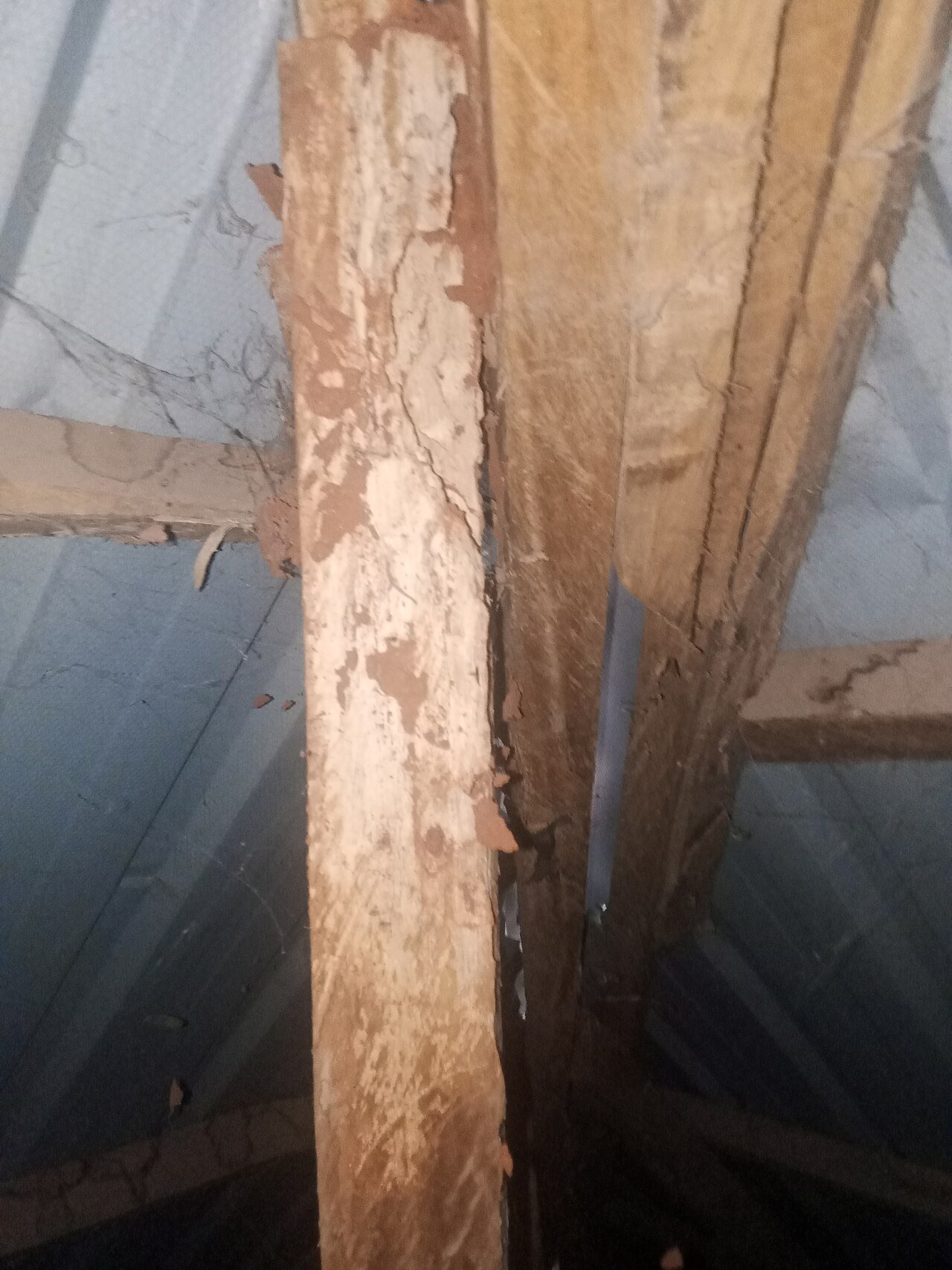
The specific habit that finds commercial activity early: walking the expansion joints and the dock-wall perimeter looking for shelter tubes — the mud straws termites build across any surface they cannot tunnel through. On a warehouse floor these run short and low, joint to rack base, and forklift traffic knocks them down, which means a fresh tube on Tuesday over a route cleared last quarter is a live colony announcing itself. We photograph, log, and bait; the trend line across visits is the intelligence.
The Residential File: National Road Timber
Vandalia’s houses run decades older than its warehouses. The blocks around the old National Road core carry mid-century frames — wood sills on block foundations, crawl spaces with the moisture profile termites prefer, porch additions whose posts meet soil the way no modern code allows. The newer sections toward Cassel Hills sit on slabs with the same joint-and-penetration logic as the corridor, at house scale. The species is the eastern subterranean termite either way; what changes is the evidence trail. Crawl-space houses show tubes on piers and sill damage at the dark end nobody visits; slab houses show swarmers at a window in April and little else, because every working surface is behind drywall. Our inspection reads the construction type first and hunts accordingly — and it separates active colonies from old scars honestly, because half the “termite damage” that panics a Vandalia homeowner is archaeology from a treatment that already worked.
- Full-structure inspection: crawl, perimeter, garage, and slab-penetration zones, with active-vs-historical called plainly
- Liquid or bait, matched to the building: trench-and-treat barriers where slabs and soil allow; monitored bait systems where they don’t — the structure picks, not the sales script
- Swarm-season triage: April–May winged emergences ID’d free — half are ants, and the wrong guess buys the wrong treatment
- Moisture counsel: crawl ventilation, grade, and downspout routing, because wet soil against wood is the invitation
The Vandalia Ledger, Complete
This page closes the set: all eight service lines now carry a Vandalia file — the rodents commuting off the buffer land, the ants working the checkerboard, the wasps in the metal buildings, the fleas off the field margins, the roaches riding the pallet stream, the spiders on the girder loom, the bed bugs in the sleeper cabs, and the termites under the slabs. Read together they say one thing: this town’s pest pressure is infrastructure-shaped — freight, fields, and foundations — and a provider who services it as one system, on one calendar, with one logbook, beats eight separate phone numbers every time. The whole file lives on our Vandalia service page.
Guard the Slab and the Sill
One inspection reads your foundation the way this page reads the town — construction type first, honest verdict second, and a protection program sized to the structure, warehouse or bungalow.
Buying or selling in Vandalia? What a lender, a VA file, or a listing agent asks for is not a treatment — it is a written report. That is a termite and WDI inspection in Vandalia: $99 flat on the lender-ready NPMA-33, next business day, PDF the day we inspect. Treatment only enters the conversation if the report actually finds something.
Frequently asked questions
Can termites really get through a warehouse slab?
Through it, no — past it, constantly. Expansion joints, cold joints between pours, and every plumbing penetration are soil-to-structure routes, and a settling forty-year-old floor keeps opening new ones. The steel building is safe; the pallet stacks, office framing, and mezzanine decking on top are not.
Our building was pretreated when it was built — are we covered?
Almost certainly not anymore. Soil pretreatments carry a service life of years, not decades, and much of the corridor’s stock has outlived its barrier quietly. A monitoring program is the honest replacement.
What do termite shelter tubes look like on a warehouse floor?
Mud straws running from slab joints up rack bases or dock walls — pencil-wide, earthen, and rebuilt after forklift traffic knocks them down. A fresh tube over a route cleared last quarter is a live colony announcing itself.
Which is better for my house, liquid treatment or bait stations?
The structure picks: trench-and-treat liquid barriers where the foundation and soil access allow, monitored bait where slabs, additions, or wells complicate trenching. Anyone who names the method before seeing the building is reading a sales script, not your foundation.
I found winged insects at a window in April — termites or ants?
Coin-flip — swarm season produces both, and the treatments differ completely. Straight antennae, equal wings, thick waist = termite; elbowed antennae and pinched waist = ant. The photo ID is free and settles it in minutes.
Is old termite damage in my crawl space an emergency?
Not if it’s archaeology — damage from a colony a past treatment already killed is common in older Vandalia frames. The inspection separates active (fresh mud, live workers, new wings) from historical, and we say which plainly.
Does homeowners insurance cover termite damage?
Almost never — carriers treat it as preventable maintenance, which is exactly why prevention is the whole game. The monitoring cost is a rounding error against an uncovered sill repair. Our neighbors at Ingram Insurance Group wrote the full policy-clause breakdown — including the one narrow collapse exception worth knowing about.
What does termite control cost in Vandalia?
Residential barriers and bait programs are quoted from the inspection (footage and construction drive it); commercial monitoring is priced per station interval and slots into the same scheduled route as the roach and rodent service — one calendar, one logbook.