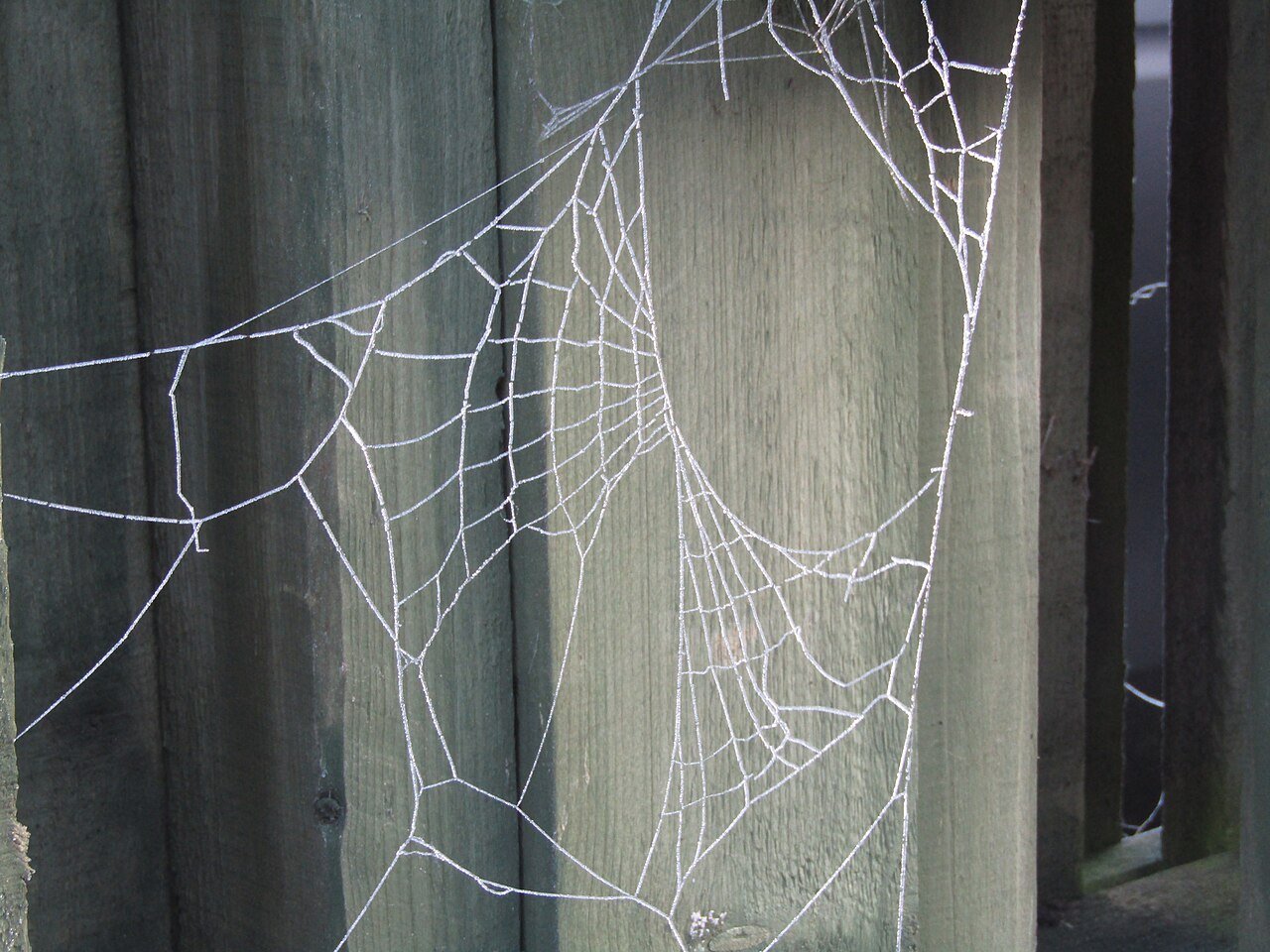
Every warehouse ceiling in Vandalia’s freight corridor is running a textile operation nobody ordered. Look up past the racking in any distribution building off Northwoods or along the Route 40 industrial stretch and the girders carry it: webbing strung between steel flanges, anchored to conduit runs and sprinkler pipe, rebuilt nightly by orb weavers working the gap between the dock lights and the insects those lights summon. We call it the girder loom, and it is the organizing fact of spider control in this town — because Vandalia’s spider pressure is not a basement story first. It is a lighting story, an eave story, and a loading-dock story, and the houses inherit a domesticated version of all three.
Why the Corridor Weaves
Spiders go where prey concentrates, and nothing concentrates flying prey like industrial lighting run all night against dark farmland. Vandalia’s warehouse district sits with crop margins and the I-75/I-70 interchange green space close on multiple sides — a moth and midge production zone with a wall of sodium and LED fixtures at its edge. Every dock light is a prey fountain; every girder within reach of one becomes loom real estate. The species doing the weaving are mostly harmless orb weavers and funnel weavers, but their output is relentless: a fresh web across a dock door every morning, egg sacs in the flange gaps by September, and — the part managers actually call about — webbing drifting onto palletized product staged near the doors, which reads as a sanitation failure to any customer receiving that freight.
The control program therefore starts where the prey does. We audit the lighting line: which fixtures burn all night, which shine onto door seals, where the web density maps against them. De-webbing without touching the lighting logic is a subscription to next week’s webs; pairing a physical removal pass with targeted treatment of anchor lines and fixture housings — and a recommendation memo on which lights can shift, shield, or swap spectrum — moves the loom off the building instead of just harvesting it.
The Dock-Door Curtain
The specific structure that generates complaints: overnight, an orb weaver strings a wheel across the human-door or the gap beside a rolled-down dock door, exactly at face height, because that airspace funnels light-drunk insects. First shift walks into it at 6 a.m. It is harmless and it is also, at scale, a morale line-item. Our route treats door frames, seal edges, and the lintel zone above every working door as standing service points — the same doors the roach program’s dock monitors and the rodent program’s stations already watch, one stop reading three files.
The Residential Half: The Loom Comes Home
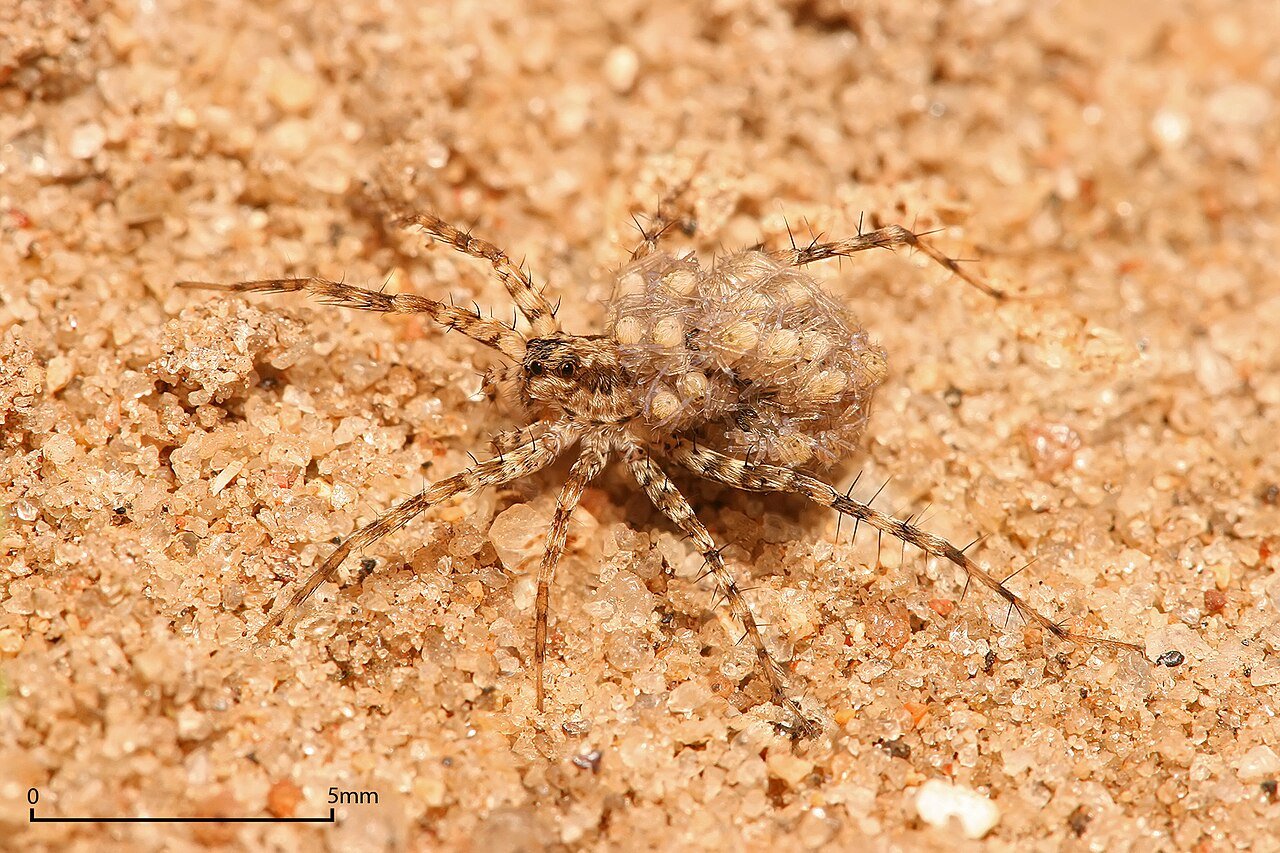
Vandalia’s neighborhoods run the domestic edition. The postwar blocks around the old National Road core — smaller frames, deep eaves, mature tree canopy — carry classic eave-and-porch-light weaving all summer; the newer sections toward the Cassel Hills side add landscape lighting, which is dock lighting at garden scale and recruits the same builders. Inside, the file shifts to the hunters and cellar residents: wolf spiders patrolling garage thresholds in October, cellar spiders holding the sump corners, and the occasional brown recluse question — rare here, real enough to check — answered with a free photo ID rather than a guess. Send the picture before you send the panic; most “recluse” photos we receive from Vandalia are grass spiders with ambitions.
- Exterior de-web + treat: full pole-brush removal of webs and sacs, then treatment of eaves, soffit returns, porch-light zones, and foundation lines — removal without treatment regrows in days
- Lighting counsel: warm-spectrum swaps and motion conversion for the fixtures doing the recruiting, at home and at the dock
- Entry sealing: door sweeps and thresholds against the fall wolf-spider walk-in season
- Interior corners: basement, garage, and utility-room service on the resident species
Timing the Loom
Spider work in Vandalia has a calendar. Spring service is preventive — anchor-point treatment before the first big web generation matures. High summer is the maintenance window, when each service visit resets the exterior population while egg production runs hot. September is the strategic month: this year’s weavers are laying the sacs that become next year’s loom, and a thorough sac-removal pass in early fall is the single highest-leverage visit of the cycle — every sac scraped now is a hundred spiders that never take a shift next June. October pivots to the indoor file as ground-hunters follow the temperature line through garage doors and gaps the sealing work exists to close.
What Vandalia Gets From Us
For the corridor: scheduled de-web and treatment routes with the door-zone standing service, a lighting memo your facilities team can actually act on, and documentation in the same logbook the rest of your pest program writes to. For the houses: a flat-priced exterior program that treats the light-web-eave system as one problem instead of selling web removal as a subscription. Spiders are the most self-inflicted pest pressure in this town — the corridor built the prey fountains, the porches copied them — which is exactly why the fix is mostly architecture and timing, delivered by a crew that reads the whole system. Our Vandalia service page covers the full local file, and our spider guide carries the species-by-species detail.
Take Back the Girders
One call books the audit — dock line or porch line, the loom logic is the same. Free photo ID on any spider that worries you, and straight answers on which lights are doing the recruiting.
Frequently asked questions
Are the warehouse spiders in Vandalia dangerous?
Almost never — the girder loom is built by orb weavers and funnel weavers, nuisance species whose bite ranks below a bee sting. The medically relevant pair (black widow, brown recluse) turn up rarely and in different habitat: undisturbed clutter, meter boxes, stored pallets’ underside — which is why the audit checks those zones specifically.
Why does my dock door have a new web every single morning?
Because the light above it runs a nightly prey fountain and the door gap funnels the flight line — prime real estate gets rebuilt within hours of clearing. Treatment of the anchor zones plus lighting changes retires the site; removal alone just re-lists it.
Can spider webbing on staged product fail an audit?
It reads as a housekeeping deficiency to auditors and as neglect to receiving customers — cosmetic, but reputationally real. A scheduled de-web route with documented dates is the answer that satisfies both.
Do I need spider service for my house or just better lights?
Both halves matter: warm-spectrum or motion-converted fixtures cut recruitment dramatically, and treatment plus sealing handles the population already anchored. We tell you honestly when a $12 bulb swap is half the fix.
What about brown recluses in Vandalia?
Possible, uncommon — and over-reported. Most submitted photos are grass or wolf spiders. Send the free photo ID before assuming; genuine recluse findings get a targeted protocol, not a generic spray.
When is the best time of year for spider control here?
Early fall is the leverage month: removing this year’s egg sacs cancels next summer’s population at the cheapest possible point. Spring anchors-treatment is second; summer visits maintain.
Why are wolf spiders getting into my garage every October?
They’re ground-hunters following the temperature line indoors, not web-builders — door sweeps and threshold sealing stop the walk-in, and the garage-perimeter service handles the ones already inside.
What does spider control cost in Vandalia?
Flat-priced residential exterior programs; documented scheduled routes for corridor facilities, usually bundled with the roach and rodent service already on the same calendar — one stop, three files, one logbook.