
You felt the pinch before you saw the ant — and now there’s a red welt on your ankle and a line of tiny bumps that itch like fury. The first question everyone asks is the same: was that a fire ant? In the Dayton area, the honest answer is almost certainly no, and the real story of what bit you is more interesting. This guide shows you exactly what ant bites look like, which Ohio ants actually bite or sting, how to tell an ant bite from the half-dozen other bugs that leave similar marks, and what to do about the colony that sent the ant in the first place.
What Do Ant Bites Look Like?
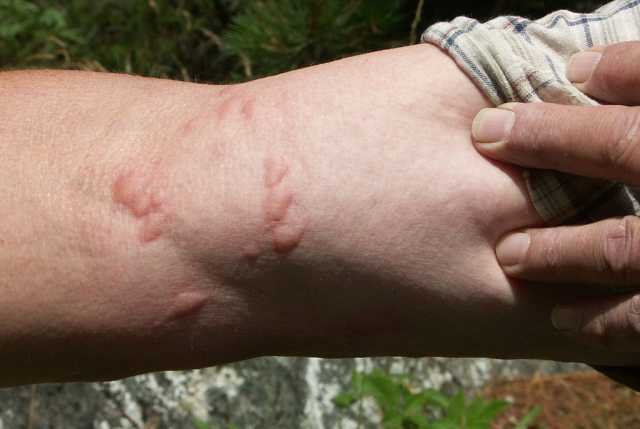
A typical ant bite is a small red bump, usually 2–5 millimeters across, with a pinpoint center where the mandibles broke the skin. It itches or burns for a few hours to a couple of days. Because ants are crawlers rather than fliers, the bites almost always land on skin that touched the ground or a surface they were foraging on — ankles, feet, hands, and forearms are the classic sites. And because ants recruit nestmates, bites often come in loose scatters of two to six rather than the neat straight line bed bugs are famous for.
Knowing which ant bit you matters far less than finding the nest it came from, and that is the work in ant control in Dayton.
The look changes with the ant. A large carpenter ant can break the skin outright and leave a raised welt that stings sharply, sometimes with a tiny drop of blood at the center. A field ant bite burns out of proportion to its size, because the ant bites first and then sprays formic acid into the wound — a chemical one-two punch that feels like a match head touched to the skin. True fire ant stings, which Ohioans mostly experience on vacation in the South, develop into distinctive white pustules within a day. If you have a cluster of pustules and you haven’t left the Miami Valley, something other than a fire ant is responsible.
Bite or Sting? Ants Do Both — and the Difference Matters
People say “ant bite” for everything, but ants have two separate weapons. The bite comes from the mandibles — the jaws — and every ant has those. The sting comes from the back end, a true stinger injecting venom, and only some ants carry one. Fire ants, harvester ants, and the velvet ant (actually a wingless wasp — see our cow killer ant guide) sting. Carpenter ants and field ants cannot sting; they bite and chase the bite with formic acid, which is why the sensation is a burn rather than a puncture.
Why does this matter? Because stings are what put people in the emergency room. Venom is far more allergenic than formic acid, and serious systemic reactions to Ohio’s common house-invading ants are rare precisely because our local species are biters, not stingers. The itchy welt from a pavement ant is an irritation; a true sting allergy is a medical matter. Knowing which you had tells you which camp you’re in.
The Ohio Lineup: Which Local Ants Actually Bite?
- Carpenter ants — our biggest biters, workers up to half an inch. A defensive bite from a major worker genuinely hurts. They bite when you disturb a nest in wet wood; see our carpenter ant guide for what a nest means for your house.
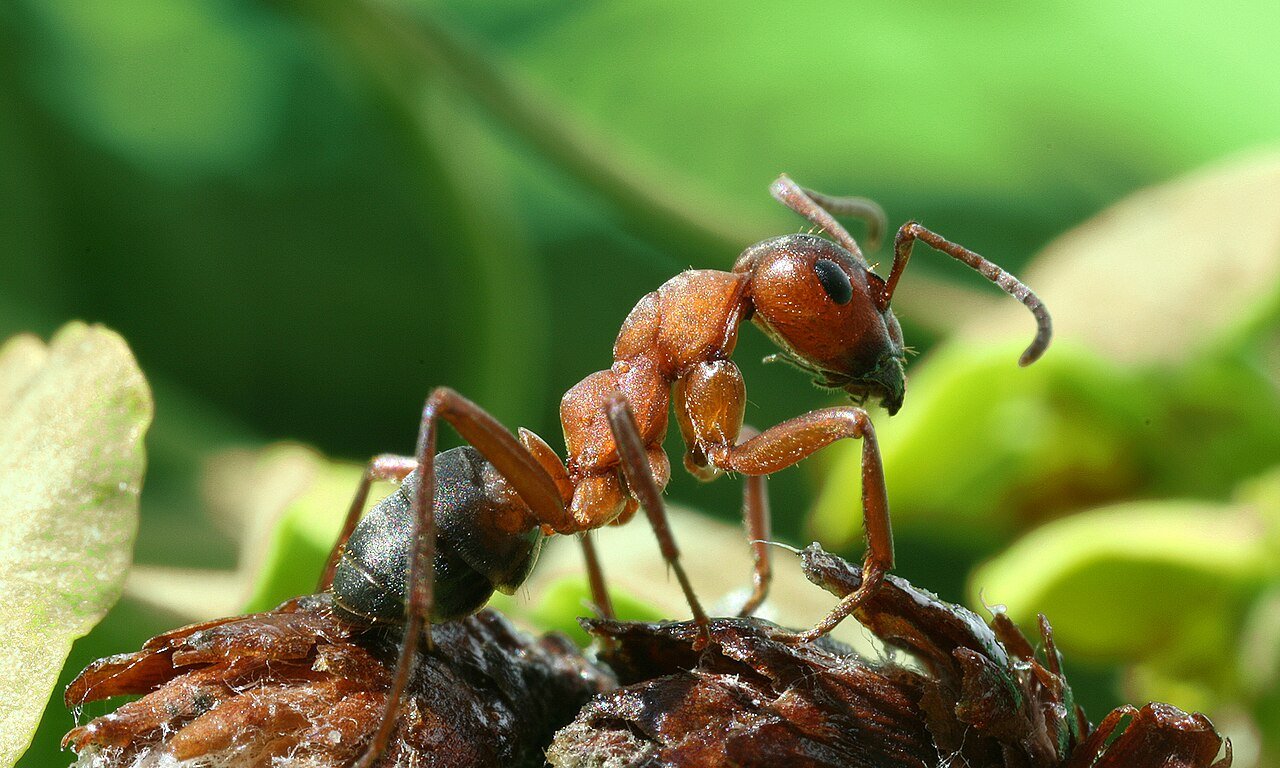
- Field ants — the big reddish-brown mound builders in Dayton lawns, and the number-one ant mistaken for a fire ant here. They bite hard and spray formic acid, but they build open thatch mounds and cannot sting.
- Pavement ants — the little brown ants of driveway fame. They technically have a tiny stinger but can rarely pierce human skin; children playing on patios occasionally get itchy pinpricks. Our pavement ant page covers the colonies themselves.
- Acrobat ants — heart-shaped abdomen held up like a scorpion’s tail when threatened. They can bite and give a mild sting when their nest in damp wood is disturbed.
- Odorous house ants and little black ants — the kitchen-trail regulars. Too small to hurt people; their mandibles are built for crumbs, not skin. If these are your problem, the trail matters more than the bite — start with our odorous house ant guide.
- Citronella ants — the yellow ants that swarm from foundations and smell of lemon when crushed. Completely harmless to people; they don’t even forage indoors. Full story on our citronella ant page.
“I Was Bitten by a Red Ant” — the Fire Ant Question, Answered for Ohio
Red imported fire ants — the infamous Solenopsis invicta — are not established in Ohio. Winters here still kill their colonies, and the USDA quarantine line sits well south of us. We keep a whole page on this because the question comes up so often: are there fire ants in Ohio? The short version: that aggressive red ant defending a mound in your Kettering lawn is a field ant. The burn is real — formic acid earns its reputation — but it will not pustule, it will not swarm you by the hundreds, and the colony is not the ecological disaster a fire ant mound would be.
The one local exception worth knowing: travelers do bring Southern souvenirs home in potted plants and moving boxes, and isolated fire ant finds get stamped out by the state when reported. If you genuinely see dozens of tiny reddish ants boiling out of a disturbed mound and stinging in numbers — not two or three big ants biting — photograph it and call us. That’s a specimen we want to see, and identification is free.
Ant Bite Treatment: What Actually Helps
- Wash it with soap and water — formic acid and skin bacteria are the infection risk, not venom.
- Cold compress for ten minutes takes down the initial burn and swelling.
- Hydrocortisone 1% or calamine calms the itch; an oral antihistamine helps if you welt up broadly.
- Don’t scratch. Nearly every “infected ant bite” we hear about started as fingernails, not the ant. Our guide to stopping bug-bite itch has the full toolkit.
- Escalate for allergy signs: hives beyond the bite site, swelling of the face or throat, dizziness, or trouble breathing mean emergency care, now. This is rare with Ohio ants but absolute when it happens.
For children, the calculus is the same but the threshold lower — kids scratch harder, and small bodies show reactions faster. A bite that is still swelling after 48 hours, shows spreading redness, or develops red streaks has moved from pest question to doctor question.
Is It Even an Ant? The Lookalike Lineup
Half the “ant bites” we’re asked about happened while the person slept — and ants almost never bite sleeping people. Ants forage; they don’t seek hosts. Marks that appear overnight in lines of three point to bed bugs (how bed bugs spread explains why they find beds), intensely itchy ankle bites in summer suggest chiggers or fleas (do fleas bite humans?), and invisible biters in a dusty renovation are often mites. A daytime bite you felt happen, on a hand or ankle, near visible ants — that’s an ant. A mystery rash discovered in the morning almost never is.
The Bite Is the Symptom. The Colony Is the Problem.
An ant bold enough to bite you indoors is a scout from a colony that considers your home part of its territory. One bite is trivial; the ten thousand workers behind it are the actual question. Our ant control service uses non-repellent baits that the colony carries home itself — the approach we explain in our ants-in-the-house guide — because spraying the one ant that bit you recruits none of them and warns all of them.
Across Montgomery, Greene, Miami, Preble, and Warren counties, ant pressure runs May through October, and the biters — carpenter and field ants — peak in early summer when colonies are expanding. If the bites are happening inside your house, that timing is your early warning: the colony is growing now.
Getting Bitten in Your Own Home?
One flat price, a licensed local applicator, and the colony gone at the source — not just the ant that got you. Serving the entire Dayton area.
A Bite’s Timeline: What’s Normal, Day by Day
The first minute: sharp pinch or burn, a pale bump rising inside a red flare. Field ant bites burn hardest right now, while the formic acid is fresh. Hours one through six: the welt settles into an itchy red papule; a carpenter ant bite may show its pinpoint puncture. Day one to two: itching peaks. This is when scratching does its damage, and when a normal bite is at its ugliest. Day three to five: fading fast. By the end of a week a typical Ohio ant bite is a memory. Anything still angry after a week — or getting worse after day two — is either infected from scratching or was never an ant bite at all.
Contrast that with the true fire ant timeline people remember from Gulf Coast vacations: sting, burn, and then within 24 hours a distinctive sterile white pustule that lasts a week and scars if opened. That pustule stage simply does not happen with any ant you’ll meet in a Beavercreek backyard — it’s the single clearest tell separating tourist memories from local reality.
Why Formic Acid Burns: the Chemistry of a Field Ant’s Defense
Formic acid takes its name from formica, Latin for ant, because ants are where chemists first found it. Field ants and carpenter ants carry it in a gland in the abdomen and can spray it several body lengths. On intact skin it’s a mild irritant; sprayed into a fresh bite wound, it lights up nerve endings the same way a nettle sting does. It’s also why the old folk claim that ants “inject venom when they bite” is half-true in spirit and fully wrong in mechanism: nothing is injected. The jaws open the door and the acid walks in. Wash the bite promptly and you remove most of what would have kept it burning.
Dogs, Cats, and the Ant Mound in the Yard
Pets find ant mounds nose-first. A dog that snuffles a field ant mound in a Centerville lawn comes away with bites on the muzzle and between the toes — you’ll see sudden pawing at the face, licking, and a hasty retreat. It looks dramatic and is almost always minor; the same cold-compress-and-time treatment applies, and pets shrug bites off faster than we do. The exception mirrors ours: facial swelling that closes an eye or labored breathing is an emergency vet visit. If your yard has enough mounds that the dog can’t avoid them, that’s a treatable problem — our pet-safe ant control guide covers how we handle lawns where animals live.
When Bites Mean an Infestation — Reading the Calendar
A single outdoor bite in July while gardening means you knelt on a foraging trail; that’s weather, not infestation. Repeated indoor bites tell a different story. Carpenter ants biting inside in early spring — before outdoor foraging season — are the classic sign of a colony nested in the structure, usually in wood that a leak has kept wet. Bites plus sightings of big ants at night, plus fine sawdust below a window frame or sill, and you should be reading our carpenter ant guide tonight and calling us tomorrow. Little ants in the kitchen never bite you at all — but a summer surge of them is the same message in a smaller font: a colony has your address.
Keeping Ants Off You: Prevention That Works
- Know your mounds. Walk the lawn in May; flag thatch mounds and treat or avoid them before barefoot season.
- Gloves for garden work. Nearly all hand bites happen weeding or mulching — right where colonies nest.
- Skip the picnic-blanket shortcut. Twenty feet from a mound is the difference between lunch and a scatter of ankle welts.
- Seal the ground floor. Door sweeps and caulked sill gaps keep foraging trails outdoors; our outdoor ant control guide covers the perimeter game.
- Feed no one. Indoor crumbs recruit indoor scouts. The ant that bit your toddler on the kitchen floor was there for the cereal, not the toddler.
Field Notes from the Five Counties
Around here the bite reports run on a schedule. Late April brings the first carpenter ant calls from the older housing stock in Dayton, Oakwood, and Kettering — big ants indoors, occasional defensive bites during cleanup. June and July belong to field ants: mound complaints and “fire ant” reports from newer lawns in Beavercreek, Springboro, and Huber Heights, where sunny, open turf is exactly what mound-builders want. August adds pavement ant pinpricks around patios and pools. And every single summer, a handful of genuinely worried callers describe a Southern fire ant swarm — and every single time so far, the specimen in the jar has been a field ant. We’d rather look at ten harmless jars than miss the one that matters, so keep them coming.
One more local wrinkle: the little black ants that surge along Miami Valley sidewalks in midsummer get blamed for bites they physically cannot deliver. When tiny ants and itchy ankles show up together in August, the actual biters are usually chiggers in the same grass. Treating the wrong suspect is the most common DIY dead end we see.
Frequently asked questions
What do ant bites look like on humans?
Small red bumps 2–5 mm across with a pinpoint center, usually on ankles, feet, or hands, often in loose scatters of two to six. They itch or burn for a few hours to two days, and larger species like carpenter ants can leave a raised welt with a tiny puncture mark.
Are there fire ants in Ohio?
No established populations. Red imported fire ants cannot survive Ohio winters, and the USDA quarantine zone sits well south of us. Nearly every reported fire ant in the Dayton area turns out to be a field ant — a big reddish mound-builder that bites and sprays formic acid but cannot sting or form pustules.
Why do ant bites turn into white pustules?
They generally don’t in Ohio. The white pustule a day after a sting is the signature of true fire ant venom, which locals mostly encounter traveling in Southern states. A pustule-forming sting in the Miami Valley points to something else — often a wasp or bee — or an infected scratch site.
Do ant bites itch?
Yes — itching is the main symptom, peaking a day or two after the bite as your histamine response ramps up. Cold compresses, 1% hydrocortisone, and an oral antihistamine control it. Scratching is what turns a trivial bite into an infected one.
What is the difference between an ant bite and an ant sting?
A bite comes from the jaws; every ant can bite, and Ohio’s biters follow up with a spray of formic acid that burns. A sting injects venom from the abdomen, and almost no ant you’ll meet in Ohio can meaningfully sting a person. Stings are the allergy risk; bites are just irritating.
Can ant bites make you sick?
Rarely. Ohio ant bites carry no disease, and formic acid causes local irritation only. The medical risks are secondary infection from scratching and — very rarely — allergic reaction. Hives spreading beyond the bite, facial swelling, or trouble breathing mean emergency care immediately.
Why do I keep getting bitten by ants in my house?
Indoor bites mean an indoor colony or heavy indoor foraging — most often carpenter ants nesting in moisture-damaged wood. Repeated indoor bites, especially in early spring, are an infestation sign worth a professional inspection, not a coincidence.
What do carpenter ant bites look like?
A raised red welt with a visible pinpoint where the half-inch worker’s jaws broke the skin, sometimes with a drop of blood, burning sharply at first from formic acid sprayed into the wound. They bite defensively when a nest is disturbed — finding the nest matters more than treating the bite.
How do you treat ant bites at home?
Wash with soap and water, apply a cold compress for ten minutes, then use 1% hydrocortisone or calamine for itch and an oral antihistamine if you welt broadly. Keep fingernails off it. See a doctor for spreading redness, red streaks, or swelling that grows past 48 hours.
Do ants bite you in bed at night?
Almost never. Ants forage for food; they don’t seek sleeping hosts. Bites that appear overnight — especially in lines of three — point to bed bugs, and itchy ankle clusters point to fleas or chiggers. Ant bites happen in daytime, on skin near visible ants.