
“Little black ants” is both a description and, entomologically, a proper name — and the gap between the two causes most of the confusion this page resolves. Nearly every dark small ant in a Dayton kitchen gets the label; the actual species behind it splits three ways (odorous house ants first, pavement ants second, and the LITERAL little black ant — Monomorium minimum — third), and while all three answer to the same bait-first doctrine, the identification changes the placement, the patience, and the prevention. Here is the complete tiny-dark-ant file: the three-species sort (with the crush-and-sniff test that settles most kitchens in one second), the true little black ant’s own biography, why these are the trails that most punish spraying, and the bait program tuned to the smallest ants on the roster.
The three-species sort: which “little black ant” is yours
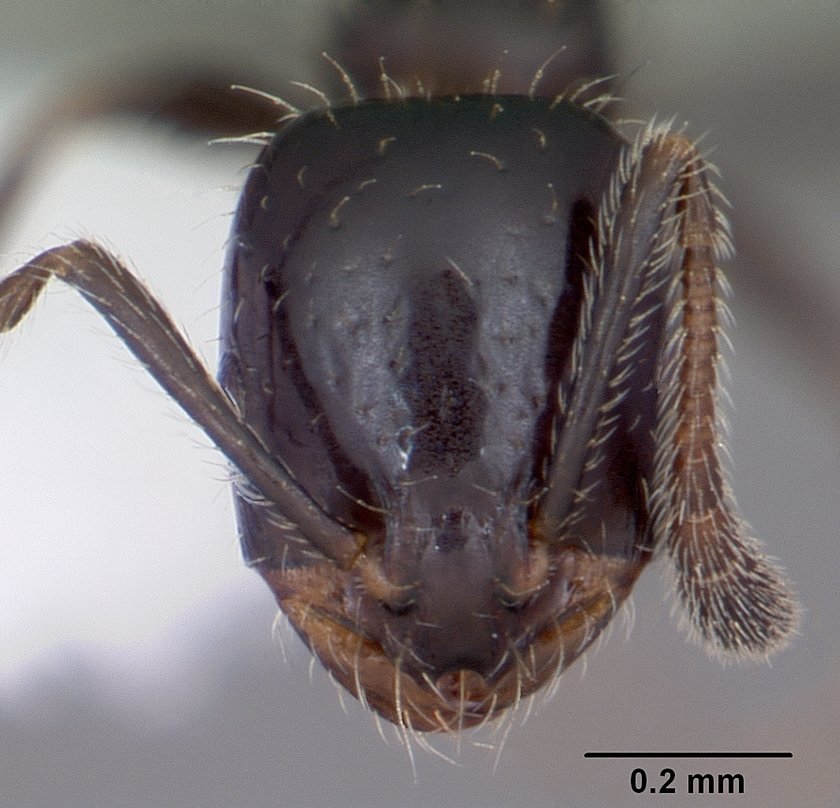
The one-minute tribunal for any small dark trail: Crush-and-sniff first — rotten coconut means odorous house ants, Ohio’s dominant kitchen invader and this library’s most-documented species (multi-queen, spray-reactive, the budding warning applies in full); no smell continues the exam. Venue second — trails rising from floor level, slab seams, and garage joints, with stockier brown-black workers, mean pavement ants (their driveway volcanoes usually confirm outside). Size and gloss third — if the workers are genuinely TINY (a millimeter and a half, half an odorous ant’s bulk), uniformly jet-black and glossy, moving in slow, tidy, almost single-file trails, you have the literal little black ant, the smallest common ant in the state. The stakes of the sort: odorous house ants punish repellents with colony-splitting, pavement ants demand weatherized outdoor bait, and little black ants — tiny, sweet-toothed, crevice-nesting — respond fastest of the three to liquid bait but hide their nests in spaces the others cannot use. All three acquit on the danger question: no meaningful sting or bite reaches human skin from any of them.
Three species look the same at a glance and want three different baits. Telling them apart is where ant control in Dayton begins.
The little black ant proper: a biography in miniature
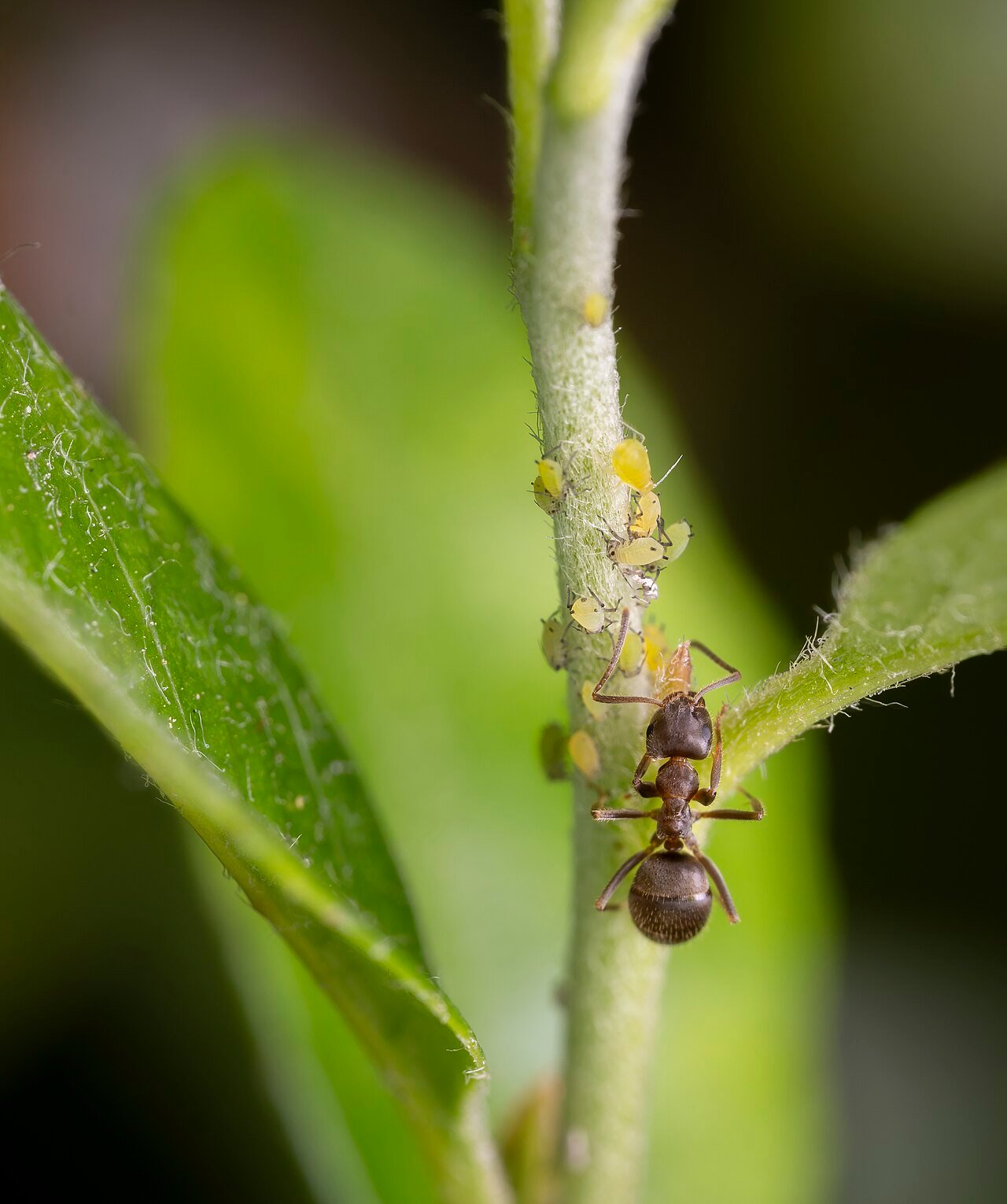
Monomorium minimum earns its own portrait: colonies run moderate-to-large with multiple queens (the persistence engine), nesting in soil under objects, in rotten-wood pockets, behind veneer, and — the indoor habit — inside wall crevices and cabinet voids too small for larger species; workers forage in disciplined trails for sweets first (honeydew is the wild staple — the aphid-farm economy in the photo below funds them exactly as it does their odorous cousins), plus grease and protein per the colony’s brood cycle. The calendar peaks in high summer — late June through August is little-black-ant season on our routes, with winged swarms in the same window (tiny dark swarmers that panic households until the wing-and-waist check acquits them of termite-hood per the flying-ant guide). The species’ superpower is access: at 1.5 millimeters, seams that seal against every other ant remain little-black-ant highways, which re-orders the usual program — bait placement outranks caulk here, because the caulk gun cannot win an arms race at that scale.
The program: liquid bait, undisturbed trails, and multi-queen patience
The doctrine transfers from the ants-in-house flagship with three size-tuned adjustments. The bait: sweet LIQUID borate bait leads decisively — tiny ants take liquids fastest, and drop placements directly beside the trail (on foil squares or the provided cards) at multiple points along the route; keep them wet daily, since micro-volumes evaporate fast. The discipline: the never-spray rule at maximum strength — clean everything EXCEPT the trail, let the busy period run (traffic doubling for two days is couriers recruiting — the program working), and expect the multi-queen timeline: seven-to-fourteen days for real collapse, longer than single-queen species, with a second bait rotation (protein-grease) if sweet uptake stalls mid-campaign. The trace: follow the trail backward as always — little-black-ant entries favor window frames, sill seams, and cabinet-back crevices — but weight the FOOD-SIDE fixes over the caulk-side ones, per the access superpower: sealed sugar, wiped drips, managed pet bowls, and the outdoor dairy takedown (hose-blast the aphid herds funding the colony) starve the trail at both ends. Persistence past two honest cycles, winter trails, or relocating multi-room traffic graduates the case to the professional non-repellent toolkit — the standing escalation across the whole ant wing.
The bottom line
Sort first — sniff, venue, size — because “little black ants” is three species wearing one name, and the sort tunes everything downstream. For the literal littlest: liquid sweet bait beside undisturbed trails, multi-queen patience, food-side prevention over caulk-side, and the aphid economy managed outdoors. For the sniff-positive majority: the odorous house ant file next door, budding warning included. For the floor-level stocky crews: the pavement ant program. And for every version: no sprays, no panic, no dirty-house verdict — just the smallest trails in the book, answered by the same patient logistics that runs the entire ant wing: (937) 569-3330 when the cycles fail or the identification wants professional eyes.
Why tiny ants punish spraying hardest
The never-spray doctrine runs the whole ant wing, but the smallest species enforce it most brutally, and the mechanics deserve their paragraph. Small-bodied, multi-queen, crevice-nesting species hold three counter-spray advantages: dispersal — repellent pressure fragments a little-black or odorous colony into satellite nests seeded through crevices no follow-up can reach, converting one findable trail into a wall-void archipelago; replacement economics — at 1.5 millimeters, workers are metabolically cheap and multi-queen production replaces spray casualties in days, so contact kills never touch colony arithmetic; and trail plasticity — micro-ants reroute around residual barriers through gaps at scales caulk and chemistry cannot close, resurfacing one cabinet over within the week. The spray-can experience with tiny ants is therefore uniquely demoralizing — visible victory, structural defeat, repeat — and the bait experience uniquely satisfying: the same access superpower that defeats barriers turns every crevice into a delivery route once the couriers carry the dose themselves. The smaller the ant, the purer the logistics war — and logistics is the one war the household always wins, provided it feeds the trail instead of fighting it.
The eight-county tiny-trail report
The sort’s local distribution: odorous house ants dominate the label everywhere (the coconut test convicts them in most kitchens from Oakwood to Eaton); pavement crews own the slab suburbs’ share — Huber Heights, Vandalia, Beavercreek — per their construction; and the literal little black ant files strongest from the mature-landscape belts (Kettering, Centerville, the county seats’ old gardens), where decades of mulch, stone, and aphid-rich plantings fund the miniature economy, with high-summer swarms adding the July identification calls. Every county shares the seasonal shape — June-through-August peak, honeydew-funded, sweet-bait-responsive — and the program’s happy ending: the smallest trails on the roster, run through the same patient bait logistics, close on schedule in every zip code. The free photo line does the sorting for the undecided: (937) 569-3330, magnification unnecessary, coconut sniff results welcome.
Frequently asked questions
What are the tiny black ants in my kitchen?
Three candidates behind one name: odorous house ants (crush one — rotten coconut smell convicts them), pavement ants (stockier, floor-level, driveway volcanoes outside), or the literal little black ant — Monomorium minimum, half the size of either, jet-glossy, in tidy slow trails. All three take the same bait-first program with species-tuned details.
How do I get rid of little black ants fast?
Sweet liquid borate bait placed directly beside the intact trail tonight — tiny ants take liquids fastest — refreshed daily, with everything else cleaned so the bait wins the menu. Expect two busy days (couriers recruiting), then collapse over one-to-two weeks on the multi-queen timeline.
Why do little black ants keep coming back?
Multi-queen persistence plus access: satellite queens survive partial campaigns, and 1.5-millimeter workers re-enter through seams no caulk gun can close. The durable fixes run food-side — sealed sugar, managed drips, the outdoor aphid-farm takedown — with full bait cycles run to completion.
Do little black ants bite or sting?
Nothing that reaches human skin meaningfully — the trio behind the name are all nuisance-and-contamination files only. The response stays proportionate: bait, patience, and prevention; never panic.
What attracts tiny black ants?
Sugar above all — honeydew specialists by evolution, they treat syrup drips, fruit bowls, and pet food as superior aphid farms. Outdoors, actual aphid herds on your plantings fund the colonies; the hose-blast dairy takedown is kitchen defense at the source.
Why does spraying make tiny ants worse?
Small multi-queen species answer repellent stress by fragmenting — satellite nests seed through crevices beyond any follow-up, converting one trail into several. Contact kills also never dent multi-queen replacement math. Tiny ants are the purest case for the feed-don’t-fight doctrine.
What are the tiny black ants with wings?
Summer swarmers — the colony’s reproductive flight, peaking July-August for the little black ant. Run the termite check (pinched waist and unequal wings = ant) per the flying-ant guide; tiny dark swarmers pass it at a glance, and the flight itself is a census event, not an invasion.
How small is a little black ant?
About 1.5 millimeters — the smallest common ant in Ohio, half an odorous house ant’s bulk, capable of using entry seams every other species finds sealed. That access is why its program weights bait placement and food control over caulk.
Where do little black ants nest?
Outdoors: soil under stones and mulch, rotten-wood pockets, and masonry gaps — usually within a short trail of the aphid economy funding them. Indoors: wall crevices, cabinet voids, and window-frame seams too small for larger ants. The trail traced backward finds the neighborhood if rarely the exact address — which is precisely why bait logistics outperform nest-hunting.
When do tiny black ants need professional treatment?
The standing escalations: two honest bait cycles failed, trails relocating room to room (satellite behavior), winter trails (in-structure nesting), or annual recurrence past patience. The professional adds non-repellent products and colony mapping: (937) 569-3330 — and the phone triage still talks plenty of tiny-trail callers into a $6 bottle instead.
The miniature economy: how 1.5 millimeters runs a supply chain
A closing appreciation that doubles as strategy: the little black ant’s colony operates the same three-part economy as every ant on this site — scouts filing reports, trails moving calories, queens converting surplus into workers — miniaturized to a scale where a single syrup drip is a regional harvest and a cabinet seam is an interstate. The miniaturization changes the household experience in both directions: infestations feel more mysterious (trails materialize from invisible seams; sources hide in crevices no flashlight enters) yet resolve more cleanly (liquid bait moves through micro-colonies fast once uptake starts, and the small foraging radius means the source economy — the drip, the bowl, the aphid herd — almost always sits within a few yards of the trail). Read the tiny trail as the supply chain it is, interdict it with the couriers’ own logistics, and the smallest pest operation in the book closes like the rest of them — on schedule, without a spray can, and with the kitchen’s sugar economy under new management: yours.
The rest of the ant wing — the coconut-scented cousins, the pavement crews, the carpenter flags, the outdoor triage — stands one link away in every direction; this page just covered the smallest delegates. Sort, bait, starve, wait: the four verbs that run the whole family, at every scale the family comes in.
And tonight’s assignment, whatever the species verdict: one drop of bait beside the trail, one clean counter everywhere else, and one week of letting the smallest supply chain in the house deliver its own eviction notice. The couriers work for you now.
Small trail, short story, sweet ending — case closed at a millimeter and a half.
Coconut sniff optional, but honestly recommended — everyone does it twice.
Happy sorting, and gentler kitchens ahead.
The trail ends here.