
Camden sits where US-127 meets the Seven Mile Creek valley in southern Preble County — a village of brick storefronts and frame Victorians that literature buffs know as Sherwood Anderson’s birthplace, and that we know as classic old-village pest territory: century homes on stone foundations, a creek corridor running the moisture and mosquito economy through the middle of town, and farm ground starting at the last backyard in every direction. Greater Dayton Pest & Rodent covers Camden and the surrounding Somers Township lanes on our Preble County route days — the full service list, from rodent exclusion to WDI inspections, at the same prices and guarantee as everywhere on this site.
Some of our Camden customers found us searching for an exterminator near me. The honest answer to that search is somebody local enough to come back for free when something returns.
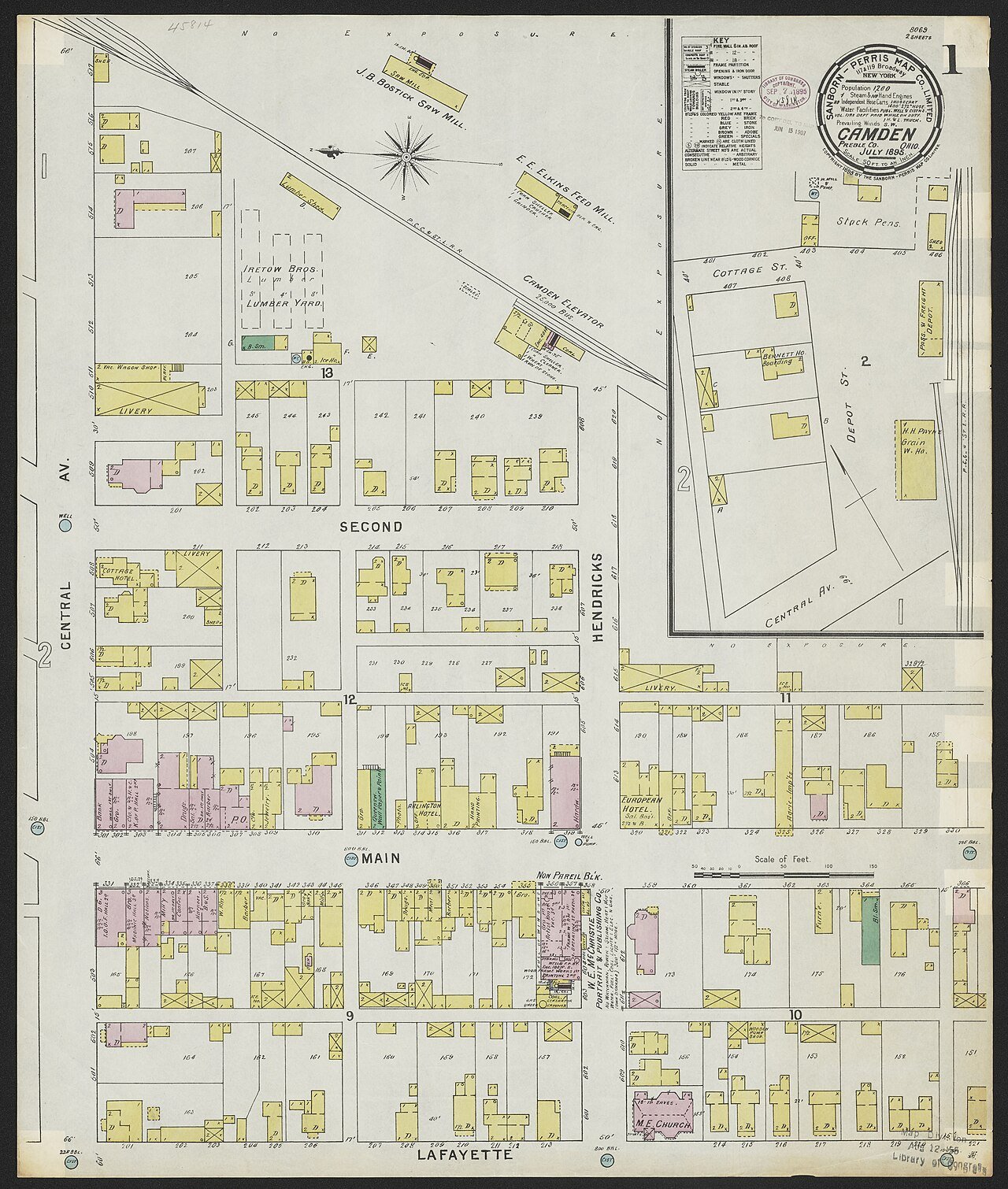
What Camden’s buildings actually face
The village core runs the old-stock playbook: stone and early-block foundations whose mortar admits the fall mouse push, balloon-framed walls that let a cellar problem reach the attic, deep porches hosting paper wasps over every summer conversation, and cellars whose humidity feeds the basement guild — camel crickets, sowbugs, and the spiders that hunt them. The creek adds its layer: properties along Seven Mile Creek and its low ground see the mosquito season arrive earlier and stay later than the uplands, and wet springs push the moisture-loving lineup indoors along the valley blocks. And the farm edge adds the rural signature the county page maps in full — harvest-season field mice testing every structure, lady beetles and cluster flies massing on sunny siding each October, and outbuildings running their own ecosystems behind the houses. Most Camden properties get some of all three, and our inspections read the whole parcel.
The Camden playbook
- September first: the exterior barrier-and-exclusion visit before harvest and the invader flights — the highest-value hour of the village year
- Creek-aware mosquito work: resting-site treatments and breeding-site audits for the valley properties (mosquito service)
- Old-stock exclusion: mortar-and-mesh work on stone foundations, done reversibly and permanently
- Porch wasp season: spring starter-nest patrols beat August colonies (the removal guide)
- Transaction inspections: Category 12 WDI reports for the village’s steady turnover of historic homes
Village logistics and the neighbor economy
Camden rides the southern leg of our Preble route days — typically the same loops that serve Gratis and West Elkton — so ordinary work books a day or two out, urgent situations (stings at doors, transaction deadlines) jump the queue, and the photo-first habit gets the truck loaded right for the first visit. Small-village booking has one superpower the suburbs lack: coordination. Two or three Main Street neighbors, a landlord’s scattered rentals, or the church and the parsonage on one route day tighten everyone’s scheduling and our routing — organize the street and we will organize the calendar. Quotes free and firm, no mileage lines, and the re-treatment guarantee rides the full length of US-127.
Camden questions we hear
The house has flooded-basement history from the creek years. Does that change pest work?
It changes the priorities: flood-history basements carry moisture memories — wicking walls, damp sills, occasionally still-wet fill — that keep the basement guild and the termite risk elevated for years after the water recedes. The plan leans harder on dehumidification, sill-line inspection, and annual termite checks, and our written findings flag what a sump or grading fix would retire. The creek is the village’s history; managed right, it does not have to be the basement’s future.
Is the old store building we bought treatable, or is commercial different here?
Village commercial is one of our favorite categories — the brick storefront with the apartment above runs the same shared-cellar, connected-wall logic as downtown Dayton at one-tenth the scale, and mixed-use buildings get one integrated plan instead of two half-plans. Restaurants and food service in the village get the documentation-ready program; everything else gets scheduled service sized honestly for village pressure. The 1895 photo above shows the buildings; we keep their twenty-first-century tenants comfortable.
Preble coverage: county hub · Eaton · Gratis · West Elkton · full service area.
A Camden seasonal calendar
- March–May: ants wake in the village kitchens (the coconut-smell species leads); termite swarm season makes any winged insect in an old Camden basement a same-day photo; creek-valley mosquito prep starts with every emptied bucket
- June–August: porch wasp colonies scale; mosquito pressure peaks along the creek; carpenter bees drill the unpainted outbuildings; spiders web every porch light on the strength of the valley’s insect economy
- September–October: the double arrival — harvest mice off the surrounding sections and the invader flights (lady beetles, stink bugs, cluster flies) onto sunny walls; the September visit answers both at once
- November–February: interior mouse season in the old stock; cluster flies at the sunny windows; the quiet months for exclusion work and pre-listing inspections
The bottom line for Camden
A creek-valley village of century buildings ringed by working fields gets all three of Ohio’s pest geographies at once — and deserves a company that reads all three instead of spraying generically at whichever one called. That is the service: old-stock exclusion done like preservation work, valley moisture managed at its sources, the September defense timed to the combines and the beetle flights, and every visit documented, guaranteed, and priced without a mileage line. Sherwood Anderson left Camden for Winesburg; the mice keep trying to move in the opposite direction — and now the village has a local answer on the route schedule. (937) 569-3330: free quotes, free photo ID, Saturdays by appointment.
For the township lanes: Somers, Israel, and the southern farms
Camden anchors our coverage of Preble’s southern tier — the Somers Township lanes around the village, Israel Township toward the southwest corner, and the farmsteads running down toward the Butler County line and the Hueston Woods country. Rural addresses here get the full campus treatment the county page describes: house, barn, feed room, and outbuildings scoped as one property, exclusion prioritized where it pays (the farmhouse and the feed room first, always), the deer-mouse protocol for the stored equipment and campers, and the honest lane-sorting between our structural work and the co-op’s crop-side licenses. The farm families of the southern county have kept these places standing for generations with exactly the maintenance philosophy we sell — small permanent fixes ahead of big seasonal problems — and joining that tradition is the point of the route. When the scratching starts in the summer kitchen or the wasps claim the equipment shed, the number rides the same truck that already knows the roads: (937) 569-3330.
Do you handle the bats in the old belfry / attic situations these villages produce?
The classic old-village call, and the honest split applies: bat removal itself is licensed wildlife work (and season-restricted in Ohio to protect maternity colonies), so the removal goes to our wildlife partners — but the exclusion afterward, the guano-context cleanup precautions, and the bat bug follow-up that attic colonies sometimes leave behind are squarely ours, and one call to us still runs the whole sequence in the right order. Village churches, lodge halls, and tall Victorians produce this situation on a schedule; the number that sorts it is the same as everything else on the page.
Who actually turns up in Camden: Greater Dayton Pest & Rodent is owned and operated by Bryan Camden, licensed by the Ohio Department of Agriculture — firm #115079, commercial applicator #170858, categories 10A, 10B and 12. When you call, you talk to the person who does the work. No call center, no rotating crews, and the same technician on every visit.
Frequently asked questions
Do you provide pest control in Camden?
Yes — the southern Preble village rides the western rotation; full program, known lanes, dedicated page.
What pests are most common in Camden?
Preble standards: harvest rodent surges, older-core foundation mice, farmstead wasp economies, fencerow globes, stored-grain files, and deer-mouse outbuildings as the default.
How much is pest control in Camden?
County formula: most homes $39–$55/month quarterly; campuses walked; free estimates: (937) 569-3330.
Why does the village get October mice every year?
The belt equation — harvest displacement plus first frost through the older stock’s accumulated doors; September masonry-appropriate sealing is the annual answer.
Do you treat the farms around Camden?
Campus model — systems quotes, harvest calendars, grain protocols, deer-mouse assumptions; the southern township lanes are standing route work.
How fast can you reach Camden?
Weekly western rotation — days typically, no travel charges.
Do you serve Camden businesses?
Yes — village storefronts and ag operations alike, matched programs and documentation included.
What is the stink bug situation?
Flyway-certain — the surrounding beans launch September’s wave at the village walls; barrier-plus-seal before Labor Day, annually, as infrastructure.
Is the Protection Plan right for Camden?
The farm-adjacent majority, yes — standing exposure matches the quarterly rhythm; honest triage for the interior blocks.
How do I start service in Camden?
Instant quote, free photo ID, or (937) 569-3330 — free estimates, route days weekly.