
Yes, vinegar kills the ants you pour it on — and no, vinegar will not solve your ant problem. Both halves of that sentence are true, both are measurable, and the gap between them is where most Dayton kitchens spend six frustrating weeks every spring. This page gives you the complete, honest picture: what vinegar actually does to ants (it is genuinely useful for one specific job), why spraying it on trails routinely makes infestations worse with Ohio’s most common house ant, what the home-remedy shelf can and cannot do, and the five-dollar approach that actually ends the problem at the colony.
What vinegar actually does to an ant
Household white vinegar is roughly 5% acetic acid. Sprayed directly on an ant, it kills by disrupting the insect’s cuticle and drowning it in an acid it cannot tolerate — death in minutes. So the demonstration everyone has run at the kitchen counter is real: spray the trail, watch the ants die, wipe up, feel victorious. The problem is arithmetic. The workers on your counter at any moment are a fraction of one percent of the colony. An odorous house ant super-colony — standard issue in Miami Valley walls and slabs — runs tens of thousands of workers and, critically, many queens. Every ant you kill with vinegar was a disposable forager scheduled to be replaced that afternoon. You are mopping the ocean.
Vinegar erases the trail without touching the colony, so the trail returns by morning. Ending it takes ant control in Dayton.
Vinegar’s genuinely valuable trick is different: it erases the road. Ants navigate by pheromone trails — invisible scent highways refreshed by every worker that walks them. Vinegar (like any strong cleaner) obliterates those trails, which is why a wiped counter stays ant-free for a day or two before scouts rebuild the route. Used correctly — as a cleaning tool in a bait-led strategy, never as a weapon — that trick has a real place, and we will put it in its place below.
The budding disaster: why spraying Ohio’s worst kitchen ant backfires
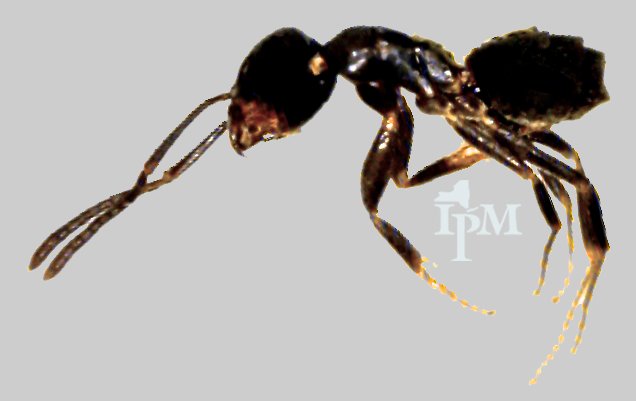
Here is the part almost no home-remedy article tells you. The ant in most Ohio kitchens is the odorous house ant (Tapinoma sessile — crush one and smell rotten coconut; full species guide here), and it has a documented stress response called budding: when a colony is hit with a repellent attack — vinegar flood, over-the-counter repellent spray, most “kills on contact” products — surviving queens grab brood and workers and split into multiple daughter colonies in new locations. You spray the trail at the sink; three weeks later there are trails at the sink, the dishwasher, and the upstairs bathroom. The infestation did not resist the treatment — it obeyed it. This single behavior is why our technicians ask “what have you sprayed so far?” before quoting ant work, and why the honest answer changes the job.
The home-remedy shelf, graded honestly
- Vinegar spray (vinegar + water, any ratio): C–. Kills on contact, erases trails, cannot touch the colony, triggers budding in odorous house ants. Use only as a cleaner, never as strategy.
- Baking soda: D. The internet chemistry (“it explodes their stomachs”) is folklore — ants avoid it, and controlled tests show no meaningful colony impact. Same folklore family as bleach remedies.
- Salt: D. Kills nothing at household concentrations; a salt line is a speed bump, not a wall.
- Windex / Lysol / all-purpose cleaners: C–. Identical story to vinegar — contact kill plus trail erasure plus the same budding risk, with added surfactants. Cleaning products clean; they do not do pest control.
- Hand sanitizer: D+. Contact kill from the alcohol; everything else above applies, at boutique pricing.
- Essential oils (peppermint, clove, cinnamon): C. Real repellency in lab settings, hours-to-days of persistence in a real kitchen, zero colony effect — and actively counterproductive anywhere you plan to bait.
- Diatomaceous earth: B– outdoors in dry protected spots; nearly useless where damp. Full DE guide here.
- Cornmeal / grits: F. They cannot digest it, goes the legend; in reality they feed it to larvae, which digest it fine.
- Boiling water (outdoor mound): B for the single visible mound of pavement ants in a walkway crack; useless for anything nesting in a wall, slab, or the network of satellite nests most species run.
- Sugar-borax bait (the one home remedy pointed the right direction): B. This is real bait logic — slow toxicant carried home by workers. Homemade versions fail on dosage (too hot kills the courier at the counter; too weak does nothing) and on matrix (colonies switch between sugar and protein hunger seasonally). Commercial gel baits solved both problems for six dollars.
What actually ends an ant problem: bait logic
Everything that works shares one design: the ant must survive the encounter and carry the payload home. Slow-acting gel and station baits — the same class we use professionally — get eaten at the placement, walked back through the trail, and fed by mouth (trophallaxis) through the workers, the larvae, and ultimately the queens. Colony death follows in one to three weeks, quietly, including every member you never saw. The homeowner’s version of the protocol: place gel bait dabs on cards directly beside the active trail (never on sprayed or vinegared surfaces — you would be serving dinner on a floor you just soaked in repellent); expect and welcome a temporary increase in traffic (“the bait is working” looks alarming for 48 hours); refresh until traffic collapses; clean the trails with your vinegar afterward, as the victory lap. The order of operations — bait first, clean later — is the entire secret, and it is exactly backwards from instinct.
Species matters: match the fix to the ant
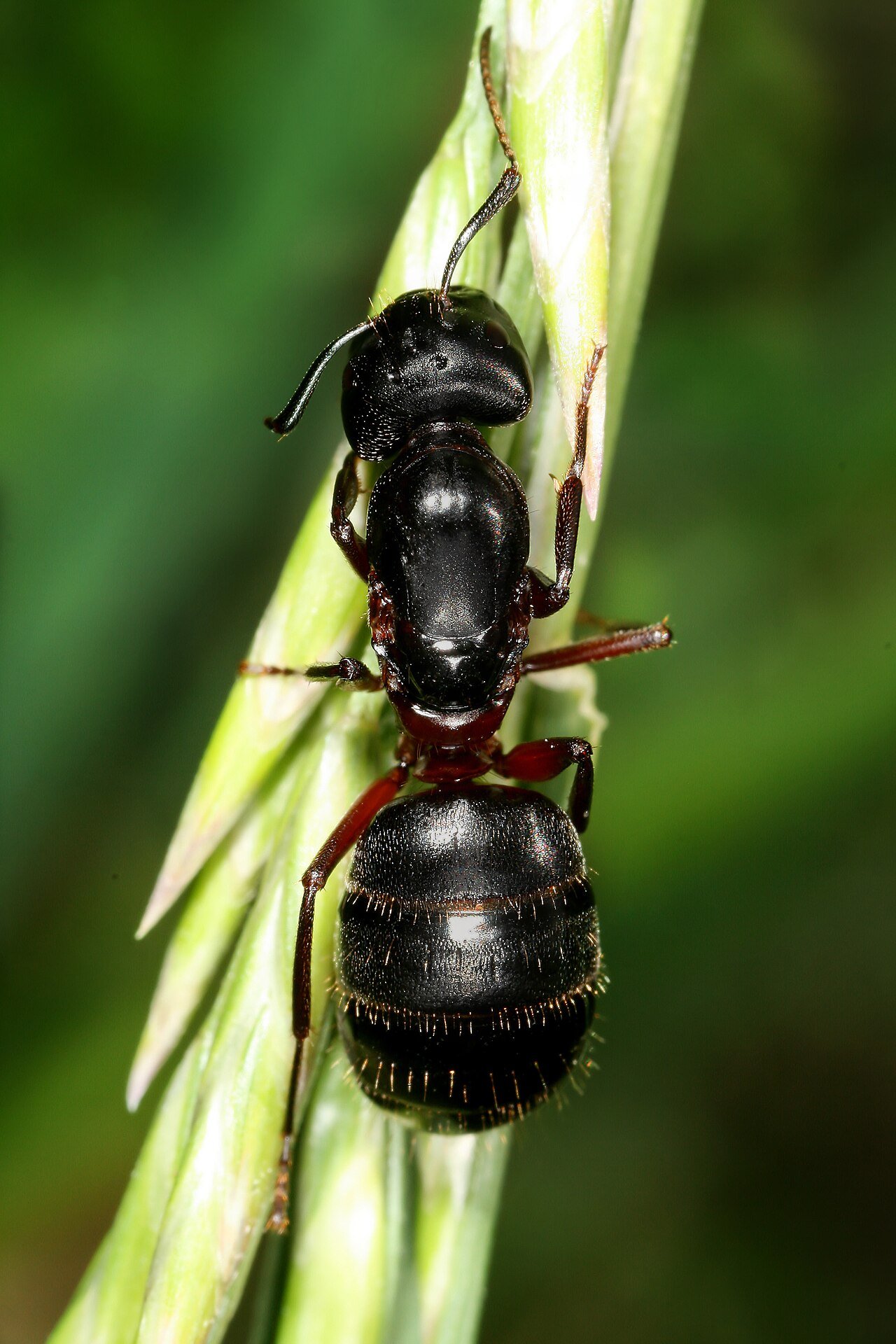
“Ants” is not one problem, and the vinegar question has a different stake for each of Ohio’s big four. Odorous house ants (rotten-coconut smell, erratic fast trails): the budding species — never spray, always bait; sweet baits first. Pavement ants (soil craters between pavers, slower trails): bait-friendly and forgiving; boiling water earns its B on the isolated walkway mound. Carpenter ants (large, often at night, sawdust-like frass): vinegar is irrelevant — these are a structural moisture story and deserve a professional look (carpenter ant guide). Citronella ants (fall swarms, lemony smell when crushed): no treatment usually needed at all — they are harmless swarmers, and vinegar would only stain the grout. Free ID from a photo settles which one you have: (937) 569-3330.
Where the kitchen chemistry belongs: your six-step no-spray protocol
- Day 1: identify the species (photo, free text ID) and find every active trail — follow them to entry points and note them
- Day 1: place commercial gel bait beside (not on) every trail; put stations outdoors at entry points
- Days 2–4: let traffic surge; do not clean the trails, do not spray anything, anywhere
- Days 5–14: refresh bait as it is consumed; traffic collapses as the colony dies
- After quiet: now deploy the vinegar — clean every former trail to erase the pheromone map for the next scouts
- Same week: seal the entry points you found (caulk, door sweeps) and fix the attractant (the drip, the crumb zone, the mulch against the foundation)
That protocol, executed patiently, resolves the majority of ordinary kitchen invasions for under fifteen dollars. When it does not — multiple failed baiting rounds, trails from wall outlets and ceiling lines, carpenter ants, spring swarms indoors, or an odorous-house-ant network that has already budded across the house from previous spraying — the colony structure is beyond counter-top reach, and that is precisely the job our ant control service exists for: non-repellent professional products colonies cannot detect, placed by people who read trails for a living, with the re-treatment guarantee behind the result.
Kids, pets, and the real safety comparison
Part of vinegar’s appeal is feeling safer than “chemicals,” and the instinct deserves a straight answer. Vinegar itself is food-safe, obviously — but the strategy it anchors keeps live ant infestations (and the salmonella-class bacteria ant trails track across counters) in your kitchen for weeks longer than baiting would, and it pushes many households toward escalating over-the-counter repellent sprays applied across the very surfaces kids and pets touch. Compare the bait-led approach: a pea-sized dab of gel inside a crack or a tamper-resistant station, nothing broadcast, nothing on food surfaces, the infestation gone in two weeks. Application method and placement — not the word “natural” — are what make a pest strategy family-safe, and by that honest measure, targeted baiting beats a spray bottle of anything. We treat homes with crawling babies, countertop cats, and beagles that lick everything, every week, on exactly this logic. (Want the fully pet-focused version? Our pet-safe ant control guide goes deeper.)
Vinegar-and-ants questions we hear
Does vinegar repel ants or attract them?
Repels — strongly, while the scent lasts, which indoors is a few hours to a day. Nothing about vinegar attracts ants; what people mistake for attraction is the rebuilt trail two days later, routed around the cleaned zone by scouts who never left the wall. That rerouting is also the quiet cost: every repellent application teaches the colony a new path, sometimes deeper into the house.
Apple cider vinegar vs. white vinegar?
Identical acetic-acid story, with one demerit: the sugars in cider vinegar leave a residue that can actually feed the next visitors if wiped carelessly. White vinegar is the better cleaner. Neither is a treatment.
The vinegar worked last year — why not now?
Last year you likely had a small satellite nest or seasonal foragers whose trail you disrupted long enough for them to give up on your kitchen. This year the colony is bigger, closer, or already budded. Same product, different opponent. The move that scales with the opponent is the bait protocol, not a stronger vinegar.
The myth-testing series: bleach vs roaches · alcohol vs bed bugs · do bug bombs work · diatomaceous earth · Lysol vs bed bugs.
Why the internet keeps promising otherwise
It is worth naming the pattern, because you will meet it again on every pest topic: the vinegar article economy runs on the demonstration, not the outcome. Contact kill is instant, visual, and filmable; colony death is slow, invisible, and boring. A thirty-second clip of ants dying in acid outperforms a two-week bait timeline on every platform, so the clip gets made ten thousand times and the timeline gets made rarely — and the budding consequence appears in approximately none of them, because the camera is off by the time the colony splits. We write these guides the opposite way on purpose: the boring mechanism that works, the exciting demonstration that does not, and the specific Ohio species that punishes the difference. It is also why the myth-testing series above exists — same discipline, applied to every kitchen-cabinet remedy our customers ask about.
The bottom line
Keep the vinegar — it is an excellent trail eraser and a fine cleaner, and it has a real slot in step five of a winning protocol. Just never promote it to strategy: it cannot reach the queens, it teaches surviving ants new routes, and against the odorous house ant that owns most Miami Valley kitchens it can turn one colony into four. Bait beside the trail, wait out the surge, clean up after the collapse, seal the doors. And when the trails outnumber your patience — or the ants are big, black, and dropping sawdust — skip to the professionals who do this daily: free quotes, same-week scheduling, guaranteed results. Greater Dayton Pest & Rodent, (937) 569-3330.
The outdoor version: vinegar in the yard and garden
Two outdoor uses deserve their own verdicts. As a weed-and-ant combo on patios: strong horticultural vinegar (10–20% acetic acid, a genuinely hazardous product that burns skin and eyes — gloves and goggles are not optional) does kill mound ants it saturates along with the weeds, but it also kills whatever soil life it soaks and corrodes limestone and concrete over time; the isolated pavement-ant mound is better served by boiling water or a labeled granular bait. As a deterrent ring around the foundation: forget it — rain and sun erase the application in a day, and you cannot re-spray your way to a barrier that professional non-repellent products create in one visit and hold for a season. The yard-side truth mirrors the kitchen-side truth: vinegar is a contact tool with no persistence, and persistence is the entire game outdoors.
Does vinegar kill ant eggs or the queen?
Only by direct soaking — which means excavating the nest and pouring, something achievable for one small visible mound and impossible for the wall-void, slab-gap, and multi-queen networks that cause actual indoor problems. No trail application ever touches eggs or queens; they are the whole reason contact killing cannot win. The bait courier reaches them; the spray bottle never does.
How do I stop the ants from coming back every spring?
Annual spring trails are a message: the colony overwinters in or against your structure — under the slab, in a wall void warmed by the house, beneath the mulch bed at the foundation — and wakes into your kitchen each March because your kitchen is the nearest sugar. Ending the cycle means one thorough campaign instead of an annual skirmish: bait the colony to collapse (professionally, if it has survived multiple springs), seal the entry gaps it used, pull mulch back to expose a strip of foundation, and fix the moisture that made the wall void attractive. Homes that do the full sequence stop having Marches. Homes that spray each spring have a subscription.
Is there any ant a vinegar spray is the right answer for?
One honest yes: the lone scout. A single ant wandering the counter with no trail behind it is reconnaissance, and killing it before it reports home — vinegar, tissue, whatever is closest — genuinely can delay discovery of your kitchen. The moment there is a trail, the scouts have already filed their report, and the strategy flips to bait. Know which moment you are in, and the little spray bottle finally has a job description it can meet.
One last calibration: everything on this page assumes the ordinary household invasion — trails, counters, patience, and a species that baits well. If what you are seeing is different in kind — winged ants emerging indoors (possible termite confusion, worth ruling out the same day), large black ants with sawdust, or trails appearing from ceiling fixtures and second-story walls — skip the protocol and send the photo now: (937) 569-3330. Those three patterns are structural stories, they are time-sensitive, and no kitchen chemistry of any grade touches them.
What ratio of vinegar to water should I mix?
For its legitimate job — cleaning trails after the bait has won — 1:1 white vinegar and water in a spray bottle is plenty, and full strength adds nothing but smell. For its illegitimate job as a treatment, no ratio exists that changes the outcome, because concentration was never the problem; reach is. A colony you cannot see cannot be cleaned off a counter at any strength.
Frequently asked questions
Does vinegar kill ants?
On direct soaking contact, individual ants, slowly — but that is not what vinegar actually does in practice. Its real effect is erasing the scent trails ants navigate by, which interrupts traffic for a day or two while the colony’s queens keep producing replacements.
Does vinegar keep ants away permanently?
No — repellency lasts only while the odor does (hours), and colonies simply route around treated lines. Permanent exclusion comes from caulk, bait, and moisture fixes; vinegar is the smell of a delay, not a solution.
Should I clean up an ant trail with vinegar?
Only after the war — during a bait campaign, the trail is your delivery infrastructure, and vinegar-wiping it is sabotage. Post-victory, a vinegar wipe-down of former routes is genuinely useful: it deletes the scent map future scouts would follow.
What is the right way to use vinegar in ant control?
Two legitimate jobs: post-campaign trail erasure, and general degreasing that removes the food film attracting scouts. As a kill agent or barrier it grades D; as cleanup crew it earns its shelf space.
Why did ants come back after I sprayed vinegar everywhere?
Because you removed the map, not the colony — the queens never encountered a drop, and re-scouting re-built the highways within days. Repellent responses reroute pressure; only bait logistics remove its source.
Does vinegar work better than ant spray?
They fail identically — both kill visible workers and leave colonies intact, and for odorous house ants both risk budding stress. Vinegar is at least cheap and food-safe; neither belongs in the strategy.
Is vinegar safe to use around pets for ants?
Completely — which is its main honest advantage over insecticide sprays for surface cleaning. But pet-safety plus ineffectiveness is still ineffectiveness; bait stations placed out of reach deliver both safety and results.
Do vinegar and baking soda together kill ant colonies?
No — combining two folk remedies produces fizz, not toxicology. The pantry’s one real weapon is borax-sugar solution, and the store’s $6 bait outperforms even that.
What actually kills the whole ant colony?
Slow-acting bait carried home by workers — trophallaxis feeds queens and brood the dose no spray reaches. The full protocol (feed the trail, never spray it) is on our ants-in-house guide, free.
When should I skip the home remedies entirely?
Carpenter-sized ants, winter trails, two failed bait cycles, or every-spring recurrence — the four patterns that need professional tools rather than a stronger kitchen acid: (937) 569-3330.