
Few insects generate a more specific brand of 2 a.m. horror-search than the Jerusalem cricket: a thumb-sized, amber-headed, humanoid-faced thing photographed on somebody’s patio, shared with the caption “WHAT IS THIS,” and searched 22,000 times a month by people hoping the answer isn’t “it lives near you.” Good news for Ohio readers on both counts: the Jerusalem cricket is real, dramatically harmless in every way that matters — and it doesn’t live within a thousand miles of Dayton. This page covers the creature itself (which deserves better than its reputation), the names and myths stacked on it, why every “Jerusalem cricket in Ohio” report we’ve ever fielded was something else — and the full lineup of what that something else turns out to be, starting with the basement resident half of Dayton already knows.
The Actual Animal: Meet the Child of the Earth
Jerusalem crickets (genus Stenopelmatus and kin) are large, flightless, ground-dwelling insects of the American West and Mexico — up to two inches-plus of glossy amber-and-mahogany body, striped abdomen, powerful digging legs, and the feature that launched a thousand shudders: a big, round, oddly bald head with wide-set eyes that reads unmistakably like a tiny human face. Spanish folk names got there centuries ago: niño de la tierra (“child of the earth”) and cara de niño (“child’s face”). They spend nearly their whole lives underground, plowing through soil eating roots, tubers, decaying plant matter, and other insects — surfacing at night, after rains, or when construction turns their real estate over, which is precisely when they end up on patios and in nightmares. Two more facts complete the portrait: they drum — individuals communicate by thumping their abdomens against burrow floors in species-specific rhythms, one of the odder percussion sections in nature — and despite the names, they have nothing to do with Jerusalem and aren’t true crickets; the leading etymology theory involves nineteenth-century slang mangled through translation.
Ohio has no Jerusalem crickets, so what turned up is one of a few impostors. Naming it is the first step in pest control in Dayton.
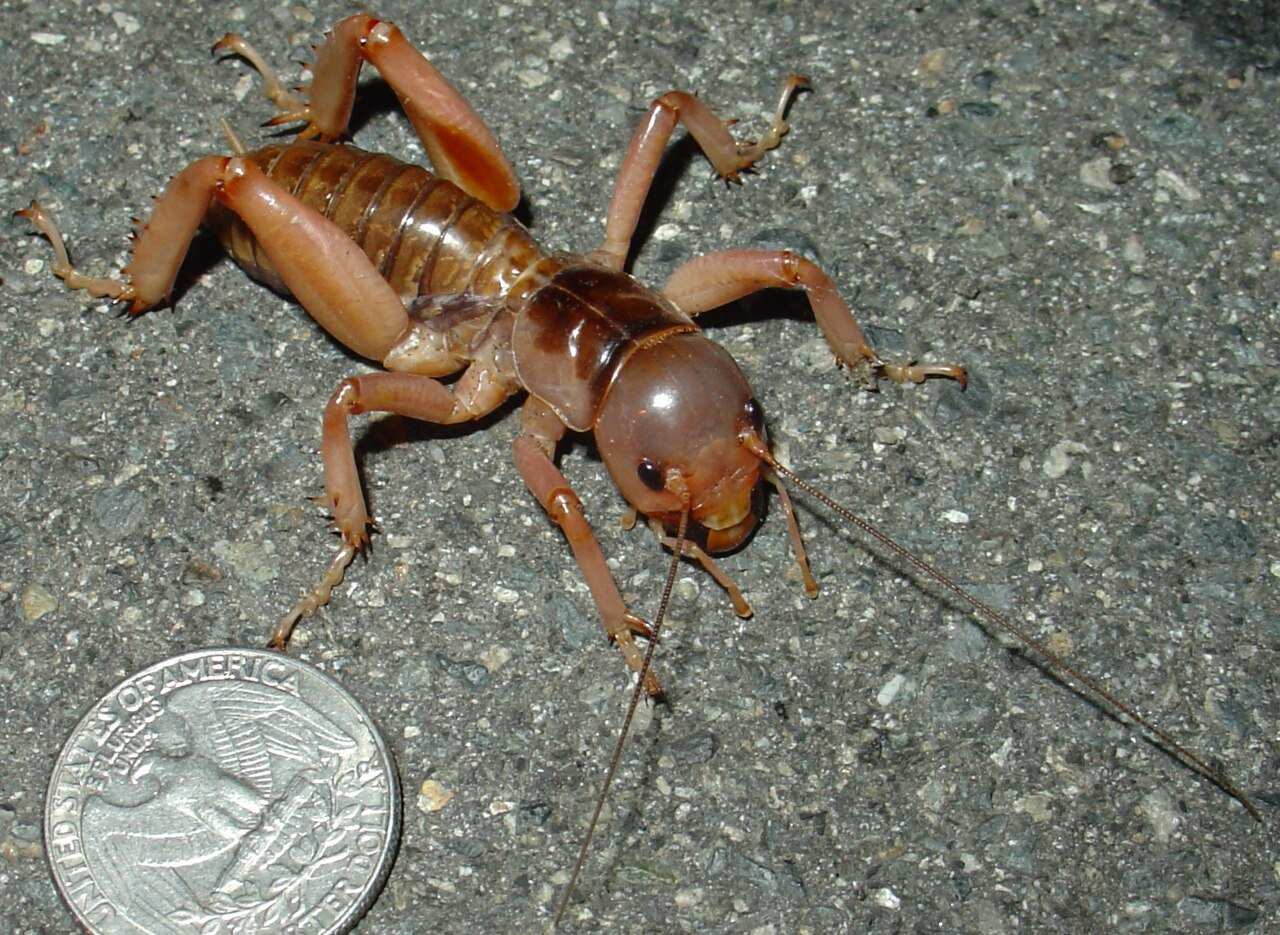
The Reputation vs. the Rap Sheet
The folklore says venomous, deadly, a “potato bug” that poisons crops, a bite that requires hospitals. The rap sheet says: no venom, no sting, no disease, no crop destruction — a defensive nip from those root-crunching mandibles if you grab one bare-handed (it hurts, briefly, like a strong pinch), and that’s the complete list. They’re solitary, slow, non-infesting, and ecologically busy as soil aerators and decomposers. The “potato bug” name comes from occasionally nibbling tubers, at densities that have never once constituted an agricultural problem. Even in their home range, the professional advice is: relocate it with a cup and move on. The scariest-looking insect of the American West is, functionally, an earthworm with charisma — one more entry in the pattern our whole acquittal series keeps finding, where appearance and threat run in opposite directions.
The Ohio Verdict: Not Here, Never Established
Jerusalem crickets’ range runs from the Great Plains westward — Nebraska and Kansas at the eastern fringe, then solidly through the Southwest, California, and Mexico. Ohio’s side of the continent has none: wrong soils, wrong climate history, wrong everything, with no established population east of the Plains ever recorded. A stowaway in a moving box from Phoenix is theoretically possible and would be a single doomed tourist, not a colonist. So when a Dayton-area caller describes or photographs “a Jerusalem cricket,” the identification is always — genuinely always — one of the local lookalikes below, and the first one accounts for the overwhelming majority.
What Ohioans Actually Found: the Impostor Lineup
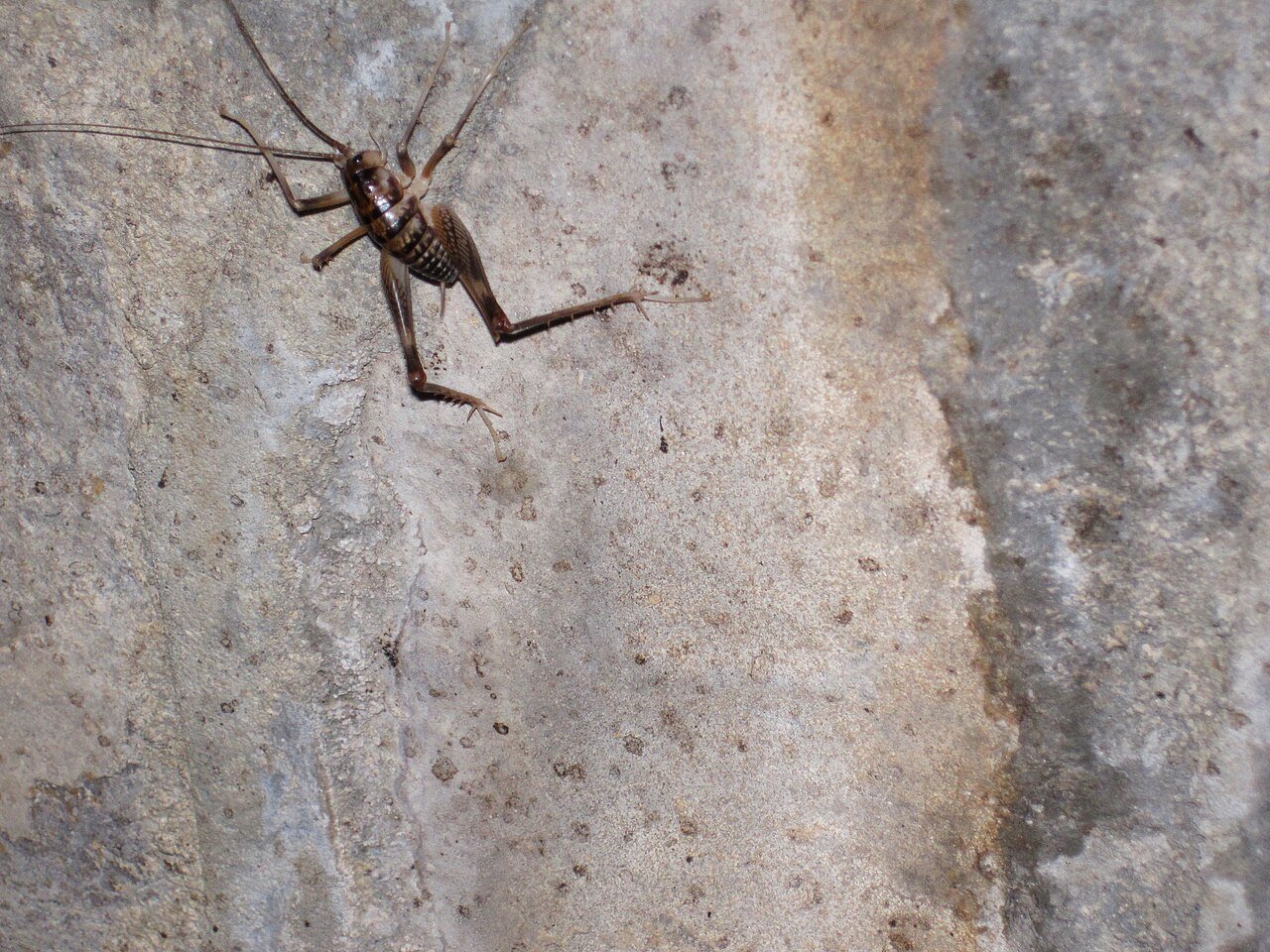
- Camel cricket — the big one. Humpbacked, tan, wingless, massive-legged, and a committed resident of Ohio basements, crawl spaces, and garages — where its habit of jumping toward perceived threats has ended more laundry sessions than any actual danger ever could. Same unsettling wrongness, same total harmlessness; its full file (and the dehumidifier strategy that actually evicts it) lives on our camel cricket page.
- Mole cricket: the closest Ohio gets to the Jerusalem body plan — cylindrical, velvety, with astonishing shovel forelimbs, tunneling turf near water. Uncommon here, harmless, and briefly alarming in exactly this page’s way.
- Broad-headed bush cricket / katydid relatives: occasional chunky-headed katydids get the Jerusalem label in photos; the giveaway is long, sweeping antennae and green-to-brown leaf-sitter coloring.
- Ground beetle grubs and pupae: large, amber, segmented things turned up by shovels — the “child of the earth” report’s underground version, and future pest-eating allies.
- The actual “potato bug” confusion: in Ohio vocabulary, “potato bug” usually means either the roly-poly pill bug or the Colorado potato beetle of garden fame — neither remotely Jerusalem-cricket-shaped, both claiming the name locally. Three insects, one name, endless confusion: regional common names strike again, exactly as they did on our frass page.
Why Geography Keeps Deciding These Cases
This is the third page in our library where the punchline is a range map — lovebugs (Gulf), fire ants (South), hobo spiders (Northwest), scorpions (Southwest), and now the Jerusalem cricket — and the pattern deserves naming. The internet’s pest imagery is national; your pests are ruthlessly regional. The scary photo that tops the search results was taken wherever the species is common, the identification spreads without its range map attached, and homeowners nationwide inherit fears calibrated to somebody else’s backyard. The correction is always the same two questions: does it live here, and if not, what local species matches the sighting? Answering those — free, from a texted photo — is among the most genuinely useful things a local pest company does, because the wrong ID doesn’t just waste worry: it buys the wrong treatment for the wrong animal while the real issue (if any) goes unaddressed.
If the Basement Thing Is the Real Problem
Since most Jerusalem-cricket searches from our area end at the camel cricket’s door: a basement hosting them in numbers is telling you about moisture, not monsters. Camel crickets need damp — their presence maps humidity, and their food is the mold, fabric, and organic debris damp basements accumulate. The eviction protocol is environmental: dehumidifier to under 50%, sticky traps along the walls (they also census the population), seal the door sweeps and foundation gaps they wander through, declutter the cardboard they shelter under. Chemicals are rarely needed and never the first move. And if what’s down there is genuinely numerous, fast-breeding, or unidentifiable from your photo — that’s what the inspection is for. We’ve never once found a Jerusalem cricket on the other end of a Dayton basement call, and we’d honestly be thrilled to be wrong someday.
Something amber, huge, or humanoid-faced in your yard or basement? Send the photo — identification is free, and the local answer is almost always gentler than the search results. Serving Dayton and all of Montgomery, Greene, Miami, Clark, Warren, Butler, Preble, and Darke counties.
The Cultural Life of a Misunderstood Insect
Few American insects carry as much folklore per capita. Navajo tradition names the Jerusalem cricket wóótsé’é’ and treats it with wary respect; Mexican folk belief holds (incorrectly, but memorably) that the cara de niño’s bite requires a priest as much as a doctor; and mid-century Hollywood borrowed its face for more than one creature feature. The internet era industrialized all of it — every viral “alien bug found in backyard” cycle features the same amber head, usually photographed on a shovel for scale, usually captioned with the venom myth this page just retired. Meanwhile the actual animal goes on doing what it’s done for millions of years: aerating western soils, recycling plant matter, drumming love songs through the ground, and surfacing after rains to be photographed and slandered. There’s a lesson in the gap between the legend and the rap sheet, and it’s the founding lesson of pest control done honestly: the response should be sized to the animal’s actual behavior, not to the feeling its face produces. That principle prices our work, picks our chemistry, and writes these pages.
Ohio’s Own “Uncanny Basement Tier,” Ranked for Reassurance
Since the Jerusalem cricket search is really a fear-of-the-unfamiliar search, here’s the honest ranking of Ohio’s most alarming-looking harmless residents, all previously acquitted on this site: the house centipede (thirty legs of pure spider-hunting benefit, fastest scream-generator in the state), the camel cricket (jumps at you, armed with nothing), the wolf spider (huge, hairy, and a free rodent-adjacent pest patrol), the earwig with its theatrical-but-feeble pincers, and the millipede coil that shows up after rain. Every one signals a moisture condition more than a threat; every one is managed with a dehumidifier, sealing, and decluttering before any chemical enters the conversation. If your basement hosts the whole cast, the building is telling you something about humidity — and that diagnosis, not a monster hunt, is what a good inspection delivers.
And if you’re reading this from the West with a genuine niño de la tierra on the porch: cup, cardboard, garden bed, done. It was there before the porch, it aerates the soil the roses need, and it will spend the rest of its life underground never thinking of you again — which, as arrangements between humans and unsettling insects go, is about as good as it gets. Ohio readers get an even better deal: our version of this animal is a range map and a story, and the basement thing that startled you tonight has been on the harmless roster all along.
One taxonomy footnote for the curious: the “Jerusalem” in the name has defeated etymologists for a century — leading theories involve nineteenth-century exclamations (“Jerusalem!” as a period swear upon unearthing one), a mistranslated Navajo term, or a garbled reference to a Jerusalem artichoke field. Nobody knows. The insect, meanwhile, belongs to an ancient family (Stenopelmatidae) whose relatives include New Zealand’s giant weta — the heavyweight champions of the insect world — making your patio visitor the modest American cousin of genuine giants. Even its family tree is more interesting than its threat level.
(For completeness: the “wild hairworm” photos sometimes attached to Jerusalem cricket posts — a long coiling worm emerging from the insect — depict a real parasite of theirs, the horsehair worm, which is harmless to humans and pets and occasionally turns up in Ohio puddles via our own crickets and katydids. Nature’s strangest content farm, but nobody’s health problem.)
Frequently Asked Questions
What is a Jerusalem cricket?
A large flightless ground insect of the American West and Mexico — up to two-plus inches, glossy amber, with digging legs and a famously humanoid bald head (Spanish folk names: niño de la tierra, “child of the earth”). It lives underground eating roots and decaying matter, and it’s neither from Jerusalem nor a true cricket.
Are Jerusalem crickets in Ohio?
No — their range ends around the Great Plains (Nebraska, Kansas) and runs west. Ohio has no established population and never has. Local “Jerusalem cricket” sightings are camel crickets, mole crickets, katydids, or beetle grubs — the camel cricket accounts for most of them.
Are Jerusalem crickets poisonous or dangerous?
No venom, no sting, no disease, no crop damage — the complete threat inventory is a strong defensive pinch if you grab one bare-handed. Even in their home range, the professional advice is a cup, a relocation, and a story to tell.
Why are they called potato bugs?
They occasionally nibble tubers — never at problem densities. Confusingly, Ohio uses “potato bug” for two entirely different animals: pill bugs (roly-polies) and the Colorado potato beetle. One folk name, three unrelated species, endless mixups.
What’s the bug in my Ohio basement that looks like a Jerusalem cricket?
A camel cricket — humpbacked, tan, wingless, big-legged, and prone to jumping toward whatever startles it. Unsettling and harmless; it maps your basement’s moisture. A dehumidifier, sticky traps, sealing, and decluttering evict it without chemicals.
Do Jerusalem crickets really scream or make noise?
They don’t scream — they drum, thumping their abdomens against burrow floors in species-specific rhythms to find mates through the soil. It’s one of the animal kingdom’s stranger percussion systems, and inaudible drama compared to the face.
Could a Jerusalem cricket hitchhike to Ohio in a moving box?
Possible and inconsequential — a single stowaway from the Southwest would be a doomed tourist, not a founding population. Ohio’s climate and soils don’t support them, and no eastern establishment has ever been recorded.
Why do so many scary-looking bugs turn out to be harmless?
Because looking dangerous is cheap and being dangerous is expensive — dramatic armor and strange faces deter predators without costing venom. Meanwhile the genuinely costly Ohio pests (termites, carpenter ants, mice) are built to go unnoticed. Appearance and threat run inverse more often than not; it’s the ruling theme of every acquittal page we write.