
The other moth question arrives at the closet door, usually holding evidence: the cashmere with constellation holes, the wool coat’s chewed collar, the vintage rug’s bald patch — and the search “will moths eat clothes” already suspecting its answer. Delivered with the necessary precision: moths don’t eat clothes — their larvae do, and only two closet species’ larvae at that, working only the animal fibers (wool, cashmere, silk, fur, feathers — the keratin menu) and ignoring the cottons and synthetics entirely, which single fact reorganizes every wardrobe’s risk map before the campaign starts. The complete file: the two culprits (the webbing clothes moth and its case-bearing cousin — the ID that tells you which cleanup you’re running), why the damage concentrates on the worn-once-then-stored sweater (sweat and food traces are the larvae’s seasoning — the clean-before-storing rule’s entire basis), the closet campaign (heat, cold, and the vacuum’s dark-corner mandate — the pantry sibling’s two-front doctrine, re-tailored), the cedar-and-lavender folklore graded at last, the storage architecture that ends the annual spring discovery, and the heritage-textile escalation for the rugs and heirlooms worth professional hands. Greater Dayton Pest & Rodent: (937) 569-3330.
The two culprits (and the fork from the kitchen’s moth)
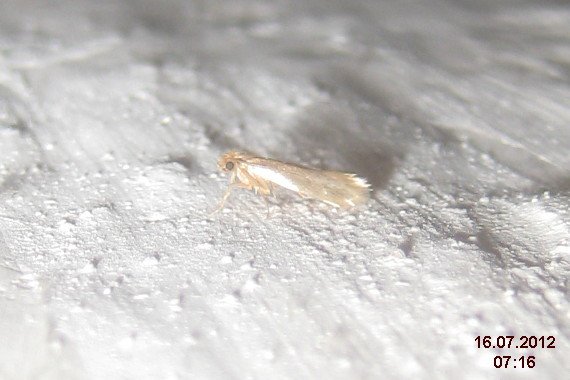
The moth fork routes here on venue and manner: closet-and-carpet moths are small (quarter-to-half inch), plain gold-to-buff, and light-shy — scuttling along baseboards and diving for dark folds rather than flying to lamps (a moth AT your lamp is almost never a clothes moth; the species’ whole strategy is not being seen). The two species split by their larvae’s housing: the webbing clothes moth (Tineola bisselliella — the dominant one) spins silken feeding tunnels and patches ON the fabric — the tell-tale silk webbing and gritty frass in the damage zone; the case-bearing clothes moth builds each larva a portable sleeping-bag case of chewed fiber it drags along — the rice-grain-shaped cases (often dyed the color of the garment they ate) found on closet floors and walls are its signature, and the case’s camouflage explains the “holes but no insects” mystery: the culprit was wearing the sweater. Both run the same calendar — eggs on suitable fiber, larvae feeding weeks-to-months (longer in cool closets; the multi-year attic-rug case is real), pupation in the dark, and adults living days without feeding (the pantry parallel: swatting the flyers, satisfying and irrelevant) — and both share the specialization that writes the whole file: keratin digestion, a rare talent that makes the world’s wool their exclusive banquet and every cotton tee a safe zone. The damage read confirms in seconds: irregular holes-with-webbing or grazed nap in animal fiber = this page; neat notched edges = the silverfish file; fuzzy bristled larvae under furniture = the carpet beetle, the closet’s other resident and this page’s standing cross-check.
Why THAT sweater (the seasoning principle)
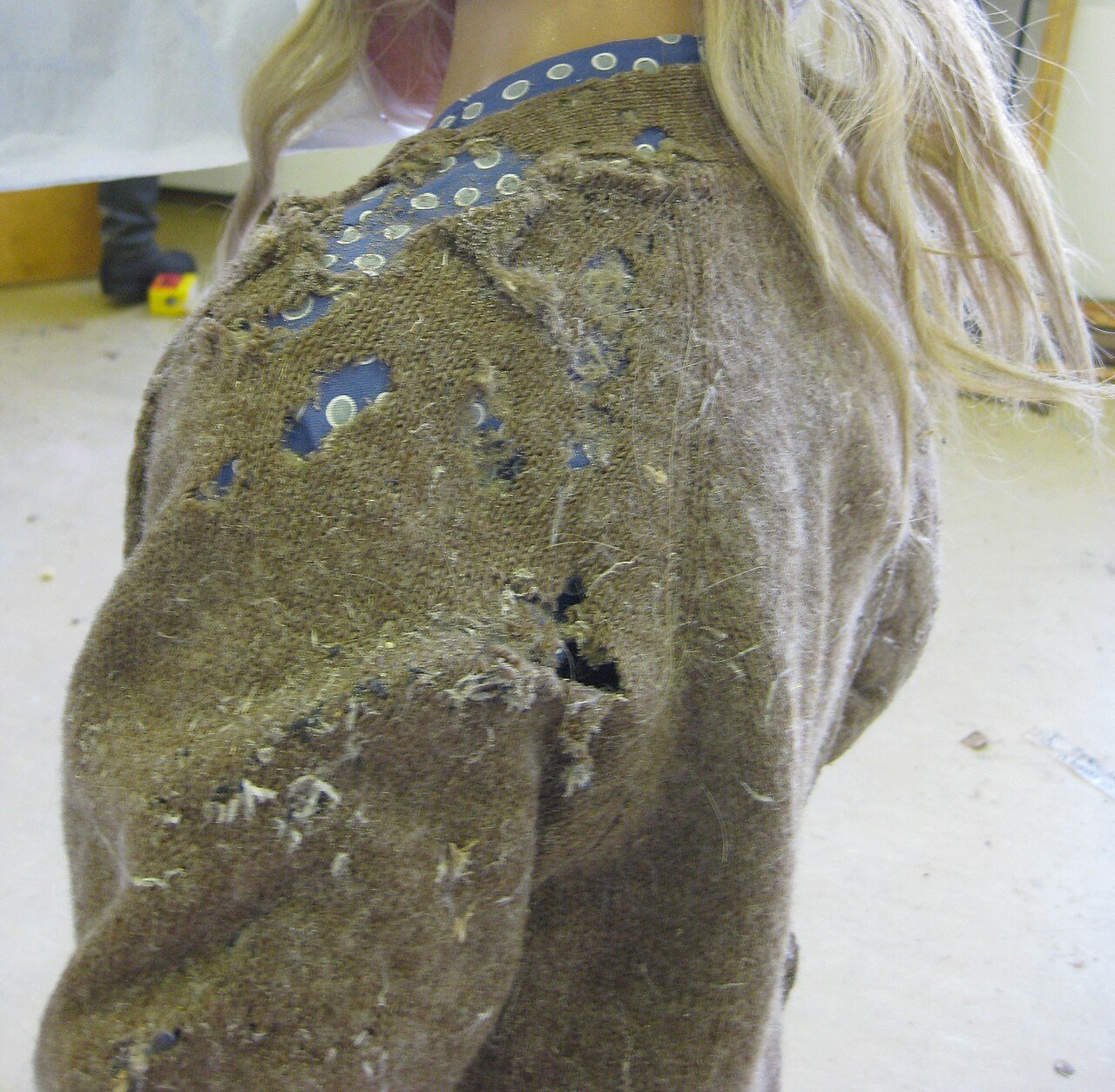
The damage map’s pattern — the worn favorite hit while the untouched stack survives — runs on a principle worth stating because it powers the whole prevention file: clothes-moth larvae prefer their keratin seasoned — sweat, skin oils, food traces and humidity all boost a fiber’s appeal and the larvae’s success (the research literature is unambiguous: soiled wool out-recruits clean wool decisively), which is why the once-worn-then-drawered sweater is the classic casualty, why collars and cuffs and underarms lead the damage census, and why the single highest-leverage habit in the wardrobe is the one grandmothers legislated: clean before storing — laundered or dry-cleaned, every animal-fiber garment, before any seasonal storage, no exceptions for “only wore it once” (once was the seasoning). The map’s other axis is darkness and stillness: larvae thrive where disturbance never reaches — the closet’s floor-corner dark, the under-bed wool blanket, the back-of-rack coat untouched since March, the rug’s furniture-shadowed margin (the case our vacuum mandate below targets) — and the corollary redeems the wardrobe’s active half: garments worn and moved regularly essentially never sustain damage; rotation is protection. Seasoning plus stillness: the two-variable model that predicts every hole this page will ever be sent a photo of — and the two levers, wash and motion, that the campaign pulls first.
The closet campaign: heat, cold, vacuum, verify
The active-infestation protocol, two-fronted per the pantry doctrine. Front one, the textiles: every animal-fiber item in the affected zone gets triaged — the damaged and suspect through the kill step: the hot dryer (twenty-plus minutes at true heat — the bed bug page’s same physics — for anything the care label tolerates), dry-cleaning (a complete kill, and the seasoned-favorites’ natural route), or the freezer alternative for the heat-intolerant (bagged, one week frozen, the museum protocol scaled home — the pantry quarantine’s wardrobe edition); cleaned survivors return only to cleaned architecture. Front two, the architecture: the vacuum’s dark-corner mandate — closet floors and corners, baseboard gaps, under-and-behind furniture, and the rug margins beneath sofas and beds (the case-bearer’s capital city), with the crevice tool on the carpet edge’s tack strip; the shelf-and-rod wipe-down; and the bag emptied outside per the wing’s standing rule. The verification meter: clothes-moth pheromone traps exist and work on the webbing species — the same monitor-not-eliminator briefing as the pantry’s, one trap per closet zone, counts falling over six-to-eight weeks as the verdict — with the case-bearing species’ weaker trap response covered by the visual re-inspection the calendar schedules. What stays on the shelf: closet foggers (the standing conviction, now with residue on your wardrobe), broadcast sprays on clothing (label-prohibited and pointless — the larvae live IN the fiber the mist can’t reach), and the mothball question — big enough for its own paragraph, next.
Mothballs, cedar and lavender: the folklore aisle’s wardrobe wing, graded
Mothballs first, because they genuinely work and genuinely shouldn’t be used the way America uses them: naphthalene and paradichlorobenzene kill moths in all stages — as fumigants, in sealed containers, at label concentrations — and accomplish approximately nothing scattered loose in a ventilated closet while off-gassing chemicals the toxicology literature treats with increasing severity (naphthalene’s classification history alone justifies the caution; the pediatric-exposure file justifies more). The honest verdict: in a truly airtight storage bin, per label, for garments that will air out thoroughly before wearing — legal, effective, and increasingly outclassed; loose in the closet — the smell of false security with a side of exposure. Cedar: the beloved chest’s oils do show larvicidal effect against young larvae in lab conditions — when fresh, at high concentration, in enclosed space — but the effect fades as the wood ages (months-to-a-year; the sanding-revival trick restores scent better than potency), and the heirloom cedar chest’s real protection was always its tight lid: it’s a good sealed container that happens to smell wonderful. Verdict: enjoy the chest, trust the gasket. Lavender, rosemary, cloves: mild repellency to adults in some assays, no larval kill, no protection at wardrobe scale — the bay-leaf verdict’s closet cousins; sachet freely for the scent, never for the security. The pattern completing the grade, familiar from every folklore aisle this library has audited: the working elements were always enclosure and hygiene — the sealed container, the clean fiber — and the aromatics were the marketing the containers never needed. Storage architecture, accordingly, next.
Storage architecture: ending the spring discovery annually
The prevention file compresses to a storage doctrine the archivist’s corner already drafted, tailored to keratin: clean, then seal — every animal-fiber garment laundered or cleaned, then stored in gasketed totes, compression bags, or garment bags that actually close (the cedar chest qualifying on its lid; the cardboard box disqualifying on every axis — the wing-wide cardboard verdict extends to wardrobes); the seasonal rhythm — the spring wool-storage ritual run properly once beats a decade of autumn discoveries, and the autumn unpacking includes the shake-and-inspect that catches any breach at the cheap stage; the rotation dividend — the worn wardrobe protects itself, so the doctrine’s real estate concentrates on the stored, the inherited and the sentimental; and the heritage tier — the rugs, tapestries, uniforms and wedding-dress-grade textiles whose value warrants the professional escalation: freezing protocols at textile-conservation standards, the anoxic treatments museums run, and the professional inspection for the estate-cleanout imports that seed a striking share of residential cases (the inherited rug is the clothes-moth economy’s secondhand-couch equivalent — quarantine and inspect before it crosses the threshold). One clean, one seal, one calendar: the wardrobe’s whole constitution, and the moth’s permanent unemployment.
Clothes moth questions, answered
Holes in my cotton t-shirts — moths after all?
Different culprit entirely: clothes-moth larvae can’t digest cellulose, so cotton and synthetic damage routes elsewhere — silverfish (starched or soiled cottons, irregular grazing), carpet beetles (whose larvae take blends and soiled synthetics opportunistically), snag-and-wear mechanics (the drawer’s zipper neighbor, the washer’s ordinary attrition — honest cause of most tee holes), or the wire-shelf pinch. The keratin rule is the fork’s gift: wool damage opens this page; cotton damage closes it and opens the differential.
I see tiny gold moths but can’t find any damage. Wait or campaign?
Census first: flyers without findings mean either an early establishment or a nearby non-wardrobe source — and the species keeps a secret menu of them: wool carpet edges (the under-furniture margins), felt piano hammers and pool-table cloth, taxidermy, feather pillows and down comforters, bristle brushes, and the attic’s abandoned bird nests and rodent-nest wool (the void-source case the pantry page’s mouse-cache cousin runs in fiber). One pheromone trap plus a dark-corner tour usually locates the colony inside a week; the campaign then aims where the evidence points rather than at the whole wardrobe.
Does dry cleaning kill eggs too, or just larvae?
All stages — the solvent process is a complete kill, which is why it anchors the seasoned-favorites’ route and the “wore it once” rule’s enforcement arm. The hot dryer matches it where labels allow; the freezer week covers the rest; and the wash-alone caveat deserves its line: cool-water washing cleans the seasoning but under-performs on eggs — heat somewhere in the chain (wash, dry, or clean) is the kill step’s non-negotiable.
Are clothes moths a housekeeping judgment?
The pantry verdict transfers: arrival is import (estate textiles, secondhand wool, the attic’s nest wool), establishment is architecture (dark, still, seasoned fiber), and neither is a character reference — the finest wardrobes in the county host the finest keratin, and the moths grade fiber, not families. The habits that matter — clean-before-storing, seal, rotate, vacuum the dark — are learnable in one read, which this paragraph just concluded.
The verdict in wool
Will moths eat clothes? Their larvae will — two secretive species, animal fibers only, seasoned and undisturbed by preference — and the wardrobe that absorbs the two-variable model runs the whole defense on habits: wash before storing, seal what sleeps, rotate what wakes, vacuum the dark margins, heat-or-freeze the suspects, and meter the campaign by trap and calendar. The folklore aisle surrenders its sachets to the gasket that always did the work; the heritage pieces get their museum-grade escalation; and the spring discovery — the constellation holes in the favorite — retires from the household calendar for the price of one honest storage weekend. For the rug-and-heirloom consults, the void-source hunts, and the hole photos graded keratin-or-otherwise same-day: (937) 569-3330, Greater Dayton Pest & Rodent, Dayton and all eight counties — where the wool keeps its weave and the moths keep their distance.
The keratin economy (why only these larvae, and what it costs the world)
The clothes moth’s specialization deserves its science panel, because keratin digestion is one of the animal kingdom’s rarer talents and the whole file’s foundation. Keratin — the structural protein of wool, hair, horn and feather — is cross-linked by disulfide bonds most digestive systems can’t break; the clothes-moth larva runs a gut chemistry (extreme alkalinity plus specialized reducing conditions) that severs them, placing it in a small guild of keratin-eaters alongside the dermestid beetles and little else — a niche so exclusive that natural-history museums historically fought both guild members as their primary collection threats, and modern textile conservation still organizes around them. The ecological frame reframes the closet: in the wild economy, the guild are decomposers of the unrecyclable — processing shed feathers, molted fur and carcass wool back into the nutrient stream (the abandoned bird’s nest is the species’ ancestral apartment, and the attic-nest source case above is the wild habit continuing indoors) — and the wardrobe is, from the larva’s perspective, a nesting site of implausible richness: a cave full of pre-cleaned pelts. The economics scale accordingly — global wool-and-textile losses to the guild run to real industry figures, the insurance and conservation literatures both carry the line item — and the household’s translation stays proportionate: one species’ rare talent, aimed at one fiber class, defeated by enclosure and hygiene. The moth solved chemistry’s hardest protein; the gasket solved the moth; and the wool, cleaned and sealed, exits the food web it briefly rejoined every time it was stored dirty.
A eight-county wardrobe report
The local casework: clothes-moth files cluster in the historic districts’ deep closets and attic storage — Oakwood’s wool-coat inventories and the estate-textile imports of every courthouse town write the county’s heaviest chapters (the inherited-rug founding story leads the intake notes); the vintage-and-thrift economy supplies the secondhand route’s steady seeding, solved at the door by the quarantine habit; the farmhouse attics add the nest-wool void sources and the wool-blanket chests whose gaskets aged out a generation ago; and the newer suburbs run the lightest files — smaller natural-fiber inventories, more synthetics — with their cases skewing toward the wool-rug margins under furniture. The resolution pattern completes the wing’s happiest statistic-set: the campaign-plus-doctrine households close their files in the six-to-eight-week window and stop generating new ones, the heritage escalations route to the conservation-grade protocols their stakes deserve, and the photo line’s keratin-or-otherwise verdicts spare a steady stream of cotton-tee owners a campaign they never needed. The wool economy of eight counties, audited: seasoned and still loses; cleaned and sealed keeps; and the golden scuttler in the closet corner — light-shy, larva-funded, and now fully documented — joins the library’s roster of solved residents.
Two golden scuttlers, one rare chemistry, and a wardrobe defended by a washing machine and a gasket — the closet’s file closes beside the pantry’s, the moth fork stands complete between them, and the spring storage weekend graduates from chore to constitution: clean what wore, seal what sleeps, rotate what wakes, and let the keratin guild take its ancient talents back to the bird nests where the wool was never yours. The favorite sweater survives the summer for the first time in years; the cedar chest keeps its scent and surrenders its myth; and the library’s textile wing — silverfish, carpet beetles, and now both moths — stands fully shelved, cross-referenced, and moth-eaten nowhere but the title cards.
Keratin fed them; gaskets end them; the wool wins.
Frequently asked questions
What are the moths eating my clothes?
Webbing clothes moths (and the rarer casemaking cousin) — small, golden, light-avoiding fliers whose LARVAE do all the eating: keratin specialists that digest wool, cashmere, silk, feathers, and fur. The dusty pantry moth zigzagging at your kitchen light is a different insect with a different page.
How do I tell clothes moths from pantry moths?
Behavior and venue: clothes moths shun light and flutter weakly in closets and dark corners; pantry moths fly boldly at dusk near the kitchen. Golden and secretive = wardrobe problem; two-tone and kitchen-adjacent = pantry problem.
What kills clothes moths in a closet?
The full protocol: launder or dry-clean everything wool-adjacent (heat kills all stages), freeze delicate items four days, vacuum the closet’s cracks and carpet edges relentlessly (larvae pupate off-garment), and restock into sealed bins or garment bags. Pheromone traps then monitor the win.
What does clothes moth damage look like?
Irregular holes concentrated in hidden zones — collars, cuffs, underarms, fold lines — plus silken webbing tubes and gritty frass on affected fabric. Damage clusters where garments sat undisturbed; the everyday-worn coat rarely suffers.
Why are clothes moths in my closet?
Undisturbed keratin plus darkness — stored woolens (especially unwashed ones; body oils and sweat attract egg-laying), fur, felt, and feather items sitting months untouched. Movement and light are their enemies; the back-of-closet stack is their habitat.
Do cedar chests and lavender really work?
Weakly and temporarily — fresh cedar oil kills small larvae at high concentration, but aged cedar and sachets mostly comfort the owner. The working protections are physical: cleanliness before storage, sealed containers, and periodic disturbance.
Do mothballs work for clothes moths?
This is their ONE legitimate job — naphthalene in a truly SEALED container reaches concentrations that protect woolens. Sealed is the entire clause: open-closet mothballs deliver fumes to your family and nothing to the moths.
Where do clothes moth larvae hide besides clothes?
Carpet edges under furniture, felt piano hammers, wool rugs’ undersides, taxidermy, upholstery horsehair, and air-duct lint — keratin sources most sweeps miss, and the reservoir behind many “we cleaned the closet and they came back” stories.
How do I store wool so moths never get it?
Clean first (always — eggs ride on worn fabric), then sealed: garment bags with sound zippers, gasketed bins, or vacuum bags for off-season storage, with a periodic shake-and-inspect for the irreplaceable pieces. Clean-and-sealed defeats the species completely.
When do clothes moths need professional treatment?
Whole-home cases — wool carpeting infested edge to edge, recurring damage after two full protocols, or heritage textiles needing specialist care: (937) 569-3330. Closet-scale cases fall to the launder-freeze-vacuum protocol above, free.