
The brick city’s pest ledger closes its circle with the mouse — because the mouse, like everything else in Huber Heights, found the veneer. The cavity between brick and frame that carries the town’s termites upward, houses its wasp colonies, and staffs its weep-hole spiders also runs winter rodent traffic: a mouse entering at a deteriorated weep hole or a grade-level mortar gap climbs the cavity as a sheltered highway and emerges into the attic’s wall-plate openings — the brick ranch’s version of the stud-bay elevator, wrapped in masonry. Ahead of the cavity runs the standard slab-ranch short list: the attached garage’s aging gasket (the airlock, six decades old citywide), utility penetrations on the shrunken-caulk clock, and the crawl-adjacent additions the decades built on. One architecture, one final map: here’s the brick city’s rodent file.
The Brick Ranch’s Entry Map
- The garage airlock, vintage edition: sixty-year-old overhead doors with sixty-year gasket histories — the corner gaps lead the citywide entry census, and the birdseed-and-storage economy inside converts the airlock into a lobby. The gasket-and-sweep refresh remains the single highest-value fix in town.
- The veneer cavity commute: deteriorated weep holes and grade-level mortar gaps admit the winter traffic that emerges at attic wall-plates — the “scratching upstairs in a one-story house” mystery, solved by the wall section between. The standing brick rules apply: never seal the weep holes (the wall must drain); stainless weep-hole vents — the same retrofit that ends the wasp story — close the rodent chapter too.
- The slab short list: AC linesets, dryer vents, and sump discharges on the shrunken-caulk clock — the dime-standard audit, mesh-backed and finished in an afternoon on production-consistent construction.
- The addition seams: six decades of porches, sunrooms, and garage conversions added crawl-adjacent voids and junction gaps the original slab never had — the renovated perimeter is the audited perimeter.
The Program, Brick Edition
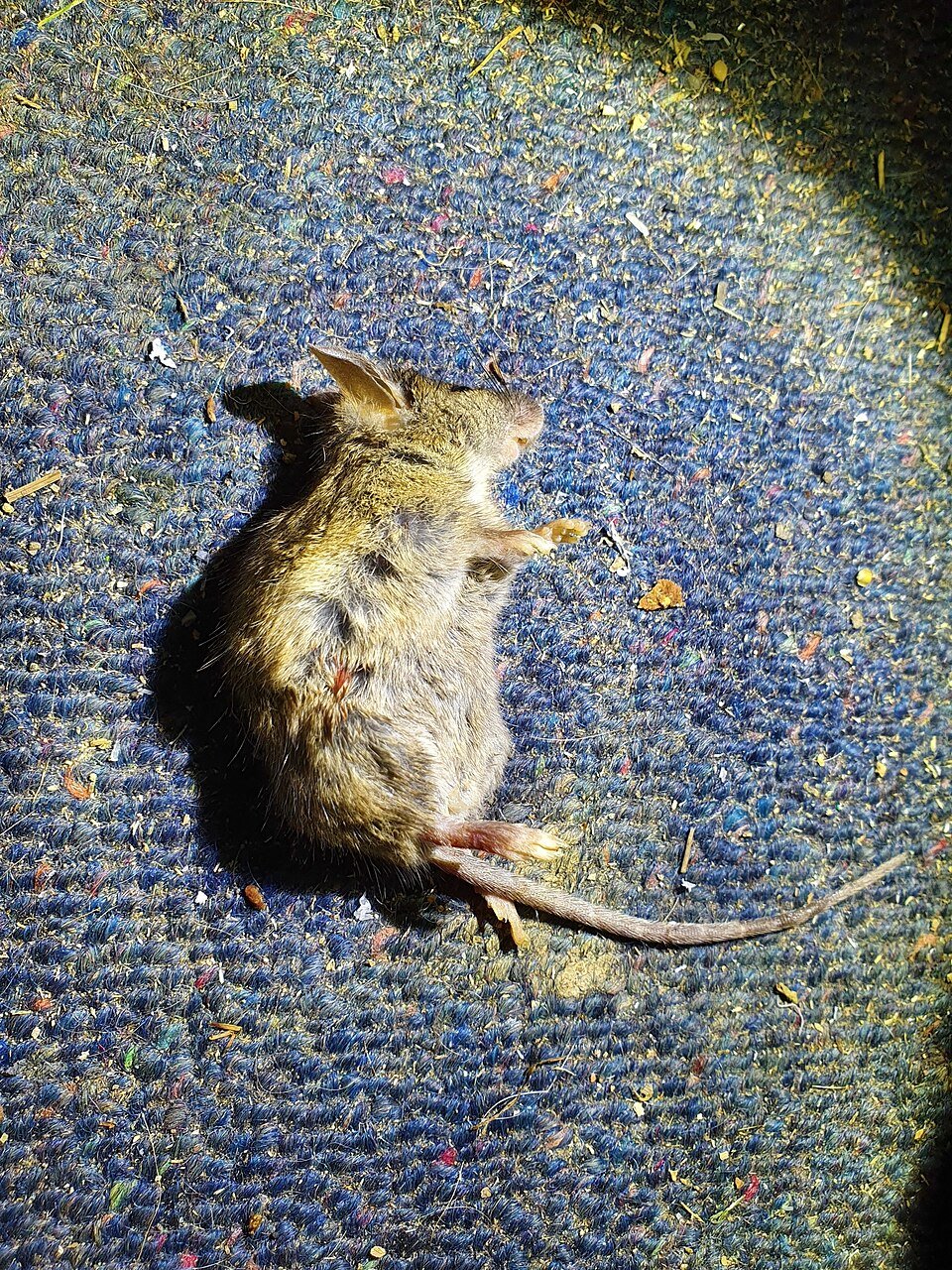
The arc runs trap-seal-verify with the town’s signature repeatability: trapping concentrates at the garage wall lines, the kitchen-adjacent voids, and the attic wall-plates where cavity traffic surfaces — snap traps on runways, checked on schedule, never poison inside (the standing case, with the brick-specific corollary that a cavity carcass is the least reachable odor problem in residential construction). Sealing runs the map above: gasket and sweep refresh, dime-standard mesh at the penetrations, addition-seam audits — and the stainless weep-hole vents that screen the cavity’s doors while preserving the drainage, the retrofit that pays across three pest files at once. Verification closes with flour patches and silent weeks. And the identical-architecture advantage delivers its usual dividend: forty thousand near-identical ranches mean the entry census barely varies house to house, the audit quotes confidently, and the outcomes run among the cleanest in our service area — the same repeatability every Huber file enjoys, applied to its final species. Evidence discipline leads throughout: droppings mapped (the forensics), the species call before hardware, and the northern field edges’ two-toned captures triggering deer-mouse cleanup rules.

The Huber Heights Calendar and the Completed Ledger
September: the audit month — gaskets, penetrations, vents, and the addition seams, before the frost migration; the northern field-edge streets take the front of October’s wave and earn the earliest dates. October–February: trapping season for whoever beat the sealing. Spring: verification and cleanup. And with that, the brick city’s ledger stands complete — eight services, one architecture, and the through-line this page closes: in Huber Heights, the building is the map. The veneer cavity, the slab joints, the weep-hole course, the garage airlock — every species in the ledger reads the same four features, and the household that manages those features manages its entire pest future at once. That’s what the quarterly Protection Plan actually sells here: one crew reading one wall across every file, from the under-slab ant highway to tonight’s attic scratching. One flat price, the fundamentals at how to get rid of mice — and the complete eight-service ledger at Huber Heights pest control.
Upstairs Scratching in a One-Story House?
The cavity explains it, the vents close it, and the brick city’s complete ledger backs it — flat-priced and guaranteed across Huber Heights.
Frequently asked questions
Why do I hear scratching upstairs in a one-story Huber Heights house?
The veneer cavity: mice enter at deteriorated weep holes or grade-level mortar gaps, climb the sheltered space between brick and frame, and surface at the attic’s wall-plate openings. The wall section between explains the “upstairs” in a ranch.
Can I seal the weep holes to keep mice out?
Never with sealant — the veneer must drain and ventilate. Stainless weep-hole vents screen the openings while preserving the airflow, and the same retrofit closes the town’s wasp and spider chapters at once: three files, one afternoon.
What is the number-one mouse entry in Huber Heights?
The garage airlock — sixty-year-old overhead-door gaskets gapping at the corners citywide, with the birdseed-and-storage economy inside converting entry into residency. The gasket-and-sweep refresh outranks every other fix in town.
Why does rodent work go so smoothly in the brick city?
Repeatability — forty thousand near-identical ranches share one entry census, so the audit quotes confidently, placements land where the architecture says, and outcomes run among the cleanest in our service area. The building is the map.
Should I poison mice in a brick ranch?
No — a cavity carcass is the least reachable odor problem in residential construction, and interior bait guarantees the attempt. Snap traps at the mapped runways, with locked exterior stations only where the field-edge streets’ chronic pressure warrants.
What are the two-toned mice on the northern streets?
Field natives — deer and white-footed mice off the northern margins — whose droppings upgrade cleanup to wet methods with gloves and ventilation. The species call opens every field-edge job.
Do additions change a brick ranch’s rodent audit?
Every porch, sunroom, and garage conversion added junction gaps and crawl-adjacent voids the original slab never had — the renovated perimeter is the audited perimeter, and the addition seams join the September checklist.
What does rodent control cost in Huber Heights?
One flat price: the mapped audit, runway trapping, dime-standard sealing with the vent retrofit option, and verification — with the quarterly Protection Plan reading the whole wall across all eight of the brick city’s files at once.
The Completed Circle, In Practice
For the household reading its way around the eight files, the practical summary of the brick city’s pest logic fits in four maintenance items and their beneficiaries: the stainless weep-hole vents (rodents, wasps, spiders — and the termite inspection’s clarity), the garage gasket and sweep (rodents, roaches, ants, and fall’s wandering everything), the slab-joint and penetration sealing (ants, roaches, rodents), and the September calendar that times all three ahead of the frost migration every file shares. Four items, eight species, one architecture — and a Protection Plan visit that checks the whole list quarterly because the list is the town. No other city we serve compresses its pest management this cleanly; it’s the reward for building forty thousand houses the same excellent way.