
Brick is spider architecture — and America’s largest community of brick homes proves it on every façade, every season. Mortar joints offer a web anchor each few inches; weep holes are ready-made retreats sized exactly to a funnel weaver’s taste; the gap between brick veneer and window frame is permanent sheltered real estate; and the whole thermal mass of a south-facing brick wall runs warm into autumn evenings, concentrating the insects that spiders harvest. Where Beavercreek’s spiders work the woods and Centerville’s work the stone cellars, Huber’s work the veneer itself — a city-wide vertical habitat with tens of thousands of identical units. The good news: identical habitat means an identical, repeatable playbook. Here it is.
The Brick Façade Ecosystem
- The mortar-line web grid: orb weavers and cobweb species anchor along the joints — the classic Huber look of webs tracking the brick courses across a gable by September — heaviest on south and west faces where the thermal mass keeps evening insect traffic late.
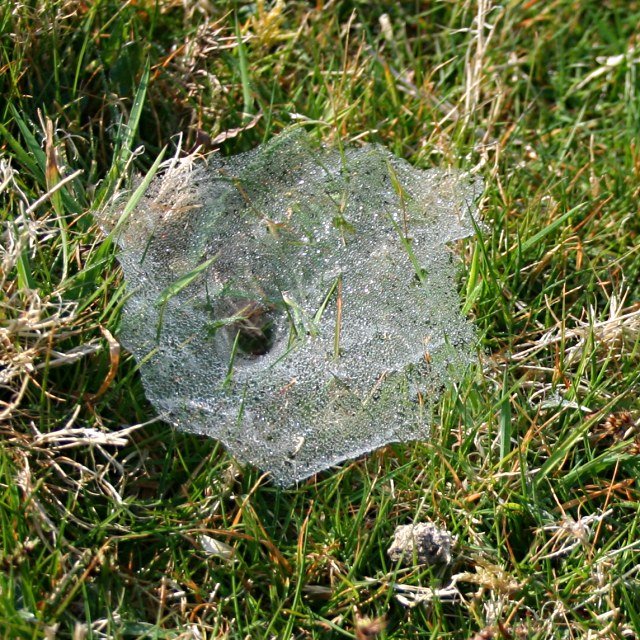
- The weep-hole retreats: funnel weavers back into the veneer’s drainage openings and sheet-web outward — the “web coming out of the wall” report that defines the city’s spider calls. The holes must stay open (wall drainage), so the answer is management, never plugging.
- The window-frame gap: the veneer-to-frame joint shelters cobweb builders at every opening — the webs-in-the-corners-of-every-window pattern that one-time cleanings never hold against.
- The standard supporting cast: fall’s wandering wolf spiders through grade-level slab entries, basement-free ranch interiors that host less than the region’s norm, and the thin serious-species file — occasional widows in undisturbed garage storage, sober rankings at Ohio’s venomous spiders.
Managing a City-Wide Vertical Habitat
The brick playbook runs on three levers, in order of leverage. Scheduled de-webbing with the right tools: soft-head brushes and extension poles clear the mortar-line grid, window corners, and eave courses without scarring the brick — quarterly passes with egg-sac removal (each sac being next season’s hundred spiders) hold the façade clean the way no one-time cleaning can, because the habitat re-staffs from the veneer itself. Perimeter treatment at the weep-hole course: a treated band along the foundation line and the lower brick courses thins both the retreating spiders and the insect traffic they harvest — placed to respect the open-hole drainage rule (the same never-plug principle as the city’s termite file). Light strategy on the thermal-mass faces: the south and west walls that hold evening heat also hold the fixtures — warm-toned bulbs and repositioned lighting on those faces cut the nightly insect delivery that funds the whole grid. Interior work stays surgical and minimal (slab ranches without basements simply host less), and the philosophy stays the library’s: spiders starve out, not spray out — the full reasoning, with identifications at common spiders in Ohio.
The Huber Heights Spider Year
Spring: dispersal into the veneer — invisible, and the right window for garage-storage discipline (the one serious-species habitat the city offers) and grade-level door sweeps. Summer: the grid builds — web density climbing the sunny faces as the insect economy peaks. Late August–October: the visible season — mortar-line webs tracking the courses, weep-hole sheets at full production, wolf spider traffic at the slab entries, and the annual calibration that October is a calendar event. Winter: the quietest spider season in the region — basement-free ranches offer little indoor habitat, and the veneer’s residents wait out the cold in the wall. Service rhythm: the fall visit carries the heavy de-webbing and egg-sac harvest, spring resets the perimeter, and the quarterly Protection Plan holds the grid below the visibility line year-round with free re-treatment between visits.
The Huber Heights Bottom Line
Tens of thousands of identical brick façades mean the city’s spider work is the most repeatable in our service area — the same grid, the same weep-hole retreats, the same thermal-mass faces, street after street — and repeatability is exactly what a scheduled program converts into results. One flat price covering the de-webbing route, the weep-hole-respecting perimeter, the light counsel in writing, and free photo identification always; the service at spider control — and the brick city’s whole ledger, roaches through termites, at Huber Heights pest control.
Webs Tracking the Brick Courses Again?
The veneer re-staffs what cleanings clear — the schedule wins. De-webbing, weep-hole-safe perimeter, and light strategy, flat-priced across Huber Heights.
Frequently asked questions
Why does my brick house have so many spider webs?
Brick is spider architecture: mortar joints anchor webs every few inches, weep holes make ready-made retreats, and the veneer’s thermal mass runs warm into autumn evenings, concentrating the insects spiders harvest. The playbook is management on a schedule, not eradication.
What is the web coming out of a hole in my brick?
A funnel weaver backed into a weep hole — the veneer’s drainage openings are perfectly sized retreats. Never plug them (they drain the wall); the treated band along the weep-hole course and scheduled de-webbing manage the residents instead.
Why do webs come back days after I knock them down?
The veneer re-staffs itself — the habitat is the whole façade, and one-time cleanings clear the web without the ecosystem. Quarterly de-webbing with egg-sac removal (each sac is a hundred next-season spiders) is what holds a clean face.
Which side of the house gets the worst webs?
South and west — the thermal-mass faces hold evening heat, run the latest insect traffic, and usually carry the lighting. Warm-toned bulbs and repositioned fixtures on those faces cut the nightly delivery that funds the grid.
Can you clean webs off brick without damaging it?
Yes — soft-head brushes and extension poles clear the mortar-line grid and window corners without scarring; no pressure washing, no staining treatments. It’s standard on every visit’s route.
Are there dangerous spiders in Huber Heights?
Rarely — the occasional black widow in undisturbed garage storage (gloves before blind reaches into stored boxes), and near-zero verified recluse presence. The veneer’s residents are harmless harvesters, and photo identification is free.
Do slab ranches get indoor spider problems?
Less than the region’s norm — no basement means little indoor habitat, and winter is the quietest spider season in the brick city. Fall’s floor-crossing wolf spiders enter at grade-level doors; sweeps end the traffic.
What does spider control cost in Huber Heights?
One flat price: the quarterly de-webbing route with egg-sac removal, the weep-hole-respecting perimeter band, and the light counsel in writing — with free re-treatment between visits under the Protection Plan.
The Garage: the One Room That Breaks the Pattern
The brick city’s single spider exception deserves its own note: the attached garage. It’s the only space in a slab ranch that combines undisturbed storage, dim corners, and direct exterior access — which makes it the one room running old-house spider rules in a new-house town, and the one place Huber’s thin serious-species file actually lives. The habits are the standard rural protocol at suburban scale: gloves before reaching into boxes that have sat, a shake for the work gear and seasonal equipment stored against the walls, storage up on shelving rather than floor-stacked against the brick, and a sticky monitor or two in the corners answering the census question with evidence. Our service visits give the garage the de-webbing pass the façade gets — corners, ceiling lines, the storage shadows — and the households that add the shelving-and-gloves discipline close the city’s only meaningful spider gap entirely. Everything else, the brick handles on schedule.