
This is the flagship page of a library we’ve spent months building — more than twenty guides on every corner of the mouse problem, from how they get in to why we’re wary of poison to the humane question — condensed into the one document we’d hand you if you could only read one. Getting rid of mice is not complicated, but it is a system, and the reason most DIY campaigns fail isn’t bad traps or weak bait — it’s running one piece of the system without the others. Mice reproduce on a 21-day clock; any plan that removes mice slower than the survivors breed is a treadmill, and any plan that removes every mouse but leaves the doors open is a subscription. The complete program has exactly four moves — starve, trap, seal, verify — and this page runs each one at full depth, in order, with the traps ranked, the placements drawn, the timeline stated, and the honest line where a weekend project becomes our job.
Before anything: confirm it’s mice, and estimate the head count
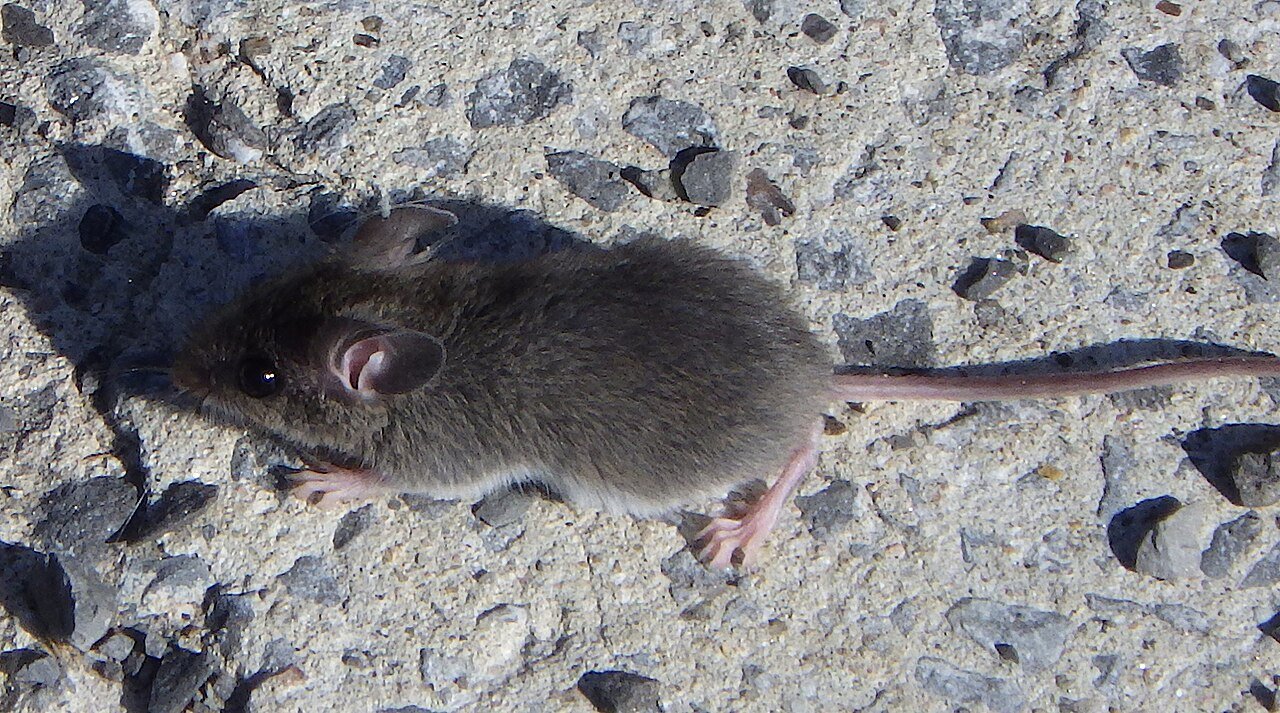
Thirty seconds of identification prevents two classic wrong turns. Mouse vs rat: mouse droppings are rice-grain sized with pointed ends; rat droppings are raisin-sized and blunt. Gnaw marks from mice are fine, almost etched; rats leave rough quarter-inch grooves. The distinction matters because rat protocols differ enough that the mouse-or-rat guide should settle it first if there’s any doubt. Mouse vs deer mouse: uniform gray means house mouse; brown back with a crisp white belly means deer mouse, which raises the hantavirus-precaution flag for cleanup, especially in garages, sheds, and cabins. Head count: you will not see the population, so read its paperwork. Droppings in one room only: early, likely one to a few mice. Droppings along multiple walls, in the silverware drawer, under the sink, plus rub marks (gray grease smudges along baseboard travel routes): an established household, likely a dozen-plus. Daytime sightings or scratching in walls at night in several rooms: multi-generation, call-worthy. Fresh droppings are dark and glossy; chalky gray ones are old news. A line of flour dusted along a suspect wall tonight will print tracks by morning and settle any argument about whether the problem is current.
Three of the four moves are about the building rather than the mice, which is exactly how rodent control in Dayton works.
Move one: starve the economy (day one, before any trap is set)
A mouse eats a teaspoon of food a day and drinks almost nothing (it metabolizes water from food), so tiny leaks sustain whole families — and a kitchen full of alternatives is why traps get ignored. In one evening: pantry staples into glass or heavy plastic (a mouse gnaws through a bread bag during one commercial break, but never through a Mason jar); pet food picked up between meals and stored in a metal bin — kibble is the number-one mouse subsidy in America; birdseed into sealed cans in the garage, and the feeder area outside raked, since a feeder’s spill zone is a mouse commissary thirty feet from your foundation; crumbs and grease off counters and out of the toaster tray; fruit off the counter into the fridge. This step isn’t optional garnish — it’s what makes move two work. A hungry mouse investigates novelties; a fed one strolls past your peanut butter with professional indifference. Every failed “the traps aren’t working” call we take starts with a pantry that’s still open for business.
Move two: trap like you mean it (the ranked arsenal and the placement rules)
The workhorse: the classic snap trap (grade A). Cheap, fast, reusable, and — placed right — the most humane lethal option there is: a correct strike is instantaneous, which is more than can be said for any alternative below. Modern plastic-jaw versions set with one press and spare your thumbs. Electronic zap traps (A−): equally quick, tidier to empty, better for squeamish households; the cost is batteries and price per unit. Live catch-and-release (B− with conditions): legitimate for the one-mouse office scenario, but the conditions do heavy lifting — check hourly-to-daily (a trapped mouse dehydrates fast, which un-humanes the humane option), release far from houses, and know that winter releases are usually death sentences with extra steps; the full ethics file is in the humane guide. Glue boards (D, and we don’t use them): slow, cruel, and no more effective than snap traps — skip them. Poison baits (C− for DIY, and the caveat is the point): rodenticides kill on a delay, off-stage — which means mice dying in wall voids (a smell you will not forget), secondary-poisoning risk for owls, foxes, and the neighbor’s cat, and zero feedback about your progress. There are jobs where professional bait stations are the right tool; an occupied house with pets, kids, and accessible trap lines is rarely one of them.
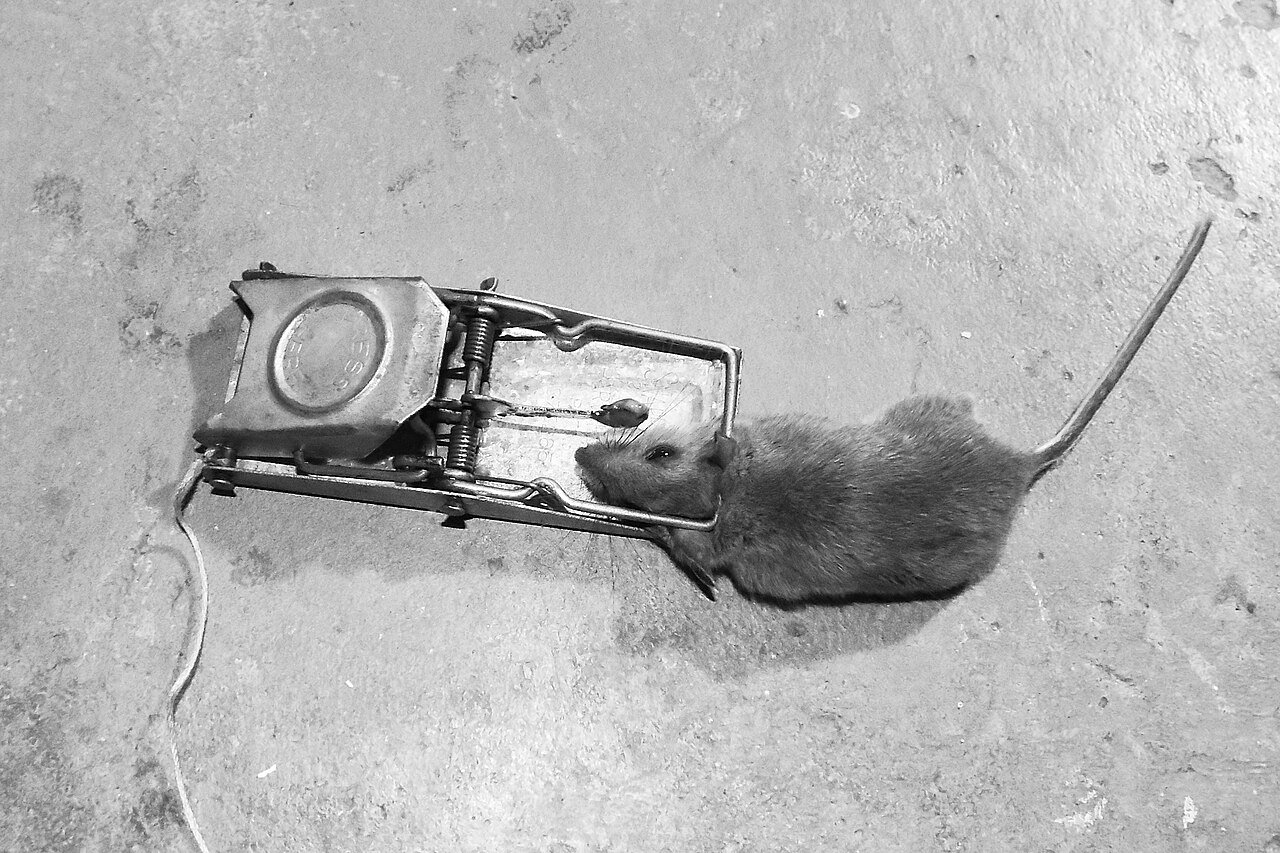
Placement is the whole game. Mice are wall-huggers with a two-inch whisker world; they essentially never cross open floor. Traps go flush against walls, trigger-end to the baseboard, perpendicular to the run — so the mouse meets the trigger mid-stride whichever way it’s traveling. Deploy where the droppings are: behind the stove, under the sink, along the back of the pantry, behind the fridge, in the drawer void. Density wins: the classic amateur move is two traps for a twelve-mouse house; the professional move is a dozen traps for a two-mouse house. Traps are $2; place them in pairs an inch apart (mice jump the first), every six to ten feet along active walls. Bait small: a pea of peanut butter smeared on, not lumped on — a big bait lets a mouse dine from the side without weight on the trigger. Chocolate spread, bacon grease, and a cotton ball scented with vanilla (nesting material reads as treasure in fall) all out-perform cartoon cheese. Pre-bait if they’re shy: two nights of baited-but-unset traps turns trap-wary into trap-confident, then set them all at once — the first night of a well-run line does more removal than the following two weeks, so stack it.
Move three: seal the doors (the part everyone skips, which is why they call us every winter)
Trapping without exclusion is mowing without edging — it looks done and isn’t. A mouse passes through any gap the width of your pinky finger — a quarter-inch-plus — and your house has more of them than you think. The audit: walk the foundation at dusk with a flashlight held flat against the wall (raking light makes gaps jump); check where every pipe, wire, AC line, and dryer vent penetrates; check the garage door’s corner gaps (the number-one mouse door in suburban Ohio), the front door’s sweep, the crawlspace vents, and where the siding meets the sill plate. Inside, pull the stove and fridge and find the plumbing chases behind the cabinets. Materials matter: mice gnaw through foam, caulk, and plastic like pastry — every gap gets stainless-steel wool or copper mesh packed tight first, then sealant over it; quarter-inch hardware cloth over vents; a rodent-rated garage door seal on the big door. The full seam-by-seam map, with photos, is in the entry-point guide. Sequence note: seal during the trapping campaign, not before it starts — sealing mice in with no trap line running moves the activity into your walls, which is the one way to make everything worse.
Move four: verify, clean, and stand down properly
The victory condition is written in droppings, not sightings. Keep the trap line running until you log seven consecutive zero nights — no catches, no fresh droppings on a wiped-clean monitoring zone, no new gnawing, no night noise. (The flour-line trick from the identification section is your printing press.) Stopping at “we caught four and it’s been quiet a couple days” is how February’s problem becomes April’s. Then clean like it matters, because it does: never dry-sweep or vacuum droppings — that aerosolizes them. Mist with a 10% bleach solution, wait five minutes, wipe with paper towels, bag, and wash hands; gloves throughout, and add a respirator for heavy accumulations, garages, sheds, or anywhere the deer-mouse flag flew. Launder or toss contaminated fabrics; wash the silverware that shared a drawer. Finally, deodorize the invitation: mouse urine trails are scent maps that tell the next scout the route works — an enzyme cleaner on rub-mark routes and former nest corners erases the recommendation letter the last tenants left behind.
The timeline: what winning actually looks like
- Day 1: starve (kitchen lockdown), audit, buy twice as many traps as feels reasonable.
- Days 1–2: pre-bait unset traps on the dropping walls; start sealing the obvious exterior gaps.
- Night 3: set everything at once. Expect the majority of total catches in the first two nights — a big first night means good placement, not a big problem.
- Days 4–10: re-bait and reposition toward whatever’s still printing; finish the sealing list, garage door last.
- Days 10–17: the zero-count — seven clean nights on wiped monitoring zones. Most single-family campaigns land here inside two to three weeks.
- After: two traps stay set in the garage and basement permanently as sentries — a caught scout in November is a $2 alarm, not a new campaign.
Why speed matters: the 21-day arithmetic
The reason this page keeps saying “all at once” instead of “see how it goes”: a female house mouse breeds at six weeks old, gestates for three weeks, delivers five to eight pups, and can conceive again the day she gives birth. Two mice in October are a dozen by Christmas and a colony by Easter — the full compounding table lives in our mice-reproduction guide, but the strategic takeaway fits in one line: a mouse plan is racing a 21-day clock, and any plan that removes mice slower than that clock breeds them is losing while it looks busy. One trap emptied nightly for a month is a feeding program with casualties. Twelve traps, one coordinated week, doors sealing behind them — that’s the same money and a finished problem.
What doesn’t work, so you can skip the aisle
The graded list is familiar to readers of this library: ultrasonic repellers (F) — mice nest happily beside them; peppermint oil and dryer sheets (D) — a day or two of hesitation, then habituation, every time; mothballs (F, and illegal off-label); “get a cat” (C−) — some cats hunt, most negotiate, and none seal a garage door; keeping the lights on (D) — mice are flexibly nocturnal and simply reschedule. The pattern is the site’s oldest lesson: anything that promises to make mice choose to leave loses to an animal with a three-week breeding clock and nothing but time. Removal plus exclusion is the entire science; everything else is the gift-shop.
The honest line: when it stops being a weekend project
Most one-room, early-caught mouse problems fall to the four moves in two weeks of amateur effort, and this page just gave you the whole playbook without a paywall. The cases that warrant (937) 569-3330 instead: the trap line goes quiet but the walls don’t — catches stop while scratching, droppings, or night noise continue, meaning the population has learned the line or lives beyond it; multi-room or multi-floor sign at the first inspection — established colonies have nest sites and routes a weekend audit won’t map; you can’t find the doors — some entry points hide behind brick veneer gaps, under stoops, and in rooflines, and finding them is genuinely a trade skill; deer mice in living space, where the cleanup stakes change; recurring winters — a new campaign every November means the building envelope needs the professional audit once, properly, instead of a patch a year; and rental properties, where the fix spans units and the landlord’s side of the ledger. Our mouse work runs the same four moves with commercial-grade density — inspection, a trap-and-monitor line sized to the evidence, exclusion with warrantied materials, and follow-up visits timed to the 21-day clock — and under the Protection Plan, the sentry monitoring and annual envelope re-check are simply part of the service. The quote is free either way, and if what you describe on the phone sounds like a two-trap Tuesday, we’ll tell you that too.
The eight-county mouse forecast
Every ZIP we serve runs the same October surge — first frost sends the field population toward heated buildings — but the entry profile shifts with the housing stock. Dayton, Oakwood, and old Kettering’s stone foundations and hundred-year sill plates leak at the mortar joints and coal-chute scars; the fix is masonry-patch plus mesh. Beavercreek, Huber Heights, and Springboro’s slab-and-vinyl builds funnel almost everything through two doors — the garage corner gaps and the AC line penetration — which makes them the fastest seals on our route. Miami and Preble counties’ farm-adjacent properties fight proximity: barns, grain, and brush lines keep the source population dense, so sentry traps and annual re-audits matter more than anywhere else. Same four moves everywhere — starve, trap, seal, verify — just different doors.
The bottom line
Getting rid of mice is a system with four moves run in order and at full strength: starve the kitchen economy the first night; trap with density, wall-flush placement, pea-sized bait, and everything set at once; seal every pinky-width gap with steel wool and sealant while the line runs; verify with seven zero nights and a proper cleanup that erases the scent maps. Respect the 21-day clock, skip the repellent aisle, keep two sentries set forever, and escalate to us the moment the evidence outruns the weekend — because the difference between a $30 fix and a recurring winter tradition is almost never the traps. It’s whether all four moves happened, together, once.
The deep-cuts index: where to go next in the mouse library
This flagship compressed twenty-plus guides; here’s where the depth lives when your case needs it. Entry forensics: how mice get in and yes, they climb walls. Species files: deer mice and the mouse-or-rat call. Method debates: the case against DIY poison, the humane playbook, and the repellent myth file. Behavior: the night shift and the hitchhiker question. Each one ends at the same phone number, because a library is a fine thing to browse — right up until the flour line prints tracks two nights running, at which point the reading list has done its job and the trap line takes over.
And the last word belongs to the arithmetic, because it’s the most motivating sentence in rodent control: the campaign you run this weekend, at full strength, costs about thirty dollars and two trips to the hardware store. The identical campaign, delayed six weeks, faces four times the mice with the same thirty dollars — and the campaign delayed until spring is a professional job with a professional invoice. Mice compound; effort doesn’t. Spend yours while the exchange rate is this good, and let seven quiet nights be the receipt.
Frequently asked questions
How do I get rid of mice fast?
Run all four moves at once instead of in sequence: lock down food the first night, set a dozen snap traps in pairs along the walls where droppings appear, seal gaps with steel wool while the line runs, and keep traps out until you log seven straight nights with no catches and no fresh droppings. A well-run campaign typically ends in two to three weeks.
What gets rid of mice permanently?
Exclusion. Traps remove the mice you have; sealing every gap wider than a pinky finger — with steel wool or copper mesh under caulk, never foam alone — removes the mice you were going to have. Pair it with sealed food storage and two permanent sentry traps in the garage and basement.
What is the best bait for mouse traps?
A pea-sized smear of peanut butter is the standard; chocolate spread, bacon grease, and a vanilla-scented cotton ball (nesting material) also out-perform cheese. Keep the bait small — a large lump lets a mouse feed from the side without tripping the trigger.
How many traps do I need for mice?
Far more than feels reasonable: place traps in pairs about an inch apart, every six to ten feet along active walls. A dozen traps for a typical kitchen problem is professional density; two traps is a feeding program.
Where should I place mouse traps?
Flush against walls with the trigger end touching the baseboard, perpendicular to the wall, wherever droppings and rub marks appear — behind the stove, under the sink, along the pantry back wall, behind the fridge. Mice hug walls and rarely cross open floor.
Why are my mouse traps not working?
Usually one of three reasons: the kitchen still offers easier calories than the bait, the traps sit in open floor instead of on wall routes, or trap-shy survivors have learned the line. Fix the food first, reposition to the walls, and pre-bait unset traps for two nights before setting them all at once.
How do I know when all the mice are gone?
Wipe a monitoring zone clean, dust a light flour line along suspect walls, and watch for seven consecutive nights of zero catches, zero fresh droppings, zero tracks, and zero night noise. Anything less is a pause, not an ending.
Do mice go away on their own?
No. A heated house with food is a better habitat than any field, and a breeding female adds a litter every three to four weeks. Mouse problems compound until the food, the entry points, or the mice themselves are removed.
Is it safe to use mouse poison in my house?
We advise against DIY rodenticide in occupied homes: mice die on a delay inside wall voids (the smell lasts weeks), children and pets can reach baits, and poisoned mice can secondarily poison owls, foxes, and cats. Snap traps are faster, cheaper, and give you feedback poison never does.
How do mice get into a house?
Any opening wider than a quarter inch: garage door corner gaps, utility and AC line penetrations, dryer vents, gaps where siding meets the sill plate, and doors without sweeps. Walk the foundation at dusk with a flashlight held flat against the wall and the gaps light up.
What smell keeps mice away?
None reliably. Peppermint oil, dryer sheets, and mothballs produce a day or two of hesitation before mice habituate; controlled tests show no lasting effect. Smells are the gift-shop aisle of rodent control — steel wool and traps are the hardware.
Do ultrasonic mouse repellers work?
No. Mice routinely nest within feet of plug-in ultrasonic devices, and independent testing has never shown durable repellency. The FTC has taken action against manufacturers over these claims.
Will a cat get rid of mice?
Rarely. Some cats hunt, most negotiate, and no cat seals a garage door. A cat may suppress casual scouting, but an established indoor colony breeds faster than any house cat kills.
How many mice are in my house if I see one?
The field rule treats one casually-seen mouse as roughly ten unseen, because mice are nocturnal and sighting-shy. A daytime sighting is worse news — it usually means crowding has pushed subordinate mice onto the risky shift.
What time of year do mice come inside?
October through December is the surge: the first hard frosts push outdoor populations toward heated buildings, with the garage-door corner as the number-one entrance. Sealing in September beats trapping in November.
Are mice dangerous to have in the house?
They are a contamination and property risk more than an attack risk: droppings and urine can carry salmonella and (in deer mice) hantavirus, gnawing damages wiring, and nests in insulation degrade it. Never dry-sweep droppings — mist with diluted bleach, wait, and wipe.
What is the difference between mouse and rat droppings?
Mouse droppings are rice-grain sized with pointed ends; rat droppings are raisin-sized and blunt. The distinction matters because rat protocols use different traps, different placements, and different urgency.
How much does professional mouse removal cost?
Straightforward single-room cases are often a DIY weekend for under $50 in supplies. Professional programs — inspection, commercial-density trapping, warrantied exclusion, and timed follow-ups — are quoted by evidence level and entry-point count, and every quote is free: (937) 569-3330.
Do mice come back after extermination?
Only through doors left open. Trapping without sealing is a subscription: the outdoor population re-colonizes through the same gaps within a season. Exclusion with steel materials plus two standing sentry traps is what makes removal permanent.
When should I call a professional for mice?
When catches stop but wall noise continues, when evidence spans multiple rooms or floors, when you cannot find the entry points, when deer mice appear in living space, or when every winter brings a new round. Recurring winters mean the building envelope needs one professional audit, not another season of traps.