Trotwood’s skyline tells its recent history in rooflines: streets where crisp post-2019 shingles and fresh soffit runs alternate with houses still waiting on their rebuild, and blocks where a cleared lot sits between two occupied ones. The Memorial Day tornado’s long tail shapes daily life here in ways big and small — and one of the small ways buzzes. Wasp and hornet removal in Trotwood works a file we see nowhere else at this intensity: a town that is simultaneously brand-new construction and standing remnant, where fresh soffit seams hand founding queens their favorite architecture while the unrepaired structures down the block bank colonies at full strength with nobody watching. We call it the remnant reservoir, and managing wasps here means reading both sides of every street.
The New Roof’s First Five Springs
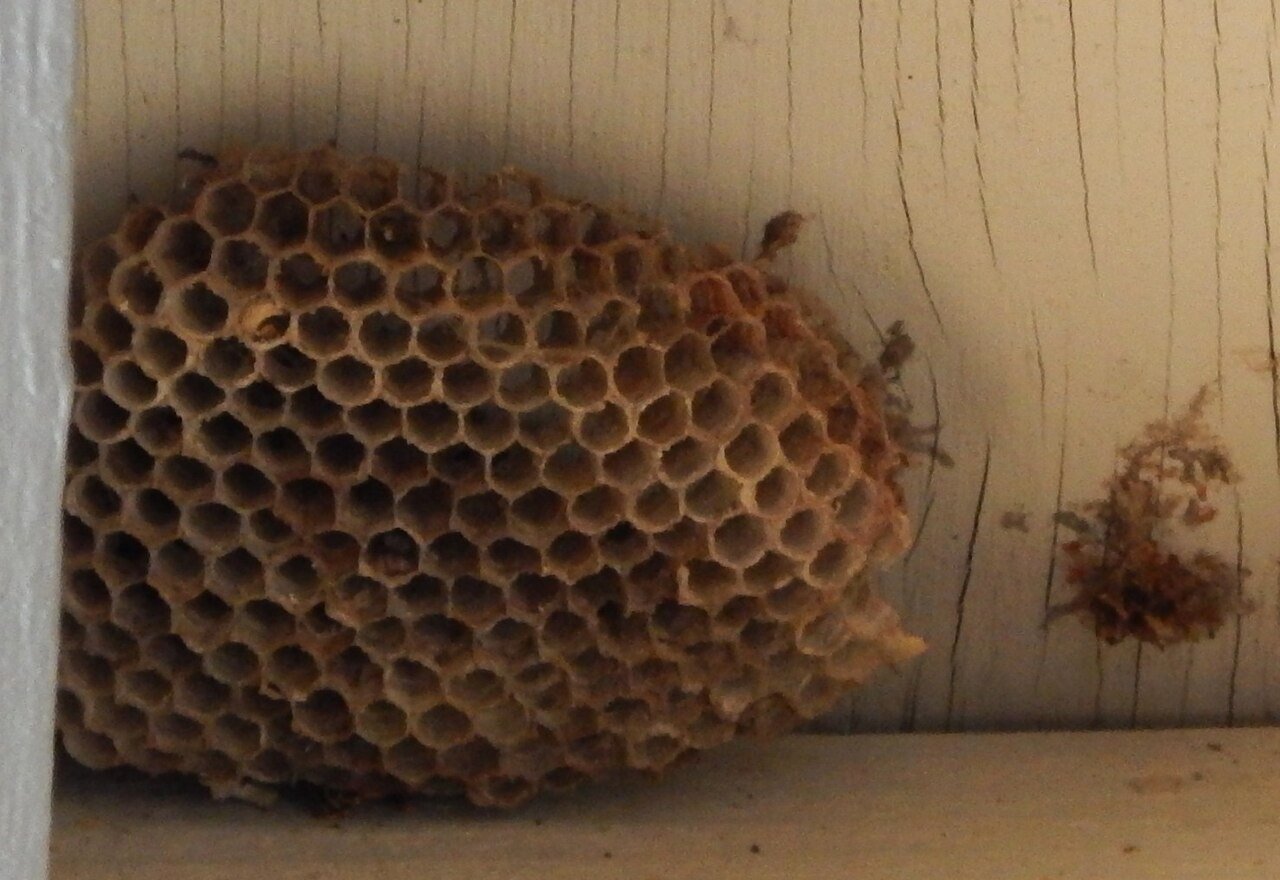
Rebuilt houses meet wasps on a schedule. A new vinyl or aluminum soffit run is tight the day it’s hung, but its first freeze-thaw cycles open the working gaps — the j-channel corners, the gable transitions, the ridge-vent ends — and by spring two or three, founding paper wasp queens read those seams as purpose-built nest shelter. The pattern our techs know: rebuilt streets generate almost no wasp calls for two seasons, then a wave of soffit-line and porch-ceiling colonies in years three through five as the architecture weathers in. If your house is post-2019 construction, the cheap intervention is the early-spring walk-around — knock down the golf-ball founding nests in April with a broom and a dusk hour, or have our spring sweep do it — because the same nest in August is a removal job with defenders.
The Reservoir Next Door
The other half of the file is the structures the storm left behind: houses still boarded, garages half-repaired, sheds nobody reclaimed. An unwatched structure is a wasp bank — paper wasps colonize the eaves, yellowjackets take the wall voids and the soil under slumped porches, and bald-faced hornets hang their footballs in the overgrown ornamentals. Colonies there grow all season at full strength, then pressure the occupied houses around them: foragers work the neighborhood’s trash cans and gardens, and next spring’s queens — each successful reservoir nest produces dozens — found their colonies on the nearest maintained soffits. Practical counsel: you can’t treat a property you don’t own, but you can note the traffic lines, keep your own eaves swept, and — for the vacant structure that’s an active hazard to your yard — document it for the city’s nuisance-abatement process, which does move on stinging-insect complaints.
Both Sides of the Street, One Program
- Spring founding sweeps: April–May eave-and-porch passes on rebuilt homes, catching queens at the golf-ball stage — the highest-leverage visit of the year
- Established-colony removal: soffit-line paper wasps, void-nesting yellowjackets (never seal the hole first — treated, then sealed), and hornet nests at height, handled with full protocol
- Rural-west ground-nest work: the big western parcels run the field-edge yellowjacket file — flag steady low traffic to a single grass point and mow around it until we’ve treated the burrow
- Reservoir counsel: honest guidance on the vacant-structure problem — what we can treat, what needs the city, and how to harden your own parcel meanwhile
The wider local file reads the same rebuild seam: the Trotwood service page covers how the storm’s long tail runs through every species we manage, from the rodents working the remnant structures to the ants colonizing the new landscaping. Wasps are simply the loudest chapter — and the most seasonal, which means the calendar is the weapon: what gets swept in April never gets removed in August.
Sweep Early, Both Sides
Rebuilt roof or original eaves, the spring sweep beats the summer removal every year it runs. One call books it — and gets the straight answer on the vacant structure next door, including the part that’s the city’s job, not ours.
Frequently asked questions
Why did my rebuilt house suddenly get wasps three years after construction?
Freeze-thaw cycles opened the soffit’s working seams — j-channel corners, gable transitions, ridge-vent ends — and founding queens read weathered-in gaps as purpose-built shelter. Rebuilt streets run quiet for two springs, then wave in years three through five. The April sweep resets the clock annually.
Can I knock down a small spring nest myself?
A founding nest — golf-ball comb, one queen, no workers — yes: dusk, a broom, done. Anything with workers patrolling by June, no. Established colonies defend with alarm pheromones, and the ladder-plus-spray-can combination writes the same urgent-care story every August.
There’s a vacant storm-damaged house near me full of wasps — what can I do?
We can’t treat property you don’t own, honestly. What works: harden your own parcel (spring sweeps, sealed eaves, lidded trash), and document the hazard for Trotwood’s nuisance-abatement process — cities do move on stinging-insect complaints against vacant structures.
What’s living in the hole in my wall or under my porch?
Steady in-and-out traffic at a single opening is a yellowjacket void colony — the dangerous file. Never seal the hole first: trapped colonies chew through interior drywall. Treatment kills the colony, then the seal closes the architecture.
Do wasps return to the same nest each year?
Colonies die at frost and old paper is never reused, but successful sites get re-founded by new queens reading the same shelter. Anchor-point treatment at removal plus the spring pass breaks the tradition — especially important downwind of a reservoir structure producing dozens of queens.
I’m on acreage on the west side — why are wasps coming out of my lawn?
Ground-nesting yellowjackets in old rodent burrows — the field-edge file. Watch for steady low flight to one grass point, flag it, mow around it, and call. By September these colonies run thousands strong and treat mower vibration as an attack.
Are the big gray football nests dangerous?
Bald-faced hornets — serious defenders with a real no-go radius. In reach of yard activity they warrant professional removal; high and away from traffic they can sometimes wait for frost. We’ll say which honestly when we see it.
What does wasp removal cost in Trotwood?
Flat single-nest pricing, whole-property rates when the walk-around finds multiples, and the spring sweep priced deliberately under the summer removal — because April’s broom-and-dust visit preventing August’s full-protocol job is the whole strategy.
For the rest of what this town actually deals with, see cockroach control in Trotwood and rodent control in Trotwood.