
Standard flea advice starts by blaming the dog. On Trotwood’s western flank that advice is pointed at the wrong animal. Within a quarter mile of Sycamore State Park’s tree line, the dog is usually the courier rather than the source — the source lives under the shed, works the creek line at night, and never comes inside at all. We call it the Sycamore Line, and which side of it your address sits on decides whether this is a two-front job or a three-front one.
The Sycamore Line
Trotwood’s western edge runs into twenty-three hundred acres of woods, meadow, and the Wolf Creek corridor — a permanent wildlife engine pointed directly at the adjoining neighborhoods. Raccoons, opossums, and stray cats patrol that creek line nightly and den under the decks, sheds, and open crawlspace vents of the houses nearest the trees. Every one of those animals carries cat fleas, and every den is a reservoir that re-seeds a yard on its own schedule, indifferent to whatever is happening indoors.
That is why the park-edge flea call so often comes from a household doing everything right. The pet is on prevention, the carpets are clean, the treatment worked in June — and the fleas are back in August. Nothing failed. The reservoir was never addressed, because it was never inside the house. Wolf Creek compounds it by threading moisture habitat through the middle of the city: flea larvae need humidity to survive, and the low-lying yards along the creek hold it in the shaded beds and under the decks long after the uphill blocks have dried out.
The Other Trotwood Flea Call
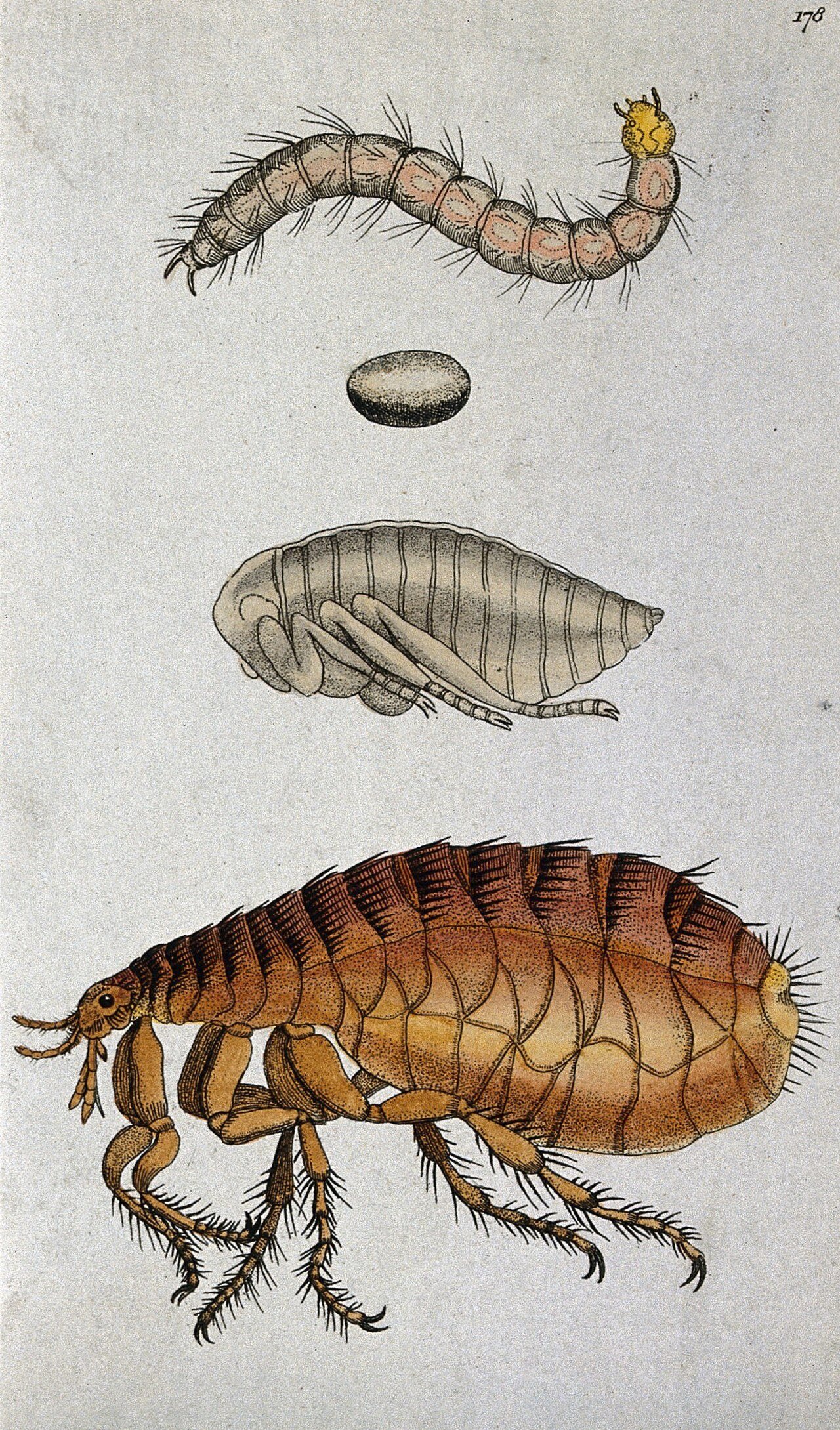
The second pattern comes from the opposite end of town and has nothing to do with wildlife. In the apartment and townhome communities along Salem and Shiloh Springs, and in any house changing hands, the previous occupant’s animals leave behind an egg and pupa bank in the carpet. Pupae can wait, sealed and armored, for weeks — and then the vibration and carbon dioxide of new people moving in triggers a mass hatch. A pet-free family gets bitten in a home they just moved into and reasonably concludes something is wrong with the building. Nothing is. They inherited a dormant population and woke it up.
Three Fronts, and Which One Is Yours
A flea job succeeds or fails on whether all the occupied fronts get handled in the same week. Here they are, and who owns each:
- The pet — your veterinarian’s front. We will say it plainly: no home treatment succeeds while the animal remains an untreated flea farm. Vet-dispensed preventives work within hours; shampoos, dips, and bargain collars do not. We coordinate timing so the home treatment and the pet product start together.
- The home — ours. An adulticide for the biting population plus an insect growth regulator that sterilizes the environment for months, applied to carpets, rugs, floor-crack lines, under and behind furniture, pet resting zones, and the car if the dog rides along.
- The yard — ours, and the decisive one on the park edge. Treatment goes where larvae can actually survive: shaded fence-line harborage, under decks, the shed skirt, crawlspace vents. Sunny open lawn is not flea habitat and we will not bill you to spray it.
- The exclusion half nobody sells. Deck and shed skirting, and crawlspace vent repair on the mid-century ranches where the original screens rusted out years ago. This is what converts a park-edge property from an annual flea customer into a house that stops calling.
The Two-Week Hatch Curve
Set the expectation now and the treatment will feel like what it is — a controlled drawdown rather than a light switch. Days one through three: a dramatic drop in bites as the adult population dies. Days four through fourteen: the pupal bank hatches into the treatment in waves, and you will see occasional fleas, typically slow-moving and short-lived. Each vacuuming session speeds it up. By week three a properly coordinated job — home treated, pet on vet prevention, vacuum cadence kept — reads zero on the white-sock test: walk the carpeted rooms in long white socks and fleas show against the fabric. Heavy or long-established infestations take longer, and the return visit is timed to the hatch rather than to the calendar.
Why This Is a Trotwood Page and Not a Generic One
Ten minutes up Salem Avenue from our office, Trotwood gets the fastest arrival on our map — and fleas reward speed less than they reward sequencing. What this town actually needs is the right diagnosis before the first application: park-edge properties get the three-front program plus exclusion, the complexes and recently sold houses get the inherited-egg-bank version, and the two are not interchangeable. The full local picture, across every pest this city runs, lives on our Trotwood pest control page.
Find the Source, Then Treat
One walk-around tells us which Trotwood flea problem you have — reservoir or inheritance — and the plan follows from that. Free quote, priced by treated area, with the return visit timed to the hatch and backed by the guarantee.
Frequently asked questions
We don’t have any pets. Why do we have fleas?
Two answers account for nearly every pet-free flea call in Trotwood. Either the previous occupant’s animals left an egg and pupa bank behind and the vibration of you moving in triggered the hatch — common in rentals and fresh home purchases — or wildlife is doing the work from outside: raccoons, opossums, and feral cats denning under a deck, shed, or open crawlspace vent. The second one is the park-edge signature, and no amount of indoor treatment outlasts it while the den is still occupied.
Something is denning under our deck. Does that have to be dealt with first?
It has to be dealt with, or the job repeats annually. We can treat the house and the yard and knock the population flat, but a reoccupied den under the deck restocks the reservoir within weeks. The inspection separates mouse evidence from the larger visitors, and the fix is skirting and exclusion at the deck, shed, and crawlspace vents — the part of flea work nobody sells and everybody needs on the park edge.
Can you treat the pet while you’re here?
No, and we will not pretend otherwise — the animal belongs to your veterinarian. Modern vet-dispensed preventives, the oral isoxazolines and quality spot-ons, kill boarding fleas within hours and shut off the egg pipeline. Shampoos, dips, and bargain collars do not. What we do is time the home treatment to your vet visit so both start the same week, because that synchronization is roughly half the outcome.
Why am I still seeing fleas a week after treatment?
Because the pupal stage is armored and nothing kills it directly. Days one through three bring a sharp drop as the adults die; days four through fourteen, the pupal bank hatches into the treatment in waves. The fleas you see then are typically slow, short-lived, and dying — that trickle is evidence the program is reaching the stage no product touches. Keep vacuuming; every session accelerates it.
How soon is it safe for kids and pets?
Once the application is dry, which is typically a few hours. We give you exact re-entry timing for the products used in your home before we leave.
Do you treat the yard, or just inside?
Both, and on the park edge the yard is often the more important half. Indoors we cover carpets, rugs, floor-crack lines, under and behind furniture, pet resting zones, and the car if the dog rides along. Outdoors we focus where larvae can actually survive — the shaded, humid harborage along the fence line, under the deck, at the shed skirt, and around crawlspace vents. Open sunny lawn is not flea habitat and does not need treating.
Will a fogger from the store work?
No. Foggers deposit on open surfaces and almost nothing reaches the carpet depth, cracks, and pet bedding where larvae and pupae actually live, so they kill a few visible adults and leave the engine untouched. They also drive insects deeper into harborage, which makes the real treatment harder.
What does flea treatment cost in Trotwood?
Priced by treated floor area, with a free quote first. Tell us the source when you call — a stray litter under the porch, a rental you just moved into, a den under the deck — because the source changes the plan. Breaking the life cycle takes a return visit timed to the hatch, and the follow-up is covered by the guarantee.
Fleas are the one pest where the cheapest useful answer is often a diagnosis. Tell us whether you back onto the park — that single fact changes the whole plan.